

Ask a packaging supplier "can you make a custom cap shape?" and the answer is almost always yes. The more useful question is how far that "yes" goes — and where it stops. Custom cap shape design for stand-up pouches and doypacks is not a yes-or-no capability. It is a spectrum: some shapes are one mold change away from production, others need slides, lifters and a careful conversation about draft angles, and a few are not worth the tooling at all. This article walks that spectrum with shapes that actually exist — whale-tail, square-flower, cloud, hex-ball and leaf caps — so you know what to ask for, what it takes to make, and how to brief a supplier before anyone cuts steel.
Most of what gets written about custom closures stops at "we offer OEM". That tells you nothing about the shapes themselves, the molding physics behind them, or the information a factory needs before it can quote your idea. The five shapes below are real production models, not renderings — and the rules that made them moldable are the same rules your own idea will have to pass.
Five real shapes already in production
A quick way to judge how serious a spout cap manufacturer is about custom work is to ask what shapes they have actually molded. One catalog from a Chinese closure factory includes at least five distinct special-shape caps, all running on food-grade PP:
Shape | What it looks like | Typical use |
|---|---|---|
Whale-tail | Flat, flared cap with a notch like a whale's tail; the flared outline doubles as a grip | Juice, honey, sauce and detergent refill pouches |
Square-flower | Squared cap with reinforced ribs; four corners give a distinct, stackable silhouette | Juice, salad dressing, hand sanitizer, cleaning supplies |
Cloud | Soft, rounded cloud silhouette with a gentle edge | Baby food puree, fruit drinks, children's beverages, natural skincare |
Hex-ball | Six-sided ball-like cap that reads as a sphere with facets | Food and daily-chemical pouches of all kinds |
Leaf | Green leaf-shaped cap, usually paired with fruit-puree packs | Fruit puree and children's food pouches |
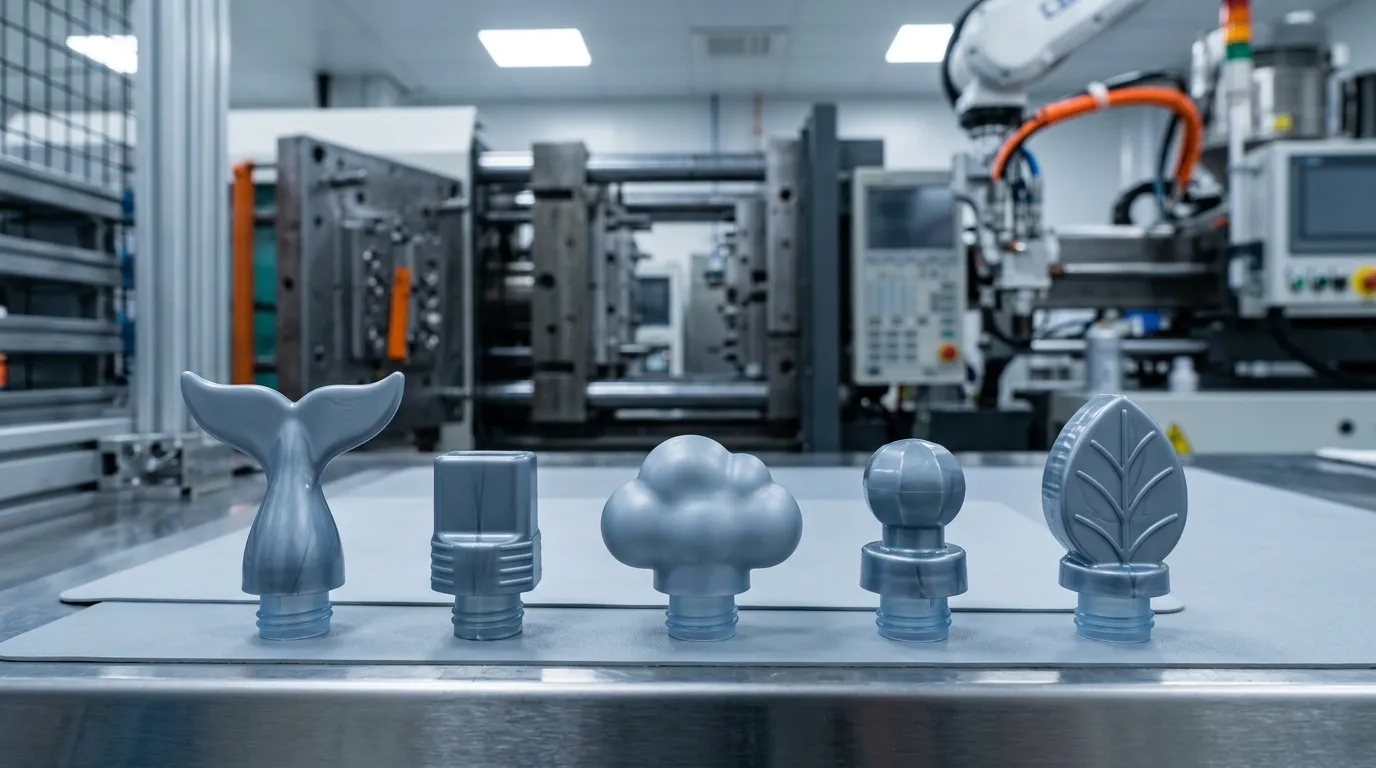
Five real production shapes from one custom spout cap catalog — each one molded, not rendered.
These shapes are not decorative afterthoughts. Each one carries a functional reason to exist: the whale-tail's flared outline makes the cap easier to twist open with wet or slippery hands; the square-flower's ribs add grip and let the cap stand out on a shelf; the cloud silhouette softens a product aimed at children. When you see a pouch closure on a shelf that looks like anything other than a plain round cap, someone paid for a mold — and they did it because the shape sells the product or makes it easier to use.
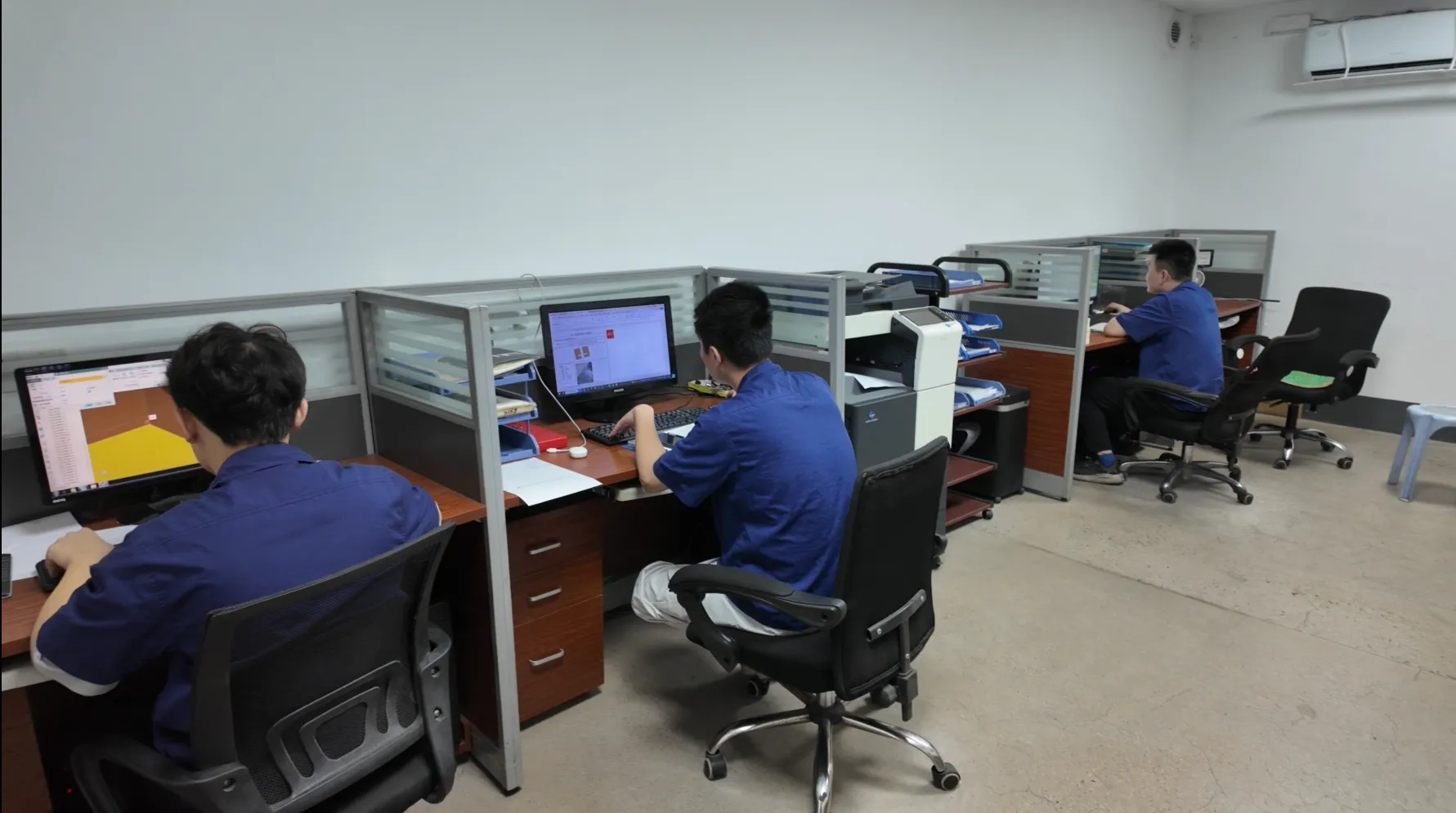
A manufacturer that lists these under a dedicated special-shape spout cap category rather than burying them in a general catalog is telling you something: the molds exist, the parts run in production, and the design office that made them is still in the building. That is the practical difference between a factory that takes custom closure shapes seriously and one that talks about them.
Custom cap shape design rules: what makes a shape moldable
Here is where custom cap shape design stops being a yes/no question. Injection molding shapes plastic by forcing molten resin into a steel cavity, and every shape has to obey four mechanical rules before it can come out of that cavity as a finished part. These rules are not negotiable — they are physics — but they are also learnable, and knowing them tells you which of your ideas will be cheap to make and which will fight you.
Draft angle. The cap has to release from the mold, so every vertical wall needs a slight taper — typically at least 0.5° to 1° per side, more on textured surfaces. A perfectly straight-sided square cap looks great in CAD and refuses to come out of the mold without scratches. The square-flower cap exists because its designers kept the sides tapered enough to eject cleanly while keeping the squared outline the brand wanted.
Parting line. The mold is built in at least two halves, and the line where they meet leaves a small witness mark on the part. Where that line falls is a design decision: on a functional surface it can affect sealing or threading, so experienced designers place it where it does the least harm. A custom shape that ignores the parting line ends up with a visible seam in exactly the wrong place.
Wall thickness. Molten plastic shrinks as it cools. If one wall is 2 mm and the next is 5 mm, the thick section cools slower, shrinks more, and can sink or warp — a visible dimple on the surface of what should be a clean shape. Uniform wall thickness is the single most common discipline in cap design, and it is why some elaborate shapes never make it: the geometry simply cannot hold even thickness without adding internal structure.
Slides and lifters (undercuts). Any feature that hooks around another — a notch, a ledge, a threaded ring — is an undercut, and undercuts cannot eject straight out of a two-part mold. The mold needs moving parts (slides or lifters) that pull sideways before ejection. Every slide adds mold cost and cycle time. The whale-tail's notch is a mild undercut; a full internal thread is a bigger one; a shape that needs three or four slides can double the tooling cost before you have made a single cap.
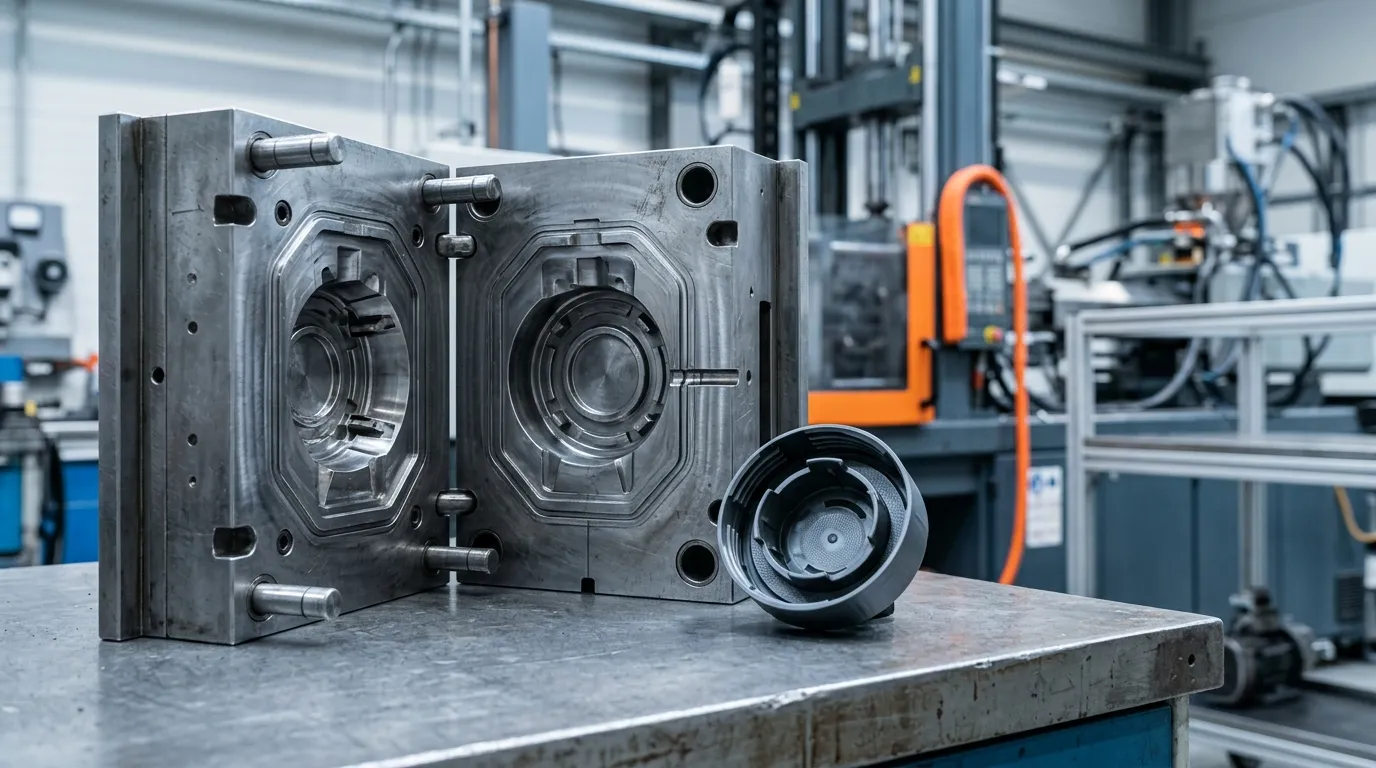
The mold cavity decides what is moldable: draft angles, parting lines and undercuts are designed into the steel, not fixed later.
These four rules are why a good supplier asks for your 3D drawing before quoting a mold. Without geometry there is no way to count slides, check draft, or judge wall-thickness discipline — the mold price would be a guess, and so would the lead time.
It is not evasion when a factory says "send the 3D first". It is the only honest way to price a custom shape — the same physics apply to your pouch spout design whether it is a simple round cap or a whale-tail.
And because every one of these rules lives in the steel, the shape review is where the custom tooling conversation really starts — the custom tooling hub ties together everything a custom mold project touches, from shapes and costs to mold ownership.
Shape is not the only dial: closures, tamper evidence, tethered options, color
The shape is the part you see, but a custom spout cap is a system of decisions that all have to agree with each other — and with the market you sell into. When you brief a supplier, the shape is one input among several:
- Closure type. Screw caps, flip tops, push-pull sport caps and brush spouts each bring their own molding and functional rules. A whale-tail screw cap and a whale-tail flip top are two different molds with two different sets of moving parts.
- Tamper evidence. If your market requires proof of first opening, the tamper-evident ring has to be designed into the mold from the start — you cannot bolt it onto a shape afterward.
- Tethered (non-detachable) options. For the EU market, where single-use beverage packaging rules push closures toward attached designs, a cap can be built with stop lugs on the thread so it cannot be fully separated from the spout. This is not a different shape — it is a structural detail inside the same outline, and it is worth confirming early because it changes the thread tooling.
- Color and finish. White is the standard stock color; beyond that, a custom Pantone color is matched as masterbatch and molded directly into the part, and a logo can be embossed into the steel. Frosted, translucent and solid finishes are all possible on the same shape. Color is where a shape becomes a brand asset rather than a component.
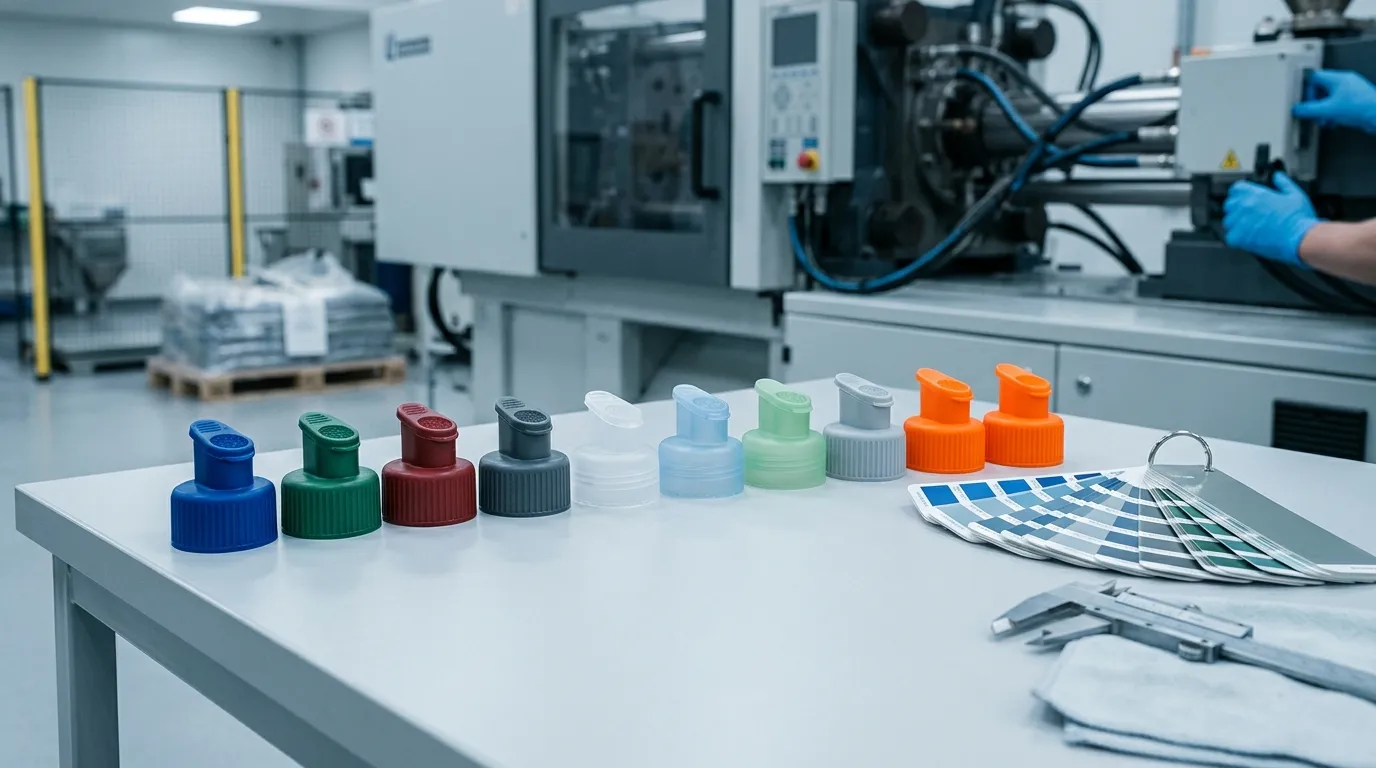
The same custom shape can ship in Pantone-matched colors and different finishes — color is molded in, not painted on.
None of these decisions are exotic — this is the standard vocabulary of spout cap customization — but they have to be settled before the mold is cut, because each one is baked into the steel. Changing a color later is cheap; changing the closure type or adding a tethered feature later means a new tool.
Where your product touches food or drink, the whole system also has to meet food-contact requirements. The EU food-contact framework, Regulation (EC) No 1935/2004, sets the baseline for materials and the European Commission's food-contact materials guidance explains how it applies in practice; US buyers typically look for FDA food-contact compliance. Food-grade virgin PP and PE with no optical brighteners or fluorescers is the safe default for a custom cap that will sit against juice, sauce, detergent or cosmetics.
Stock shape vs custom shape: when the tooling earns its keep
Before you commit to a custom mold, check the shelf. A spout cap factory with a real catalog carries models from about 1.2 mm to 40 mm inner diameter — over a hundred parts in the case of the factory that makes the five shapes above. If a stock shape already gives you the bore, the seal behavior and a close-enough look, the custom mold is a cost you do not need.
Custom tooling earns its keep in three situations:
Situation | Stock part | Custom mold |
|---|---|---|
Your content needs a specific bore or flow | Pick from existing diameters | Mold the exact bore and flow geometry |
The cap is a brand asset on the shelf | Generic round cap | Your silhouette, your colors, your logo |
A regulation shapes the design | May not meet it | Designed to the rule from day one |
The cost story is also less scary than buyers assume. In this corner of the industry the pattern is counterintuitive: after a custom mold is built, there is typically no minimum order quantity — the mold is yours, and the factory supplies according to your demand. The big commitment is the tooling itself, not the first order. (Custom colors, by contrast, usually carry a higher minimum, because changing colors means cleaning the line — so match the color decision to your volume, not the other way around.)
Mold cost and lead time are driven by exactly the four rules above: cavity count, slide count, complexity of the parting line, and how many trial-shot rounds the geometry needs. If you want the full breakdown of what drives tooling pricing — cavity counts, sampling rounds, the 60-day-ish mold production window and why quotes need a 3D file first — the custom spout cap tooling cost guide goes through it line by line. And because custom parts eventually live on pouches that claim recyclability, it is worth checking design-for-circularity guidance such as CEFLEX's design guidelines before you lock a shape intended for a mono-material PE pouch — the fitment is a first-class input to whether the whole pouch can be recycled.
What to send a supplier before requesting a custom shape quote
The fastest way to make a custom shape project expensive is to start it with a vague email. The fastest way to make it cheap is to send a complete brief. Here is the minimum set a factory needs to respond with something useful — assemble this before you ask for a quote:
- Your sketch or 3D file. A hand drawing plus a photo of a cap you like is enough to start; a STEP or STL file is better. This is the file the design team uses to count slides and check draft.
- Pouch and film details. Pouch size, film structure, and whether you can send a sealed sample pouch. The spout seals into the film, so the film is part of the design input.
- Contents and viscosity. What the pouch holds and roughly how thick it pours — this sets the inner diameter and flow behavior.
- Annual volume forecast. Cavity count is chosen for volume: a mold built for 2 million caps a year is different from one built for 200,000.
- Target markets. EU, US, or elsewhere decides food-contact certification and whether a tethered closure should be on the table.
One more thing to know before you start: a serious supplier will review your sketch for moldability (draft, walls, undercuts) and can typically print a 3D prototype from the design before committing to production steel. The full sequence — design review, mold, trial shots, mass production, sealing validation — is covered in our custom spout cap production process guide, so you know what each stage asks of you and where the decision points are.
Start with a feasibility check, not a mold
Custom cap shape design is less exotic than it sounds. The shapes that exist today — whale-tail, square-flower, cloud, hex-ball, leaf — started as the same thing your idea is now: a drawing that had to survive contact with mold physics, food-contact rules and a filling line. The five shapes above made it because each one earned its tooling with a real function, and because whoever designed them respected the four rules that make plastic moldable.
So the practical answer to "how complex can a custom cap get?" is: complex enough to be a brand asset, as long as the shape passes draft, parting, wall-thickness and undercut review — and as long as someone checks the stock catalog first. The rest is a well-briefed conversation.
If you have a shape in mind, send the sketch and the five-point brief to a factory that designs and cuts its own molds — the design team behind the whale-tail and square-flower caps is the same team that will review yours. Request samples or a quote, and you will get back a feasibility opinion and a clear picture of the tooling ahead — before anyone spends a dollar on steel.