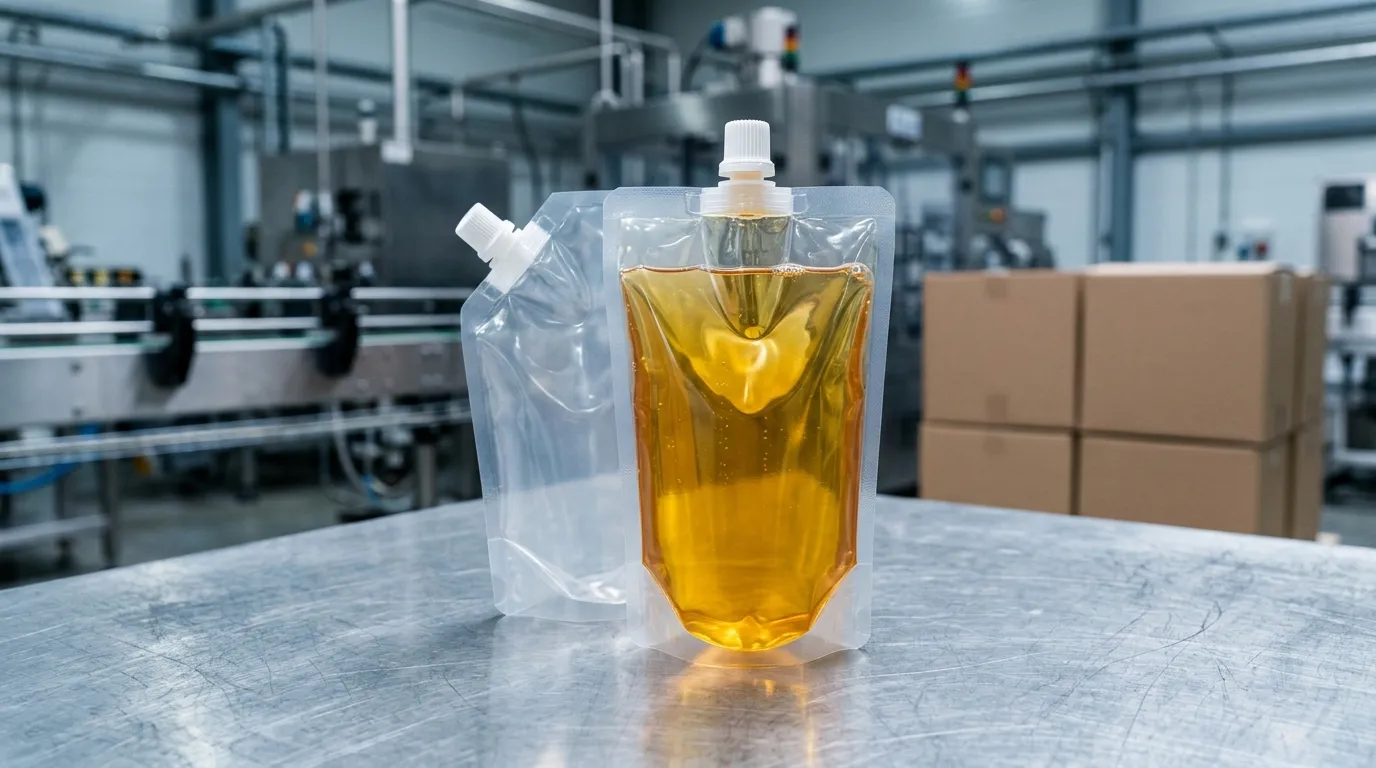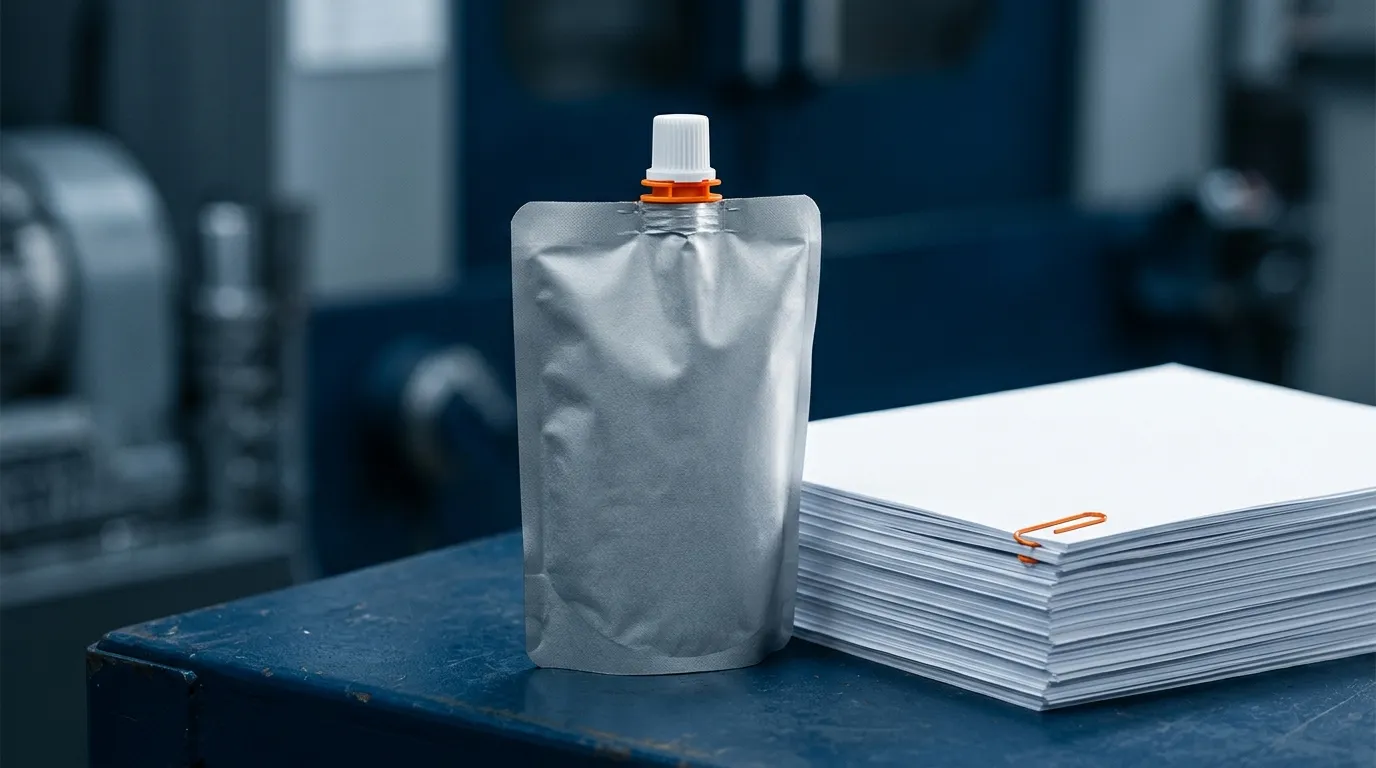


What "compliant" means for a pouch spout cap
A spout cap on a stand-up pouch has to satisfy a short list of rules in the market where the filled pouch is sold. Those rules are not one certificate, and they are not the same everywhere. In the European Union, food contact regulations for pouch spout caps sit in a framework regulation and a plastics-specific implementing act. In the United States, they sit in the FDA's 21 CFR food-contact sections. In China, they sit in the GB 4806 series. And from July 2024, an EU product rule changed how caps on beverage containers — including some pouches — must be designed.
This guide walks through the frameworks, the migration evidence behind them, the tethered-cap rule that is reshaping closure design, what recyclability adds on top, and the documents you should demand from a supplier. It is written for pouch brands, converters and importers who buy spout caps rather than write regulations.
Food contact regulations for pouch spout caps: EU, US and China
No single global standard covers food-contact closures. What you need depends on where the filled pouch will be sold. The three frameworks below cover the markets most spout-cap buyers are shipping into.
Market | Key rules | What you should request |
|---|---|---|
European Union | Regulation (EC) No 1935/2004 (framework) + Regulation (EU) No 10/2011 (plastic materials and articles) | EU Declaration of Compliance (DoC) per Article 16 of 1935/2004, migration test reports against 10/2011 limits |
United States | FDA 21 CFR 177 (polymers, e.g. 177.1520 olefins) and 21 CFR 178 (adjuvants and production aids); FDA's Food Contact Substances program | FDA compliance letter naming the resin and finished article, extractives data |
China | GB 4806.7 (food-contact plastic materials and articles), GB 9685 (additives) | GB 4806.7 compliance report from the manufacturer |
The EU stack is the one that reaches deepest into the supply chain, because Regulation (EC) No 1935/2004 Article 16 obliges every operator to have a written Declaration of Compliance for food-contact materials, and Regulation (EU) No 10/2011 sets the specific migration limits (SMLs) and overall migration limit (OML) for plastics. A cap that meets EU 10/2011 will generally satisfy FDA-oriented checks on polypropylene and polyethylene — the reverse is not always true, because the EU list of authorized substances is longer and the DoC requirement forces documentation to travel with the product.
A note on terminology: "FDA-certified" is a phrase you will see on datasheets, but the FDA does not issue certificates. It regulates food-contact substances through 21 CFR regulations and through Food Contact Notifications (FCNs). What a supplier should give you is a compliance letter backed by test data that names the specific resin grade — not a generic claim. The FDA's Food Contact Substances page explains the framework and the inventory of substances listed in 21 CFR.
For more on how these frameworks fit together — including films, closures and recycling claims — see our regulations and recyclability hub.
Migration testing: the evidence behind the certificate
A resin being on an authorized list is layer one. It does not prove the molded cap is safe, because the moment resin is compounded with colorants, molded with release agents, and assembled with a gasket, the finished article has its own migration profile. That profile is what regulators — and customs inspectors — care about.

The tests you should expect in a migration report for a food-contact spout cap:
- Overall migration (OML): total mass of substances transferred into food simulants, measured against the limit in the applicable regulation (10 mg/dm² under EU 10/2011). Simulants are matched to the food type — aqueous, acidic, alcoholic or fatty.
- Specific migration limits (SMLs): individual substances with assigned limits, including heavy metals such as lead and cadmium, plus monomers and additives. This is where a color masterbatch can fail even when the base resin is clean.
- Sensory / organoleptic testing: the cap must not transfer taste or odor. For juice and dairy pouches, where consumers detect off-notes immediately, this test matters commercially as much as the chemical limits.
- Extractives (FDA route): for polyolefins, the FDA approach includes solvent extractives tests in n-hexane and xylene at defined temperatures.
Conditions matter as much as the test list. A cap tested at 40 °C for 10 days — the EU standard condition for long-term ambient storage — is not validated for a hot-fill sauce line at 85 °C or a retort cycle at 121 °C. When you approve a spout cap for hot-fill or retorted products, ask for migration data at the temperature and duration that match your process. This is exactly the kind of gap that shows up at customs or, worse, in a consumer complaint. The European Commission maintains a food contact materials portal where you can check the framework and its implementing acts.
Simulant selection is the other half of "conditions". Under EU 10/2011, simulants are assigned by food type, and the harshest is the fatty-food simulant — which is also the one most often missing from a supplier's test folder. For a pouch brand, the mapping looks roughly like this:
Pouch contents | EU simulant (10/2011) | Practical check |
|---|---|---|
Water-based drinks, juice | 10 % ethanol (simulant A) | Standard, low risk |
Acidic foods, fruit, vinegar-based sauces | 3 % acetic acid (simulant B) | Standard |
Alcoholic products | 20 % ethanol (simulant C) or 50 % ethanol (simulant D1) | Rare for pouches, check if relevant |
Fatty foods, oils, oil-based sauces, dressings | Vegetable oil (simulant D2) | Most likely to fail — verify it is in the report |
Dairy, milk-based drinks, emulsions | 50 % ethanol (simulant D1) | Confirm D1 is covered; ask for D2 as well if the product contains significant fat |
Dry foods, powders | Tenax® (simulant E) | Powder and granule pouches |
If your product is fatty and the report only shows simulants A and B, the supplier has not tested your actual use case. Ask for the D2 result — and ask at the right temperature.
To see what a documented food-contact layer looks like in practice, the certificates and test evidence on our certification page and quality and testing page are the same kind of material you should be collecting from any supplier.
The EU tethered cap rule: what changes for spouted pouches
This is the regulatory change most likely to affect your closure design, and it is widely misunderstood. The obligation comes from Directive (EU) 2019/904 on single-use plastics, not from a 2024 regulation that is sometimes cited in trade chatter. Article 6(1) of the directive says that single-use plastic products with caps and lids made of plastic may be placed on the EU market only if the caps and lids remain attached to the container during its intended use — in other words, a tethered cap.
The scope is defined in Part C of the directive's annex: beverage containers with a capacity of up to three litres — receptacles used to contain liquid, such as beverage bottles and composite beverage packaging with their caps and lids. The rule took effect on 3 July 2024 and is transposed into each member state's national law. Glass and metal beverage containers with plastic caps are excluded, as are beverage containers for food for special medical purposes.
Where do spouted pouches sit? The trigger is the word "beverage". A stand-up pouch filled with a drink — juice, water, smoothie, energy drink — with a capacity up to three litres is a beverage container, so a spout cap on it falls in scope: the cap must stay attached to the spout after opening. A pouch filled with sauce, condiments, detergent or cosmetics is not a beverage container, so Article 6 does not apply to it — although many brands adopt attached caps anyway as part of recyclability commitments. The European Commission's single-use plastics page sets out the directive's scope and the products it covers.
The quick scope check for a pouch brand:
Pouch contents | Beverage container? | Tethered cap required (EU Art. 6)? |
|---|---|---|
Juice, water, smoothie, energy drink | Yes | Yes |
Plant-based milk, ready-to-drink tea/coffee | Yes | Yes |
Sauce, condiment, cooking oil | No | No (recommended for recyclability) |
Detergent, cosmetics, personal care | No | No |
Wet pet food, semi-solid food | No | No |
Two details matter in practice. First, the rule has been in force since 3 July 2024 — this is not an upcoming deadline. Pouches already on the EU market that use a detachable cap on a beverage pouch are out of compliance today, and retailers and enforcement authorities have been checking since the summer of 2024. Second, "attached" is judged at the product level: the cap does not need to be permanently bonded, but it must remain connected to the container through opening and normal use, which is what a hinged or tethered design delivers. Non-compliance consequences vary by member state but can include withdrawal from sale — the cost of retrofitting a closure design after a market entry is far higher than specifying the right cap before tooling.
Practically, this means a drinks-pouch brand selling into the EU should be specifying a tethered (non-separated) spout cap — one where the cap remains hinged to the spout collar after opening. These are sometimes called "attached caps", "one-piece caps" or "non-separated twist spouts". The closure still needs to be food-contact compliant in its own right: the tether changes the geometry, and a changed geometry is a changed finished article, so migration evidence should be regenerated for the tethered design.
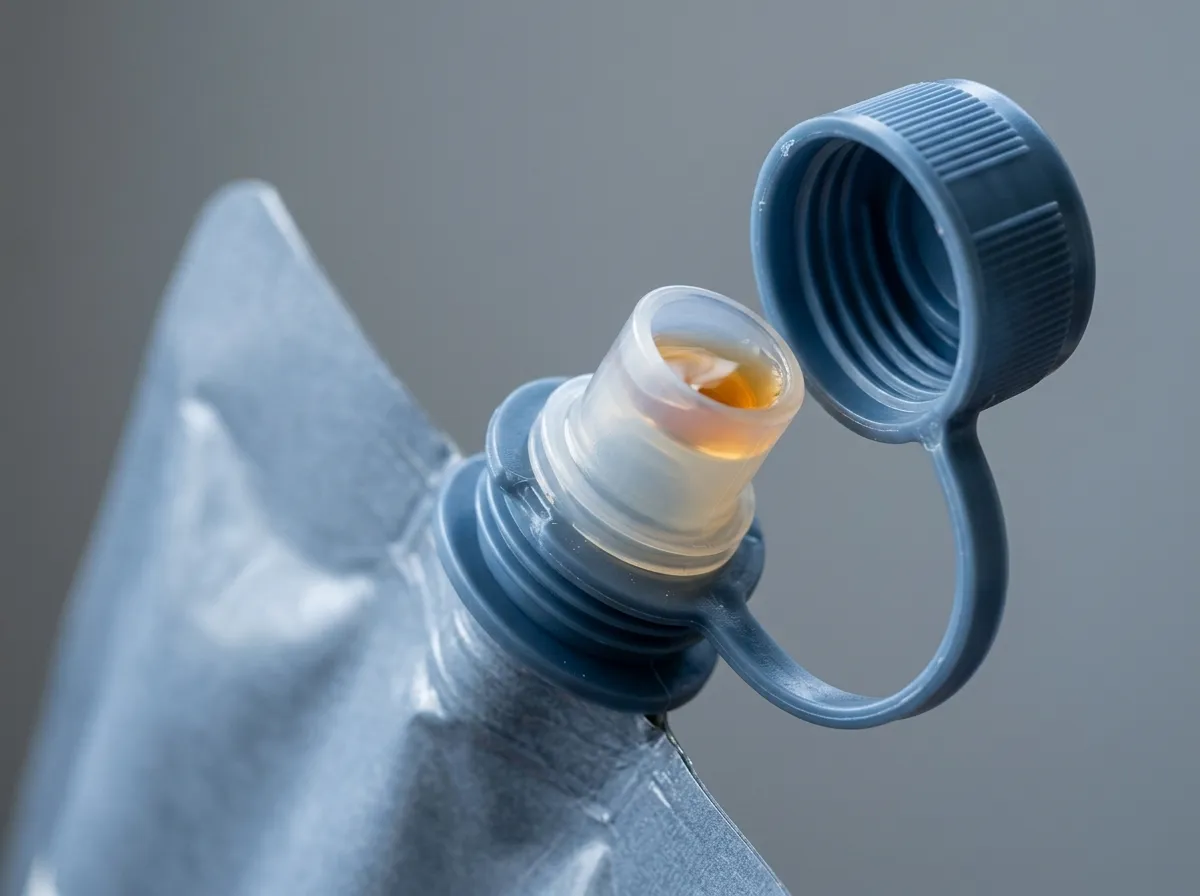
We manufacture exactly this configuration — an 8.6 mm European standard non-separated twist spout where the cap stays connected to the spout — alongside our standard screw caps. If you are transitioning a beverage pouch line for EU compliance, the tether design, the sealing window and the food-contact documentation all have to be re-validated together, and that is a conversation worth having before you commit tooling.
Recyclability: mono-material PE and the spout's role
The tethered-cap rule exists because loose caps are one of the most-littered items on European beaches. Recyclability pushes in the same direction: a cap that stays with the pouch has a better chance of being collected and recycled with it. But for spouted pouches, recyclability is not just about the cap design — it is about the film structure and the spout's sealing temperature.
Mono-material recyclable PE pouches are replacing multi-layer laminates because they can be recycled in PE streams. The constraint this creates for closures: a mono-material PE film has a lower sealant-layer melting point, so the spout must weld at roughly 110–130 °C rather than the higher temperatures older spout designs required. A spout engineered for high-temperature welding can scorch a recyclable PE film or weld inconsistently. When you move to recyclable packaging, re-qualify the spout's sealing window and confirm its materials still meet your food-contact rules — a food-grade spout is not automatically a recyclable-pouch spout.
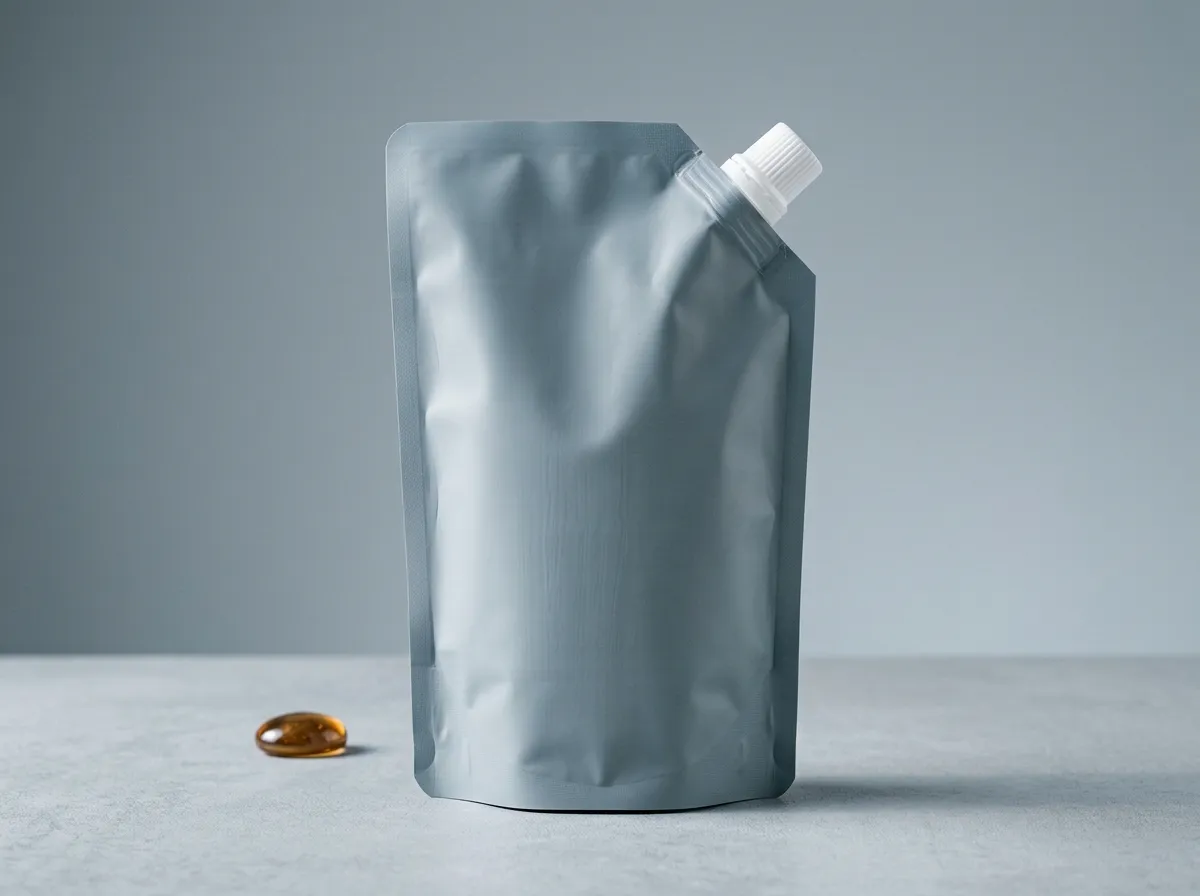
The recycling story does not end at the film. The closure itself has to be compatible with the sorting and recycling stream your pouch will enter. In Europe, design-for-recycling guidance — such as the RecyClass protocols used across national collection schemes — generally expects closures to be of a material and density that separate cleanly from the film, and attached caps are increasingly seen as an advantage because they travel with the pouch instead of being lost as micro-litter. For a spout cap, the practical questions are: is it PE or PP, does it float or sink in the sink-float separation tank, and does it detach from the film during shredding? Your supplier should be able to answer all three from their own product data.
If your recyclable pouch uses recycled content in food-contact layers, another EU rule comes into play: Regulation (EU) 2022/1616 on recycled plastic materials and articles intended for food contact. It replaced the earlier framework and sets out how recycled plastics can be used in food-contact applications, including the conditions for recycling processes to be authorized. Your closure supplier should be able to tell you whether their caps use virgin resin only, and whether any recycled content sits in food-contact layers — this is exactly the kind of detail that changes a compliance story.
For our part, our spouts are produced from food-grade virgin PP/PE and are designed to seal at 110–130 °C so they work with low-temperature-sealing recyclable PE films. For the practical side of matching a spout to a film — temperature windows, machine compatibility and sealing tests — see our guide to spout cap sealing temperatures.
What documents to demand from your supplier
You do not need to become a compliance engineer. You need the right documents, in writing, from the manufacturer. Send this list to any spout cap supplier — including us — and the quality of the answers will tell you a lot about the factory.
- EU Declaration of Compliance (DoC) — per Article 16 of Regulation (EC) 1935/2004, if you sell into the EU. Must name the applicable regulations and the materials covered.
- FDA compliance letter — for US sales, naming the specific resin grade and, ideally, the finished article, backed by test data.
- Migration test reports — overall migration and specific migration, with the simulants, temperature and duration stated. Conditions are the content.
- Sensory evaluation report — taste and odor neutrality for the finished cap.
- Extractives report — for the FDA route on polyolefins.
- GB 4806.7 compliance report — if you sell into China.
- System certificates — ISO 9001, HACCP and any BRC/SQF/IFS certificates, with certificate numbers and issuing bodies.
- Material declaration — virgin resin statement, no unapproved regrind, no optical brighteners or fluorescent agents.
- Batch traceability statement — how the factory guarantees production material matches the tested material.
- Recyclability data — sealing temperature range and compatibility with mono-material PE films, if you are moving to recyclable pouches.
If a supplier cannot produce items 3–5, they have resin evidence, not finished-article evidence. That distinction decides whether your pouch passes inspection in your target market.
Red flags: compliance gaps that pass a casual review
A few patterns recur in supplier audits and import inspections:
- One certificate for everything. A single FDA letter covering "food contact" with no regulation number, no resin grade and no finished article is a marketing document.
- Test reports without conditions. "Passed migration" with no temperature, no duration and no simulant list is meaningless. Conditions are the content.
- Ambient-only data for hot-fill or retort products. The most common silent gap in this category.
- A tethered cap treated as "the same product". If your beverage pouch needs a tethered cap for the EU, the geometry changed — migration evidence must be regenerated for the new design.
- No traceability. If the factory cannot say which resin grades and masterbatches are in the approved bill of materials, the tested sample and the production batch are different products.
How to spec compliant pouch closures from a manufacturer
First, fix your market and your process before you talk to suppliers: which countries will the filled pouch be sold in, is the pouch a beverage container (which decides whether the EU tethered rule applies), what is your fill temperature, is the product retorted, and are you moving to mono-material recyclable PE? Write these down — they determine which documents you need and which cap design you need.
Second, send the checklist above. Compare answers across suppliers, not just certificate names. A supplier who returns a full folder with conditions and test parameters is telling you their compliance is an operating system, not a slideshow. Ask the follow-up questions that separate real documentation from decoration: who is the issuing lab, which standard did they test against, and what was the exact test temperature and simulant? The answers to those three questions cost nothing to request and they surface most of the gaps described in the red flags section.
Third, order samples and test them in your own line: seal pouches, run them through your fill process, check torque, leak resistance and tamper-evident ring behavior. A cap that passes paperwork but fails your sealing window is not compliant for your product. If you are running a beverage pouch for the EU market, also verify the tethered behavior on your capping equipment — a hinge that binds on your line is a line-stoppage problem even when the design is perfectly legal.
This is the approach we take with our own customers: start from their market and process, then match spout diameter — our range spans 1.8 mm to 33 mm — sealing characteristics and materials to the application, and support each order with the documentation above. You can browse the full range on our spout caps page and read more about how we manage quality on our tech-quality page. For the engineering side of choosing a spout — diameters, threads and machine fit — start with our spout cap diameter guide.
Frequently asked questions
Does the EU tethered-cap rule apply to spout caps on pouches? It applies to caps and lids on single-use plastic beverage containers up to three litres, which includes drink pouches with spout caps. Pouches holding sauces, condiments, detergents or cosmetics are not beverage containers, so the rule does not apply to them — though attached caps are increasingly expected anyway.
What is the difference between EU 1935/2004 and EU 10/2011? 1935/2004 is the framework regulation for all food-contact materials; 10/2011 is the implementing regulation for plastics, setting the authorized substances list and migration limits. Both apply, and together they require the Declaration of Compliance.
Is "FDA certified" the same as EU compliant? No. The FDA does not issue certificates — it regulates food-contact substances under 21 CFR and FCNs. A cap that meets EU 10/2011 will usually satisfy FDA-oriented checks for PP/PE, but verify per market with a compliance letter naming the resin and finished article.
Do I need new migration testing if I switch to a tethered cap? Yes. The tether changes the cap's geometry and therefore its finished-article migration profile. Regenerate migration and sensory evidence for the tethered design, and re-qualify sealing on your line.