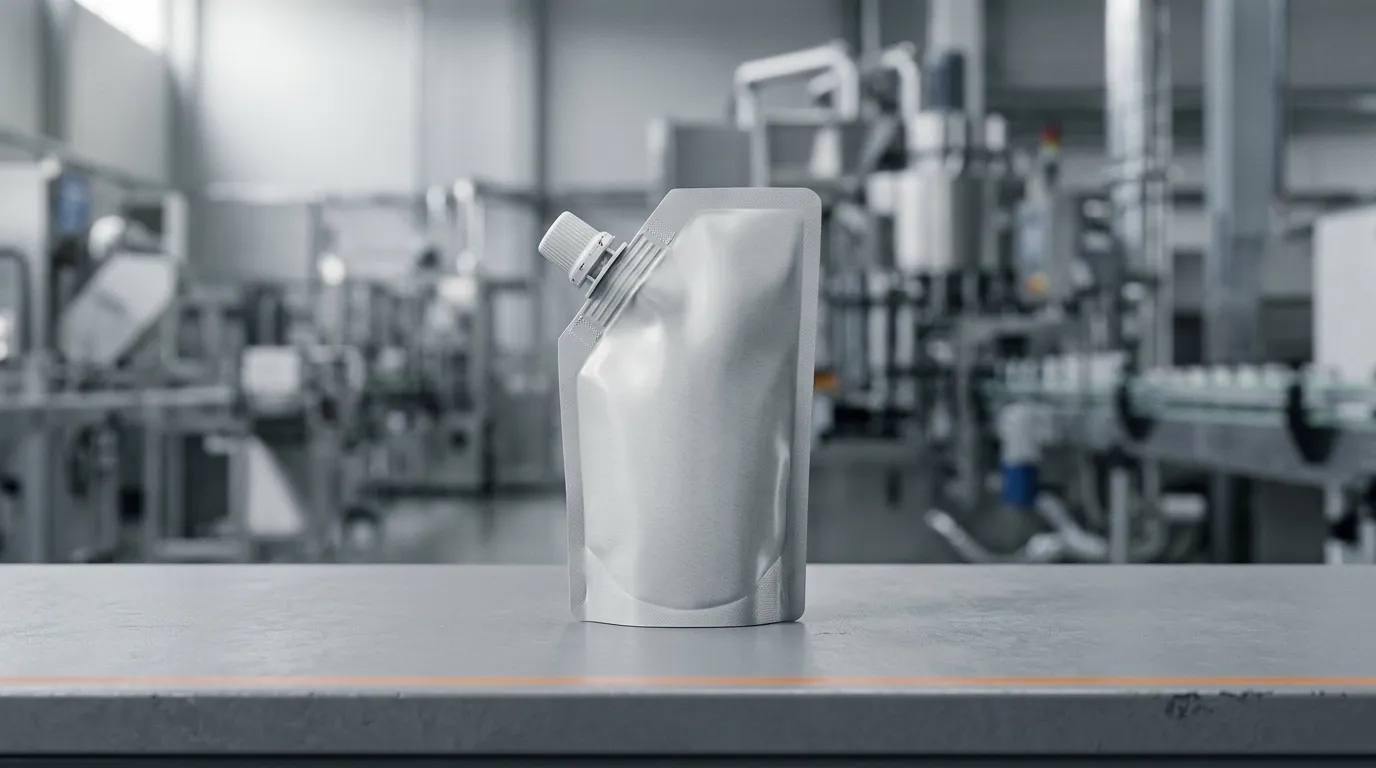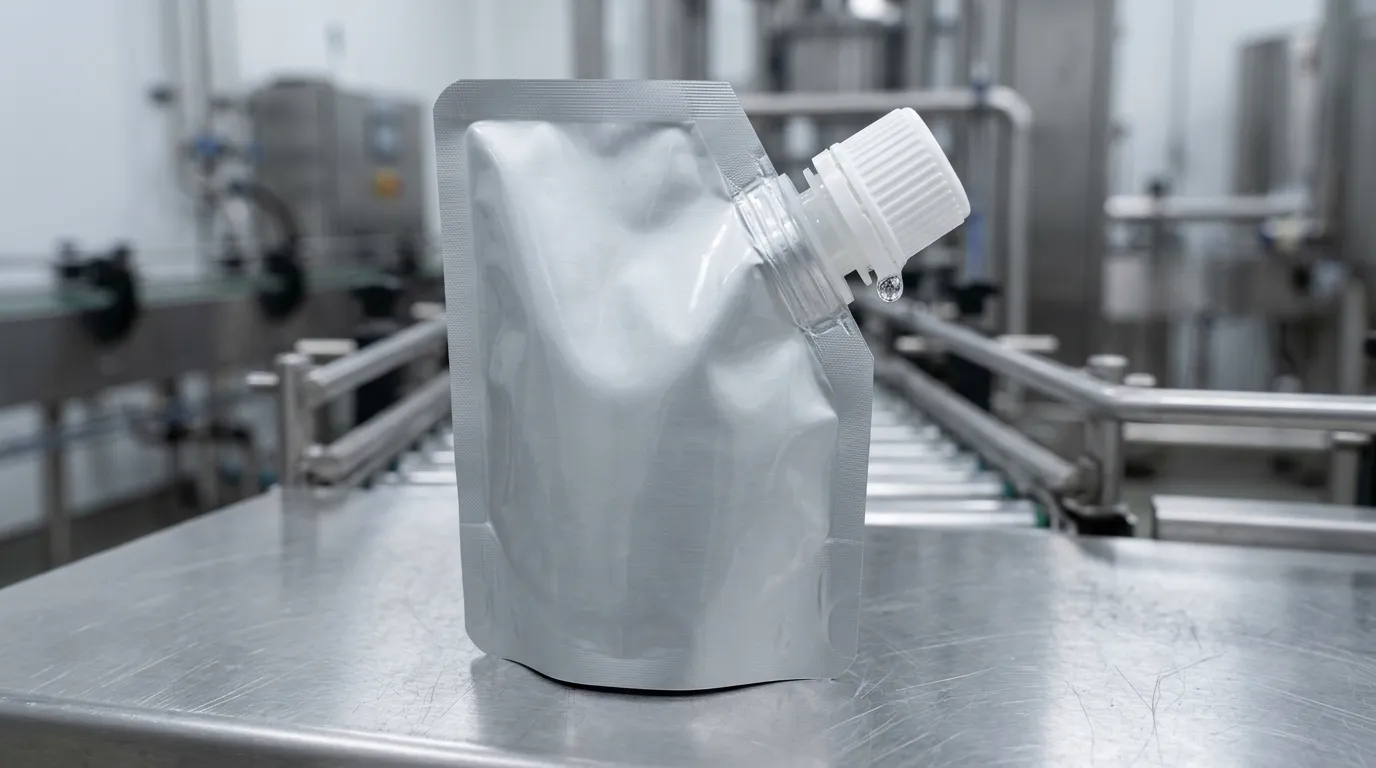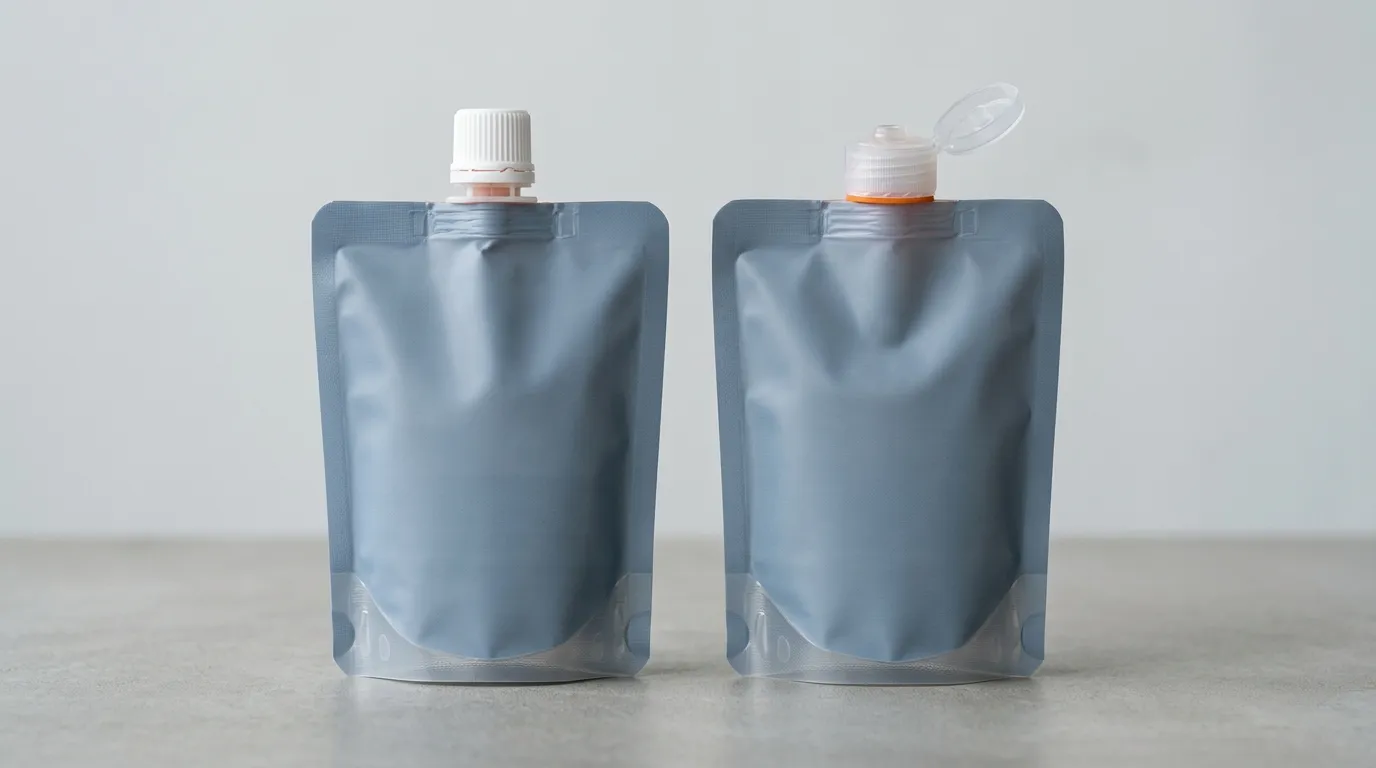


Most spout-cap datasheets give you one temperature number, if any. That is not enough to plan a line around, because a spout has to survive two completely different thermal events and they pull in opposite directions.
The first is sealing — the moment the spout's flange is welded into the film. That happens once, hot, for a fraction of a second. The second is processing — retort, hot-fill, pasteurisation — where the finished pack sits at temperature for minutes. A cap can be excellent at one and fail at the other.
Nobody in this category writes this down, so buyers usually discover the gap on a trial run.
Two numbers, not one
Sealing temperature is where your film and your spout have to agree. The flange has to soften enough to fuse with the film's sealant layer without the spout body distorting. Too cold and you get an incomplete weld — the classic leak that shows up after filling, not during. Too hot and the spout's neck or thread deforms just enough that the cap no longer torques down evenly.
Process resistance is a different property entirely. It asks whether the moulded part holds its geometry after twenty minutes at temperature and then cooling. A spout can seal beautifully at 120 °C and still creep out of round in a retort.
When you ask a supplier for "the temperature", specify which one you mean. If the answer is a single number, ask again.
The high end: 121 °C retort
Retort is the demanding case, and it is the one most food pouches actually face. Fifteen of our spout-cap models are rated for retort up to 121 °C — the temperature standard sterilisation runs at.
RD-001 is the reference: an 8.6 mm screw cap in food-grade material, GB 4806.7 and EU LFGB compliant, rated to 121 °C. It is the combination chilli and tomato sauce pouches need, which is exactly what it was developed for.
What "rated to 121 °C" has to mean in practice:
- The thread still torques correctly after the cycle. Sealing integrity is not just the weld; it is whether the cap and neck still fit each other once both have been through the heat and cooled.
- No deformation of the flange. If the flange distorts, the weld is stressed from the inside even though it was sound when it was made.
- No migration. At retort temperature material selection stops being about mechanics — a resin that is compliant at ambient is not automatically compliant hot.
If your product is retorted, treat 121 °C as a hard filter and ask for the test data rather than the claim. We build our own high/low-temperature, pressure, airtightness and torque rigs in-house, which is how these numbers get verified rather than assumed — more on how we test.
The low end: 110–130 °C, and where it currently applies
The other direction matters when your film is the constraint rather than your process. Mono-material recyclable PE structures seal at lower temperatures than the multilayer laminates they replace. Run a conventional spout into one and you either under-weld it or you scorch the film getting the flange hot enough.
Three of our models are built for that window and carry it in their name: RD-051 at 5 mm, RD-070 at 6 mm and RD-076 at 6 mm, all specified for 110–130 °C welding.
Two things worth being straight about. These three are small-bore parts, developed for cosmetic and personal-care sachets — body wash, facial cleanser, hand sanitiser. If you are packing a beverage in a recyclable mono-PE pouch at 8.6 mm or wider, the low-temperature version of that size is a development item, not a stock item. We cut our own molds, so it is a real conversation rather than a no — but it is a tooling conversation, and you should plan for it as one.
Second, low-temperature sealing and retort resistance are close to mutually exclusive by construction. A part engineered to fuse at 110 °C is not the part you retort at 121 °C. Decide which end of the window your product lives at before you shortlist.
How to check the window before you commit
The failure mode we see most is a spout and a film that were each specified correctly and never checked against each other. Four steps close that:
- Get the sealant layer's temperature range from your film supplier, not the film's overall rating. The sealant layer is what actually welds.
- Get the spout's sealing range and its process rating separately. Two numbers.
- Confirm they overlap with margin. A 5 °C overlap is not an overlap on a production line where jaw temperature varies across the tool.
- Trial with the real film, at line speed. Bench sealing at leisure proves very little; dwell time is part of the specification.
If you tell us the film structure, the sealant layer's range and your line's jaw temperature, we will tell you which of our models fits the window — and say so plainly if none of them does.
Related decisions
Temperature interacts with two other choices. Bore size changes flange width, which changes how the heat is distributed across the weld — see the diameter guide. And if your pack is child-facing, the anti-choking cap variants such as RD-030 carry their own retort ratings that need checking alongside the base.
Send us your film structure and line temperature and we will come back with a model, the test data behind it, and samples to run.