
The Short Answer: Yes, You Can Mix Models in One Order
If you're sourcing spout caps for stand-up pouches (doypacks) and you've been wondering whether a mixed model order — several different cap models on a single purchase order — is possible, the answer is yes. Mixing models in one order is standard practice here. What changes is the MOQ (minimum order quantity), which we define as the smallest quantity a supplier will produce in a single run (Wikipedia). And the MOQ depends on which path your order takes: stock, custom color, or custom tooling.
The rule in one line: stock models can be ordered in any quantity, custom colors carry a higher minimum, and once a dedicated mold exists, there is no minimum at all. The sections below explain why that structure exists and how to use it to keep your first order small.
What a Mixed-Model Order Means for MOQ
A mixed-model order is one purchase order that lists several different spout cap models — for example, an 8.6 mm screw cap for tomato sauce pouches, a 9.6 mm pilfer-proof cap for sauce sachets, and a 14 mm screw cap for baby food pouches, all on the same PO.
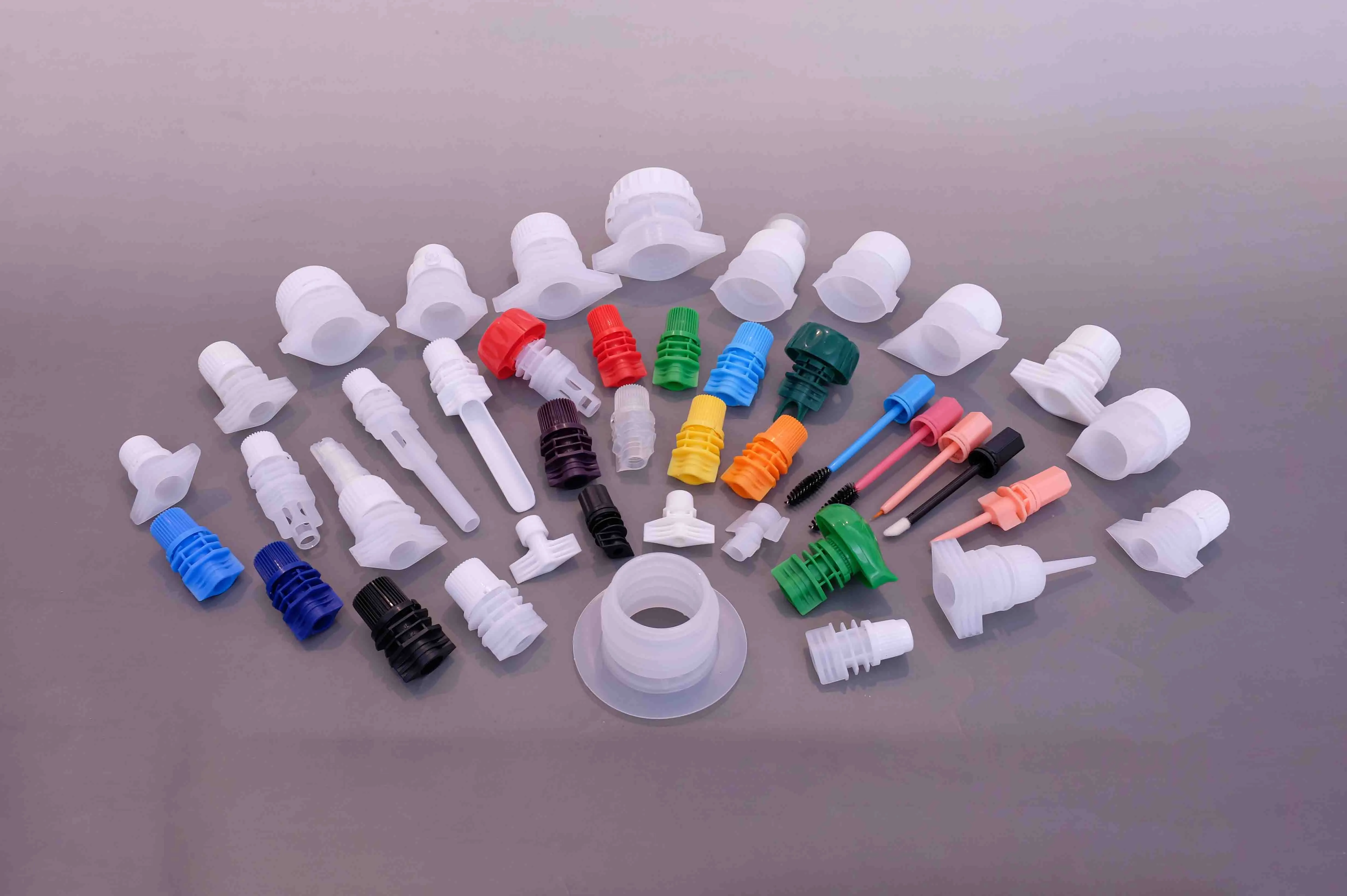
Buyers ask for this because they rarely launch one product at a time. A pouch converter may be quoting three SKUs to the same brand; a private-label buyer needs trial quantities of several sizes before committing. Ordering them separately means multiple freight charges, multiple minimums, and excess inventory for products that may not sell.
The MOQ question on a mixed order is really two questions. First, does each model have to meet its own minimum? Second, is there a minimum for the order as a whole? Suppliers answer those differently, which is why the rule has to be written explicitly on the quotation.
A related question buyers often ask: does mixing models get you a better price? Not directly. Each line is quoted at its own volume — a small quantity of one model doesn't piggyback on a large quantity of another. What mixing does save you is everything around the order: one PO, one set of documents, one freight booking, one customs entry. For a first order, those fixed costs often matter more than the unit price difference. Our sourcing and supply guides cover the wider buying process; this article focuses on the mixing and MOQ rules themselves.
MOQ by Order Path: Stock, Custom Color, Custom Tooling
MOQ is not one number. It changes with how much of the production process your order touches. For spout caps from this factory, there are three paths:
Order path | What it means | MOQ |
|---|---|---|
Stock models | Standard models already in production and kept in regular stock | Any quantity |
Custom color | Standard model, color matched to your Pantone number | 100,000 pieces (special cases negotiable) |
Custom tooling | A new mold built for your cap design | No MOQ after the mold is completed |
If a supplier answers "what's your MOQ?" with one number, they're quoting you the worst case. Ask for the rule per path — stock, custom color, custom tooling.
Two things stand out versus the typical supplier. Most factories price with a ladder: order more, pay less per piece, and the minimum is simply "a lot." Our structure is different — the custom-color path has a higher minimum than the custom-tooling path. That looks backwards until you understand the economics, which the next sections explain.
One more thing worth noting: the MOQ row in this table is the answer to the question "what is the smallest quantity I can order of this type?" It is not a price tier. Ordering above the minimum doesn't automatically lower the unit price on every line — volume pricing is quoted per order, so ask how the volume ladder applies to your line quantities. If you're comparing quotes, our breakdown of what drives spout cap pricing shows how those numbers are built.
Four Stock Models You Can Order in Any Quantity
The most useful consequence of the stock path: if your spec fits one of the regular stock models, there is no MOQ pressure at all. A few hundred pieces for a trial run and a truckload for a launch are both fine.
These four are the models kept in regular stock, but the catalog runs wider — spout inner diameters from 1.2 mm to 40 mm across more than a hundred SKUs — so if your spec is close but not exact, ask whether a neighboring model is stocked or can be run on short notice.
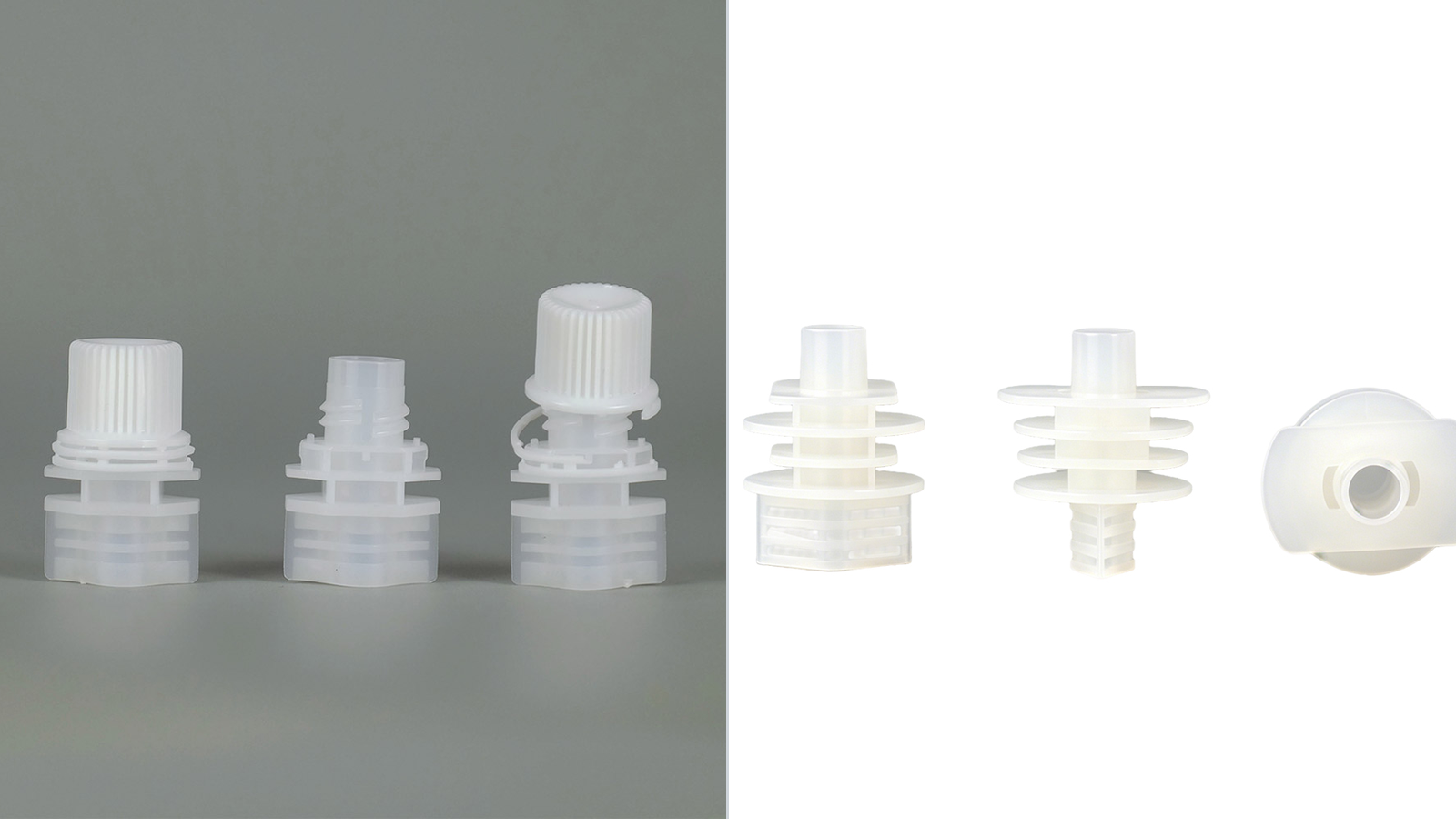
Four spout cap models are kept in regular stock for fast shipment:
- RD-001 — 8.6 mm food-grade screw cap, suitable for retort and pasteurization up to 121 °C; a workhorse for sauces and purees.
- RD-010 — 9.6 mm pilfer-proof cap; the break ring gives consumers visible proof the pouch hasn't been opened.
- RD-013 — 12 mm leak-resistant cap, often used for thicker contents.
- RD-014 — 14 mm screw cap, often used for baby food and beverage pouches.
Because these models are already running on the production lines, they ship faster than made-to-order items — our comparison of stock vs made-to-order spout caps walks through the lead-time difference. If your application fits one of these four, you can mix any of them on one order, in any quantity, without touching the minimums below. All stock models are molded in food-grade PP/PE under ISO 9001 and HACCP systems, with FDA and EU 1935/2004 food-contact compliance — the US side is regulated by the FDA food ingredients and packaging program, and the EU applies its framework regulation on food contact materials.
Custom Color: The Higher-MOQ Path, Explained
The standard color for these spout caps is white. If you need a color matched to your brand, the factory matches your Pantone number on a per-order basis — not from a shelf of pre-colored stock.
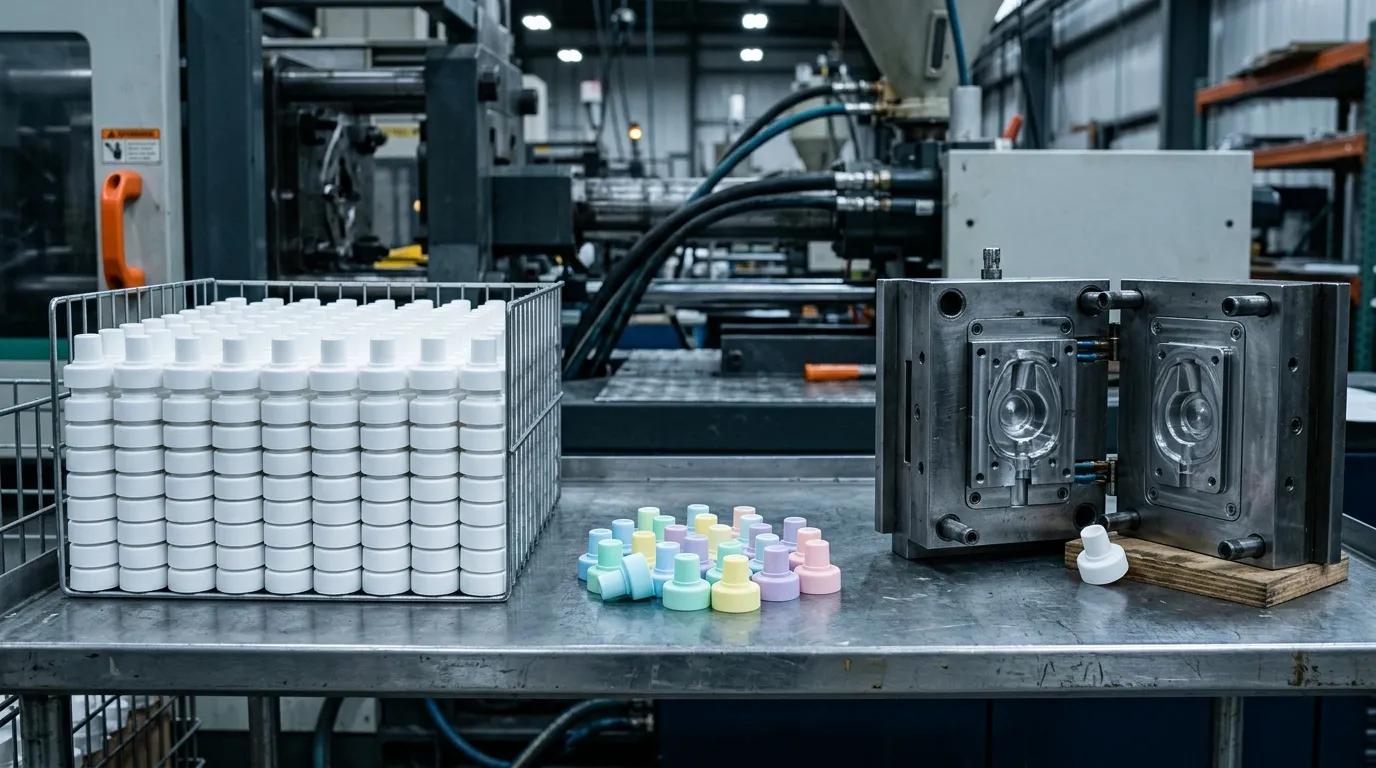
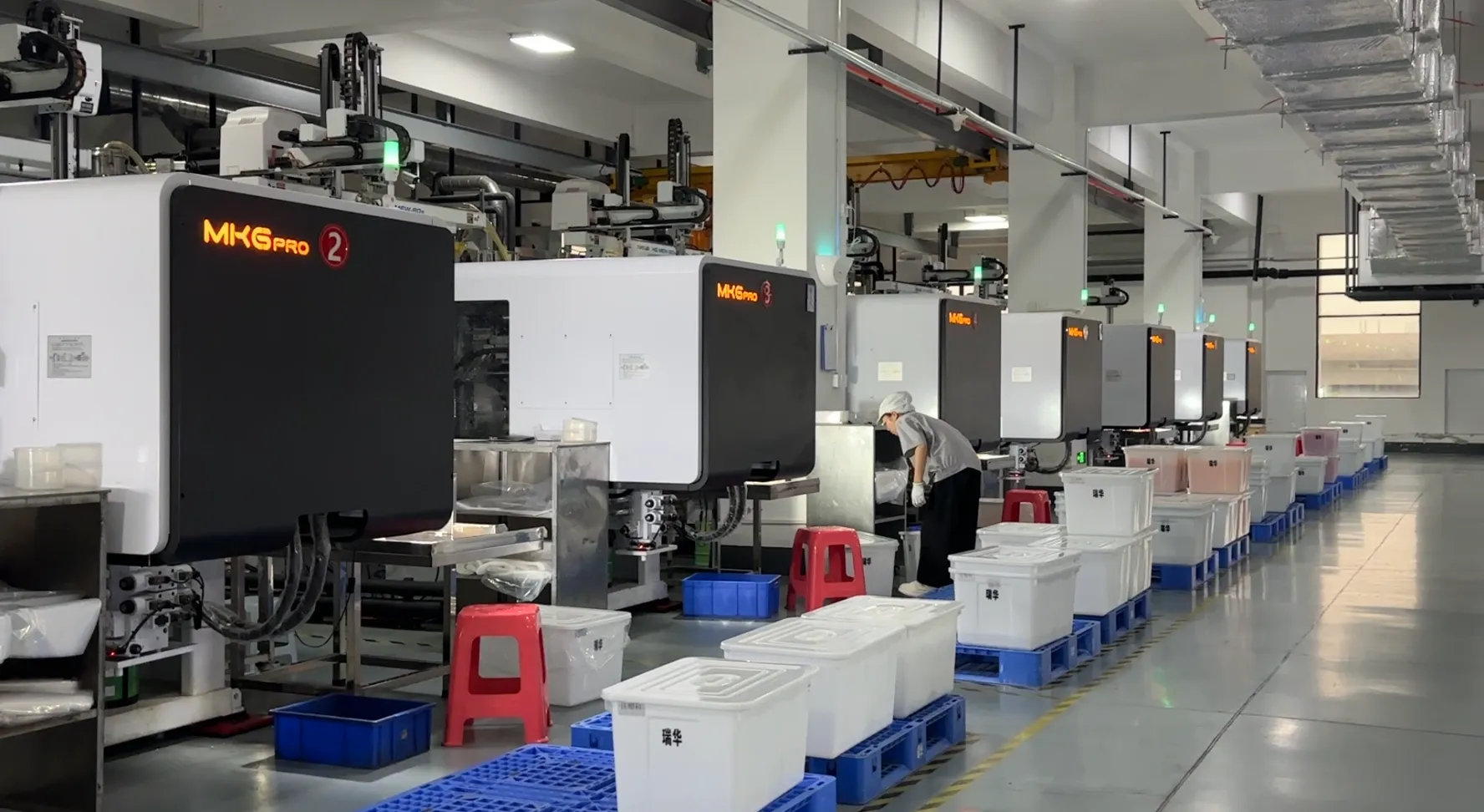
The custom-color MOQ is 100,000 pieces, with special cases negotiable. Why so high? Changing color on an injection molding line means stopping production, flushing the material feeding system, and running until the shade is stable. The machine is effectively down for the color change, and a small run doesn't pay for that downtime — the same reason any molder charges a color-change premium.
Worth knowing before you plan a trial: if a colored cap is essential for your launch, budget the volume or ask about a special-case arrangement. If white works for the first run, you stay on the stock path and keep the minimum at zero.
To see why the color premium exists in practice, consider a detergent brand that wants its signature blue cap. The line has to stop, purge the white resin from the feeding system, and hold until every shot comes out in the right shade. That setup time is the same whether the run is 20,000 or 200,000 pieces, so the factory needs enough volume to absorb it. This is also why the standard color is white rather than a shelf of pre-colored options: most orders run in white, and color is matched per order.
Custom Tooling: No MOQ After the Mold Is Made
The third path — custom tooling — is where the MOQ disappears. When your cap design doesn't exist yet, Ruihua builds a dedicated mold. The process runs in four steps:
Step | What happens | When |
|---|---|---|
| 3D drawing locks the cap structure | Before any mold quote |
| 3D-printed sample for fit testing | After the drawing is confirmed |
| Mold production | About 60 days |
| Mass production from your mold | After tooling is completed |
Once your mold exists, there is no minimum order quantity. Supply follows your demand, not a volume floor. The logic is simple: the mold belongs to your project, and the factory's economics are covered by the tooling investment rather than by per-order volumes. This is why the post-tooling minimum can be zero while the custom-color minimum stays high. Reorders from the same mold are straightforward — the tooling is proven, the process parameters are set, and supply simply follows your schedule.
Two practical notes. First, a mold quote cannot be given before the 3D drawing — mold cost depends on structure complexity, cavity count, and steel, none of which exist until the design is defined. Second, the in-house mold shop has been running since 1999 and holds 38 patents, so design, tooling, and production live under one roof. Our article on custom spout cap tooling cost breaks down what drives that investment.
How to Plan a Mixed Order That Ships Fast
You can combine all three paths in one order — two stock models at low volume, one custom-color line, and one tooling project. Each line is quoted under its own path's rules, but they can share a PO and a shipment. To keep the whole thing fast:
- Anchor on the stock models. Check RD-001, RD-010, RD-013, and RD-014 first. If your spec fits, you've already avoided every minimum.
- Decide the color early. White keeps you on the stock path; a Pantone match adds the 100,000-piece consideration. Decide before asking for quotes.
- Order samples before volume. Samples confirm sealing behavior with your pouch film and filling line — far cheaper to iterate on than a full run. Ask for samples of every model you plan to mix, so the whole set is validated at once.
- Confirm lead time per line. Stock models ship fastest; a custom color adds setup; a new mold adds roughly 60 days of tooling before production. Knowing each line's timeline keeps the combined shipment from waiting on the slowest one.
- Combine shipments. Put every path on one PO and one freight booking. That is where the real savings of a mixed order show up.
None of this requires a huge first order. The structure exists so a brand can validate packaging with small quantities and scale once the product sells. A mixed order is also the lowest-risk way to test a new supplier: you see how the stock, custom-color, and tooling lines each behave — quoting, sampling, quality, communication — before committing serious volume to any one of them.
FAQ: Mixing Models and MOQ
Can I mix stock and custom-tooled models in one order? Yes. Each line follows its own path's rules, but they can sit on the same PO and ship together.
Does every model have to reach the MOQ individually? Only on custom-color lines, where the 100,000-piece rule applies per color per model. Stock models have no minimum, and tooled models lose theirs once the mold exists.
Do samples count toward the MOQ? No. Samples are a separate small-quantity step that confirms the fit before you commit to production volumes, so they're handled outside the MOQ discussion.
How is this different from other spout cap suppliers? Many factories quote one high minimum for everything. Here the minimum depends on the path: zero for stock, high for custom color, zero again after tooling. When you compare quotes, ask each supplier for their rule per path — not a single "MOQ" number.
How long does a mixed order take? It depends on the slowest line. Stock models ship quickly; a custom color adds a setup cycle; a new mold adds about 60 days before mass production starts. If you need stock models urgently and the custom work later, say so — the stock part can ship ahead instead of waiting for the rest.
Get a Quote for Your Mixed Order
The fastest way to know what a mixed order costs is to send the model list with estimated quantities, noting which models are stock, which need a color match, and which need a new mold. We come back with a per-line quote that shows exactly which lines have no minimum at all — so you can trim the order before it grows. Start with the four stock models to see how far zero-MOQ gets you, then request a quote with your full list.