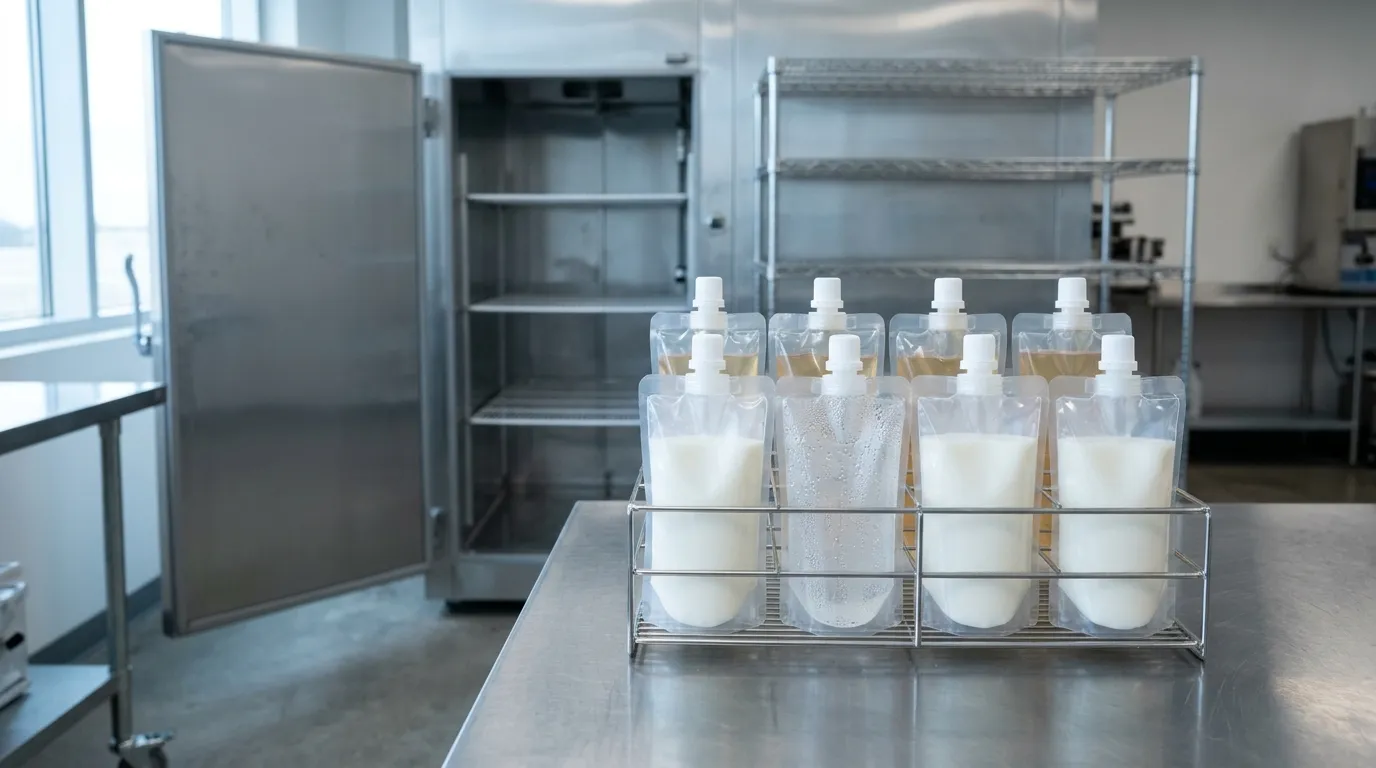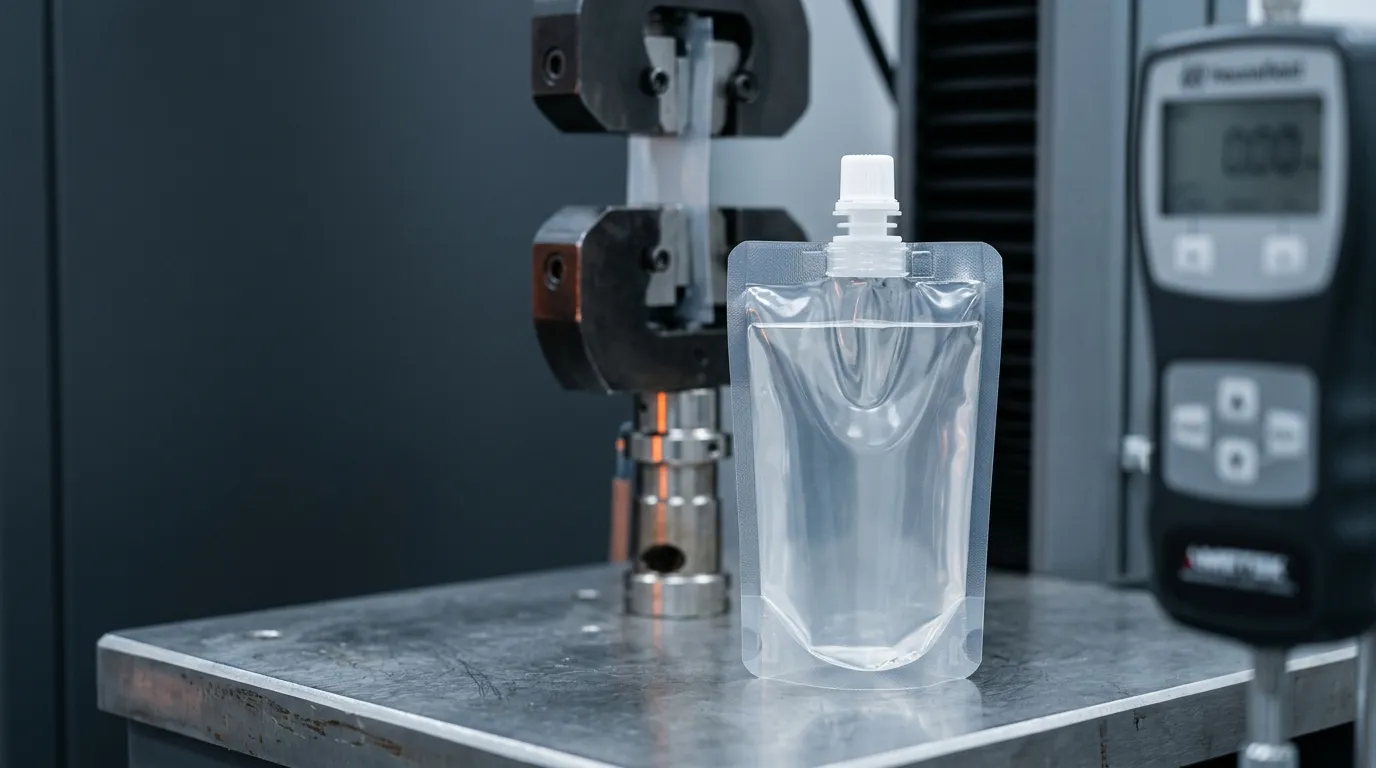

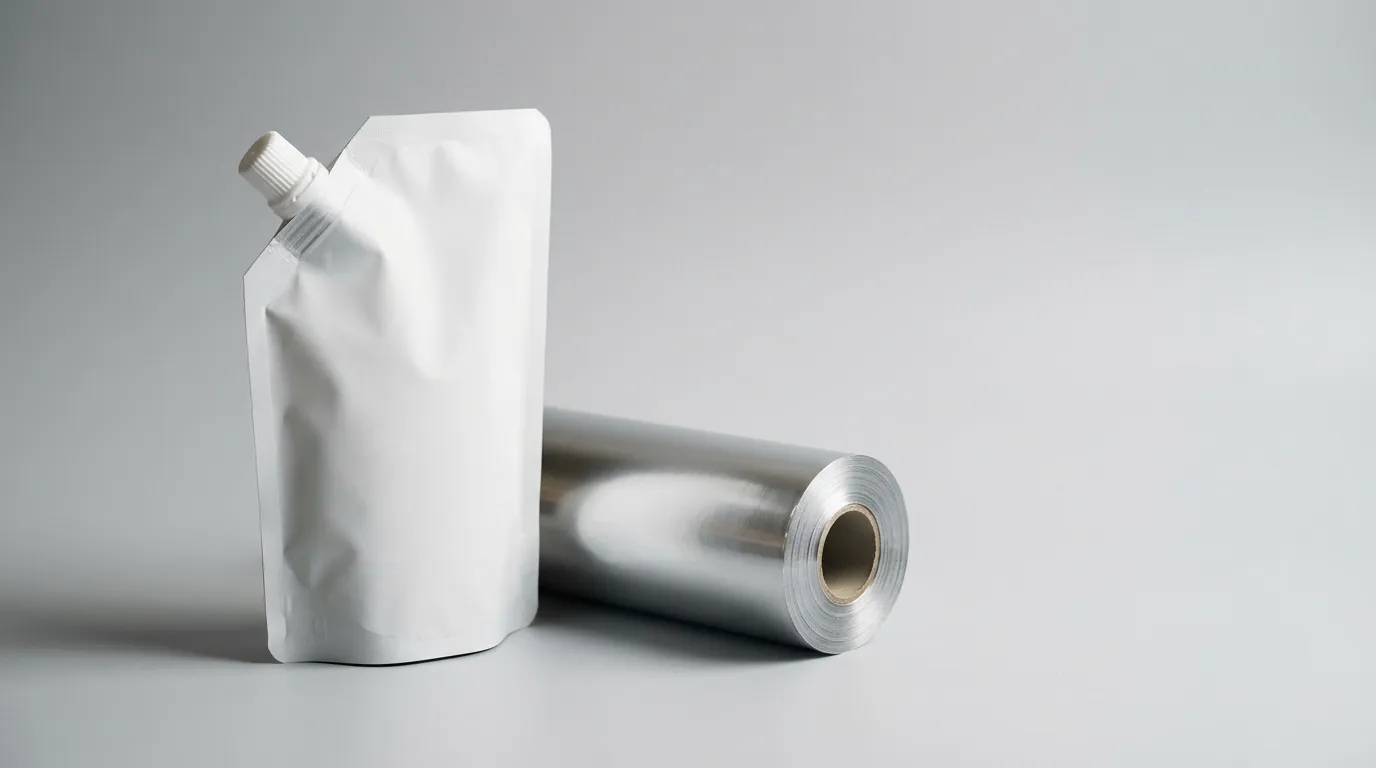
Direct answer. A film barrier number describes the laminate. It does not describe the pouch. The oxygen transmission rate (OTR) measured on a flat specimen is an area-normalized material property: gas crossing a known area of web, under a stated temperature, humidity and oxygen partial pressure. A spouted stand-up pouch is a closed three-dimensional assembly. Between the laminate and the finished pack sit a molded fitment, a welded flange ring, a seam set that runs around every edge, and a volume of air sealed in at the fill head. None of those terms is in the film number, and no arithmetic correction turns one into the other. If you need a figure that describes the pack, it comes from a package-level test, run next to a leak test rather than instead of one.
This is written for the person signing off a spouted pouch or doypack for a product that cares about oxygen: juice, puree, sauce, a liquid supplement, a cosmetic emulsion. A gas-can spout cap is a different product family, and the fitment guidance here does not transfer to it; everything on this page is about pouches. And if the closure itself is still open, the guides on choosing and running spout caps settle bore, resin and sealing window before any of this matters.
What a Film Barrier Number Actually Measures
The specimen is a flat piece of the finished laminate, clamped as a sealed membrane between two chambers. One side is challenged with oxygen; the other is swept with a nitrogen carrier gas that carries whatever crossed to a coulometric sensor. That sensor is where the number comes from: the oxygen is reduced electrochemically at an electrode, and the current the reaction produces is proportional to the amount that crossed. That is the shape of ASTM D3985, and its scope is film, sheeting, laminates, coextrusions and plastic-coated papers or fabrics — a list of flat things. The result is quoted per unit area, in cubic centimeters per square meter per day at one atmosphere of driving pressure difference, and it means nothing until the temperature, the relative humidity and the oxygen partial pressure are quoted beside it. Instrument makers describe the specimen plainly: a flat film such as the sidewall of a pouch.
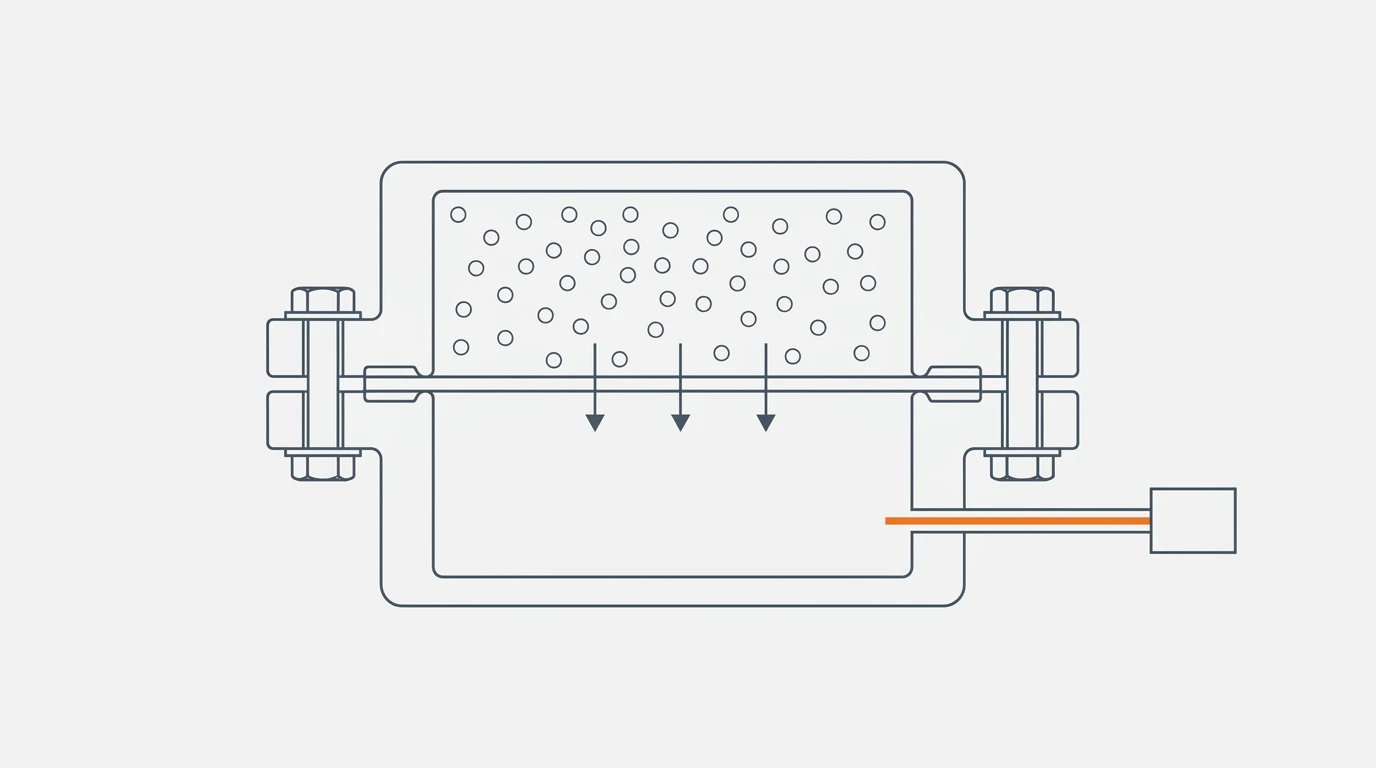
That phrase is the whole problem. The sidewall of a pouch is not the pouch.
Humidity is not a footnote. D3985 runs dry. Ethylene vinyl alcohol and polyamide take up moisture and lose barrier as they do, so a dry-cell result can flatter a structure that will spend its life in a humid warehouse or hold a water-based product. The same method at controlled humidity — ASTM F1927 — exists because "zero humidity, or at best an assumed humidity" is not the condition a pack actually meets.
Water vapor is a second measurement. The water vapor transmission rate (WVTR) is quoted separately, and legitimately so: a structure can be a strong oxygen barrier and a weak moisture barrier, or the reverse. When a quote arrives with one line labeled "barrier", the first question is which of the two it is.
None of this makes the film number untrustworthy. It makes it specific. It answers a real question — is this web the right barrier for this product — and it answers it well. The trouble starts when the same number is read as an answer to the next question.
Why the Same Laminate Stops Describing the Pouch
Four things change at the moment the web becomes a pack, and one more step can change them again afterwards.
The surface is no longer a plane. A pouch is not a flat blank with a known area. Gussets unfold into two extra panels that sit against the product. The shoulder curves into the spout. The top seal is a compressed, folded strip rather than a plain wall, and where a barrier layer is present — metallized PET, aluminum foil, a coated film — the heat and pressure of that seal act on it. Multiplying a film OTR by length times width produces a number, but it is a number about a flat bag, not about the pack in front of you.
A molded fitment is welded into the top seal. The spout body is injection molded, with a wall many times thicker than the film it is joined to, and its flange is sealed between the two webs. That weld ring is a bond between a molded part and a laminate — a different interface from a film-to-film seal, made at a different temperature, pressure and dwell. It is also the one part of the pack whose transmission behavior was never in the datasheet at all.
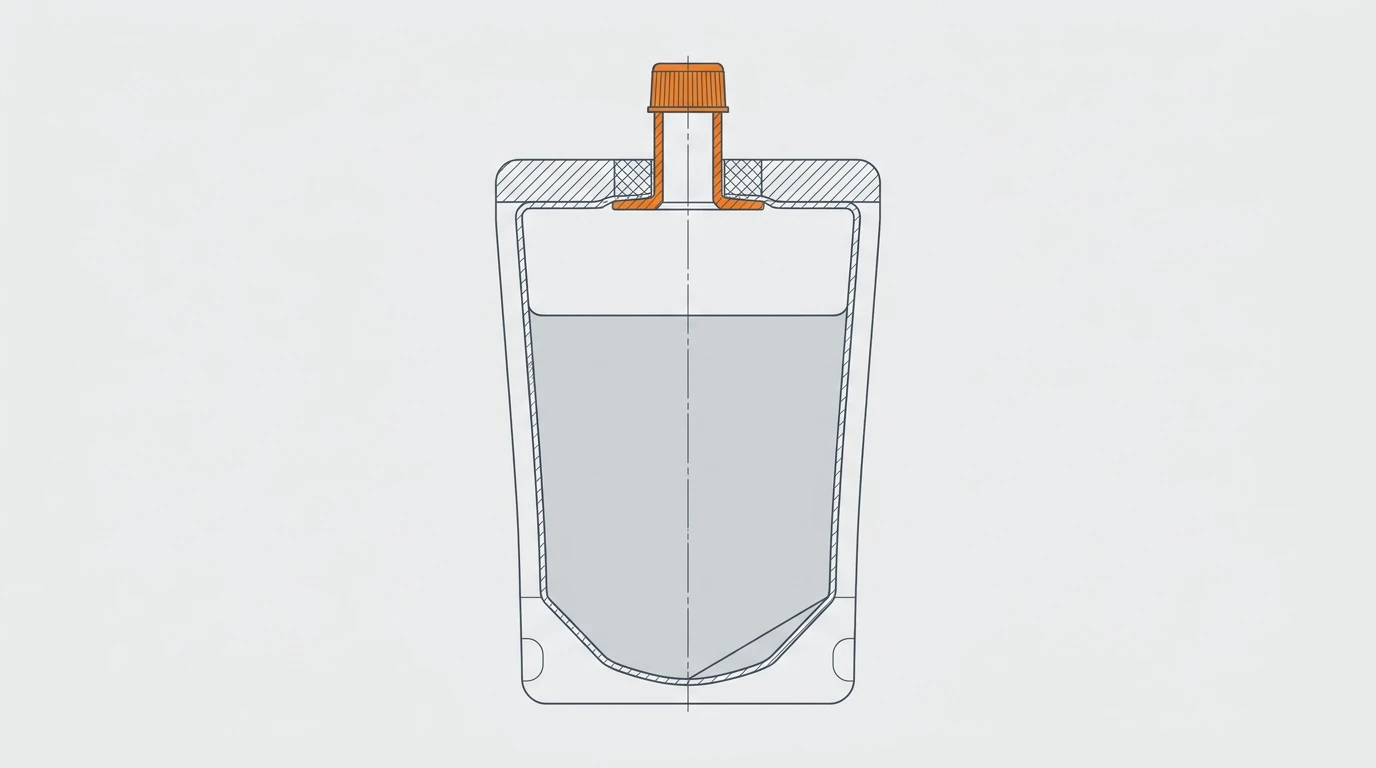
The closure is a mechanism, not a wall. A screw cap, a flip-top or a push-pull head gets opened and closed for the life of the pack. Whatever it contributes to oxygen ingress, it contributes through a seat and a thread, and it does so differently on the twentieth opening than on the first. That is a use property, and no transmission rate describes it.
The pack has an inside. The air sealed in at the fill head contains oxygen, and it is already there before the first molecule crosses the film.
Retort and hot-fill are that extra step. The retort cycle's temperature and pressure act on the barrier layer and on the flange weld alike, so a laminate figure quoted before processing is a measurement that has to be taken again afterwards. On the fitment side the window is a sealing temperature, not a barrier value: a spout whose sealing window is 110–130 °C is what makes that weld compatible with a low-temperature PE sealant layer.
There is a recycling consequence hiding in this list. A mono-material PE pouch exists because the foil or metallized layer that carried most of the barrier has been removed on purpose. The laminate's barrier figure drops accordingly — and the share of the pack's performance that belongs to the fitment, the weld ring and the seam set goes up, not down.
Three Things a Whole-Pouch Test Sees That a Film Test Cannot
Package-level oxygen transmission
ASTM F1307 is written for dry packages, and the change of subject is the point: the finished package is the test cell. Its interior is purged with nitrogen, the outside carries the oxygen challenge, and whatever crosses the whole assembly — wall, seams, flange weld, spout body — is carried to a coulometric sensor. The result is a volume of oxygen per package per day.
That unit is the tell. It cannot be converted to a per-area figure by dividing by surface area, because the assembly does not have one surface with one property. Accredited laboratories run this as a service on finished packs; it is the number that belongs in a shelf-life calculation, and it is usually the number a laminate datasheet does not contain.
Leak, which is a different failure altogether
A pinhole, a channel along a seal, a flange weld with a cold spot: gas moves through a defect by flow, not by diffusion. That is not a permeation rate and it does not belong on the same axis. It is a defect, and it is found with an integrity test. ASTM F2338 covers non-destructive leak detection by vacuum decay and states its scope as including nonporous flexible packages, which is the category a spouted pouch falls into. A strong weld that channels at one edge passes a peel test and fails a leak test, which is why seal strength and seal integrity deserve separate lines in a specification.
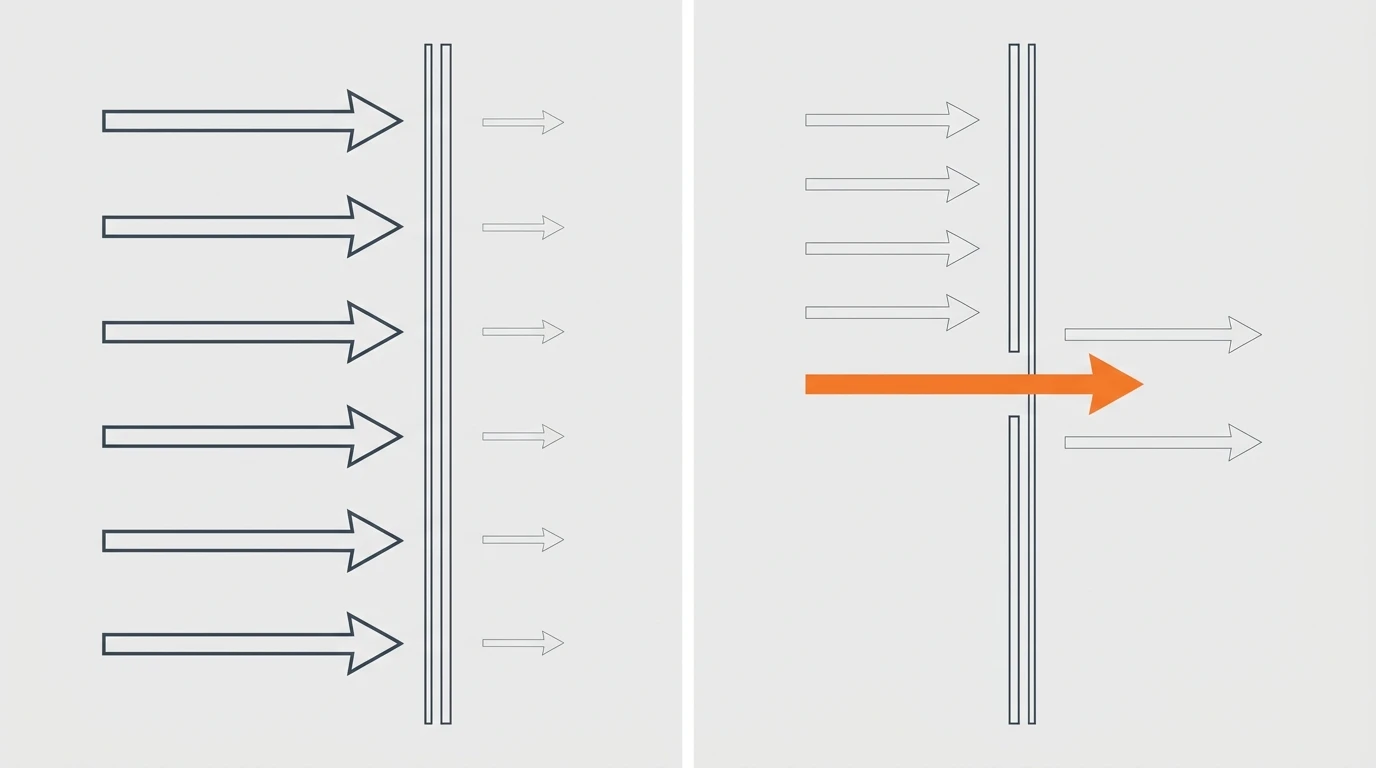
The operational difference matters more than the terminology. A package OTR test reports the average behavior of a pack that is intact. A pack with one channel in the flange weld can still return a plausible-looking OTR figure, because the defect's contribution gets absorbed into the total. Run leak test methods by production stage separately, and the defect shows up as a fail instead of as a slightly worse number.
Headspace oxygen, the cheapest lever
Purge quality, fill temperature, the moment the seal closes: these set the starting inventory of oxygen inside the pack. A wall that transmits nothing measurable still leaves you with whatever went in. This is the one term entirely within the filler's control, the one that costs nothing to improve, and the one that appears in no laminate datasheet anywhere.
Why One Number Cannot Be Converted Into the Other
The temptation is arithmetic: take the film OTR, multiply by the pouch's surface area, call it a per-package rate. It survives as an order-of-magnitude sanity check for a plain bag, and it fails as a specification, for reasons that are separate and any one of which is enough.
The unit is wrong. Per area and per package are different quantities. A conversion needs an area, and you do not have one — see the next point.
The area is wrong. Gussets, the curved shoulder, the folded top seal and the flange are not the flat blank. Part of the surface is a double layer, part is a heat-affected zone, and part is molded resin.
The conditions are wrong. Dry-cell data compared against a pack that will sit at high humidity is comparing two different materials, not two measurements of one material. This is the most common error in the category and the easiest to make honestly.
The terms are missing. The fitment, the weld ring, the seam set and the headspace have no entry in the film number at all. No amount of arithmetic recovers a term that was never measured.
The standard number is often the wrong one. Supplier comparison tables still list ASTM F2622 as the package method. F2622 is a film and sheeting method that allows various sensors; the dry-package method is F1307. A specification citing F2622 for a pouch has a citation problem even when the value behind it is real.
There is no report behind the number. A figure from a sales deck, an undated datasheet, a value borrowed from a different structure that "should be about the same". None of these is a measurement of your pack, and all of them survive into specifications because nobody asks to see the report.
There is one more reason that catches people later: a package-level result is one number for one design at one set of conditions. Change the spout, the cap, the seal band width, the fill temperature or the laminate, and you are holding a new measurement, not a corrected old one. That is why the table below exists — not to be exhaustive, but to stop a single figure from carrying a decision it cannot carry.
The Four Numbers a Spouted Pouch Specification Should Carry
# | Number | Unit and conditions | Produced by | The question it answers |
|---|---|---|---|---|
1 | Laminate OTR, dry cell | cc/(m²·day) at stated temperature, RH and oxygen partial pressure | Converter or its laminate supplier | Is this web the right barrier for this product? |
2 | Laminate OTR, controlled humidity | Same unit, at stated elevated RH | Converter or an accredited lab | Does the barrier survive moisture? Needed whenever an EVOH or polyamide layer is in the structure. |
3 | Whole-package OTR | cc/package/day at stated conditions | Accredited lab, on finished packs | How much oxygen enters this pack design per day? |
4 | Integrity result and headspace oxygen at seal | Pass/fail plus a measured value, taken at t = 0 | Converter QA, or the filler's own QA | Is the pack closed, and what did it start with? |
Add a fifth line for WVTR if the product is moisture-sensitive rather than oxygen-sensitive, and state which of the four the number you were given actually is.
The last column is the part that gets skipped. A quote offering "high barrier" without naming which of these four sits behind the phrase has not told you anything you can put in a specification — and if the answer arrives as number 1 when your shelf-life question needs numbers 3 and 4, the quote is not wrong, it is answering a different question. Getting from a materials pass to a shelf-life conclusion is its own discipline: compatibility testing is not stability testing, and a real-time or accelerated study is what closes the gap.
What to Ask the Converter, and What to Ask the Fitment Molder
Ask the converter | Ask the fitment molder |
|---|---|
The full layer structure, in order, with the barrier layer identified | Bore diameter and its tolerance |
The test conditions behind every OTR figure — temperature, RH, oxygen partial pressure | Flange dimensions and flange thickness |
Whether the figure is a laminate value or measured on a sealed pack | Resin grade, and the food-contact documentation that goes with it |
Seal band width and the sealing window for the structure | The sealing window the fitment is specified for, against your sealant layer |
Any package-level result they already hold | Cap torque and reclosure behavior after repeated cycles |
Whether the quoted barrier survived the sealing trial | Thread specification, so the capping head can be set once |
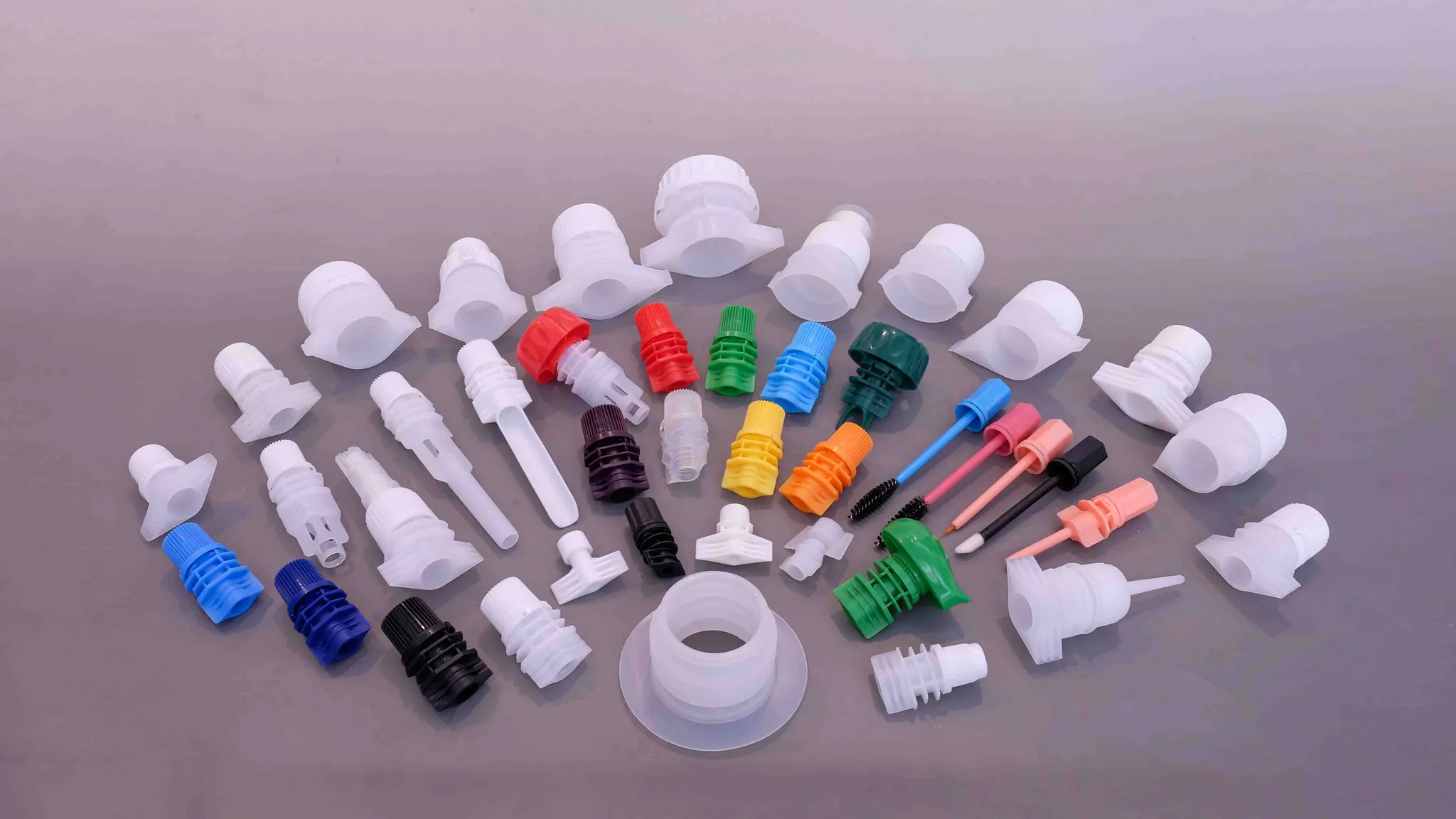
Splitting the table this way is not a formality. The two columns are answered by two different companies, and a specification that merges them tends to end up with one number standing in for six.
Ruihua's own split is the second column. We mold the fitment: bore, thread, flange geometry, resin grade and the sealing window specified against a given film. We do not laminate the film, and we do not issue a whole-pouch oxygen figure, because that measurement belongs to the finished pack and to the laboratory that ran it. What we can hand over is the fitment data the converter needs to build and test the pack — and a straight answer when a specification asks us for a number that is not ours to give. Our spout caps and fitments are specified that way: dimensions, resin, sealing window.
FAQ
Can I estimate what my pouch will do from the film OTR?
To an order of magnitude, and only for a plain bag with no fitment. That estimate tells you whether you are dealing with a high-barrier or a low-barrier structure. It does not tell you whether the pack meets a shelf-life target, and it should not appear in a specification as though it did.
Does the spout let oxygen through?
The molded body is thick compared with the film and is not where the interesting question sits. The interface is: the flange weld, the seam that meets it, and the cap seat after repeated opening. Those are integrity questions, tested as leaks and as closures, not as transmission rates.
Why did my pouch fail a shelf-life test when the film passed?
Most often one of three: the headspace started with more oxygen than assumed, a seal or flange weld is channeling, or the test conditions did not match the storage conditions the film was tested at. A package-level test plus a leak test separates those three faster than any argument about a datasheet.
Which figure goes into the specification I send my customer?
Whichever one answers their question, named as such. If they ask about shelf life, give them a package-level result with its conditions attached, plus the integrity result. If they ask about the material, give them the laminate figure with its conditions attached. Handing the material figure to a shelf-life question is the failure mode this article is about.
What This Means for Your Spec
The film number is not the villain. Reading it as a pack property is. Once the four numbers are separated and each is named with its conditions, the argument stops being about which value is better and becomes about which measurement is missing — a question you can answer, order and close.
If the missing piece on your side is the fitment data, request samples and a quote and we will send the bore, flange and sealing window for the format you are running.