The short answer: a BPA-free spout cap is not food contact compliance
If your supplier's answer to "can this cap go into a food pouch?" is "it's BPA-free", you have one fact and three open questions. The fact is narrow by design: it concerns a single substance. Food contact compliance describes the whole article — every material in it, at your conditions, in your market.
A BPA-free claim therefore does not support your food packaging use until three things are attached: the parts it covers, the composition behind it, and the contact conditions its evidence was produced at. Buyers of BPA-free food packaging ask this in almost the same words, and get the same gap back. The wider document stack is in our guide to food-grade spout cap certification.
Why a BPA-free line on a PP or PE spout cap tells you little
Bisphenol A is a starting substance for epoxy resins, and it is used to make polycarbonate and polysulfone plastics; the EU regulation that restricts it names those uses, alongside printing inks and adhesives (Regulation (EU) 2024/3190, recital 1). Spout caps for stand-up pouches are molded from polypropylene or polyethylene. Neither polymer is built from BPA.
So a supplier saying their PP cap contains no BPA is usually telling you something that could not have been otherwise — which is why the line fills so many datasheets and settles so little. Which polymer suits your fill is a separate decision, covered in our comparison of PP and PE spout caps.
The question the claim distracts you from: is there a bisphenol anywhere else in the part, or in the plant that made it? If the same plant also molds polycarbonate parts, ask about regrind.
Three meanings hide inside the same two words
"BPA-free" covers at least three statements, and only two of them can be filed.
What the words mean | What it actually is | What you can file |
|---|---|---|
No BPA added | A formulation claim: BPA is not an ingredient of any material in the part | A declaration of composition you can check against the bill of materials |
Not detected | A test result — stronger, but only as strong as its method and limit. EU verification of a BPA-free article uses an extraction method with a 1 µg/kg detection limit unless another is set (Article 9(2)) | A report showing the method and the limit |
A marketing phrase | No test, no scope, no limit | Nothing. It cannot enter an approval file, however true it is |
Ask which one you are being handed. Suppliers who know their paperwork answer at once; hesitation is information too.
Where BPA can still reach a "BPA-free" assembly
Even a part with no BPA in its formulation can carry traces, and the regulation anticipates that twice.
First, other bisphenols. BPA is a precursor for substances such as BADGE, and articles made with another bisphenol or bisphenol derivative must not contain any residual BPA (Article 4); the wider family of hazardous bisphenols is handled separately in Article 5. "We swapped BPA for something else" is therefore not automatically a clean answer — the substitute has to be shown to leave no BPA behind.
Second, the parts beyond the cap. The regulation also covers printing inks, adhesives, silicones and coatings, and a filled pouch meets several of them at once.
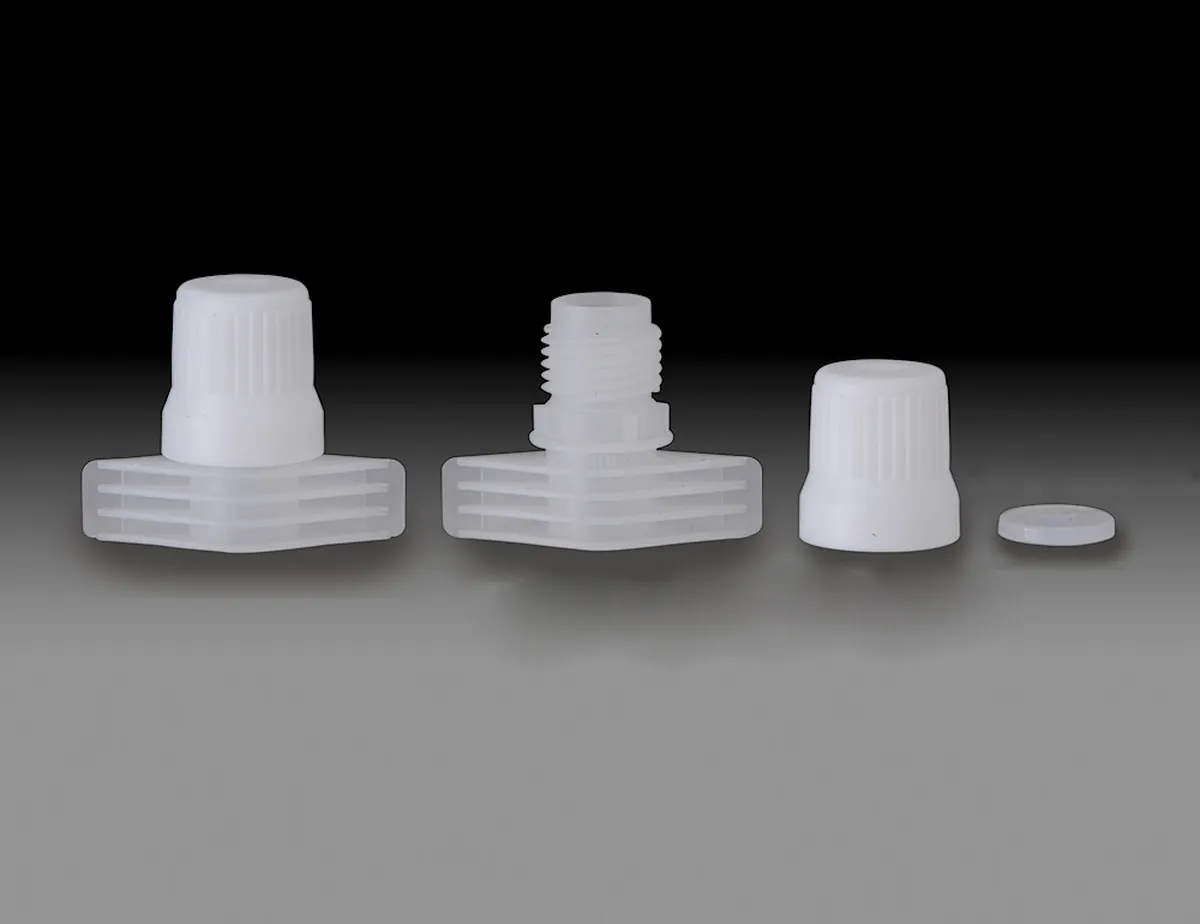
A claim that names "the cap" has covered perhaps a quarter of the article you are buying. That is our own 9.6 mm foil-seal assembly, and the loose disc on the right is the component a one-line claim never mentions.
What the EU changed, and why the US answer differs
Since January 2025 the EU prohibits using BPA in the manufacture of those materials, and placing on the market articles made with it (Article 3); the only exceptions in Annex II are liquid epoxy coatings on articles above 1,000 litres and polysulfone filtration membranes, neither of which arises in a spout cap.
The declaration of compliance is now the document that carries the answer. Article 8(2) sends its content to Annex III, which requires a list of any bisphenols and bisphenol derivatives used in the manufacture, plus a compliance statement naming the regulation. That is checkable; a line saying "BPA-free" is not.
Transitional dates are a stock question, not a judgement: single-use articles could be placed on the market until 20 July 2026, with narrower derogations to 20 January 2028 (Article 11). The full timeline is in our regulations and recyclability hub.
The United States reads differently, and a claim copied from a European datasheet can mislead. BPA remains permitted in polycarbonate resins (21 CFR 177.1580) and in metal can coatings; the FDA's 2012 and 2013 amendments removed uses in baby bottles, sippy cups and infant formula packaging because those uses had been abandoned, not because the agency judged them unsafe (FDA on BPA). The same words mean different things in each market, which is why the declaration has to name the rule it answers.
If your construction includes printed film or a welded liner, the component document checklist covers the parts a spout-cap supplier does not own.
The claim verification table
Eight checks, sent as a table rather than a question. A supplier with real documentation fills it in a day; the blanks show where to spend review time.
Check | What to ask for | What a passing answer looks like |
|---|---|---|
| Which parts the bisphenol statement covers: body, cap, liner, colorant, ink, adhesive | Named parts, one by one — not "the product" |
| "No BPA added", "not detected", or a marketing line | For "not detected", a named method and detection limit (EU verification uses 1 µg/kg) |
| Confirmation that every plastic part is PP or PE, with no polycarbonate, polysulfone or epoxy coating in the assembly | Resin grades matching the declaration, and no PC or PSU part |
| Whether bisphenol S (BPS), BADGE or another bisphenol derivative is used, and that no residual BPA remains | A bisphenol list, not a single-substance denial |
| Whether the colorant's own declaration covers bisphenols, and whether its carrier resin differs from the cap resin | A separate declaration for the masterbatch, naming its carrier |
| Bisphenol data at your fill temperature, hold time and food type, not at the ambient default | A report stating simulant, temperature and duration, not just "passed" |
| Which rule the statement answers: EU 2024/3190, FDA 21 CFR, GB 4806.7 | The named rule plus a declaration that references it |
| How production is held to the declared formulation, and how a resin or masterbatch change reaches you | Written change notification, traceable to the tested batch |
Rows 2 and 6 do most of the work: one decides whether you hold a result or a slogan, the other whether it applies to your process.
What to do with the answers
Three outcomes; only one closes the file.
All eight answered. File the declaration, the migration report and the masterbatch declaration with the specification revision you approved; re-check when the resin, the colour or the liner changes.
Four to seven answered. The claim is probably honest and the file is incomplete, and the gaps are paper: a bisphenol list nobody requested, a report missing its conditions. Ask before you approve, not after the first production run.
One to three answered, or "BPA-free" repeated back to you. Treat the claim as unverified and shift the burden to evidence at your conditions. If that cannot be produced, you are accepting a sentence in place of a file.
The durable fix belongs in the specification, not an email thread: the parts, the declaration, the bisphenol list, the change notification. Shantou Ruihua Plastic molds food-contact PP and PE spout caps from 1.2 mm to 40 mm, and the range starts on our spout caps page.