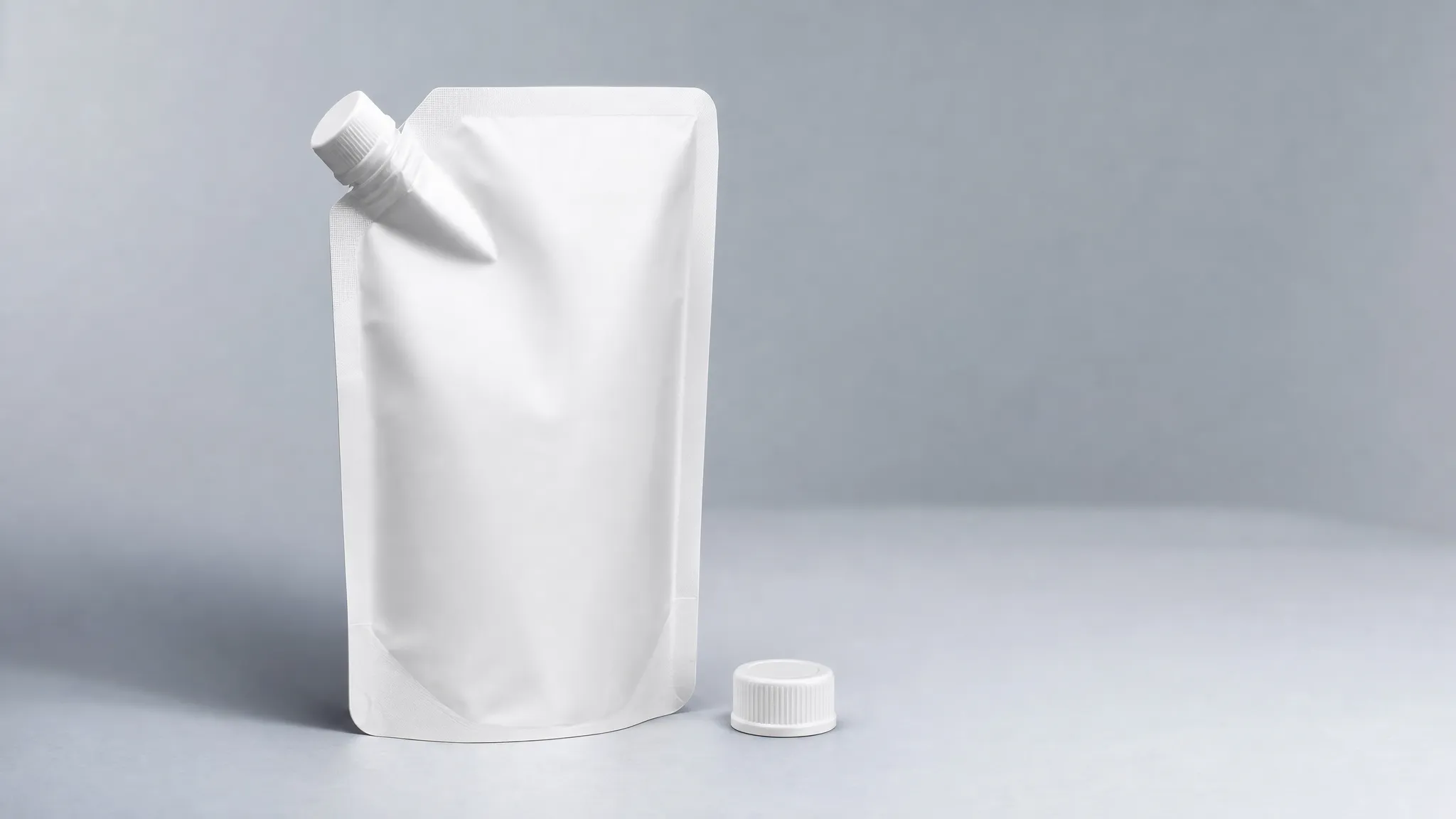

PP vs PE spout caps come down to one decision: what your pouch film and filling process demand, not which resin is "better." Polypropylene (PP) spouts handle hot-fill, retort, and tamper-evident ring designs; polyethylene (PE) spouts stay flexible, survive drops, seal at low temperatures, and keep mono-material PE pouches recyclable. Match the spout material to the film's seal layer and your process heat, and both PP and PE will serve you well — mismatch them, and you get leakers on the line or cracked caps in the field.
The Short Answer: Match the Spout to the Film, Not Just the Resin
Most comparisons of PP vs PE stop at the material datasheet. For stand-up pouches and doypacks, the material only matters through the job it has to do on your line:
- Seal compatibility — the spout welds into the pouch film, and the welding window has to overlap the film's seal layer. PE films seal at lower temperatures; PP and retort films need more heat.
- Process heat — hot-fill and retort demand a spout that holds its shape at high temperature. That is PP territory.
- How the consumer uses the pouch — squeezable refills and drink pouches favor PE's flexibility; rigid pour spouts with tamper evidence favor PP.
If the film is a standard PE-based structure and the fill is cold, PE is usually the simpler, lower-cost match. If you hot-fill above 85 °C, retort, or need a rigid, tamper-evident closure, PP earns its place. Everything below builds that decision on data you can verify.
PP vs PE Spout Caps at a Glance
Dimension | PP (polypropylene) | PE (polyethylene) |
|---|---|---|
Film seal window | Higher; suits PP films and retort structures | Lower (≈110–130 °C grades); suits PE/LDPE seal layers |
Heat resistance | High — hot-fill, pasteurization, retort | Limited — cold or warm fill only |
Stiffness | Rigid; holds threads and tamper-evident rings | Flexible; soft-seal and squeeze designs |
Impact at low temperature | Can turn brittle in cold storage/transit | Tough; drop-resistant |
Chemical resistance | Excellent against oils, greases, solvents | Good against acids, bases, alcohols; choose HDPE for aggressive contents |
Recycling fit | PP stream (recycle code 5) | PE stream (codes 2/4) — mono-material PE pouch plus PE spout keeps one stream |
Typical cap styles | Screw caps, tamper-evident rings, flip-tops | Flip-tops, pull-out spouts, squeeze-fit closures |
In the published cap-level comparison we cite, the tested PP caps show a melting point near 168 °C and PE caps near 147 °C — a roughly 20 °C gap that shows up in practice as a different tolerance for heat (PP/PE cap comparison data on ResearchGate). Resin-grade ranges vary (PP grades typically span ~160–170 °C, PE ~130–150 °C), so always confirm against your supplier's material certificate.
What PP Spout Caps Do Well — and Where They Fall Short
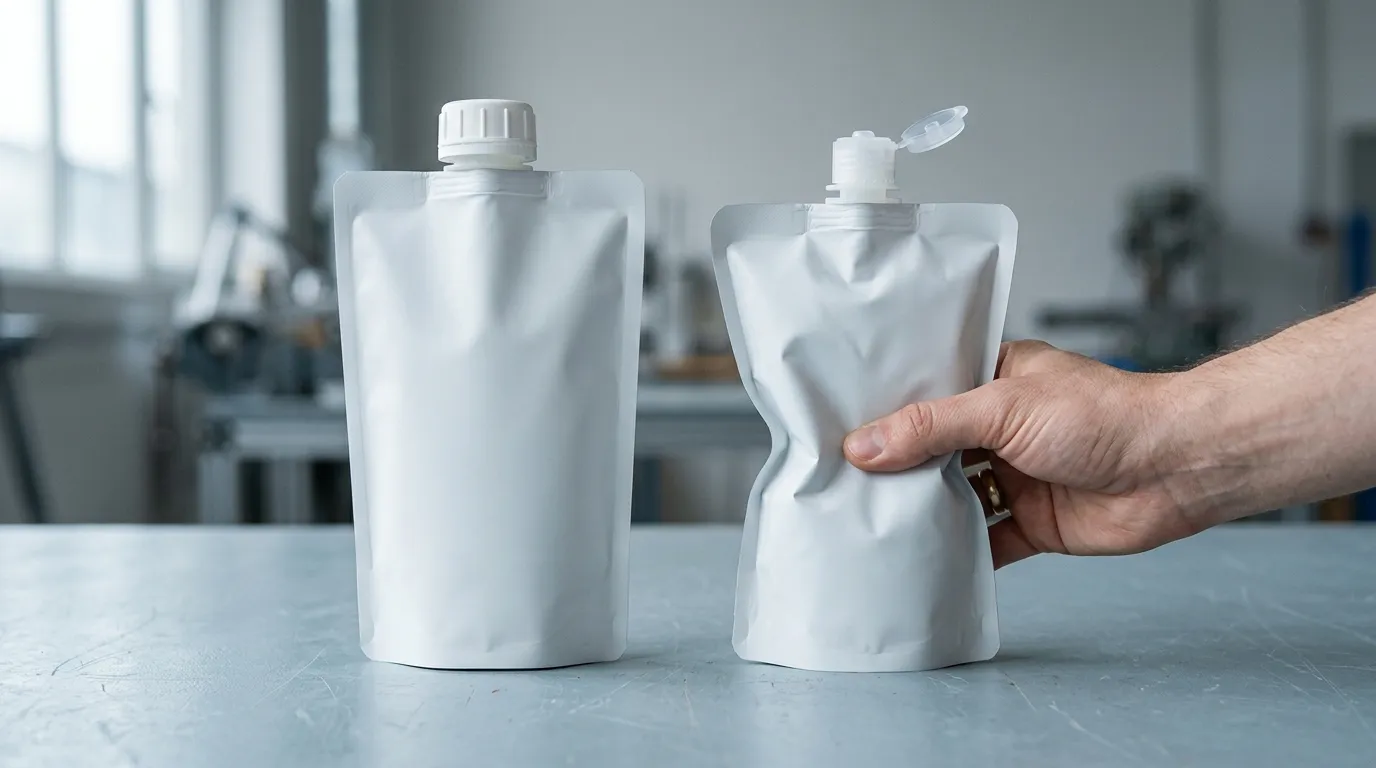
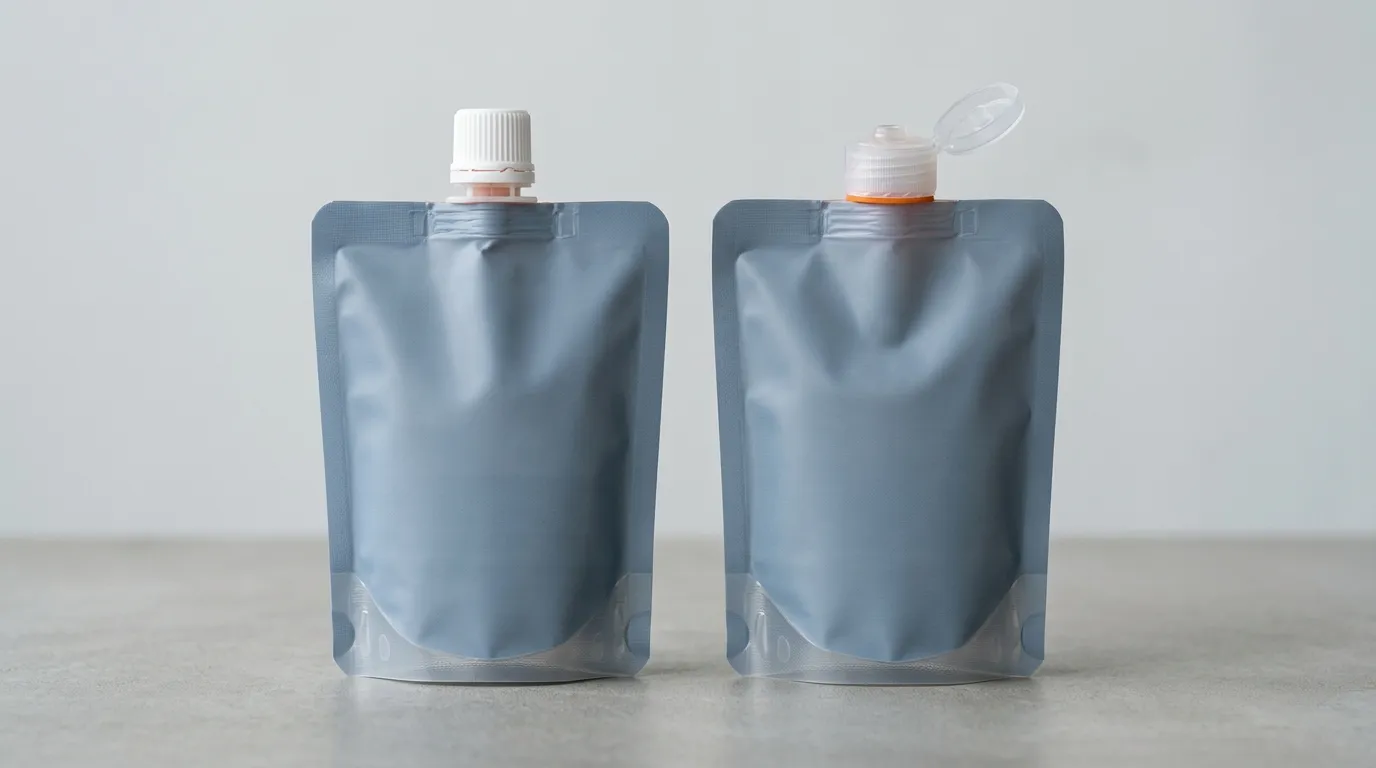
Rigid PP vs flexible PE: the same pouch format, two different opening behaviors.
PP is the workhorse when heat and rigidity are on the table.
Where PP wins:
- Hot-fill and retort. Sauce, ketchup, jam, and baby-food pouches that are filled hot or retorted need a spout that does not soften or distort. PP's higher melting point and stiffness keep threads, seals, and tamper-evident rings true through the process.
- Tamper-evident and anti-theft designs. A rigid ring that snaps cleanly and shows clear breakage evidence is a PP strength. PP also holds crisp thread geometry, which matters for screw-on caps that get opened and closed dozens of times.
- Chemical resistance. PP shrugs off oils, greases, and organic solvents — relevant for cooking oil pouches and some daily-chemical refills. Transparent PP grades also deliver clear caps when product visibility matters.
- Dimensional control in hot processes. Because PP keeps its shape at temperature, it is the practical choice for components that must stay dimensionally stable through a retort cycle.
Where PP falls short (honestly):
- Low-temperature impact. PP is stiffer, and in cold storage or winter transit it can become brittle. A pallet dropped at −20 °C can crack PP caps where PE caps survive.
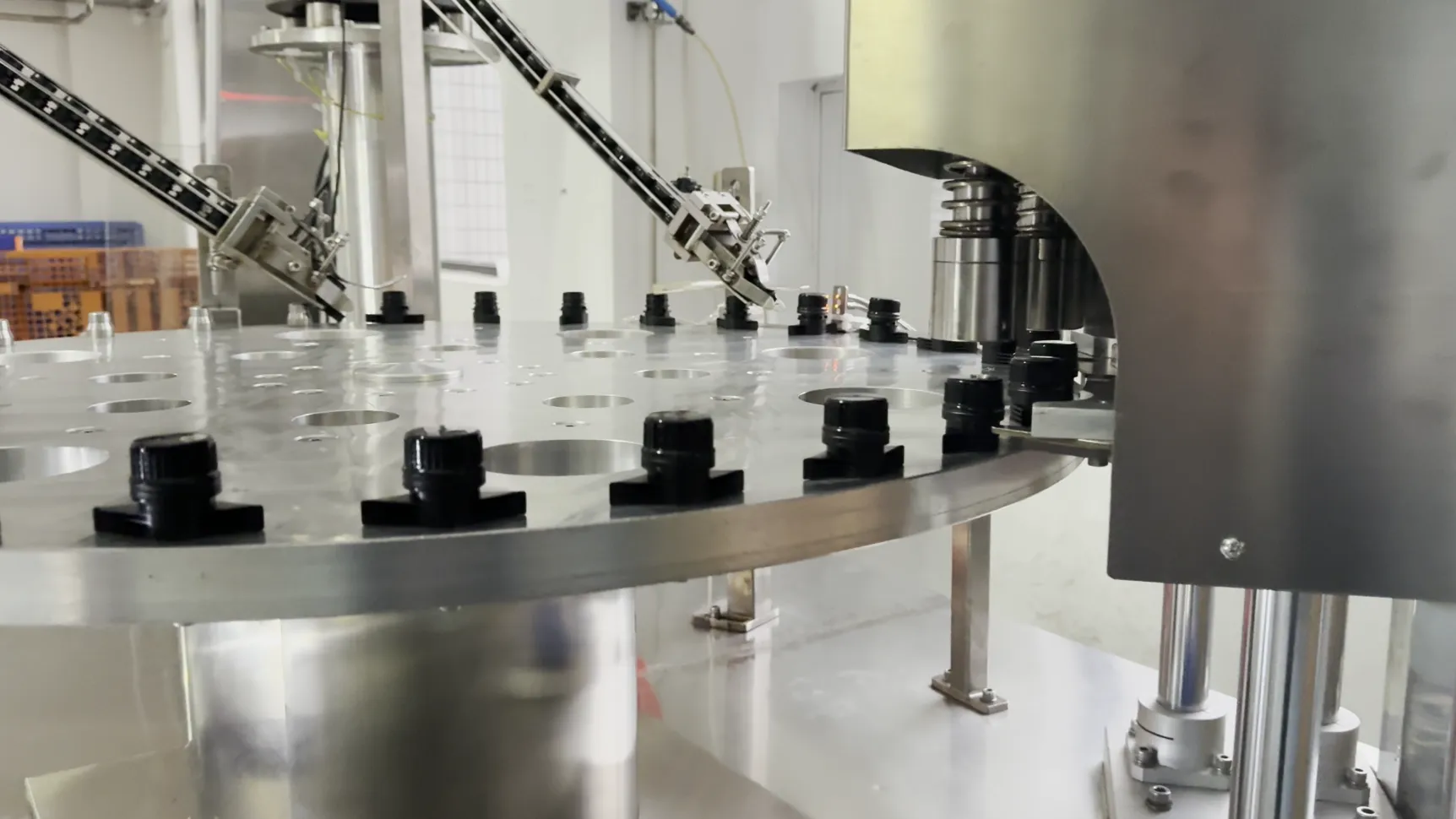
- Molding shrinkage. In our molding experience PP spouts are more prone to shrinkage and warpage in thin-wall geometries — grade-level shrinkage ranges overlap (PP ≈1.0–2.5%, HDPE ≈2–4%), so confirm against your grade's data sheet. This is a real manufacturing challenge — it is why PP spouts with stable shape and seal performance are harder to produce consistently. Good mold design and process control close that gap.
- Cost. PP resin and its processing usually cost more than PE.
What PE Spout Caps Do Well — and Where They Fall Short
PE is the material you reach for when the pouch has to flex, survive handling, and recycle cleanly with a PE film. It is also the resin behind most blow-molded bottles and jugs, so its behavior is familiar to every packaging engineer.
Where PE wins:
- Impact resistance and squeezability. PE is ductile: caps survive drops, and soft-seal pouches that get squeezed (drink pouches, refill packs, sample sachets) work naturally with a PE spout.
- Low-temperature sealing. PE spouts are engineered to weld at roughly 110–130 °C, which matches PE-based pouch films. Lower sealing temperatures protect heat-sensitive contents and run faster on some lines.
- Mono-material recyclability. A PE spout on a PE film keeps the whole pouch in one polymer stream — the cleanest story for recyclability as EU packaging rules tighten (Regulation (EU) 2025/40 — the Packaging and Packaging Waste Regulation).
- Cost. PE is generally the more economical resin for high-volume closures.
Where PE falls short (honestly):
- Heat. PE cannot take hot-fill or retort. A PE spout on a retort pouch will soften and fail the seal.
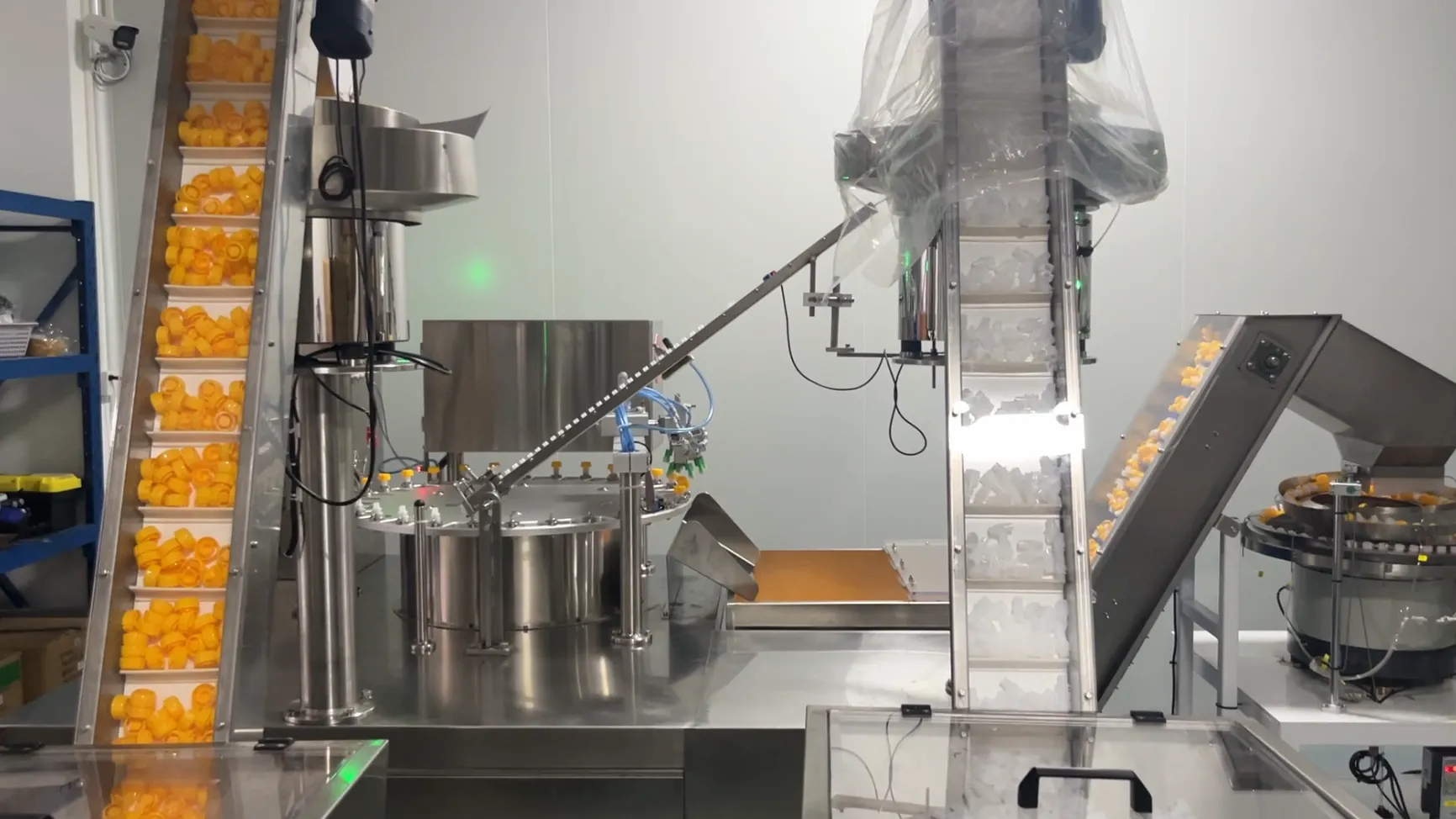
- Capping-line distortion. Softer PE can distort in cap feeding or when torque is applied too aggressively; line setup needs to respect that.
- Aggressive contents. For strong solvents and some fatty chemicals, HDPE is the grade to specify — and even HDPE has a lower continuous-use temperature than PP. Environmental stress cracking is the failure mode to watch: the right PE grade, not just "PE," is what prevents it.
How to Match the Spout Material to Your Pouch Film
Four questions settle the PP vs PE decision for any given pouch. Walk them in order.
1. What temperature does your film seal at?
The spout welds into the film, so the spout's sealing window must overlap the film's seal layer. PE films with LDPE/LLDPE seal layers weld at lower temperatures and pair naturally with low-temperature PE spouts; PP films and retort structures need a higher welding temperature and a PP spout. If you are tuning a new line, start from how seal temperature is tested and set before choosing the resin.
2. Do you need mono-material recyclability?
If your pouch film is already a mono-material PE structure, a PE spout keeps the entire package in one recycling stream. That is the cleanest configuration for EU PPWR-driven design-for-recyclability and for retailers asking for mono-material packaging — the same logic covered in our guide to mono-material PE pouch spouts.
3. What heat does the product see after filling?
Process | Recommended spout material |
|---|---|
Cold fill / ambient storage | PE or PP (decide by squeeze vs pour) |
Warm fill (40–70 °C) | PE low-temperature grades or PP |
Hot-fill (>85 °C) | PP |
Retort / pasteurization (≥121 °C) | PP (retort-grade) |
4. How does the consumer open and use the pouch?
Squeezable and single-hand use (drink pouches, refill packs, travel sizes) favors PE. A rigid spout with a screw cap, flip-top, or tamper-evident ring — where the closure carries repeated open-close cycles — favors PP.
Rule of thumb: if the film seals below 130 °C, PE is the natural match; if the product sees hot-fill or retort heat, move to PP. Validate with a sealing trial before you commit a whole SKU.
When the answers are in, the full selection picture (diameter, cap style, sealing conditions) comes together in our step-by-step spout cap selection guide.
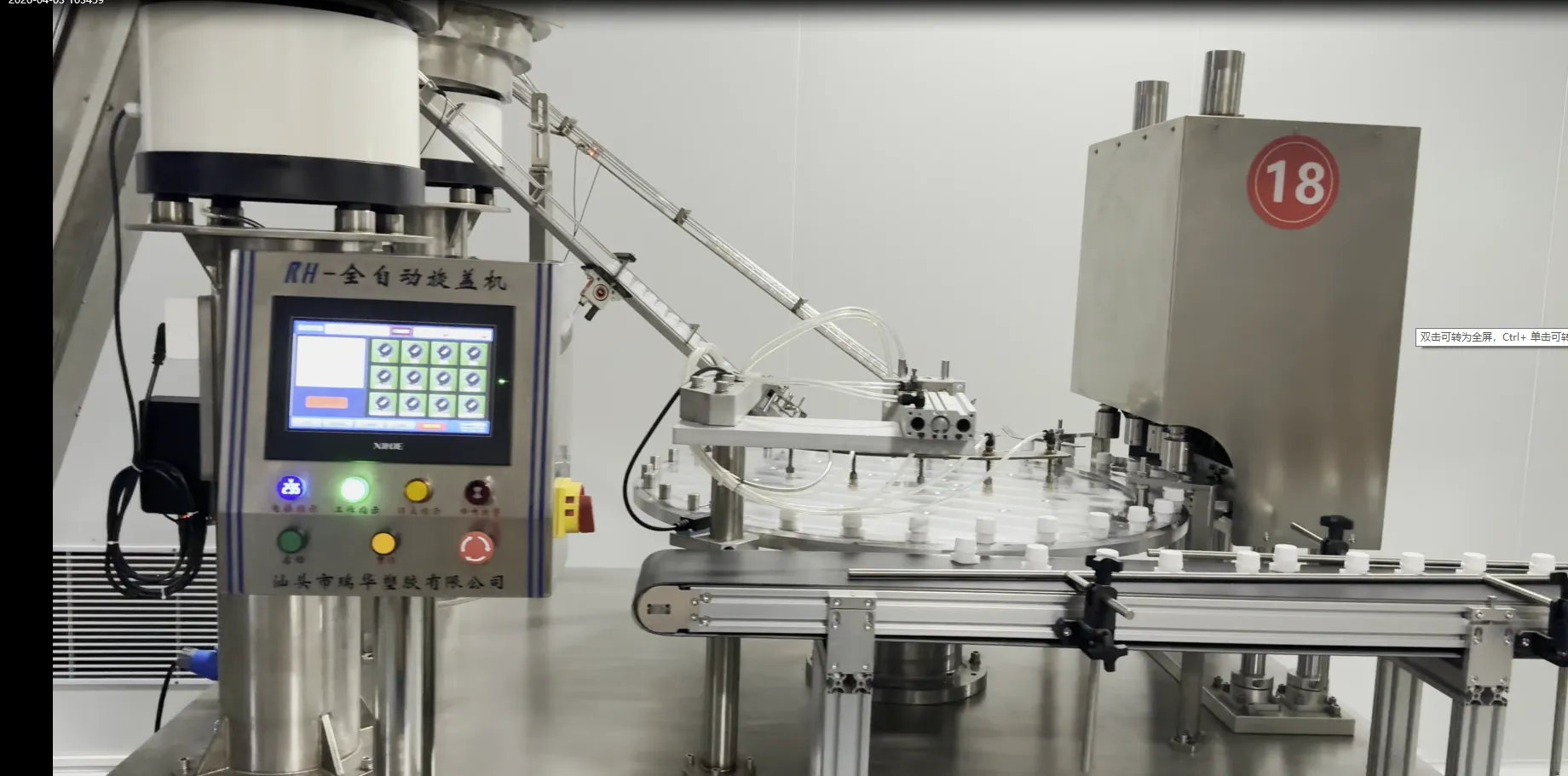
The weld is the moment of truth: the spout material and film seal layer have to work in the same temperature window.
How to Tell PP from PE
In practice you often hold an unlabeled cap and need to know what it is. Three checks help:
- Resin identification code. Molded parts are sometimes marked: PP is code 5, HDPE is 2, LDPE is 4. Many small spout caps are unmarked, so absence of a code proves nothing.
- Density (with caution). Both PP (≈0.90 g/cm³) and PE (≈0.91–0.97 g/cm³) float in water, so the classic float test does not separate them — it only rules out denser polymers like PET.
- Feel and flexibility. PP snaps back stiffly and creases white when bent repeatedly; PE bends more easily, feels waxy, and is harder to snap.
For food-contact work, do not rely on torch or smell tests — they damage the part and tell you little. The reliable path is the supplier's material certificate: a food-contact declaration that states the resin grade and its compliance. Spouts destined for food, beverage, or cosmetic pouches should ship with that documentation from the start.
Quick Selection Guide by Pouch Application
Application | Typical fill | Recommended spout material |
|---|---|---|
Baby food puree / squeeze pouch | Cold fill | PE or PP with anti-choking (mushroom) cap |
Ketchup, sauce, jam | Hot-fill | PP |
Cooking oil | Hot-fill or ambient | PP (oil compatibility) |
Laundry detergent / daily chemical refill | Ambient | PE, large-bore for high flow |
Sports drink / energy drink pouch | Cold fill | PE (squeeze) |
Cosmetics, lotions, sample packs | Ambient | PP or PE by dose type, small bore |
For the sizes behind these choices — 8.6 mm up to 40 mm — see our spout cap diameter guide. You can browse the full spout cap product range, and more selection and running guidance lives in the Choosing & Running Spout Caps hub.
If you are mid-spec and want a second opinion: send your film structure and fill temperature to our team, and we will confirm the spout material and sealing window against our line data before you commit to tooling.
PP vs PE Spout Caps: FAQ
Which is better, PE or PP?
Neither wins outright — the film and the process decide. Use PE when the pouch film seals at low temperature, the product is filled cold or warm, and you want a squeezable, mono-material-recyclable package. Use PP when you hot-fill, retort, or need a rigid tamper-evident closure. The tables above give the per-application call.
Can a PP spout seal to a PE film?
Only if the spout grade's sealing window overlaps the film's seal temperature. Low-temperature-sealing PP grades exist, but the safest rule is to match polymer families — PE spout to PE film, PP spout to PP film — and validate with a sealing trial before production.
Are spout caps food-safe?
Food-contact compliance is a property of the resin and the finished part, not of the material family. Food-grade PP and PE resins, certified against the EU food-contact framework (Regulation (EC) No 1935/2004) and its plastics implementing rules (Regulation (EU) No 10/2011), or the US FDA food ingredients and packaging framework, are suitable for direct food contact. Ask your supplier for the certificates — they should be routine documentation.
Are PP vs PE spout caps recyclable?
Recyclability depends on the full package structure. A PE spout on a mono-material PE pouch keeps one polymer stream and is the strongest configuration under EU PPWR design-for-recyclability expectations. PP spouts belong with PP pouches. Mixed-material pouches (for example, a PE spout on a multi-layer barrier film) need component separation before recycling, which most sorting infrastructure does not do automatically.
Does material choice affect cap cracking?
Yes. Cap cracking in the field is usually a stress-crack or impact problem: aggressive contents against the wrong PE grade, or cold-transit impacts against brittle PP. Matching resin grade to contents and handling conditions — not just choosing "PP" or "PE" — is what prevents it.