


A refill pack is a claim about time. The first fill closes a pack once; a refill pack is expected to be opened, emptied, wiped or rinsed, filled again and closed again — and the part that meets a hand on every one of those occasions is the spout pouch refill closure. Nothing else on the pack is asked to survive that repetition. The film is welded once, the pouch body is filled through the top, and the closure is the only component that is expected to be operated, many times, by someone who is not thinking about it.
Which is why the useful question is not whether the closure is good, but what repeated opening does to it. A refill closure does not have one seal to wear out. It has three, working at different scales, failing by different mechanisms, and answered by three different tests. A specification that fixes film structure and an application torque has described the pack — but only one of the three interfaces.
This page separates those three, names what degrades at each, and sets out how to write a resealability requirement you can test. It belongs to the durability and compliance half of our Regulations & Recyclability hub, where "spout cap" always means the closure of a stand-up pouch or doypack fitment, never a gas-can spout cap.
What "the seal" means on a spout pouch refill pack
Ask three people where a spouted pouch seals and you will get three answers, all correct, and none of them complete. Split the pack into its three closure interfaces before talking about wear, because they degrade on different timescales.
| Interface | What it actually does | What repeated opening does to it | Evidence that answers it |
| Cap-to-spout sealing interface (plug, wad or rim face) | Keeps product in and air out while the pack is closed. Designed to be opened | Compression set: the material that was squeezed loses part of its recovery, so the sealing force decays cycle by cycle | Interference/compression measurement on a sectioned cap; gross-leak test after cycling |
| Thread interface | Holds the sealing interface under load. It is retention, not sealing | Crest wear, flash polishing and cross-threading; a worn or crossed thread produces a torque reading with no seal behind it | Removal-torque series plus visual inspection of the first thread starts |
| Pouch-to-fitment weld | Joins the fitment to the film and carries every handling load for the life of the pack | Creep and channel formation under cyclic pressure, flexing and temperature, on a seal that nobody ever re-opens | Destructive seal-strength test at cycle 0 and at cycle N |
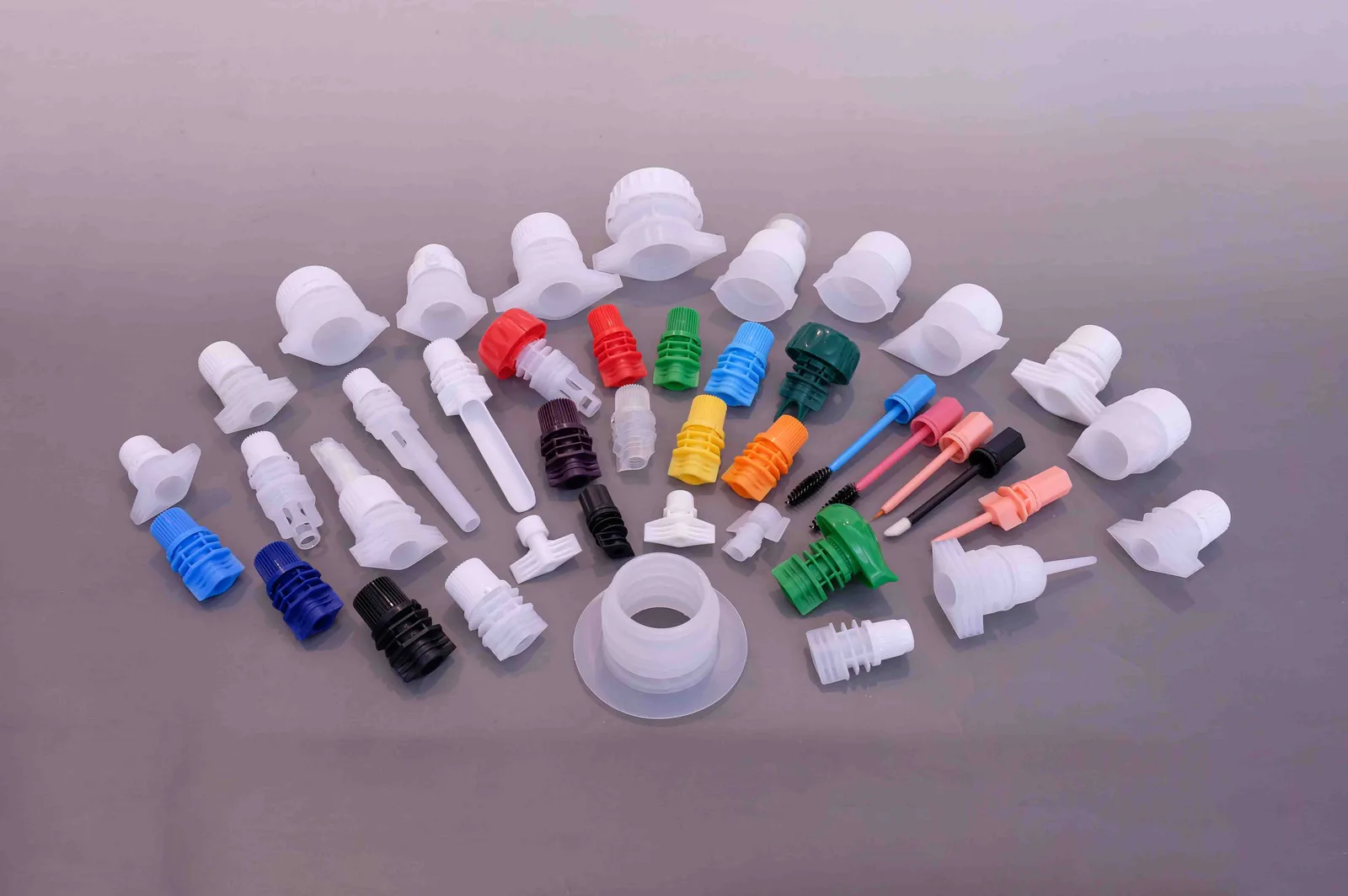
Diagnose in that order. A closure that will not hold after reuse is reported as a leak, and a leak is investigated at the weld — the interface that is hardest to re-open and easiest to blame. If the pack weeps immediately after filling, before any consumer has touched the cap, that is a different fault with a different cause, worked through in our guide to why a pouch spout leaks after filling. Cycle wear is what is left when the pack seals on day one and stops sealing in month three. A resealable pouch closure is never judged by one number but by a set: what the consumer can close, what holds while it is closed, and what survives being repeatedly loaded around it. Nor is it one object. A press-to-close zipper is a closure too, but it is opened and resealed across the whole pouch width, and it brings track fatigue and product-in-the-track contamination instead of thread wear and torque. This page stays with the closure that turns: the spout cap.
What refill and reuse regulation now assumes about the closure
Refill is no longer a marketing idea that a packaging team can interpret for itself; in the EU it is a design duty with a date attached, and the closure sits inside the definition.
Regulation (EU) 2025/40, the Packaging and Packaging Waste Regulation, applies from 12 August 2026. Its Article 11 sets the conditions under which packaging counts as reusable, and two of those conditions land directly on the closure:
Article 11(1)(b) requires packaging to be "conceived and designed to accomplish as many rotations as possible under normally predictable conditions of use" — rotations, not shelf life — and Article 11(1)(f) requires it to be capable of being reconditioned in accordance with Part B of Annex VI while maintaining its intended function. Cleaning and reconditioning is the regime a sealing interface has to survive, and the closure is the part reconditioned most often.
Then there is the number everybody wants and nobody has. Article 11(2) requires the Commission to adopt a delegated act by 12 February 2027 establishing a minimum number of rotations for the packaging formats most frequently used in re-use. It has not been adopted yet. So the honest position today: the regulation requires the closure to be designed for many rotations and does not yet say how many. Article 11(3) then requires compliance to be demonstrated in the technical information for the packaging, which is where your own cycle data ends up.
One more thread runs through the same chapter and lands on the fitment: recycled content. If the pack carries a PCR target, the closure is where the arithmetic gets awkward — a spout cap is a food-contact part, so post-consumer resin in it must be declared for the layers that touch product. That is a documentation line rather than a sealing line, but it belongs in the same specification, or the two claims contradict each other on the artwork.
The refill half of the same regulation completes the picture. Article 28(5) provides that, from 1 January 2030, final distributors with a sales area above 400 m² shall endeavour to dedicate 10% of that area to refill stations for food and non-food products — a retail format in which the pack, and therefore its closure, is opened in public, often, by people who are not the brand's own staff. On the single-use side, Directive (EU) 2019/904 requires Member States to achieve a measurable quantitative reduction in the consumption of the single-use plastic products listed in Part A of its Annex by 2026 against 2022 (Article 4), and requires that caps and lids on the products in Part C of its Annex remain attached to the container during the intended use stage (Article 6(1)) — a duty written for single-use beverage containers in Part C (≤3 L), and the rule that produced tethered and non-detachable caps; where a refill pack carries a tether, the second fatigue path it adds to the closure is self-imposed rather than statutory.
Regulation says a refill closure must be designed for as many rotations as possible. It does not say how many, and it will not until the delegated act lands. Until then the cycle requirement in your specification is a number you own — and a number you can defend only if you measured it.
The compliance frame around those duties — what a closure must be able to demonstrate, and what belongs in the component folder — is the subject of what "compliant" means for a pouch closure, with the calendar of dates and scope in the PPWR timeline that applies to spouted pouches. This page stays on the engineering question those two raise: what changes in the closure, and how to prove it does not.
Mechanism 1 — the thread: wear, flash and cross-threading
The thread is a molded feature, and that single fact explains most of what happens to it. It is not a machined screw; it is a polymer form released from a tool, carrying the tool's part line, its draft and its flash, then compressed against a matching form every time the pack is closed.
Repeated opening produces three distinct effects at the thread:
- Crest wear. The working flanks rub against each other at every opening. Product residue accelerates it: a sugar syrup, a shampoo surfactant or a food oil that dries in the thread becomes an abrasive film. Wear reduces the interference the thread is meant to hold, which shows up later as torque that no longer means anything.
- Flash and part-line defects. A thin molded web at the thread start, or a step where two tool halves meet, behaves like a cutting edge. The first close shaves it, and the cap then rides on a smaller feature than the drawing specifies — one reason a fitment drawing should carry a flash limit at the thread start, not only a nominal thread form.
- Cross-threading. A consumer closing a cap at an angle starts the thread off its root. The cap then either rides over a crest and cuts a new path — leaving a thread that looks fine, closes with a normal feel, and seals nothing — or shaves a sliver of polymer that lands in the sealing face. Cross-threading is more likely when the neck is slightly out of round, which is why roundness and concentricity belong in incoming inspection rather than in a line setting.

The practical consequence is that the thread cannot be assessed by feel. A cross-threaded closure often reports higher removal torque than a correct one, because the cap is mechanically jammed rather than seated. Inspecting the first two thread starts on a sample of packs after a cycle run, at magnification, tells you more than a torque gauge alone.
Mechanism 2 — torque retention: the number that quietly falls
Torque is the most quoted and least informative number in closure quality, because three different quantities hide behind the word. Application torque is what the capping head puts in. Removal torque is what the consumer feels. Torque retention is the relationship between them over time — and it is the only one of the three that describes a refill pack.
Spout caps are molded in polypropylene and polyethylene, and both creep: a material held under load redistributes that load as time passes, so the closing force stored in the closure does not stay where the capper left it. Measure removal torque five seconds after closing and you have measured the capping head; measure it three weeks later, after a temperature cycle or two, and you have measured the pack the customer has. ASTM D2063/D2063M measures the removal torque of continuous-thread closures under predetermined environmental conditions, over time — which is what makes retention a different quantity from the application torque the capper put in. It is written for rigid containers rather than a welded-in fitment, so borrow the method: same quantity, same time series, applied to the cap-and-spout interface.
Two shapes appear when you plot retention across a cycle program:
- Drop then plateau. Removal torque falls quickly in the first hours and days, then levels off. This is ordinary relaxation, and the plateau is the number to write into a specification, because it is the one the consumer meets.
- Continuous decline with cycle count. Every open-close pair re-seats the sealing interface and loads the thread in a new position. Retention that keeps dropping as cycles accumulate means the closure is not returning to its original geometry — a resealability problem, not a relaxation problem.

This is the mechanism behind the most common refill complaint there is: the pack that was tight in the plant and leaks in a bathroom cabinet. Nothing failed at the capper — the number the plant measured was not the number the pack delivers after a week of retail and a month of use, and nobody had asked the closure to hold retention across a cycle count.
Mechanism 3 — compression set at the sealing interface
The thread holds. The sealing interface is what actually seals, and on a spout closure it is usually one of three designs: a plug that enters the spout bore, a wad or liner that presses against the neck rim, or a face-to-face seal between two molded surfaces. All three work the same way — something is compressed by interference, and the elastic recovery of that compression is the sealing force.
Compression set is what happens to that recovery over time. A polymer compressed for long enough takes a new shape and returns less of its original thickness. The consequence for a refill pack is specific and easily missed: the closure can be perfectly closed, fully tightened, in the right position, and no longer sealing. No amount of hand force restores the seal, because the force is there and the material no longer answers it.
Three conditions accelerate it, and refill use supplies all three: temperature (a hot fill, a hot rinse, a warm shelf) softens the interface and speeds up the set; product (oils, surfactants, alcohols) creeps into the sealing face and acts as a plasticizer at exactly the surface that needs friction and recovery; and time between operations, since a refill pack spends most of its life closed, which is precisely when compression set accumulates.
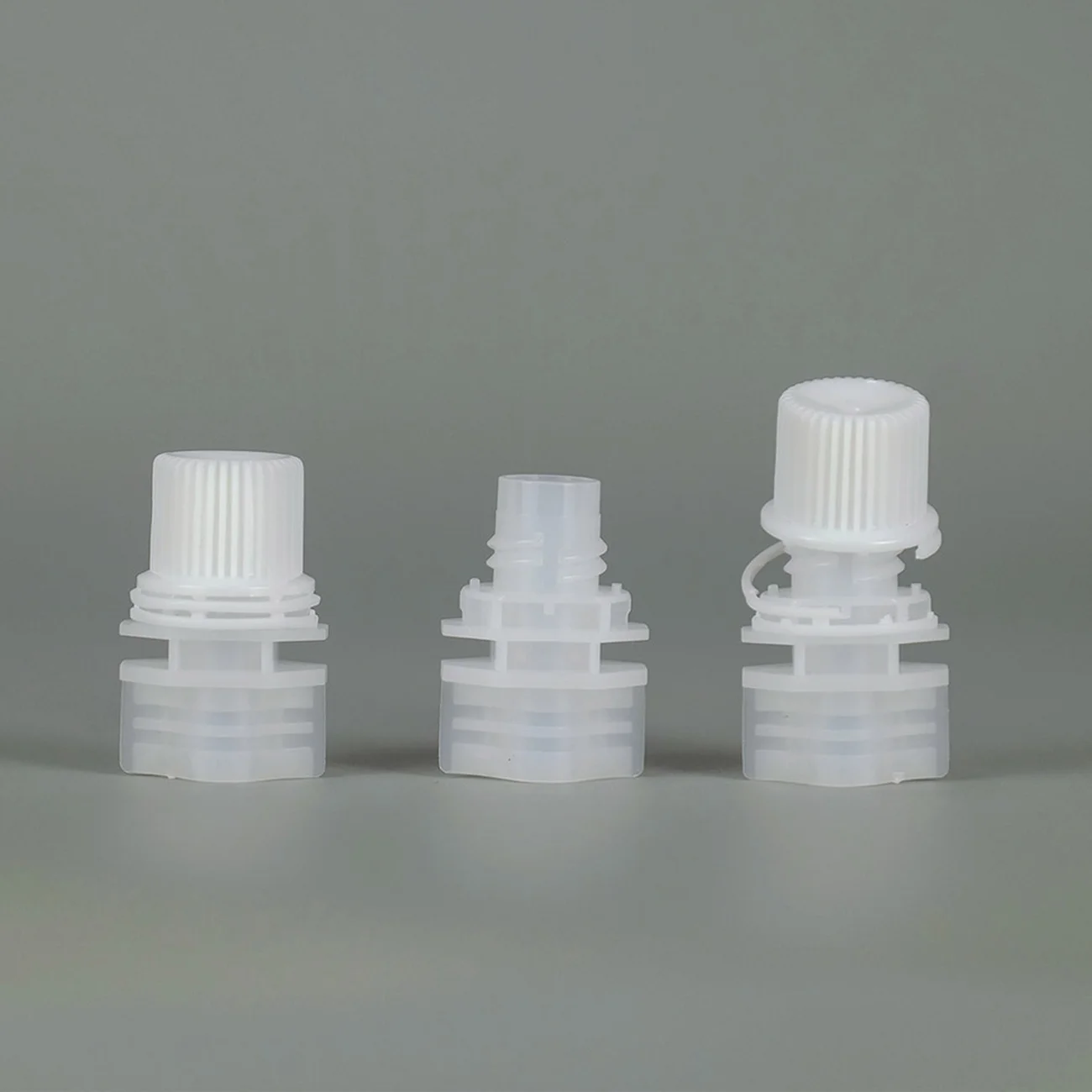
Non-detachable caps add a second wear path to the same closure: if the cap must stay attached to the container during its intended use, the strap flexes at every opening, so hinge fatigue becomes a life-limiting feature alongside the sealing interface. The design options and their trade-offs are in a spout cap that stays attached to the pouch. The useful questions for a refill pack are whether the hinge is rated in cycles at all, and whether the flip-top's plug — also a compression seal, and thinner than the neck plug of a screw cap — has its own retention data.
Mechanism 4 — the pouch-to-fitment weld under cyclic load
The weld is the interface nobody re-opens, so it is routinely left out of the wear conversation. On a refill pack it deserves the most attention of the three: it is the one interface that was never designed to be loaded repeatedly.
A spout pouch is welded once — film to flange, at temperature and pressure, on a machine whose settings were qualified for that film. Then the pack is filled, cooled, squeezed into a carton or onto a shelf, opened at home by a hand that grips the pouch body, and closed again. Every one of those actions loads the film-flange boundary, and what accumulates is not visible wear but a slow change in the seal:
| Failure mode | How it presents in the field | What catches it |
| Creep of the seal at temperature | A pack that holds on a cool shelf and weeps in a warm one | Seal-strength test run at the warm end of the storage range |
| Channel leak along the weld edge | No visible damage; a slow product migration or a pressure-decay failure | Gross-leak test by bubble emission |
| Film tearing beside the flange | A tear initiating where the film bends against the flange corner | Destructive seal test plus a flex/drop sequence before it |
| Fitment pull-out or rotation | The spout turns in the film while the cap is being unscrewed | Torsional load applied to the fitment on a finished pack |
Barrier structure belongs in the same sentence. A pouch built on an EVOH or metallized barrier layer seals through a different film stack than a plain PE pouch, so the weld window — and its re-test after cycling — has to be established for that structure rather than inherited from a similar-looking pouch.
The destructive test at the center of this is seal strength, measured on flexible barrier materials by ASTM F88/F88M. The number to record is not the initial peel or tensile value — it is the ratio you get when you run the same test at cycle 0 and at cycle N on packs from the same production run. A weld that starts at a comfortable margin and finishes at the same margin is a weld that will not be the reason your refill claim fails.
The temperature side is where the weld meets the material strategy. A film's sealing window depends on its sealing layer, and a fitment has to be weldable inside that window — which is why a low-temperature-sealing PE spout exists for mono-material PE pouches, letting a recycle-ready pack be welded in the film's own range instead of pushing the jaw temperature up until the film is stressed. When the weld window and the film argue, the temperature half is covered in the sealing window for the fitment weld; what matters here is that the same weld is re-tested after cycling, not only on the day the line was qualified.
How to prove it: a reclose cycle test for a spout pouch refill closure
Everything above is only a hypothesis about your pack until it has been cycled. The reason this step gets skipped is not difficulty — it is that no one hands you the protocol. So build it in seven decisions.
1. Derive the cycle count from the use case. Write the scenario before choosing a number: how often is this pack opened, over what lifetime, under what conditions? A household cleaner refilled weekly for two years and a catering sauce pouch opened twice a day are different tests. State the derived count, the margin on top of it, and the scenario next to it — the number is unarguable only while its assumption is visible.
2. Decide the conditions, and keep the product inside. Ambient cycles on an empty pack underestimate wear at the thread and the sealing face, because product residue is part of the mechanism. Cycle the pack with its product in it, at the temperature the pack is used or stored at — the warm end, not the comfortable one — and include the rinse if the pack is rinsed between refills.
3. Fix the checkpoints before you start. Cycle 0, two or three intermediate points, then the derived count. Checkpoints chosen after the fact turn a test into a search for a result you already like.
4. Measure four things, not one. Removal torque on the closure, using the retention method the standard describes (ASTM D2063/D2063M); a gross-leak check on the closed pack; seal strength on a destructive sample; and a visual inspection of the thread and the sealing face. Torque alone will tell you the closure still turns — which is not the question. Gross leaks in flexible packaging are conventionally detected by bubble emission under water (ASTM D3078), which is a method a filling line can run without a laboratory.

5. Write the pass/fail criteria before the first pack is cycled. A defensible set: removal torque stays inside the closing window a consumer can achieve by hand for the whole cycle life; no gross leak at any checkpoint; seal strength at the final checkpoint stays within an agreed fraction of the cycle-0 value; no visible loss of thread material at the first two starts. Note what is not in that list: a fixed cycle count from a standard, because none exists yet.
6. Record who did what, and keep the packs. Measured sample packs are the only record that survives a customer complaint or a regulator's question, and PPWR Article 11(3) expects the reusability conditions to be demonstrable in the technical information for the packaging. Physical retention matters as much as the spreadsheet.
7. Decide who runs it, and ask the part supplier for theirs. A converter or brand can run the leak and torque parts on its own line; the weld-strength and compression-set measurements belong with whoever owns the component drawing. A supplier claiming cycle life should name the method, the cycle count and the sample size behind it. If nothing of the sort exists, that absence is the finding.
The discipline around the bench — dimensional checks on incoming fitments, air-tightness checks on finished components — is described in our quality control process, and it is the same discipline a cycle program borrows.
The record sheet: object, timepoint, condition, and who signs the standard
Seven decisions describe a program; the program is only as good as its record. A torque figure written down without the object it measured, the moment it was taken and the conditions it was taken under is not data — it is a number someone can quote in a meeting to end an argument it does not settle. The sheet below is the minimum that makes a resealability result defensible. The values belong to the model and the agreed method, so leave every figure to the drawing or the test plan and fill in only what was actually measured.
| What is measured | When it is measured | Under what conditions | Who approves the standard |
| Application torque | At capping, on the line, immediately after the cap is applied | The capping head and its speed, the fill temperature, and a full pack rather than an empty one | The line owner and the brand's packaging engineer; the supplier confirms only the thread geometry it tooled |
| Removal torque, first open | On first opening, after a defined dwell from capping (hours, not seconds) — never with the cap just applied | The temperature the pack is stored at, on the same instrument that will be used at the end of the program | The brand's packaging engineer, against the band a consumer can achieve by hand |
| Removal torque after N reclose cycles | At each checkpoint of the cycle program — cycle 0, the intermediate points, then the derived count | Identical instrument, dwell and temperature to the first-open measurement, so the two series can be read against each other | Whoever owns the resealability claim; in the EU that sits with the party placing the packaging on the market |
| Tamper-band torque | On the first opening only — the band is a single-use feature and has no second data point | Break-away torque of the band as the cap is first turned | The brand and the capping line; the supplier confirms the band geometry it tooled |
| Reseal holding force (compression recovery at the sealing interface) | At cycle 0 and at the end of the program | A sectioned cap measured for interference and recovery, after the storage and rinse the pack actually sees | The component supplier for the sealing design; the brand for the use conditions it is tested under |
Two rules keep the sheet honest. First, first opening and repeated openings are separate lines of the record, not one number — a closure that opens correctly once and a closure that still holds on the fortieth open are answering different questions, and folding them into a single figure hides the wear the test exists to find. Second, no line is filled in by hand-feel. "It felt tight" is not a measurement, and a cap that has cross-threaded often feels tighter than one that seated correctly, which is exactly the case a feel check gets wrong. Where a figure is not yet fixed — the torque limits, the dwell, the number of cycles, the sample size — write "to be confirmed per model and method" and leave the cell visibly open, because an empty cell someone is still chasing is worth more than a filled one nobody can defend.
Writing the requirement into the specification
A cycle test that is not written into a purchase specification gets run once and forgotten. Seven lines carry the whole argument, and every one of them is a decision somebody has to make rather than a value somebody can look up.
| Specification line | What to write | Why it decides whether the closure survives |
| Bore and neck geometry | Nominal bore with its tolerance, plus neck roundness or concentricity | Out-of-round necks cross-thread more easily; this is the geometry the consumer's closing motion has to find |
| Thread | Thread form, number of starts, and a flash limit at the thread start | Flash behaves like a cutting edge and is the first thing to go; a form-only drawing leaves it unmanaged |
| Torque window | Application and removal torque at cycle 0, and retention after N cycles, with the method named | A single application-torque figure describes the capping head, not the pack; the retention figure describes the consumer's experience |
| Sealing interface | Design (plug, wad or face), material, interference, and a compression-set expectation | Interference is the sealing force; without a statement of how much recovery is retained, the closure's seal is unquantified |
| Retention feature | Hinge or tether with a fatigue target in cycles, if the pack claims a non-detachable cap | Adds a duty the closure did not have before where the pack is a single-use beverage container in Part C of the SUPD (≤3 L); for other refill packs a tether is a design choice, not a legal duty |
| Weld window | Temperature and pressure band for your film, and the fitment's sealing layer | The weld is the interface you never re-open; it is qualified once, so its window has to be a written range |
| Documentation | Food-contact declaration for the fitment, ISO 9001 / HACCP where the buyer's scheme requires it, and the technical information PPWR Article 11(3) expects | Turns a component into a compliant component; keeps the cycle data attached to the part it describes |

Two practical notes belong with the table. Most of these lines are tooling decisions, and tooling decisions are cheapest before the mold is cut: a flash limit, a thread form and a sealing-face geometry are edits to a drawing at quoting stage, and a new tool afterwards. And the documentation half now has a destination — the component checklist in the component documentation your file needs is where cycle data and material declarations end up.
If the pack is being designed for recyclability as well as reuse, one line changes the others: a low-temperature-sealing spout for mono-material PE lets a pouch be welded in the film's own window, which is the version that keeps a recycle-ready structure inside the same weld and cycle rules as everything else. And if what you need is the document itself rather than the argument, the fields our own spout cap specification sheet carries are the ones to start from.

Frequently asked questions
How many open-close cycles should a refill closure survive? There is no harmonized figure to cite. The EU's Packaging and Packaging Waste Regulation requires reusable packaging to be designed for as many rotations as possible and delegates a minimum number of rotations to a Commission act due by 12 February 2027 — so the honest answer today is that the number is yours to derive from the use case and to defend with a test. Derive it, write it into the specification, and note the assumption next to it.
Is the cap or the weld the weak point on a refill pack? They fail differently. The sealing interface is designed to be opened and reclosed, so it wears by compression set and thread loss. The film-to-fitment weld is designed never to be opened and has no cycle rating at all — yet it is loaded by every squeeze, drop and temperature swing the reused pack sees. Test both at cycle 0 and at the end of the program; the ratio tells you which one is eating the margin.
Can I put a standard spout cap on a refill pack? Mechanically, yes — and it may well pass. What you do not get with a single-trip cap is any cycle-rated retention data, any stated compression set for the sealing interface, or a hinge rating if the cap is non-detachable. If the pack carries a resealability or reuse claim, the burden of proving multi-cycle performance sits with whoever placed it on the market, so ask the supplier for a retention series before you accept the part.
Does a tether make a refill closure more or less reliable? It solves retention and adds fatigue. A cap that must stay attached during intended use introduces a hinge or strap that flexes at every opening, so the closure has two wear paths instead of one — and hinge fatigue is a different test from seal retention. Some designs also move the sealing interface into a thinner flip-top lid plug, which compresses less material than a screw cap's neck plug.
What do I need to send a supplier to get a real answer? Four things: the fitment drawing with bore and tolerance, the film structure, the use scenario (cycles, temperature, product), and the leak or retention criterion you intend to apply. With those, a supplier can answer the cycle question against your pack instead of against a catalogue page. Without them, any cycle claim you receive is about somebody else's pouch.
Designing a refill closure that still seals on the fortieth open
Refill is a promise about repetition, and the closure is where that promise is kept or broken. Three interfaces carry it: the sealing interface that compresses and gradually stops compressing, the thread that retains and gradually stops retaining, and the weld that was never asked to be loaded twice and now is. Each has a mechanism and each has a test — and none of it requires a new category of component. It requires a specification that says what the pack has to survive, a cycle program that measures four things at defined checkpoints, and a supplier who answers with a method rather than a reassurance.
If you are writing that requirement now, send the fitment drawing you have, the film structure and the use scenario. Our spout fitments cover a 1.2 mm to 40 mm bore range in food-grade PP and PE, made in our own mold shop and checked on dimensional and air-tightness equipment, so the cycle, torque and weld questions get answered against your pouch rather than a catalogue figure. Request samples or a quote and we will tell you which of the specification lines above your current drawing is missing. Our full range is listed under our full range of spout caps.