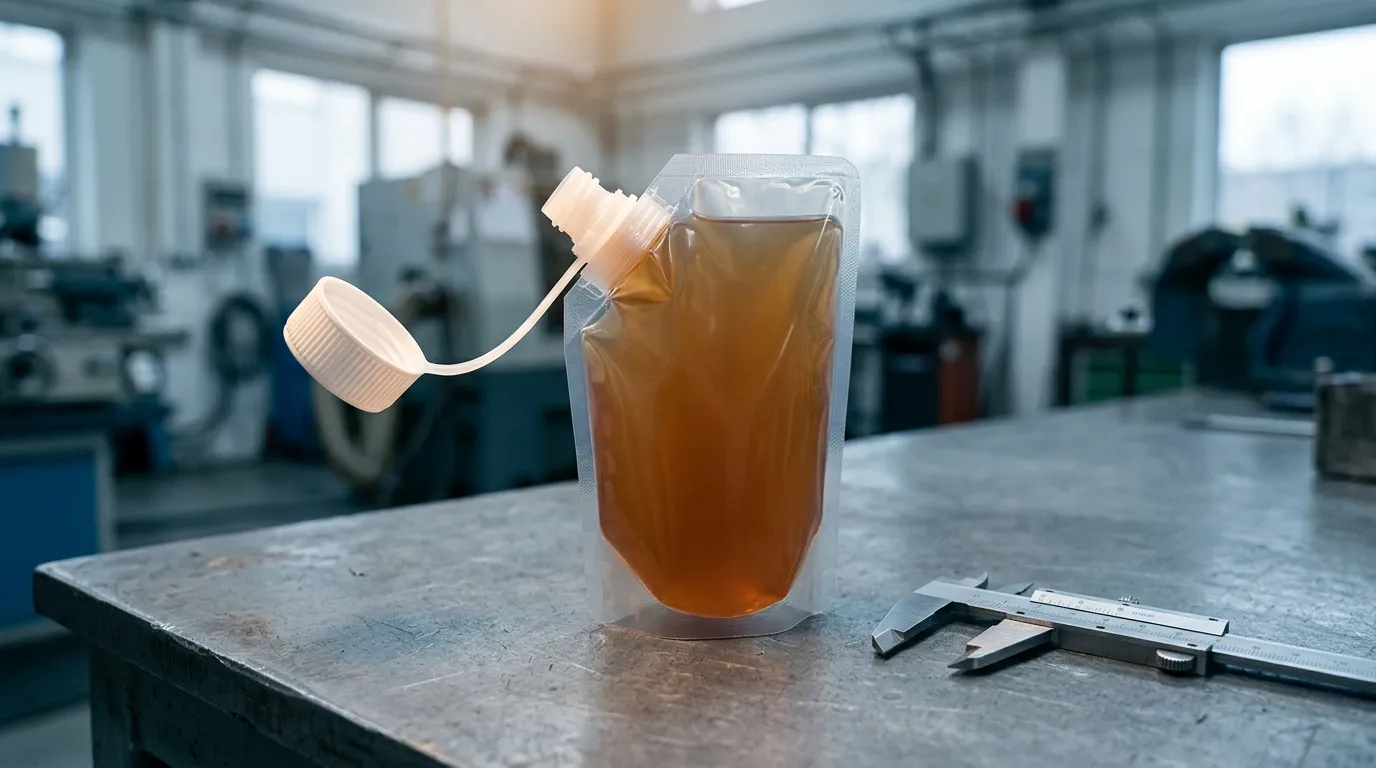

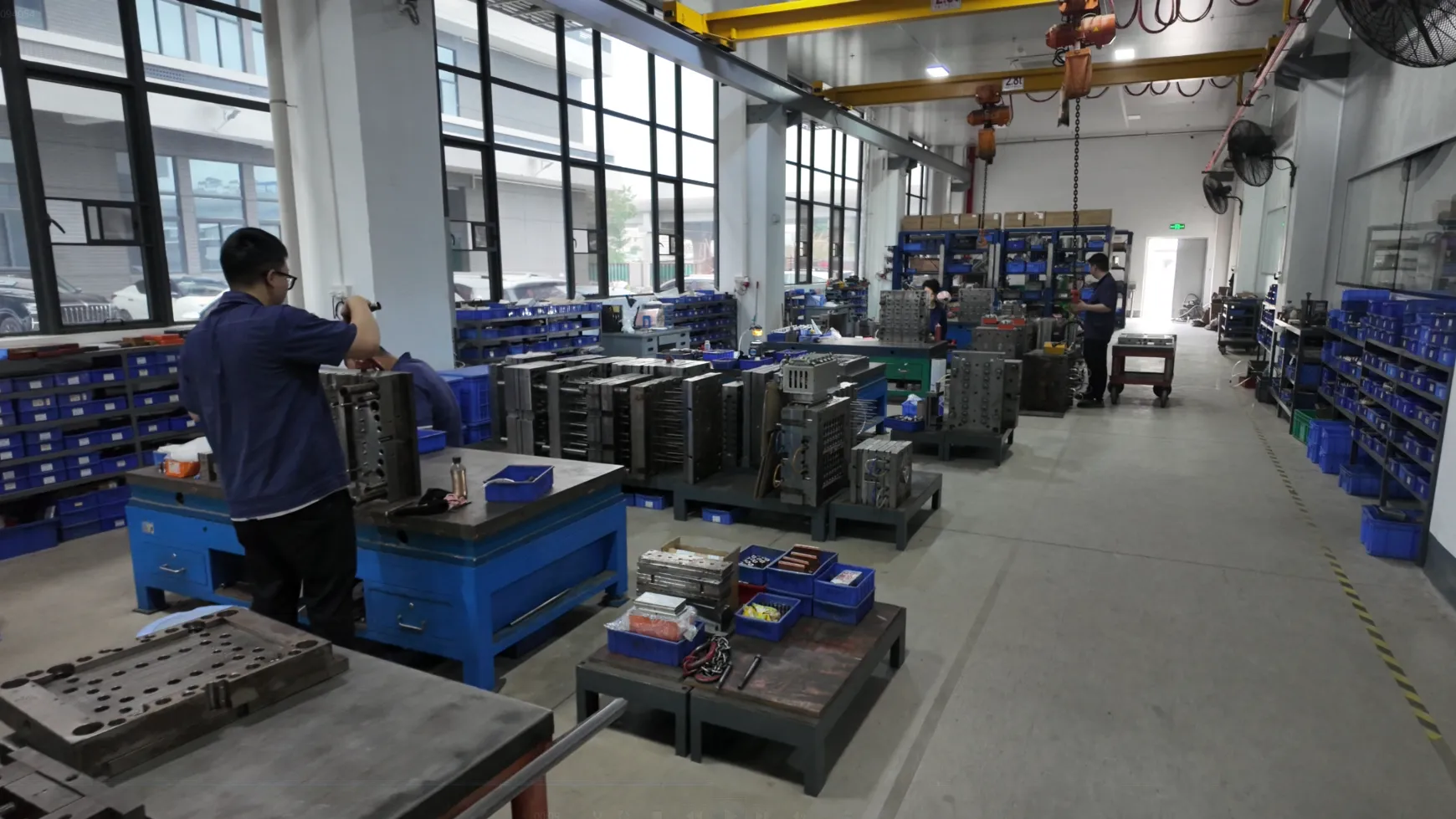
A PPWR fitment project brief is not a compliance summary, and it is not a form your supplier fills in for you. It is the short document that fixes the decisions a mold will harden into steel — and the reason it exists is that most of those decisions stop being cheap the moment the cavity is cut.
Here is the counterintuitive part. On a spouted stand-up pouch, the expensive PPWR decision is rarely the declaration of conformity. That is a document, and documents can be rewritten. The expensive decision is the polymer family, because the cavity is machined to a shrinkage allowance that belongs to one resin and not to another. Choose the wrong family for your recycling story, and you are not editing a file — you are re-cutting a mold.
So the brief has one job: put the seven inputs below in front of your engineering, purchasing and compliance owners before the tooling deposit, and get a name against each one. Everything else in the EU packaging file — the technical documentation, the test reports, the signed declaration — is downstream of decisions that already exist in the drawing.
This is the pre-mold half of the story. The regulation's own timeline, including the 2030 and 2035 horizon, is mapped in our PPWR guide for spouted pouches, and it sits with the rest of the EU closure compliance work in our regulations and recyclability hub.
Why the regulation lands on the mold, not just the file
Three of the obligations in Regulation (EU) 2025/40 are already enforceable — it has applied since 12 August 2026 — and all three reach backwards from the paperwork into the tooling.
Packaging has to be recyclable, and that is a materials decision. The core obligation is one sentence long:
All packaging placed on the market shall be recyclable. >— Regulation (EU) 2025/40, Article 6(1)
The graded test arrives with the design-for-recycling criteria and the recyclability performance grades in Annex II — grade A at 95% or better, B at 80%, C at 70% — applied from 1 January 2030 (or 24 months after the delegated acts, whichever is later), with only grades A and B allowed from 1 January 2038. Article 7 then raises the floor on recycled content in plastic packaging across two steps, one landing in 2030 and the next in 2040. A cap that sits in a different polymer family from the film it is welded to does not fail because someone wrote the file badly. It fails because the mold produced the wrong part.
The technical documentation has to contain the drawing. Under Article 15(2) the manufacturer carries out the conformity assessment, draws up the Annex VII technical documentation and then draws up the declaration under Article 39. Annex VII requires "conceptual design, manufacturing drawings and materials of components" — so the part drawing and the mold drawing are not supporting evidence you dig out later. They are the compliance file, kept for five years for single-use packaging and ten for reusable packaging. A drawing issued without a revision number is a compliance gap you created at the design meeting.
Component data is what your file is made of. The declaration covers the packaging unit, but the evidence is component-level: materials, substance tests, food-contact documentation, recycling design data. Article 15(5) adds a traceability duty on top: every item has to carry some identifier — a type, batch or serial number will do — so the stock in hand can be tied back to the declaration covering it. On a spout cap, that identification lives in one of two places: a marking applied after molding, or a code engraved into the cavity. The second one is a tooling decision.
None of this says a cap needs its own declaration. It does mean that most of the seven inputs below are decided by people who will never read the regulation, and the brief is the only place their decisions get checked against it.
PPWR fitment project brief: seven inputs to confirm before you cut a mold

Run these as a single freeze session, not as a rolling conversation. Each one lists what you are deciding, why the decision survives into the tool, and who owns it.
1. The packaging object — and who signs for it
Decide: the packaging type the file covers, the pouch formats included in it, and which legal entity is the manufacturer of record.
The declaration identifies the packaging object it covers, and the technical documentation is built per packaging type. In practice that means one mold can serve several pouch formats only if the component data is genuinely the same across all of them — same film structure, same spout system, same cap material, differing only in dimensions. If the cap has to differ between two SKUs, you are looking at two evidence sets, and possibly two version numbers on the same tool.
The signatory matters earlier than most teams expect. For a private-label pouch placed on the EU market, the brand that has the packaging manufactured under its own name or trademark is normally the manufacturer for PPWR purposes — the converter and the cap molder are suppliers to that obligation, not substitutes for it. If you are that brand, the brief is your document, and the cap supplier's job is to give you data you can sign against.
Owner: your compliance or regulatory lead, with purchasing confirming the supplier entity.
2. The polymer family and the mono-material route
Decide: the cap and spout resin family, matched to the pouch film — PE for a mono-material PE pouch, PP where the film structure calls for it — and whether recycled content will be part of that grade.
This is the input that turns a compliance choice into a tooling cost. A mold cavity is machined oversize to compensate for how much the resin shrinks as it cools, and that allowance is specific to the polymer family. LyondellBasell's technical note on mold shrinkage publishes these ranges for the families a spout cap is normally molded in:
Resin family | Published mold shrinkage (in./in.) | What it means for a sealing spout |
|---|---|---|
Polypropylene, semi-crystalline | 0.010 – 0.025 | Cavity sized for the lower end of the semi-crystalline band |
Polyethylene, semi-crystalline | 0.015 – 0.040 | The same part in PE can need a wider allowance than the PP tool would have allowed for |
ABS, amorphous | 0.004 – 0.009 | Shown for contrast: a much narrower band, and not the route to a mono-material pouch |
Polycarbonate, amorphous | 0.005 – 0.007 | Same point as ABS — an amorphous resin has a tighter, more predictable allowance |
Switching from the low end to the high end of the PE band is a dimensional shift far larger than the dimensional tolerances a sealing spout is normally held to.
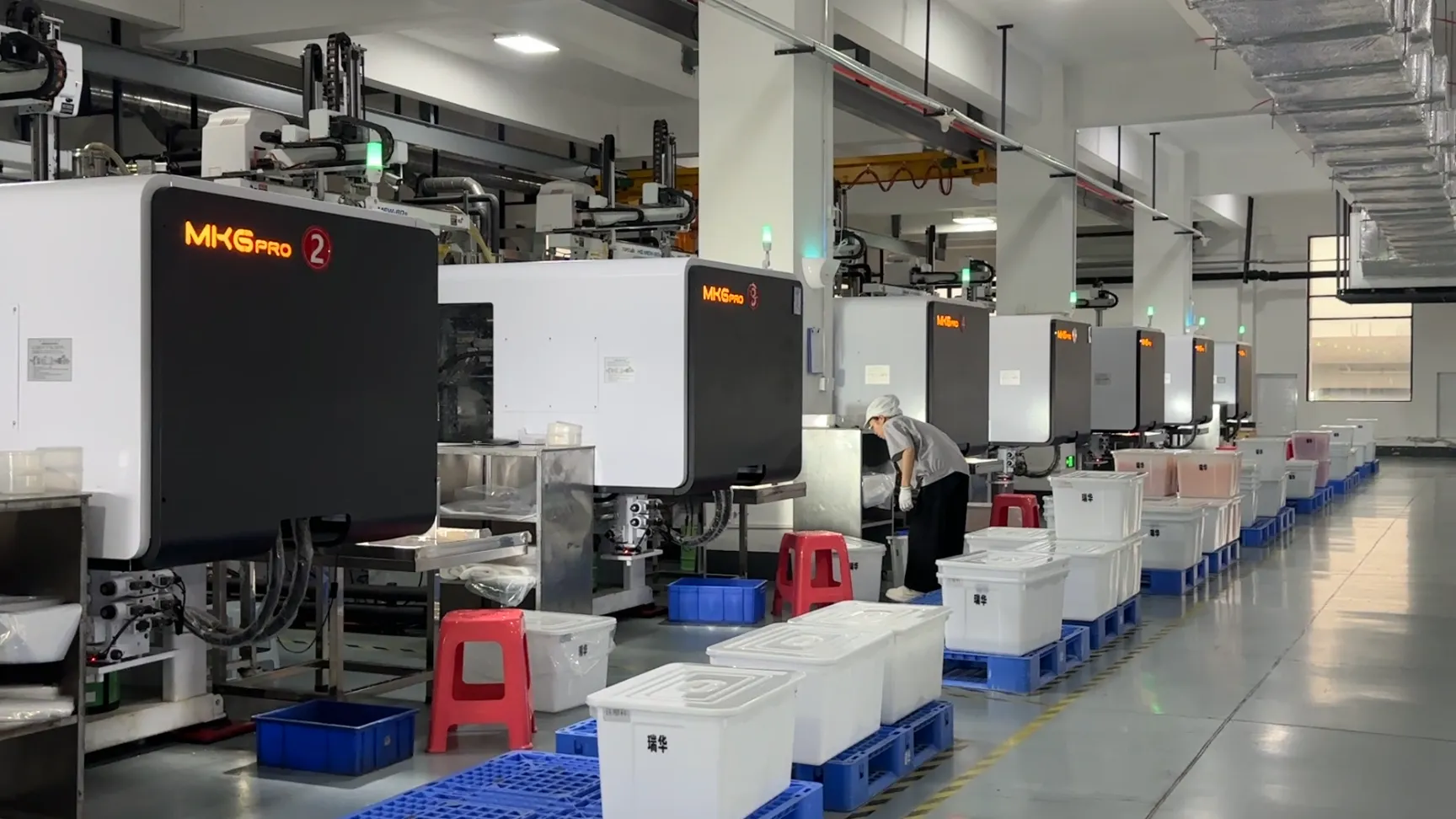
Article 6's recyclability obligation and Article 7's recycled-content steps both push toward a single polymer family across the packaging unit. That push has to be resolved at the material selection stage, because after that it is a cavity change. If the resin question is still open in your project, the full comparison of what PP and PE buy you is in our guide to choosing between PP and PE spout caps; the brief only needs the decision and the grade.
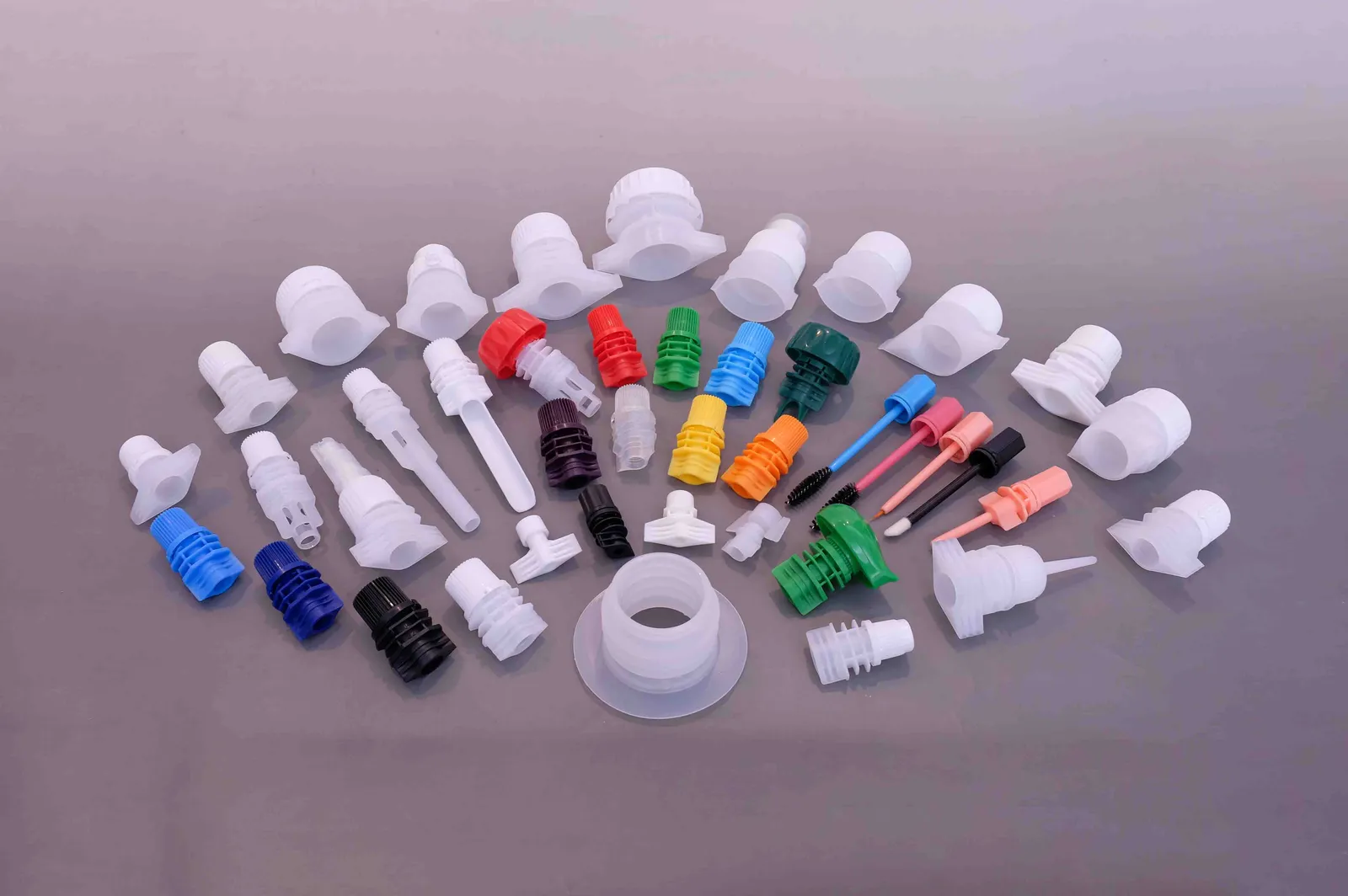
Owner: your packaging engineer, with the resin grade named — not "food-grade PE" but the specific grade the molder will buy.
3. The closure architecture — including whether it must stay attached
Decide: the closure type, and whether the cap is required to remain attached to the container during intended use.
Attachment is not a separate rule that someone else worries about. Under Article 6(1) of Directive (EU) 2019/904, caps and lids on the single-use plastic beverage containers listed in Part C of the Annex — containers up to three litres — may be placed on the market only if they stay attached during the product's intended use stage, and member states have applied that since 3 July 2024. Where it applies, the attachment feature is a molded geometry: a strap, a hinge, a stop lug, a ring. It cannot be added to a finished part, and it cannot be added to a mold that has no room for it in the cavity and no space for the additional stroke in the ejection design.
The scope question is yours to settle with your compliance counsel, not a supplier's. EN 17665:2022+A1:2023 is the harmonised test method for attachment strength, reliability and safety, and you should be asking for a test report against that standard rather than a supplier's summary — the standard itself is the reference in the Commission's list of harmonised standards for plastic caps and lids. What tests it, and how a spout pouch differs from a bottle neck finish, is set out in our EN 17665 tethered cap explainer.
Owner: product or brand owner for the scope call; tooling engineer for the geometry.
4. The sealing interface and the weld window
Decide: spout inner diameter and orifice, seal flange geometry, and the temperature window at which the spout welds to your film.
The sealing window is a polymer decision with a mold consequence. Spouts are commonly engineered to seal across a band around 110–130 °C, which protects the seal layer of a mono-material PE film; a higher sealing temperature burns that layer and produces a heat-damaged edge. The flange that carries the weld is cavity geometry, so the window has to be chosen with the film structure, not discovered on the filling line. If your pouch has already moved to a mono-material PE structure, the welding interface that a PE spout has to satisfy is the constraint the flange gets designed around.
Inner diameter and orifice belong in the same breath because they define the filling and dispensing interface. A narrow bore, a long nozzle, a large-bore spout for a viscous product — these are the choices buyers are least likely to revisit after tooling, and they are also the ones where the size ladder matters most: the closer a new spout sits to an existing mold family, the less new steel the project needs.
Owner: packaging engineer together with the filling line engineer. If you fill in-house, the line is a stakeholder at the freeze meeting, not a recipient of the outcome.
5. Resin, masterbatch and color under Article 5
Decide: the resin grade, the color masterbatch, and whether branding is molded into the cavity or applied later.
Article 5 applies at component level: it binds the substances in packaging and packaging components, before the packaging unit exists as a finished article. Article 5(4) caps the sum of lead, cadmium, mercury and hexavalent chromium resulting from substances present in packaging or packaging components at 100 mg/kg. Article 5(5) sets limits for per- and polyfluoroalkyl substances in food-contact packaging — 25 ppb for any single PFAS under targeted analysis, 250 ppb for the sum, and 50 ppm including polymeric PFAS — and where total fluorine exceeds 50 mg/kg, the manufacturer, importer or downstream user must, on request, provide proof of how much of that fluorine is PFAS and how much is not, so the technical documentation can be drawn up. The color masterbatch is the usual hiding place for heavy metals, and it is the change most likely to happen quietly after sampling. The evidence chain, and how to read the test reports behind it, is covered in our guide to PPWR substance testing for spout caps.
The tooling half of this input is branding. If your logo is molded into the cavity, every subsequent design change is a cavity insert change. If it is laser-marked or printed, the mold stays untouched but the mark becomes another process to document and control. Decide which one you want while the cavity is still being designed.
Owner: your quality or compliance lead, with the molder's material declaration attached — not paraphrased.
6. Component mass, material identification and the recyclability record
Decide: cap and spout weight, removability, and whether the material identification is molded in or applied.
Wall thickness and gating decide the mass of the part, and the mass is what enters the recyclability assessment of the whole packaging unit. A cap that releases cleanly in the recycling stream — or belongs to a system designed to work with the film — is what keeps that film inside a recyclable grade. Packaging minimisation is another instruction that runs through the same numbers: Article 10 requires the manufacturer or importer to ensure, by 1 January 2030, that packaging weight and volume are reduced to the minimum necessary for its function, and the technical documentation has to demonstrate that rather than assert it. The input to that demonstration is the component weight you froze at the design stage.
Material identification sits in the same decision. The harmonised material-composition label arrives from 12 August 2028, or 24 months after the implementing acts behind it — whichever is later — and where a polymer code is molded into the part rather than printed on it, that mark is cavity geometry. Adding a molded material code to an existing tool means cutting a new insert.
Owner: packaging engineer for the mass and removability targets; compliance lead for what the label must eventually carry.
7. Traceability, drawings and change control
Decide: the identification scheme on the part, the drawing revision discipline, who holds the mold drawings, and who is obliged to notify whom when anything changes.
Article 15(5) requires an identification element on the packaging so the declaration can be matched to physical stock. On a cap, that is a type, batch or cavity code — and the cheapest way to have it is to have it in the tool. Article 39(2) then requires the declaration to be continuously updated, which is a supply-chain obligation dressed as a document rule. If your supplier changes resin, masterbatch, or a cavity insert, the file behind your signature is stale until someone tells you.
This is why the drawings belong in the brief as a deliverable with a name attached. The Annex VII file needs manufacturing drawings; a mold without its drawings is an asset you cannot move, repair or re-qualify. Ask for them at the same time as you ask for the tooling quote, not after the mold is signed off.
Owner: purchasing for the contract terms, engineering for the revision discipline, compliance for the file itself.
The freeze sheet
Input | What you freeze | Legal hook | What it changes in the mold | Owner |
|---|---|---|---|---|
Packaging object and signatory | Packaging type, formats covered, manufacturer of record | Art. 39 / Annex VIII; Art. 15(5) | Version and identification marking per format | Compliance lead |
Polymer family | Resin family and grade, recycled-content intent | Art. 6(1); Art. 7 | Shrinkage allowance → cavity dimensions | Packaging engineer |
Closure architecture | Closure type, attachment requirement, tether geometry | SUPD 2019/904 Art. 6(1); EN 17665 | Strap, hinge, stop lug, ejection stroke | Brand owner + tooling |
Sealing interface | Spout ID, orifice, flange geometry, weld window | Art. 6 recyclability; food-contact framework | Flange geometry and resin choice | Packaging + filling line |
Resin, masterbatch, color | Grade, masterbatch, molded-in vs applied branding | Art. 5(4); Art. 5(5) | Cavity insert if branding is molded in | Quality / compliance |
Mass and material ID | Component weight, removability, marking route | Art. 6; Art. 10; Art. 12 (from 2028) | Wall thickness, gating, molded polymer code | Packaging engineer |
Traceability and drawings | Part and mold codes, drawing revisions, change notice | Art. 15(5); Art. 39(2); Annex VII | Cavity code position and insert design | Purchasing + engineering |
What each input costs you after the steel is cut
The reason to hold this meeting is arithmetic, not process discipline. Take the same seven inputs and ask what a change costs on each side of the tooling decision.
Input | Change before the mold is cut | Change after the mold is cut |
|---|---|---|
Polymer family | A drawing revision, days | New cavity and core dimensions, new steel work, fresh dimensional qualification |
Attachment geometry | Add it to the 3D design | New tool or a significant tool modification, plus re-testing against the attachment standard |
Seal flange and weld window | Adjust the drawing | Re-cut the flange and re-qualify sealing on your film |
Molded-in branding | Change the engraving | New cavity insert, usually a separate tooling line item |
Molded material code | Add it to the drawing | New insert |
Drawing and revision scheme | Set it up once | Retro-documenting a tool you cannot fully describe |
Two mechanisms make the right-hand column worse than it looks. The first is the sampling loop: a tool change means new trial rounds, new dimensional and sealing checks, and a new approval cycle. The second is the evidence file. Every material change invalidates the substance and food-contact evidence behind the component, so a mid-project resin swap costs you the test reports and the time to re-run them.
That is the honest case for the brief. Tooling is a four- or five-figure commitment whose price is not really the fee — it is the number of times you have to interact with the tool afterward. The cost drivers and the sampling rounds themselves are broken down in our guide to spout cap tooling cost.
The one-page brief: how to run the freeze meeting
A brief that runs to twenty pages does not get read. The version that works is one page, seven rows, and a rule that no row leaves the meeting without a name and a date. If you would rather not build the page from scratch, our custom spout cap project planner turns the same kind of brief into a form you can hand to a supplier.
- Invite the people who own the consequences. Packaging engineering, purchasing, the compliance or quality lead, and — if you fill in-house — someone who runs the filling line. For a beverage pouch, add whoever owns the label and the legal scope call.
- Bring three things that must be physical or documentary, not verbal. A material composition statement from the cap supplier; the substance test evidence behind it; and a filled pouch for the fit and seal check. If those three are missing, the meeting ends with a to-do list, not a freeze.
- Print the drawing number on the page. The point of the exercise is that the frozen inputs map to one drawing revision. A brief that cannot name the revision it applies to will be quoted against the wrong one.
- Fix the change-notice direction before you need it. Write down who tells whom when the resin, masterbatch, cavity insert or film structure changes. That single line is what makes "continuously updated" a workflow instead of an aspiration.
- Run the prototype round before the steel round. A 3D-printed sample lets you confirm shape, feel and fit against a real pouch for a fraction of a tool change — the cheapest round in the project and the one most often skipped. Our note on 3D-printed pouch closure prototypes covers what to check in that round.
Send the finished page with your RFQ. Suppliers price the gaps in a brief as contingencies, which is why two molders quoting the same pouch can land thousands apart.
Frequently asked questions
Does the spout cap need its own PPWR declaration of conformity? No — the declaration is owed on the packaging unit, so the cap never gets a declaration of its own, though it still has to feed its own materials, substance and recycling data into that unit's Annex VII technical documentation; our PPWR component documentation checklist sets out that evidence item by item.
Our pouch is not a beverage container — do we still have to think about tethered caps? Only if the container falls inside the beverage-container category of the Single-Use Plastics Directive, which covers containers up to three litres. That determination belongs to the Directive and to your compliance counsel, not to the cap supplier and not to a test standard. The practical point for the brief is different: if attachment could apply to your format, the attachment geometry has to be designed now, because it cannot be retrofitted to a finished mold.
Can we switch resin after the mold is cut? Technically the mold still exists. Practically you are cutting new cavity and core dimensions, because the shrinkage allowance was calculated for a different polymer family, and you restart the sampling and test cycles that qualify the part. Treat the resin family as part of the tooling specification, not part of procurement.
What is the minimum a brief needs so that quotes are comparable? The pouch type and film structure; the contents and filling temperature; the spout bore and closure type; annual volume and ramp; colors and branding route; the target markets and the compliance requirements that follow from them; and a physical pouch sample. Those seven lines are what turn three mold prices into three comparable proposals.
Freezing the inputs is cheaper than re-cutting them
The pattern behind all seven inputs is the same. The regulation asks for evidence about a packaging unit; the evidence is built from components; the components are made by tools. Anything you can still change with a pencil is cheap, and anything that requires moving steel is not.
If you are assembling the brief for a spout-pouch project now, the useful next step is to send that one-page freeze sheet to your supplier together with the pouch itself — and see whether the quote comes back as a breakdown or as a single number. Request samples or a quote and we will answer the seven rows as part of the proposal.
Certification and compliance requirements vary by market, product and packaging configuration — verify the specific obligations for your pouch with your compliance counsel and the authorities of your target market.