

One closure, four filling sites, and two of them contract fillers that have never spoken to the brand's packaging engineer directly. That shape of project produces a predictable failure: the specification is agreed in a review meeting, and months later pallets come back from one site because the caps will not sit flat in the rail — same part number, same drawing revision, two different readings of the same sentence. The scene is a composite of the pattern rather than one logged incident, and most organizations that ship a single closure from several sites will recognize some version of it.
That gap is what packaging specification management is for. Not the file, not the folder structure, not the software license: the controlled agreement about what the part is and how anyone is allowed to decide that it is acceptable. A specification with one reader can be informal. The moment a second site reads it, informality becomes a defect stream.
This article sets out a practical way to hold one closure specification steady across several sites: what to write, what to allow each site to choose, how to control revisions, and what evidence each site should be able to produce. It is written from the supplier side of the handoff — we mold spout caps and fitments, and we see which specification fields cause rework downstream. The sourcing-side view of this cluster is collected in our Sourcing & Supply hub.
Three ways one closure specification drifts when a second site starts using it
Drift is rarely sabotage and almost never incompetence. It happens because a document that worked as a conversation does not work as a contract. Three mechanisms account for most of it.
The specification describes the part but not the acceptance. A drawing shows a spout outer diameter. It does not say what a receiving inspector should measure, with what tool, to what tolerance, and what happens at the boundary. Faced with that silence, each site invents a check. Site A measures the flange with a caliper; site B checks only that the cap threads on by hand. Both sites are now "to specification", and only one of them will catch a bad lot.
The document mixes two kinds of decision. A master specification decides the part; a site's process settings decide that site's line. Put both in one file and the file becomes editable by everyone: site two edits "sealing temperature" to suit its own sealer, saves, and the shared document now describes a part nobody else approved. The change was local and legitimate; the damage is that it was invisible.
The specification has no identity. If the controlled version lives as closure-spec-final-v3-2026-03.pdf in a shared folder, nobody can answer "which revision did the caps in this container come from?" A file name is not a revision. A revision is an identity that a purchase order, an inspection record and a certificate can all point at.
Every one of these failures is silent. Nothing errors. The caps ship, the pallets arrive, and the two sites disagree weeks later, when the container is already filled.
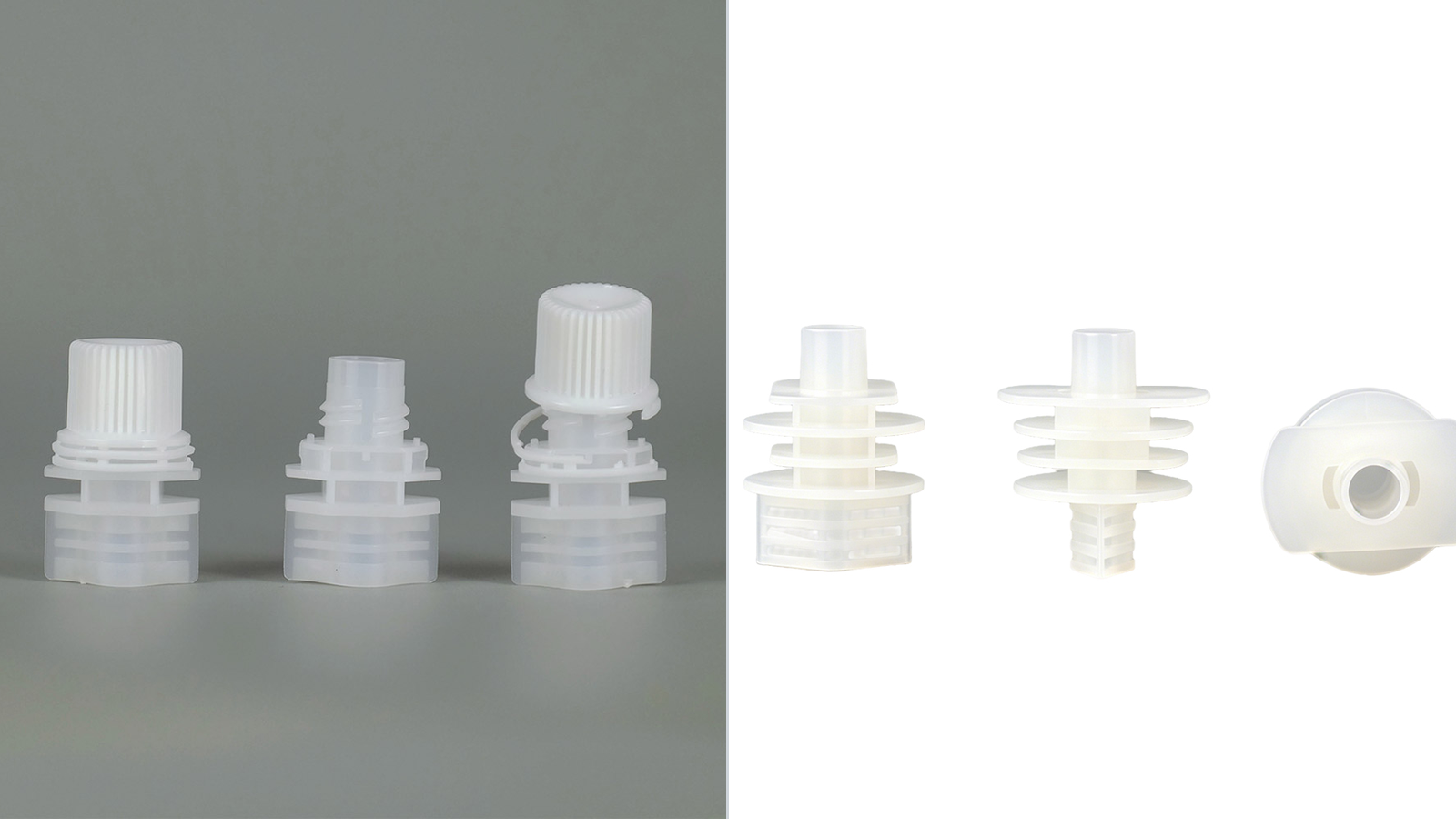
Fitments and caps that look alike at a glance — the specification, not the photograph, has to identify the part.
The cost is not only the rejected pallets. It is the review you hold a second time, the second sampling round you pay for, and the audit finding that your supplier qualification, your incoming inspection and your product file each describe a slightly different component. Software vendors have built a category around that problem, and it is worth reading how the case is made: Specright's write-up on specification data and supplier collaboration is vendor material arguing for its own platform, and the mechanism it describes — everyone working from one current version instead of several local copies — is the same one this article asks you to build by hand.
Write the specification so two sites read the same sentence the same way
A closure specification is a master data object before it is a document. In an ERP it would be a record with attributes; in a contract it is an annex; in practice it is one page of values that several sites will act on independently. SAP's documentation on creating packaging specifications treats it exactly that way — a definition of how a product is packed, referenced by downstream processes rather than re-typed into each of them. Whatever tool holds yours, the content has to pass one test: every line either states a value with a tolerance and a method, or names who is allowed to decide.
Twelve fields carry almost all of that weight for a pouch closure.
Group | Field | What the line must contain |
|---|---|---|
Identity |
| Model or part number, plus the revision this line belongs to |
Identity |
| Screw, flip-top, push-pull, twist-off, tethered, with or without a liner — the functional family, not a marketing name |
Identity |
| Which pieces arrive assembled: spout body, cap, liner, plug, tamper band |
Dimensional |
| Nominal value, tolerance, and the measuring method and instrument |
Dimensional |
| Flange or weld face geometry and the dimensions the pouch converter works to |
Dimensional |
| Thread or engagement features that decide whether the cap seals and re-seals |
Material |
| Polymer type, food-contact grade, and the color reference |
Material |
| Material and function, if one is present |
Performance |
| The range the fitment is designed to be welded at, and on what film basis |
Performance |
| The checks a receiving site performs, pass/fail limits, and sample size |
Compliance |
| The declarations the part must carry for the target market, and their scope |
Commercial |
| Bag or carton count, labeling content, and any per-site labeling difference |
Five of the twelve fields carry more weight than their line length suggests.
Field 10 is the one that most often does not exist. If acceptance criteria are not in the specification, they live in someone's practice, and practices differ between sites. Writing them down is what converts a disagreement into a measurement.
Fields 4, 5 and 6 must be separated. The bore is what the contents flow through. The interface is what the pouch welds to. The functional features are what the consumer operates. Teams regularly specify the first, assume the second, and forget the third — and the failure shows up as a leak the drawing said could not happen.
Field 7 is where color causes cross-site problems. On our own line the standard production color is plain white unless a color is called out, and colored parts are matched per order against a reference — the reference is what belongs in the specification, not the word "red". Wherever your supplier's baseline sits, if the reference is a name rather than a physical chip or a stated value, three sites will produce three reds and each will be able to defend itself.
The four views below show the assembly states a specification has to describe: the same closure as it ships, and with the cap lifted off the spout body.
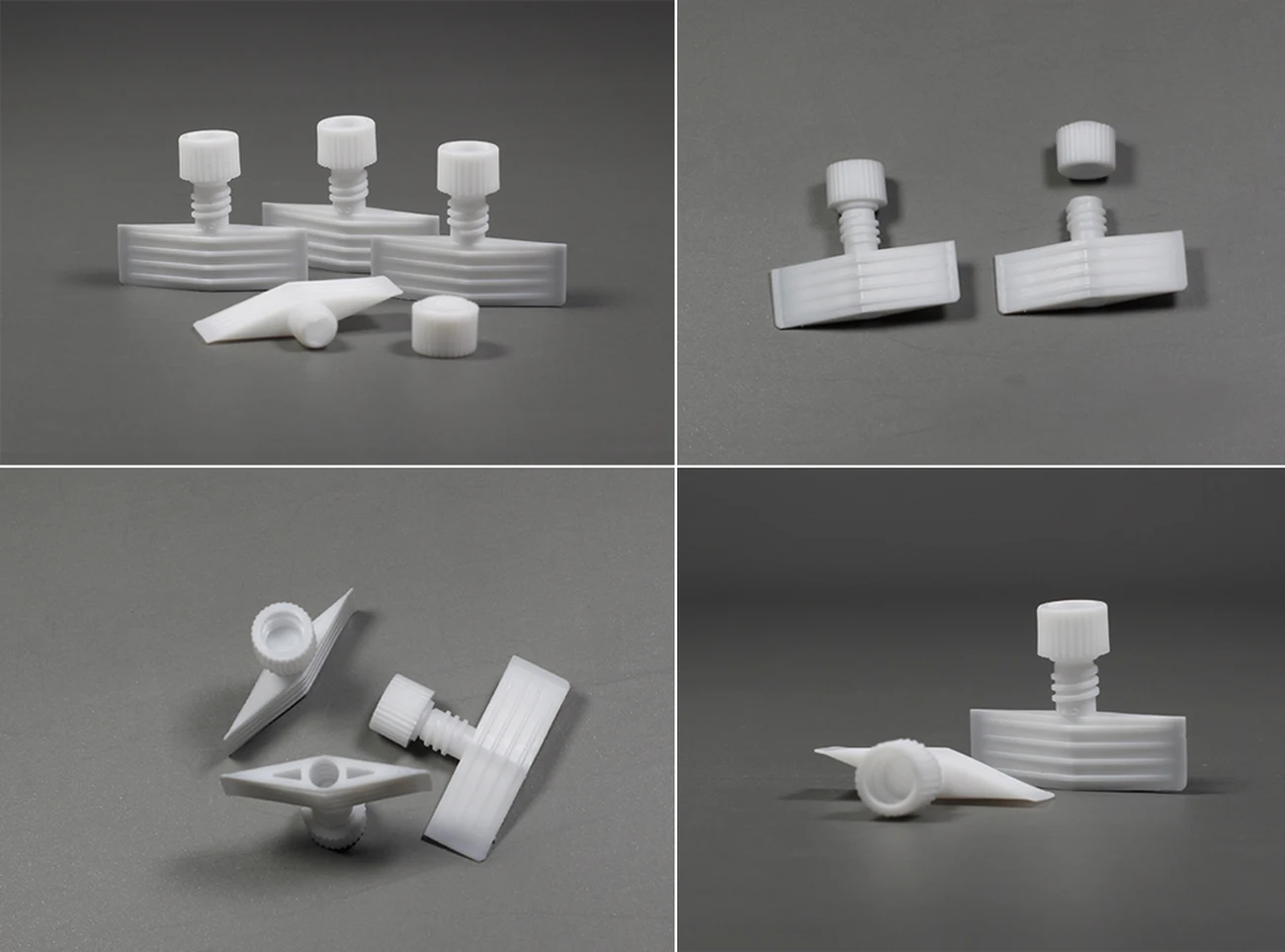
Which pieces arrive assembled, and which arrive as separate parts, is a specification line — not a detail for whoever packs the carton.
If your closure is a spout cap for a stand-up pouch, the field-level version of this list already exists on this site: the spout cap specification sheet covers bore and material, the two dimensions most often asked about. This article stays one level up — on how a specification set out that way is governed across sites.
Decide field by field: what stays global, what may be chosen per site
The second failure mode — a site editing the master document to suit itself — is not fixed by locking permissions alone. If a site has a real local constraint and no sanctioned place to record it, it will solve the problem in an unsanctioned place.
So make the second column explicit. For every field, decide whether it is global (one value, one owner, changed only through a revision) or site-controlled (each site records its own value inside a stated range, with a named owner). Three questions sort almost every field:
- Can it change what the consumer receives? If yes, global.
- Is it a property of that site's equipment or film rather than of the part? If yes, site-controlled.
- Does a market's regulation fix it? If yes, global for that market — and if two markets disagree, you need two market variants, not two site readings.
Typically global | Typically site-controlled |
|---|---|
Part identity, revision, component states | Date the site switched to the current revision |
Bore, interface and functional dimensions with tolerances | Which of the site's lines the closure runs on |
Resin type, food-contact grade, color reference | Sealer settings used to weld the fitment to that site's film |
Regulatory declarations and their scope | Container or pallet configuration for that site's intake |
Acceptance criteria and pass/fail limits | Sampling plan and inspection location at that site |
Packaging count and labeling content | Local stock rotation and quarantine practice |
The row that surprises people is the seal or weld window. It looks like a global performance figure, but the value a site actually needs depends on the film structure it is welding to. Two sites using the same fitment on different laminate structures will legitimately need different settings. Keep the designed window global, keep the working settings per site, and make the site record them. If the line is also changing between closure sizes, changing a spouted-pouch line over between sizes covers what else has to move.
Two rules make the site-controlled column safe to use. First, a site-controlled value is a range, not a single number, and the site must record the value it actually uses — a range nobody fills in is just an unfilled blank. Second, a global field can never be changed by a site, only raised. The distinction matters because the alternative is what this section started with: a site quietly fixing its own copy of the file.
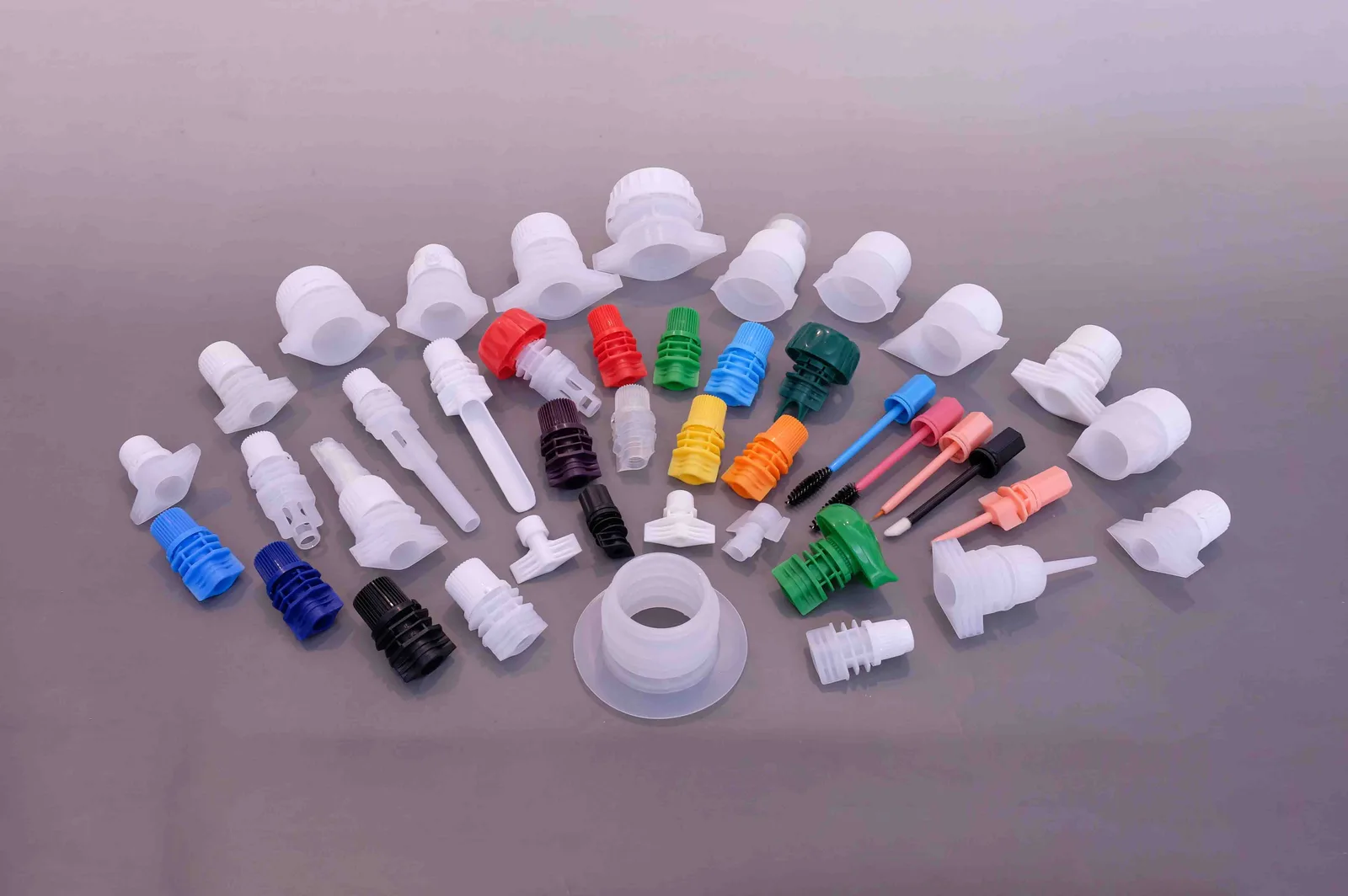
The parts below belong to the same functional family at different bores. Which bore this specification is for is a global field, decided once. How a given site welds it is not.
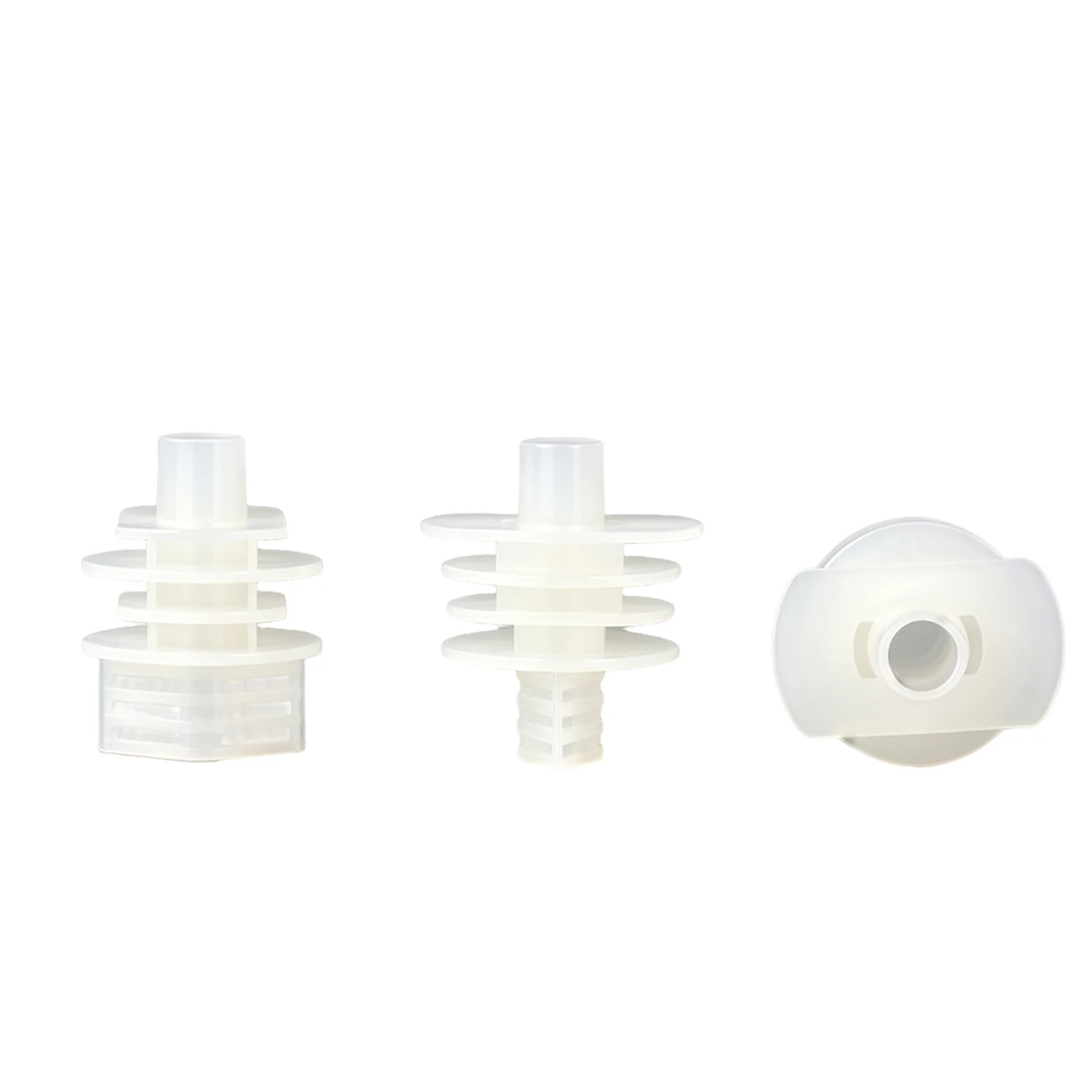
Same family, different bores — the specification has to name one of them, not "the small spout".
Revision control: where packaging specification management quietly fails
Revisions are usually defined in terms of how the part changed. That is the wrong axis. Define them in terms of what would have to be re-verified.
- A change to the physical part, or to any acceptance criterion, is a new revision. Full stop — including changes that look cosmetic to engineering and are not cosmetic to a welder.
- A change to the wording that does not alter what is measured or what passes can be handled as a documented correction, but it still gets a date and a distribution record, because a site may be holding a printed copy.
- A site-controlled value changing inside its allowed range is not a revision. It is recorded in the site's own register, against the current revision.
- A revision letter or number is never reused. If revision C is withdrawn, revision D follows it; there is no second C.
The change notice is where a revision becomes a shared fact. Six items, and the notice is not complete without them:
- Which revision the change produces, and which it supersedes.
- What changed, in the words of the acceptance criterion — not in the words of the drawing.
- Why, and whether the change affects fit, function, compliance or only documentation.
- Which sites and which open purchase orders are affected.
- The stock position at each affected site: how much of the superseded revision is on hand and where it is.
- The disposition of that stock — use up, rework, return or scrap — decided before the notice goes out, not afterwards.
Add a seventh item that most templates miss: the date each site actually switched. A single global effective date is a polite fiction when sites run out of stock on different weeks. The notice can carry a target date; the site's own register carries the truth. A new site training on the file six months later needs the real one.
The notice also has to travel outward, not just down. The component supplier receives it, and so does goods-in at every receiving site. A notice that stops in the packaging engineer's inbox has changed nothing on the floor.
If a site cannot say which revision its current container holds, the change was never controlled — it was announced.
Change control is also where the approval question lands: someone has to be accountable for the notice, and the person who agrees a drawing change is not always the person who can accept the inventory consequence. The division of those roles is set out in more detail in our article on who approves what in a spouted pouch project. Food businesses in the United States meet the same discipline from the other direction: under the preventive-controls supply-chain program, suppliers have to be approved, verification activities conducted and those activities documented — the framework set out in 21 CFR Part 117 Subpart G.

A revision starts here and ends at a filling site's goods-in desk. The distance between the two is where most control is lost.
Verify the specification at each site, not only at head office
A specification that is only verified at head office is a specification with one working copy. Verification is a per-site activity, and the evidence has to be per-site too.
Incoming inspection against the acceptance criteria. Not against the drawing — against the pass/fail limits and method in the specification. If the site is measuring a dimension the specification does not name, either the specification is incomplete or that site is checking something it does not need to.
A physical reference at every site. A retained reference sample of the approved part is what turns "it looks right" into a comparison. It should be held where the goods are received, not only at head office, and it should be replaced when the revision changes — an old sample kept past a revision change is worse than no sample, because it is a confident wrong answer.
A first-article or first-production verification when a site starts. New site, new line, new film structure: the first run against the current revision is the only cheap moment to find out that the site reads field 10 differently.
Seal and leak checks on that site's own materials. A weld window verified at head office against one film says little about the same fitment on another laminate. This is the practical consequence of keeping the weld window global and the settings local.
A quarantine rule for mixed revision stock. When two revisions are on the floor at once — which is normal during a changeover — the container has to be marked, and goods-in has to know which one it is allowed to release. Sites get this wrong most often immediately after a change, precisely when the boxes look identical.
If you also ship into Europe, part of this evidence set overlaps with the packaging documentation the PPWR touches: the spout and pouch component documentation checklist lists which component-level documents belong to a compliant file.
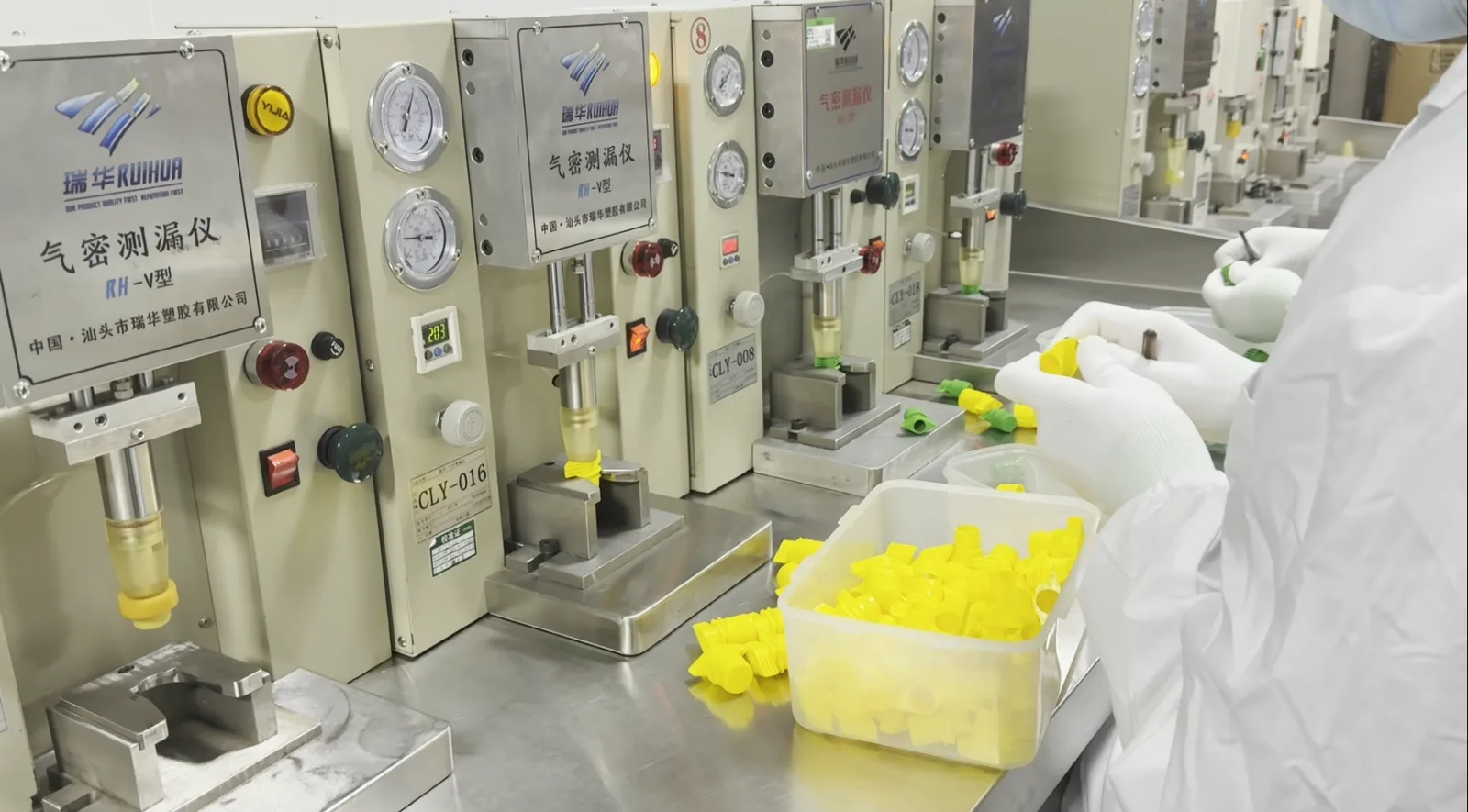
Verification happens where the closures arrive, against the revision that container actually contains.
Keep the record set a new site or an auditor will ask for
Records are what make the previous two sections enforceable rather than aspirational. Eight items cover a closure across multiple sites, and they share one rule: every record names a site and a revision. A record that says "latest specification" is not a record, it is a liability.
- The controlled master specification, with its revision history and the current revision visible.
- A per-site register of site-controlled values, each with its owner and the date it was set.
- Change notices, with the distribution list and the acknowledgments.
- The per-site switchover date for each revision the site has run.
- Retained reference samples, logged against the revision they represent.
- Incoming inspection records, per site, referencing the acceptance criteria revision.
- Certificates and declarations for the material and the part — the food-contact and system documents a brand is normally expected to collect from any component supplier.
- Artwork and labeling approvals, where the closure carries printed or applied information.
On item 7, the document categories are standard across the industry, and it is reasonable to ask any closure supplier for them in writing: quality management system certification, food-safety system certification, food-contact material compliance for the target markets, and — where test reports exist — the reports themselves with the sample they were tested on named. Scope is the thing to read, not the logo: a report that names one tested sample supports that sample, not every model in a catalog.
Management-system standards point the same way without naming any of this. In ISO 22000:2018, the food-safety management standard, documented information is a requirement in its own right: the documents and records a site uses to demonstrate conformity are expected to be controlled, current and identifiable — which is what items 1 to 8 are doing by hand.
The cross-site closure specification checklist
Before the next container leaves, the specification should survive these eleven questions.
- Does every field state either a value with a tolerance and a method, or a named decider?
- Are acceptance criteria written down, with pass/fail limits and a sample size?
- Are the bore, the weld interface and the functional features specified separately?
- Is the color reference a physical chip or a stated value, rather than a color name?
- Is each field marked global or site-controlled, with a named owner for each?
- Does every site-controlled field have an allowed range and a recorded actual value?
- Can each site name the revision its current stock was made to?
- Does the change notice carry the stock position and disposition at every affected site?
- Does each site record its own switchover date, rather than assuming the global one?
- Does every site hold a current reference sample, replaced when the revision changed?
- Is there a quarantine rule for mixed-revision stock on the floor?
Two or three of these will be missing in most organizations. The useful move is not to fix all of them at once but to find the ones that are missing and combined with a live multi-site rollout — those are the ones that send pallets back months later.
If the closure itself is the part you are specifying, our spout caps and fitments range covers bores from 1.2 mm to 40 mm in food-grade PP and PE, and samples or a quote is a quick way to check a candidate part against the fields above before a specification is frozen.