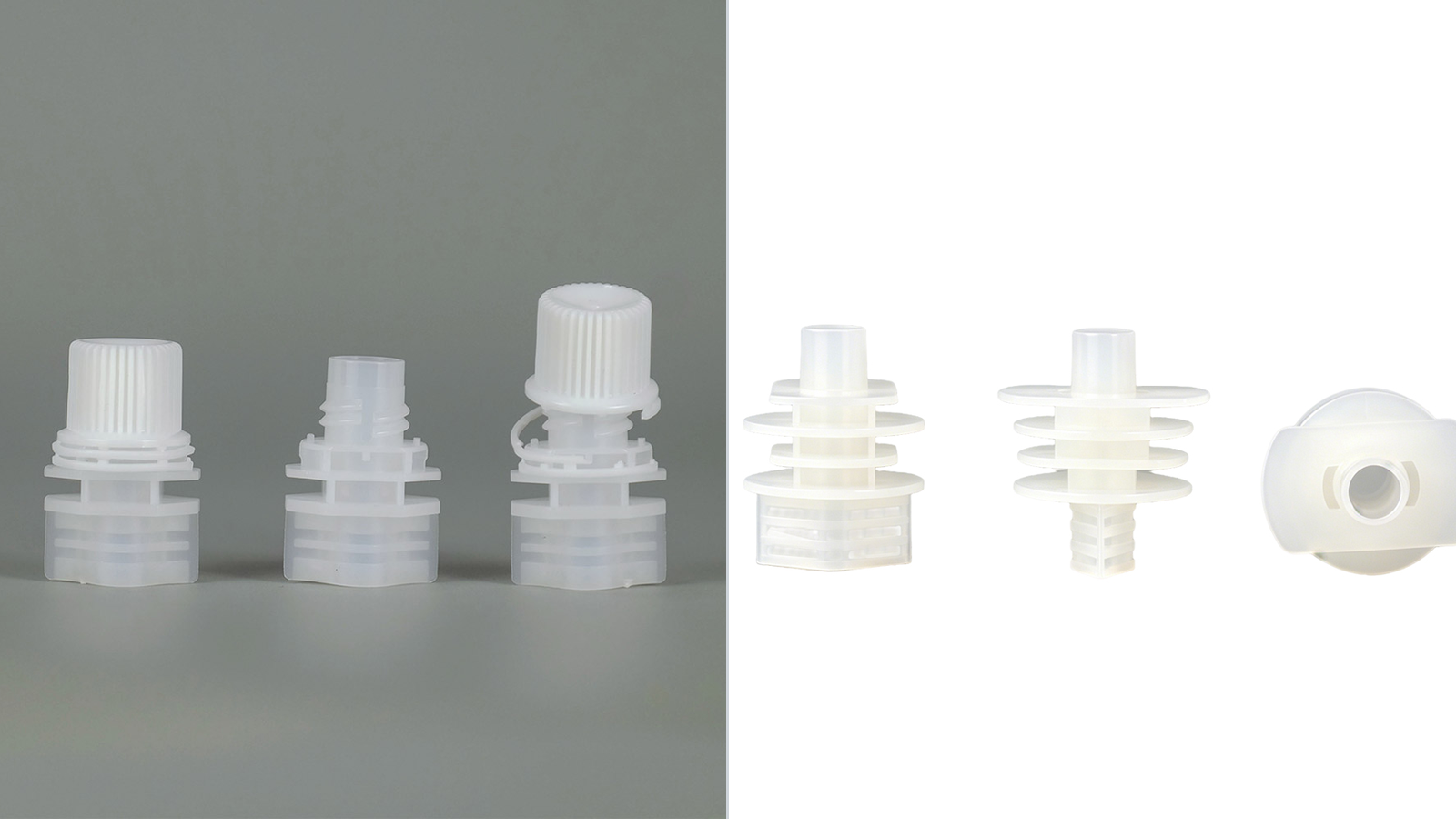

On paper, a spouted pouch is one package. In practice it is three companies' output welded into a single object: a brand that specifies it, a converter that forms the bag from film, and a spout-cap manufacturer that makes the fitment everything pours through. In our work with converters and brands, the failures that hurt most in spouted pouch packaging development are rarely technical. It is a decision that nobody owned — a bore picked for fill speed that the film could not weld, artwork approved after the print cylinder was engraved, a cap that sealed perfectly on a lab sealer and leaked on the co-packer's line.
This article sets out a proposed, generic responsibility framework: who confirms what, at which stage, and which points deserve a written sign-off. Treat it as a starting point to adapt in your own contract. It is not a signed agreement, it is not a description of any single supplier's service, and it deliberately stays at the level of roles and gates rather than re-walking the manufacturing process.
Why spouted pouch packaging development stalls at the handoffs
A spouted pouch project crosses three organisations, and each one is optimised for its own scope. The converter buys film by the roll and cares about seal integrity and print registration. The spout-cap supplier cares about tool life, cycle time and weld geometry. The brand owns the shelf, the fill weight and the consumer's first pour. All three can hit their own targets while the project still fails, because the targets meet in places nobody is measuring.
Four handoff failures account for most of the pain:
- The bore is chosen before the contents are characterised. Flow rate is set by the spout's inner diameter, and inner diameter is the one spout decision that cannot be changed later without a new tool. When it is picked from a catalogue habit rather than from viscosity, fill weight and dosing, the first prototype tells you the truth at tooling prices.
- Artwork is approved by a different group than the one that buys film. Print order, colour build and registration live with the converter's pre-press team. If brand marketing signs off a proof that pre-press never saw, the mismatch surfaces on the print cylinder, not on the screen.
- The weld is validated in the wrong place. The fitment seals against the pouch seal layer, and the seal window is a property of the film structure, the flange material and the sealer settings together. A spout that seals on the converter's lab sealer still has to seal on the filler that actually runs the product.
- "Approved" means different things to different people. If approval is a photograph in a chat thread, it is not an approval. It is an opinion, and it will be re-litigated at the first defect.
The pattern behind all four is the same: a decision with no named confirmer and no written evidence. That is what a responsibility framework fixes.
There is a cheap way to find these gaps before they cost anything. Ask, for every decision the project has already made, two questions in the same meeting: who is accountable for this, and what would we hand over to prove it was approved? Decisions that produce a name and a document are settled. Decisions that produce a shrug, or two names, are the project's real risk register — and they cluster in the same few places: the bore, the film, the weld and the artwork.
The three parties, and what each one actually owns
Strip away the org charts and a spouted pouch project has three accountable parties. Some projects add a fourth — a co-packer running the fill line on the brand's behalf — and when the co-packer is separate from the converter, it must be named explicitly rather than assumed to be covered by the converter.
Party | Owns | Does not own |
|---|---|---|
Brand owner (packaging engineering, product, quality) | The commercial brief: contents, fill volume, shelf life, dispensing behaviour, target markets, brand and artwork direction, and the final decision to release a batch for sale | Film structure, tool design, weld parameters |
Pouch converter (flexible packaging / bag maker) | Film structure and laminate choice, print and pre-press, pouch forming and seal geometry, and fabrication tolerances of the bag itself | Spout geometry, cap tooling, brand decisions |
Spout-cap supplier (fitment manufacturer) | Fitment design and its manufacturability, closure type, flange and weld interface, moulding tolerance, colour matching in the resin, and the component-level documentation | Pouch film, the brand's product, the filler's settings |
The split holds whatever the pouch is filled with. A juice or a sauce, a laundry-detergent refill, a cosmetic serum and a pharmaceutical suspension all pass through the same three parties; what changes is the dossier each row has to carry. Food and beverage applications answer to food-contact compliance first. A non-food fill — detergent, cosmetic or pharmaceutical — usually arrives with its own labelling, dosage and closure requirements stacked on top, and those requirements are why the closure rows below name the brand owner rather than the filler. The physical work starts further down the converter's flexible packaging line: the film structure, the seal layer and the print web are chosen there, before any fitment is specified.
The useful test for any item on that list is whether exactly one party can say "we are accountable for this, and here is the evidence". Where two parties can both claim a decision, or neither can, that item is the one that will cost you a week.
One structural note: this framing is deliberately narrower than a full packaging supply chain. If your supplier is positioned as a system supplier who takes multiple links of this chain, the matrix below still applies — it just means fewer boxes change hands. The supplier-side questions this cluster is built around are collected in our Sourcing & Supply hub.
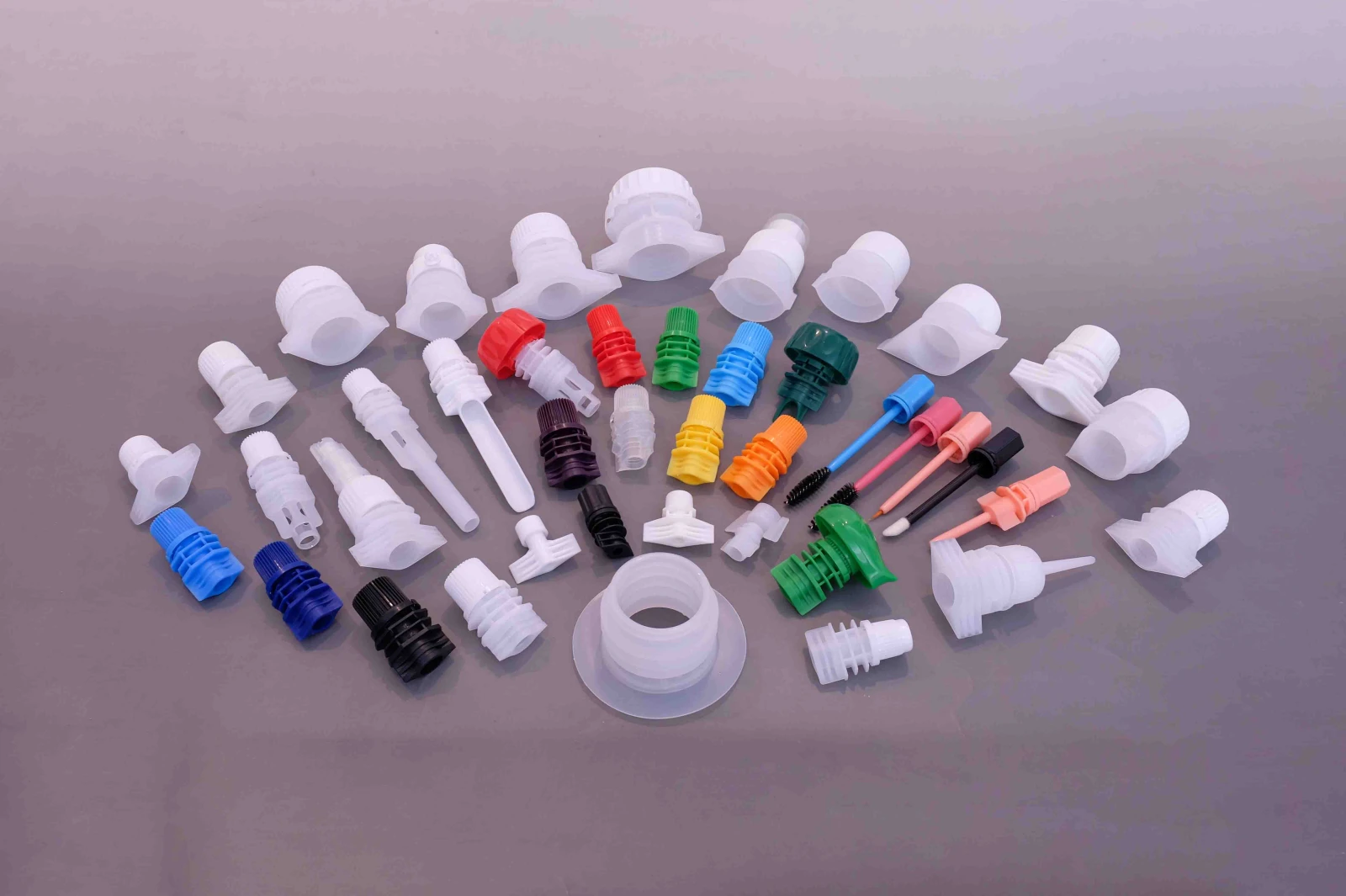
One pouch specification, many fitment options — the choice has to survive the film, the filler and the shelf.
A proposed responsibility matrix for spouted pouch projects
The table below is a blank-style starting template, not a contract. Copy it into your own quality agreement, strike the rows that do not apply, and fill in names. Its only rule is one accountable owner per row.
Decision | Accountable | Must confirm | Evidence at sign-off |
|---|---|---|---|
Performance brief (contents, fill weight, shelf life, dispensing) | Brand owner | Converter (film feasibility), spout-cap supplier (flow) | Signed brief with contents and target markets |
Pouch format and film structure (laminate layers, seal layer) | Converter | Brand owner, spout-cap supplier (weld compatibility) | Film specification sheet |
Spout bore / flow rate | Brand owner | Spout-cap supplier, converter (pouch aperture) | Bore decision with viscosity and fill-speed assumption |
Closure type (screw, flip-top, push-pull, long nozzle, anti-choking, tamper-evident, child-resistant) | Brand owner | Spout-cap supplier (mouldability), converter (fit) | Chosen closure with the reason recorded |
Flange geometry and weld interface | Spout-cap supplier | Converter (film structure, seal window) | Interface drawing agreed by both |
Sealing temperature window | Spout-cap supplier states it | Converter validates on the actual film | Seal curve and a tested seal |
Artwork and print proof | Brand owner | Converter pre-press; spout-cap supplier if cap colour is specified | Approved proof file and version number |
Colour match (resin / masterbatch) | Spout-cap supplier | Brand owner against the reference | Physical master or Pantone reference |
Tooling design and DFM | Spout-cap supplier | Brand owner (design and tooling spend) | Approved 3D design before steel |
Trial samples (T1, T2 and beyond) | Spout-cap supplier produces | Brand owner and converter against spec | Measurement report, not photographs |
Filling-line trial and seal validation | Whoever runs the line (converter or co-packer) | Brand owner on acceptance criteria | Line trial record with settings |
Bulk release and first-article inspection | Spout-cap supplier releases | Brand owner accepts | Batch data and inspection record |
Change control after sign-off | Whoever proposes the change | All three parties re-confirm | Change note referencing the affected gates |
Two rules make the matrix work in practice. First, one name, not one department — "the quality team will check it" is how a decision goes unattended. Second, evidence beats conversation — if a gate has no artefact attached, it has not passed.
The one rule that carries the rest: every row has exactly one accountable party, and every gate has one document. Two names on a row means the decision has not been made yet.
Two closure families deserve naming separately, because they change the tool rather than the cap. A tamper-evident band is moulded in the same shot as the closure, so it cannot be bolted on after the tool exists. A child-resistant closure is defined by a test protocol as much as by its geometry, and it is usually the pharmaceutical and household-chemical fills — the non-food side of the range — that trigger the requirement. Both decisions belong at specification freeze; both are expensive to reopen once steel has been cut.
Written specification is the anchor here; the fields a pouch spout specification actually needs are broken down in our spout cap specification sheet guide.
The five sign-off points worth putting in writing
Not every row in the matrix deserves a formal gate. Five do, because they are expensive or irreversible to revisit.
Sign-off point | Trigger | Who signs | What you keep |
|---|---|---|---|
| Before tooling spend is committed | Brand owner, with converter and spout-cap supplier acknowledging | Frozen spec, version-numbered |
| Before print cylinders are engraved | Brand owner, with converter pre-press | Approved proof, dated |
| After trial shots (T1/T2) hold dimension | Brand owner, against the frozen spec | Measurement data, cap-closure feel, colour match |
| On the actual filling line, with the actual film | Line operator plus brand owner | Line trial record: temperature, pressure, dwell, result |
| Before the first commercial batch ships | Spout-cap supplier, accepted by brand owner | First-article inspection and batch traceability |
Three of these get skipped most often, and each has a recognisable shortcut. Sample approval becomes a photo instead of a measurement report. Seal validation happens on a lab sealer because the line is busy. Bulk release is assumed because the samples were fine. Any of the three moves risk from the supplier's balance sheet to yours, because a defect found at your filling line has already been paid for twice.
The gates are cheaper than they look if you treat each as one document. A frozen spec is one PDF with a version number. Artwork release is one dated proof. Sample approval is one measurement report — the data the supplier already generates for its own inspection, reformatted against your names. Seal validation is one line-trial record with the settings used, so the run can be repeated. Bulk release is the batch record you would want anyway if there were ever a recall.
The gate that startles first-time buyers is sample approval, because it reads like a formality. It is not. Sample approval is the last point where a fix costs a toolroom adjustment instead of a production write-off — what the trial-shot loop fails to surface here shows up later, on a line that is already running your film and your fill weight. The steel-and-trial-shot sequence on the supplier side is covered stage by stage in our walkthrough of the custom spout cap production process. If you want the gate formalised as a checklist you can hand to a project team, the sample and validation planner covers the same ground from the buyer's side.

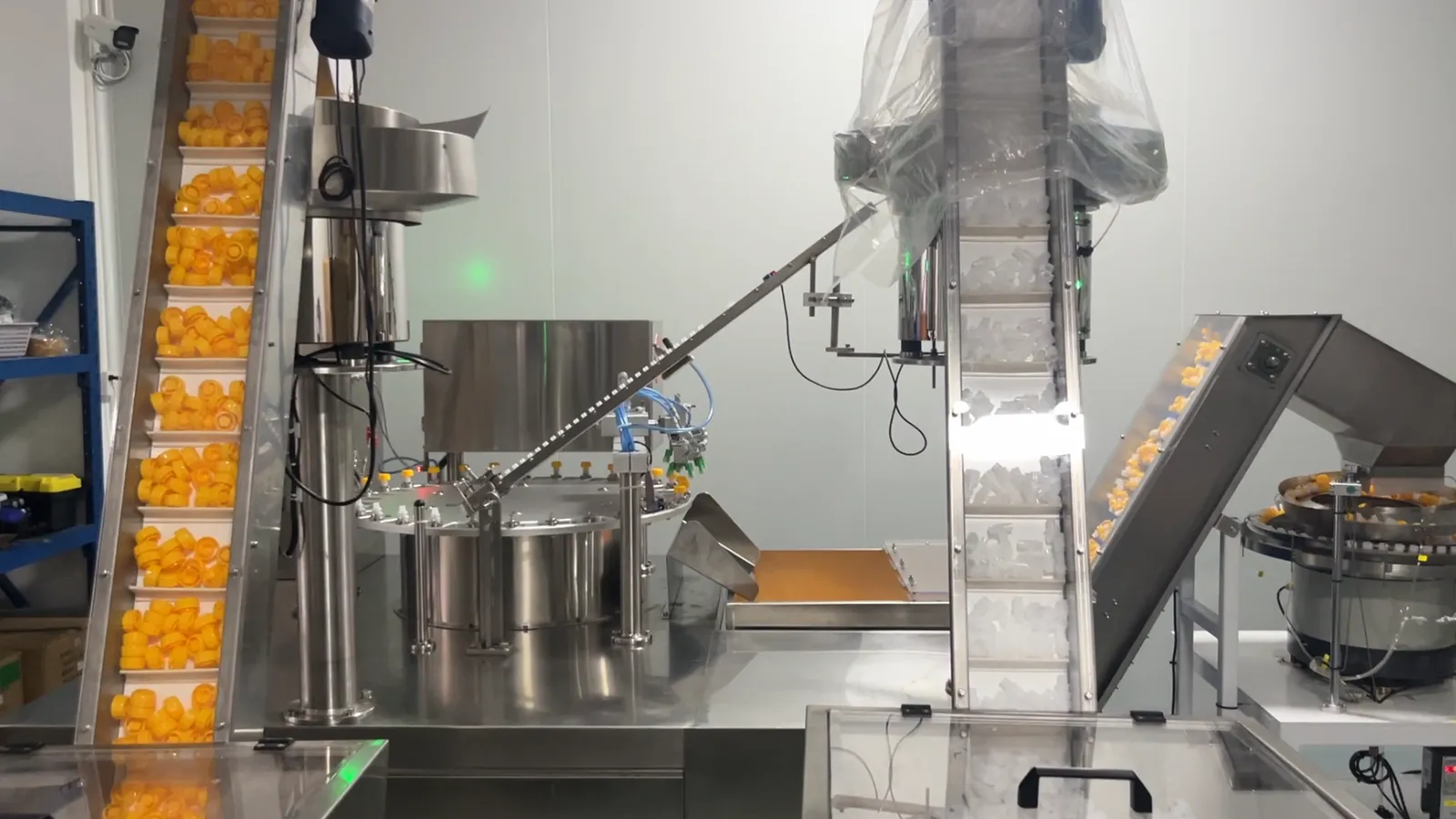
Verification is a place and a record, not a promise — the batch is made on a machine, and the machine log is the evidence.
Where compliance responsibility sits (EU and US)
Role clarity stops being a management question and becomes a legal one the moment a package crosses a border. The frameworks differ in detail but agree on the principle: responsibility attaches to the operator, not to the component.
In the EU, Regulation (EC) No 1935/2004 is the framework for materials intended to come into contact with food. It defines a "business operator" as the person responsible for ensuring the regulation's requirements are met within the business under their control, and it requires traceability at all stages so that responsibility can be attributed and defective products recalled. In a spouted pouch project that means each party holds the documentation for what it makes: the converter for the laminate, the spout-cap supplier for the fitment. The Commission publishes its own summary of how food-contact materials are regulated — worth reading before you agree which party supplies which declaration.
The packaging and packaging waste regulation (EU) 2025/40, which repeals Directive 94/62/EC, adds design and material constraints on top of food-contact rules — including a limit on PFAS in food-contact packaging that applies from 12 August 2026. Recyclability requirements make the fitment a design input rather than an accessory. The engineering constraint sits with the component: a spout engineered to weld at low temperature keeps the seal layer of a mono-material PE pouch intact, so the pack stays in a single polymer stream instead of carrying a second, incompatible plastic. The design side has its own reference document — the CEFLEX D4ACE guidelines, the flexible packaging value chain's guide to designing packaging that can be recycled, which is the frame in which a spout and cap are part of the pack rather than an accessory bolted on afterwards. If your brand is making a recyclability claim, the weld window belongs in the specification freeze, not in a later revision.
For the US market, the comparable clearance for the resin in a polyolefin fitment sits in FDA 21 CFR 177.1520, which lists the olefin polymers permitted for food-contact use and their conditions. The practical consequence is the same as in the EU: the component supplier documents the component, and the brand's dossier is only as complete as the weakest certificate in it. When you qualify a new supplier, the questions that expose a thin paper trail are collected in our spout cap factory audit checklist.
How to use this framework without mistaking it for a contract
The boundary is worth stating once more, plainly.
This is a proposed framework, not an agreement. It is generic by design, it names no models or commercial terms, and it should not be pasted into a purchase contract as if a supplier had accepted it.
What it is good for is the conversation before the contract — and the project record during it.
Three ways to get value from it:
- Run it as a gap check at kickoff. Walk the matrix row by row with all three parties on the call. The rows where nobody volunteers to be accountable are the rows to resolve before tooling.
- Attach it to your quality agreement. Convert the five gates into acceptance criteria with names and dates, and reference the evidence column so nobody has to remember what "approved" meant.
- Keep the filled-in version as the project's spine. When a defect appears six months in, the first question is which gate it passed through and what evidence was recorded. A matrix with real names answers that in minutes; a chat thread does not.
If you are starting a fitment project, the range of spout caps your pouch format can accept is a useful reality check before any specification is frozen — the spout cap range for stand-up pouches and doypacks runs from 1.2 mm to 40 mm in spout inner diameter, and moulding the fitment is the half of this chain we are accountable for. We issue the component-level paperwork for the spout cap we make — ISO 9001:2015 and HACCP system certificates, plus food-contact documentation covering the US FDA food-grade requirement and EU 1935/2004 — so the fitment row of your matrix has something to point at.
Whether the next step is a spec review, a sample request or an audit, it starts with the same two documents: a brief and a matrix. Request samples or a quote and use the framework above as the agenda.