
A spout cap specification becomes quotable when it answers six questions: the pouch film or sealant layer the fitment welds into, the fill and filling conditions, the target spout inner diameter and cap style, the quantities, the target market and port of destination, and the validation or documentation you need. Send those six lines and we can quote you from them — leave one out and the number that comes back is a guess.
This page turns a spout cap specification into a brief a supplier can actually price. Choosing the right fitment is a separate job: our step-by-step guide to choosing a spout cap walks the full decision order, and how fill type shapes the fitment is a topic of its own — both live in our choosing and running spout caps series. Here we assume you know roughly what you need and want it quoted.
What a quotable spout cap RFQ must contain
Six lines separate a request from a quote. Copy the list into your email or RFQ form and fill in what you know:
Required — without these, the price is a guess:
- Pouch film structure / sealant layer. The film or sealant the spout must weld into — for example a PE/PE mono-material structure, BOPA/PE, or a named sealant grade. This decides the sealing window and whether the fitment should be PE or PP.
- Fill and filling conditions. The product itself, its fill temperature, and your line speed or filling method. Hot-fill and retort change both material and cap requirements.
- Target spout inner diameter and cap style. The bore in millimeters, with the ± tolerance you expect, plus the closure — screw cap, flip-top, anti-choking mushroom, tamper-evident — and color if you need custom.
- Quantities. Annual usage and first-order size. MOQ terms for stock models and custom colors are confirmed on the quote — they vary by model and are negotiable for special cases.
- Target market and port of destination. EU, US, or other — this decides which food-contact documentation you need — and the port for logistics.
- Validation or documentation required. Certificates (FDA, EU 1935/2004, GB 4806.7), third-party test reports, or samples to evaluate.
Nice to have — speeds things up, does not block a quote:
- Reference sample or existing model number (for example RD-001, RD-010)
- Target delivery timing
- Branding or labeling requirements (cap color, logo embossing)
- Third-party testing requirements
- Existing drawing or 3D file
Not sure which fields you can fill? The custom spout cap project planner walks the brief step by step. When the brief is complete, send it through the request samples & quote page and get numbers back instead of a questionnaire.
Existing model or new tooling: state which
The fastest way to slow down a quote is to leave this ambiguous. Two routes exist and they price differently:
- Existing model. A standard catalog fitment with a mold already in production — for example the stock RD-001 (8.6 mm), RD-010 (9.6 mm), RD-013 (12 mm) or RD-014 (14 mm). These quote directly from the catalog, with MOQ terms confirmed on the quote — most pouch projects land here. Ruihua's catalog carries 19 SKUs at 8.6 mm alone, across a 1.2–40 mm range of 117 spout cap models. Custom spout caps and pouch fitments shows how far a standard model can be adapted before it stops being standard.
- New tooling. A custom mold for a bore, cap style or geometry the catalog does not cover. This route prices differently, and honestly: the mold quote follows the 3D drawing and a confirmed technical route — mold cost cannot be estimated from a sketch. That is why we will not fill in a price, an MOQ or a delivery date before the drawing exists; a number without a drawing is a guess. What we can tell you now: samples can be 3D-printed from the completed drawing, and the mold production timeline and post-tooling MOQ terms are confirmed once the drawing and technical route are agreed. The custom spout cap service page walks the drawing-to-production path in detail.
Validate the sample on your actual film and fill
A sample that works in the supplier's lab is not proof it works on your line. The fitment has to be verified in the combination that matters: sealed into your actual pouch film, filled with your product, and tested for seal strength, flow rate and leaks — plus repeated open-close cycles if the pack is resealable. The material pair (spout polymer and film sealant layer) is what melts together on the sealing station, so a sample sealed into a different film tells you little. The sample and validation planner structures that test protocol so nothing gets skipped. Where the fitment also has to match a line you already run, the five interfaces to check are listed in pouch sealing machine compatibility.
The spout cap specifications that still matter on the sheet
Once the brief is out, these are the numbers to check when the quote and the datasheet come back.
What to label on the drawing: five dimensions that are not interchangeable
One bore number does not describe a fitment, and the fastest way to a wrong quote is to let one stand for the others. When you annotate a photo or a drawing, keep these five dimensions apart — each is measured in a different place, bought as a different thing, and a match on one does not imply a match on the rest.
| What you are labelling | What it actually is | How to state it at RFQ |
| Inner diameter (bore) | The clear opening the product flows through, measured across the point where flow is constrained | The target bore in mm, plus the tolerance you expect. This is a flow dimension, not a fit dimension |
| Thread and finish | The thread pitch and form, and the sealing land under the cap — the surfaces that hold the cap on and seal it | Name the thread reference, or send the mating part; never infer the thread from the bore |
| Cap outer dimensions | The cap's outside diameter and height — what the feeder, chute and capping head have to handle | Give the cap OD and height in mm, or the cap style if it is a stock one |
| Machine-clamping / handling dimension | The body, flange and neck geometry your jaws, nests and grippers grip and locate | Send the flange outer diameter, the neck height above the flange, and the pouch pitch the machine runs |
| Dispensing orifice | The opening the consumer pours or squeezes from, which can differ from the bore you fill through | If you fill through the fitment and dispense through the cap, state both, not one |
The rule that prevents most mismatched orders: inner diameter ≠ thread specification ≠ interchangeability. An 8.6 mm spout from one supplier and an 8.6 mm spout from another share a nominal number, not a mating surface. A bore that matches on paper does not confirm that a cap and a spout actually close on one another — only a drawing or a physical sample does, so confirm compatibility that way rather than off the bore.
Inner diameter: the bore your RFQ must state
The inner diameter is the bore the product flows through, measured across the opening with a caliper at the point where flow is constrained. State it with a tolerance. Ruihua publishes its spout inner diameter as held to within ±0.1 mm of nominal; that is our published figure for the bore — not an industry-wide benchmark every fitment shares, and not a figure that covers the thread, the cap or the neck. Bore controls flow rate and dosing — a narrow bore doses slowly, a wide one empties fast — and it interacts with the cap, so the two are designed as a pair. Matching bore to product and line is covered in the spout diameter guide.
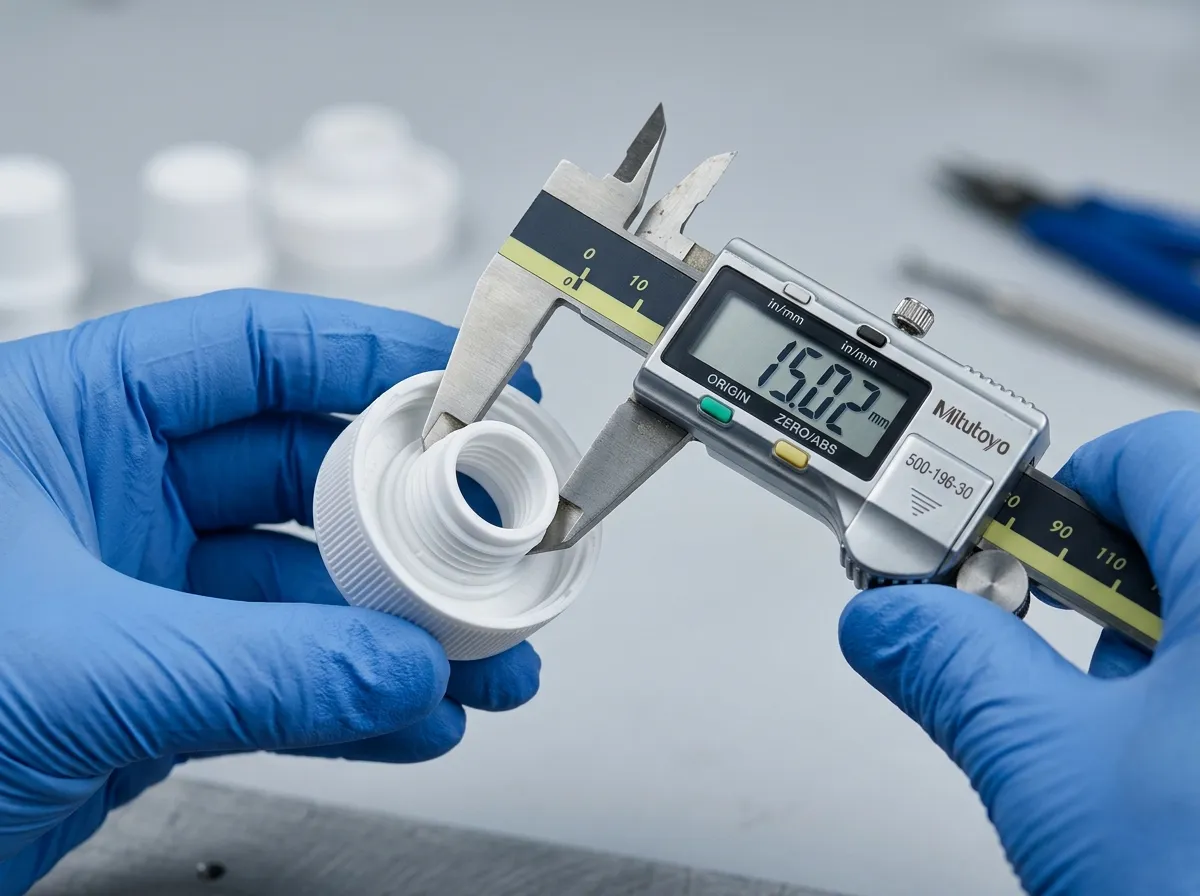
The inner diameter is the bore of the spout, measured across the opening with a caliper.
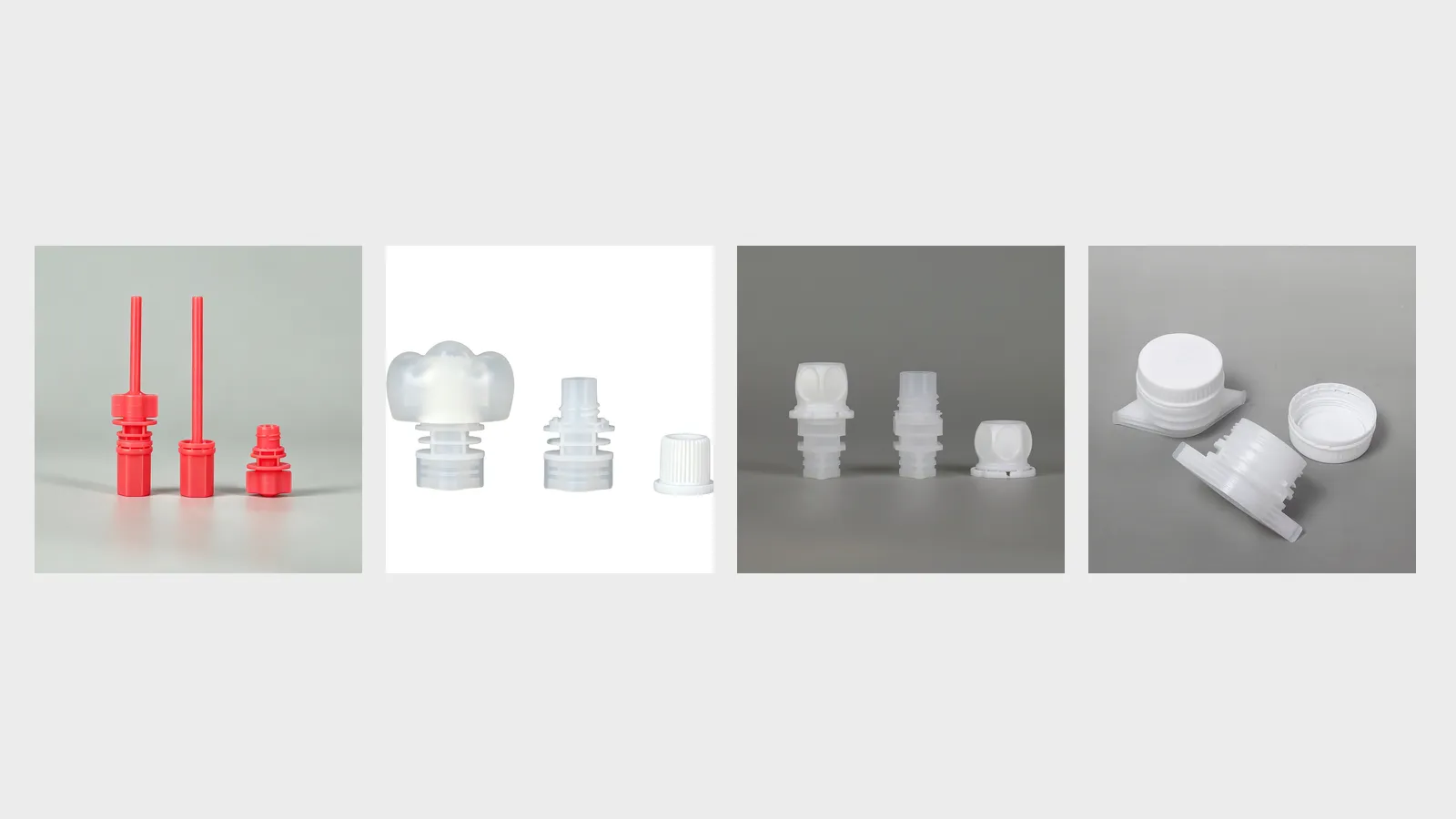
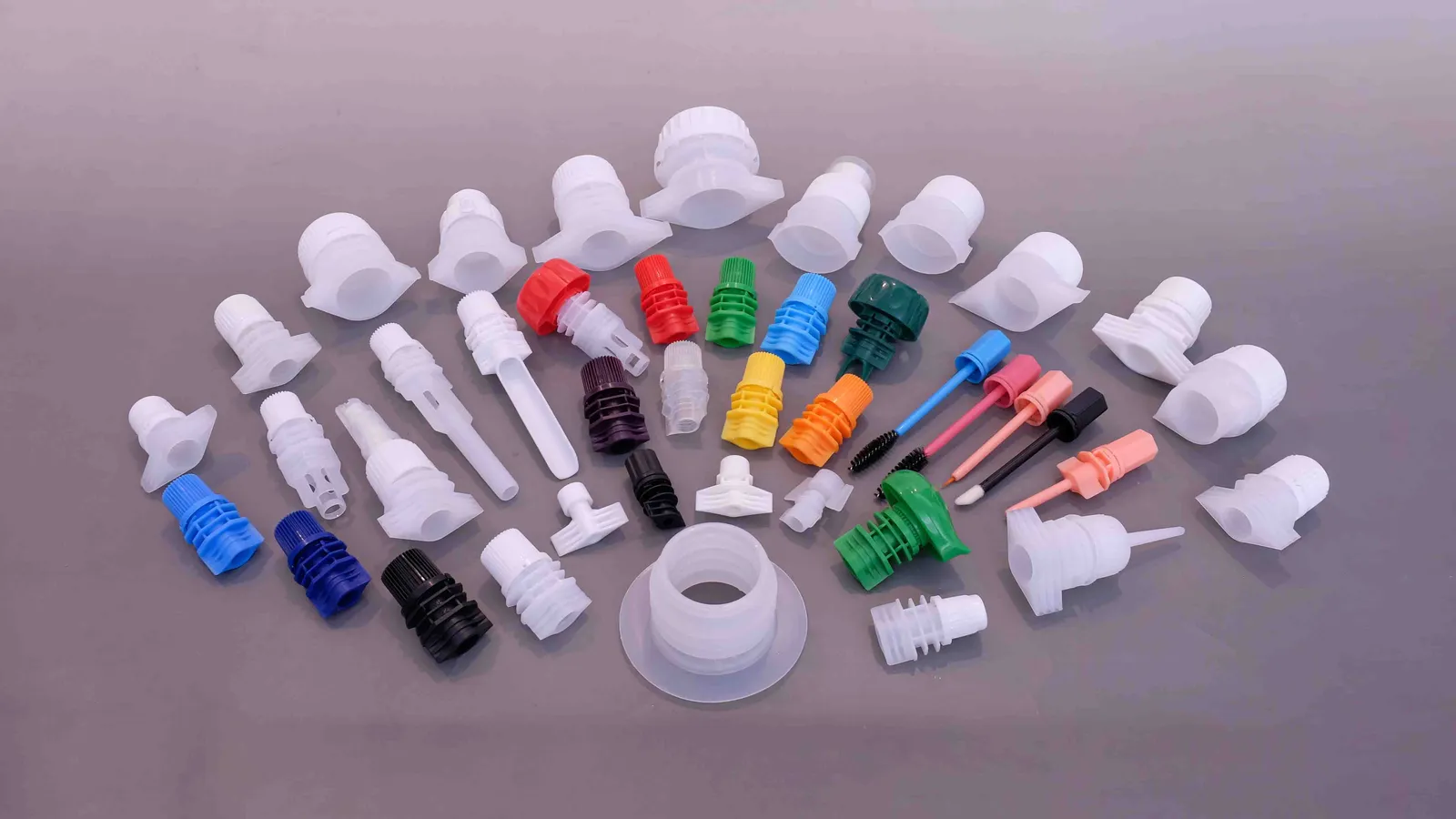
The same family across bores — from slim cosmetic fitments to 40 mm bulk-refill spouts, the inner diameter is the first spec that separates them.
PE or PP: match the material to film and fill
The spout cap material line on a datasheet should be chosen, not inherited from the supplier's stock item. If your film is a mono-material PE structure built for recyclability, a PE spout keeps the whole pack on one polymer family; if the product is hot-filled or retorted, PP's higher heat resistance is the safer call. Polyethylene's general properties are documented on Wikipedia for reference, and the recycling angle is unpacked in our guide to mono-material recyclable PE pouches.
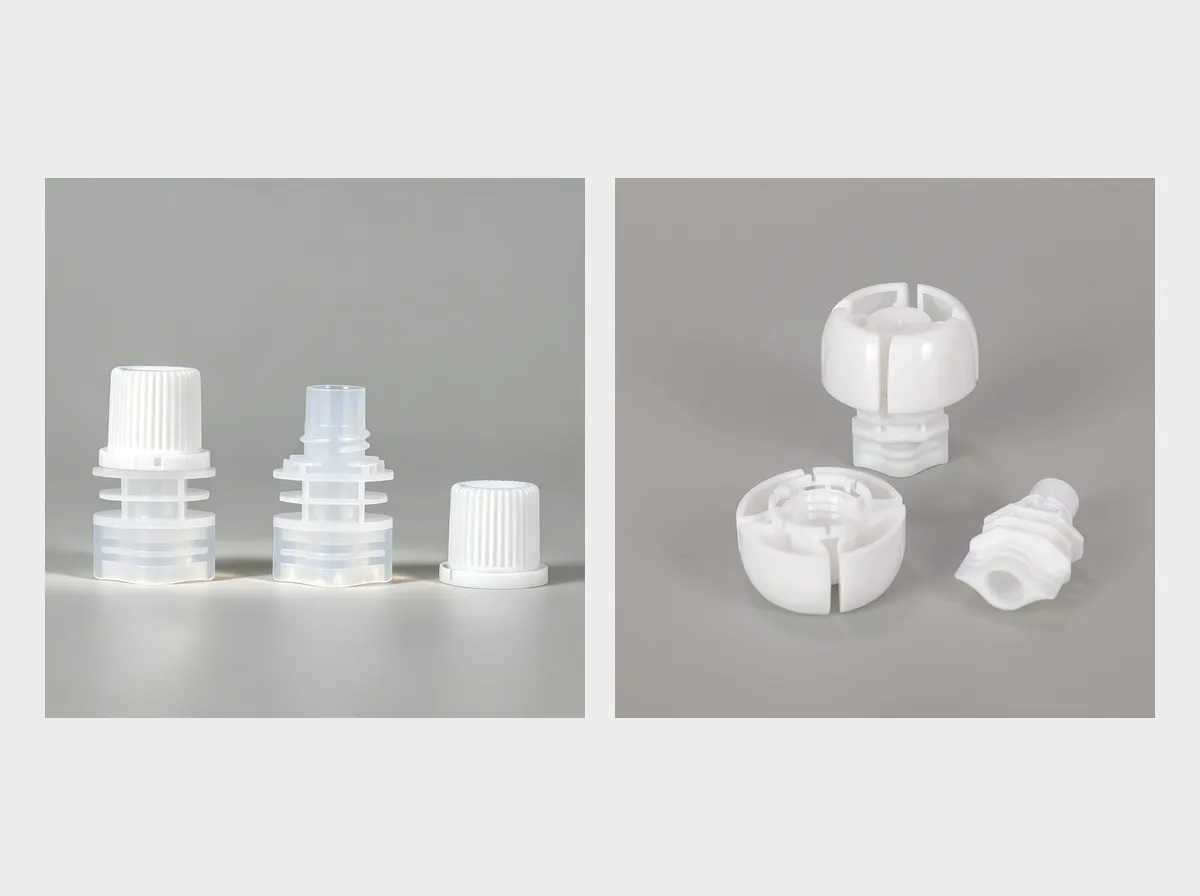
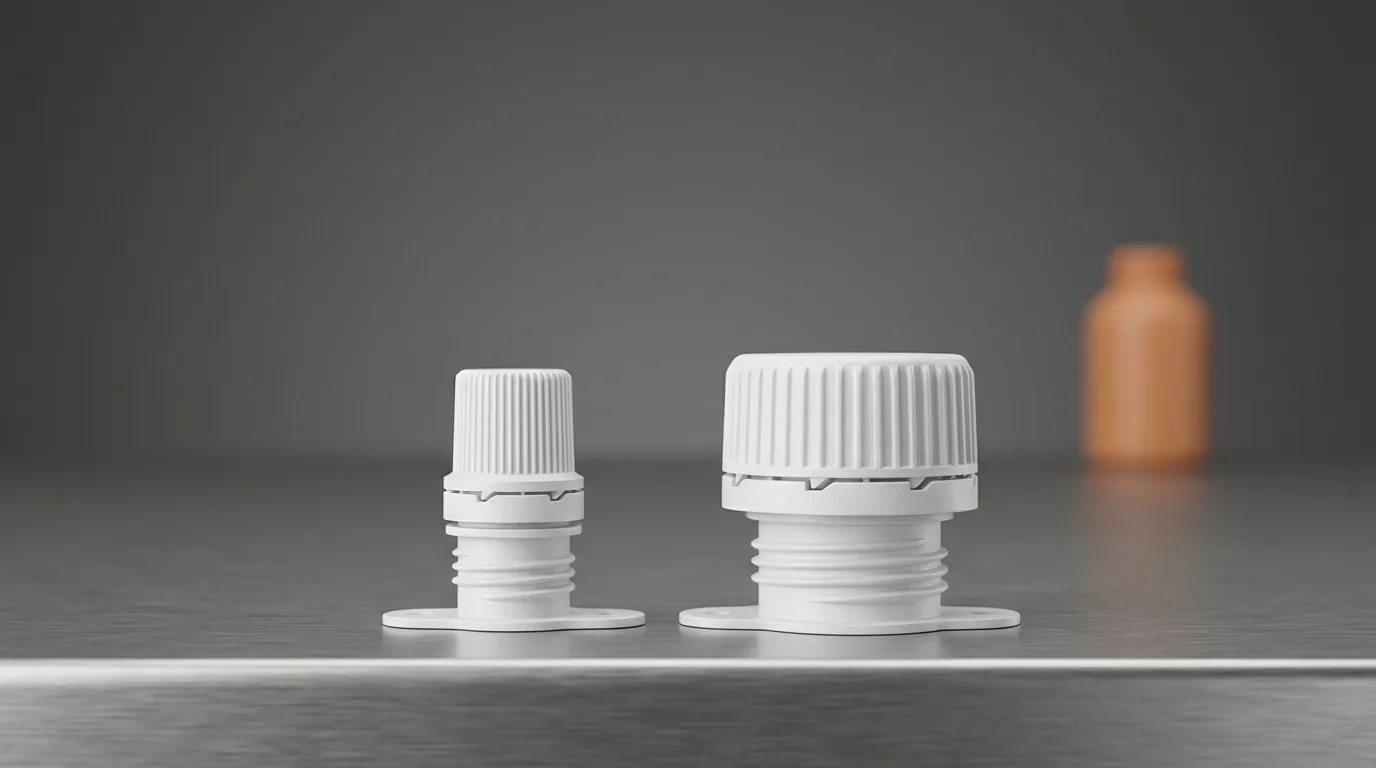
PE spouts seal at lower temperatures; PP spouts hold threads more firmly and take hotter fills.
Sealing temperature and food-contact compliance
Sealing temperature is where the spout meets your line: the material pair must melt and bond in the same window, and low-temperature-sealing PE grades (110–130 °C) protect thin films and allow faster line speeds. The full picture — temperatures, dwell time, film compatibility — is in our spout sealing temperature guide.
Compliance documentation is one of the six brief lines for a reason. Three references cover most export markets: the US FDA food-contact program, the EU framework (EC) No 1935/2004 with its plastics rules in (EU) No 10/2011, and ISO 9001 as the quality-system backbone behind the claims. At Ruihua, spout caps are produced under ISO 9001:2015, HACCP and EU 1935/2004 (TUV SUD) certification with US FDA food-grade material compliance, and individual products additionally reference GB 4806.7 and EU LFGB. What each certificate actually covers for a pouch project is unpacked in food-grade spout cap certifications.
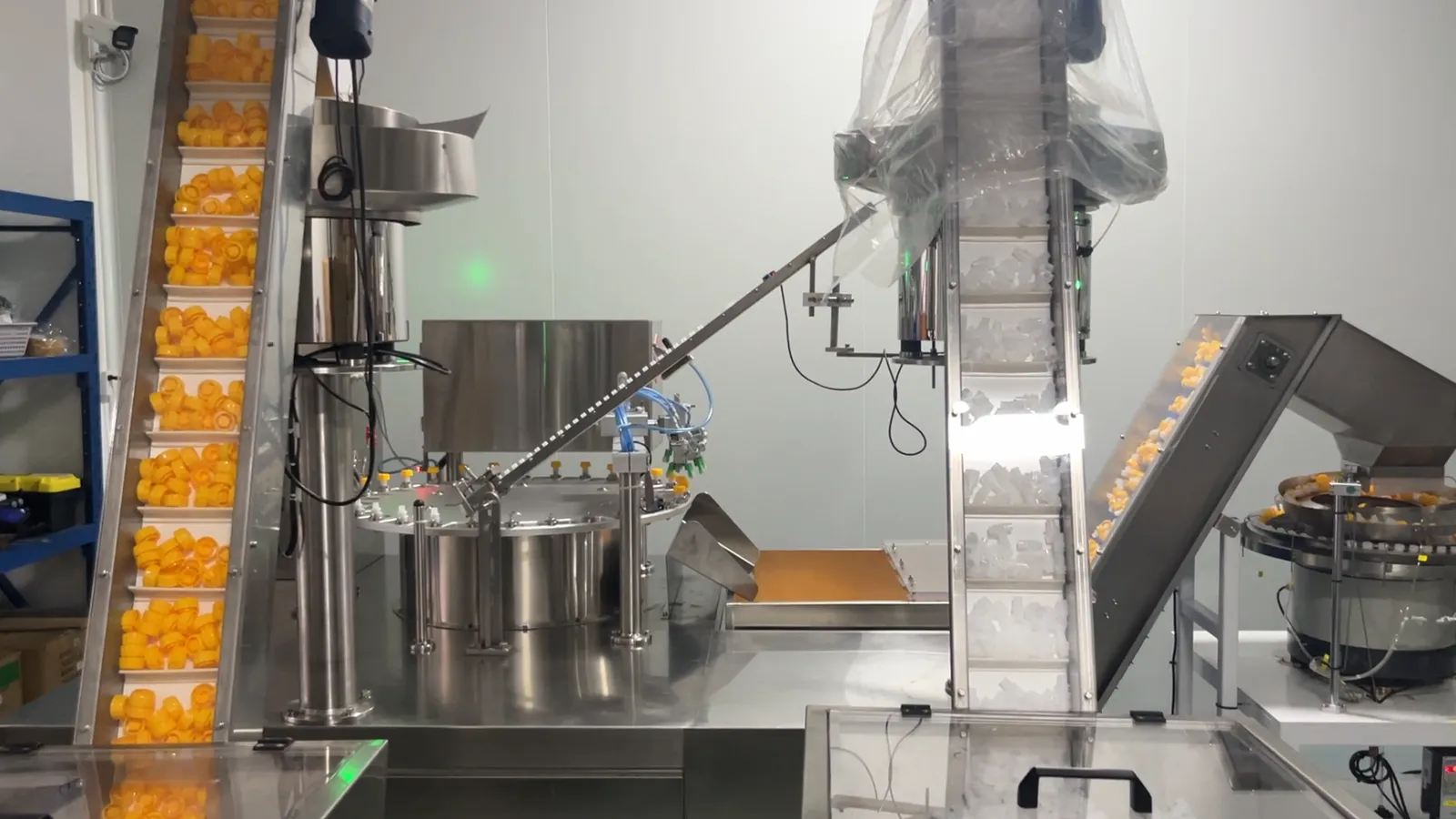
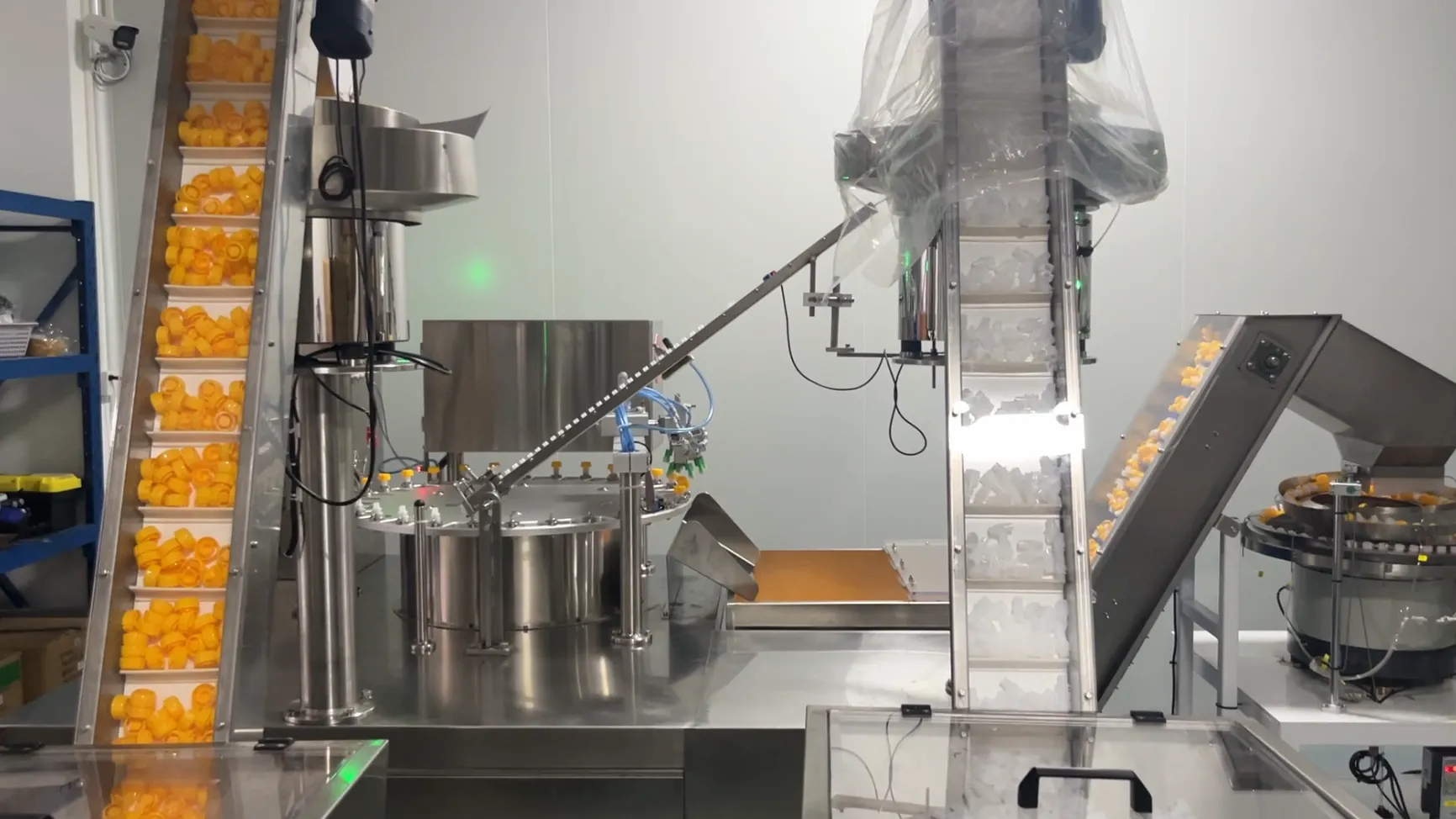
Certificates only mean something if the process behind them is real.
Send the six lines and get a quotable spec
You should not have to reverse-engineer a catalog to get a price. Fill in the six lines above — film, fill, bore and cap, quantities, market, validation — and send them through the request samples & quote page with an annotated photo or a drawing of the part you have: mark the bore, the thread, the cap OD and the flange on the image rather than describing them, and send the sample you want matched. Do not size a cap off the bore alone — a matching bore is not a matching thread. Still deciding between models? Start from the plastic spout cap product range. We reply with numbers, not a sales pitch.