You wired the tooling money in March. In September your cap price goes up 12%, you ask for the mold, and the answer is that the mold belongs to the factory. It is a dispute that recurs across packaging procurement, and it almost never turns on who paid — which is why an injection mold ownership agreement deserves more of your attention before the PO than after it.
It is also a question that resists the singular. A spout cap for a stand-up pouch is a fitment welded into film, a cap that threads or snaps onto it, usually a tamper-evident ring, often an anti-choking lip, sometimes a liner — and each can come from a different tool. An agreement that says "the mold" and stops there has settled nothing you can enforce.
The short version. Name every part, insert and spare. Fix the title trigger and the acceptance criteria it depends on. List the files you receive. Settle release, maintenance, insurance and end-of-life together. Put a number on the buy-out.
Paying the invoice is not the same as owning the mold
Two buyers pay an identical US$9,000 tooling invoice. One ends up owning a mold; the other owns an argument. Four things decide which: the written agreement, the default rules of the place where the tool sits, who holds possession, and the evidence you can put on a table.
Possession is the one buyers underestimate, because it is leverage. Several US industrial states legislate for exactly this. Michigan gives a molder "a lien, dependent on possession, on any die, mold, or form in the molder's possession belonging to a customer for the amount due the molder from the customer for plastic fabrication work performed with the die, mold, or form," and lets the molder retain possession until that amount is paid (MCL 445.618, Michigan Legislature). Ohio extends a lien to work done fabricating or improving the tool and sets a certified-mail final-notice process once payment is 60 days overdue (ORC 1333.31, Ohio Revised Code).
Note what both presuppose: a tool that already "belongs to a customer." They govern the holder's leverage, not the title. Ownership without release rights is a certificate, not an asset — so who owns the mold is only half the question, and a mold ownership clause that fixes title but not release, maintenance and insurance leaves the holder all the leverage.
Title can also move by default. Michigan goes further than a lien: unless otherwise agreed in writing, a customer who does not claim a mold within three years of its last use may lose "all rights, title, and interest" to the molder, who may then destroy it (MCL 445.612, Michigan Legislature). That is a title-transfer rule triggered by non-claim rather than by a signature — and it comes with a procedural step that is easy to miss: before the transfer, the molder must send written notice by registered mail to an address the customer designated in writing, or to the last known address if none was designated (MCL 445.613, Michigan Legislature). Read that the other way round and it is the most useful sentence in the act: designate a notice address in the tooling schedule, and answer the registered letter when it arrives.
Two caveats. Jurisdiction: these statutes show the mechanism — possession plus silence can beat a payment receipt — not your outcome. If your tool sits in a Chinese factory, Chinese law and a local retention right apply, and the contract is the part you control. Not legal advice: this page is educational; have counsel review the actual agreement.
If you are still deciding whether a custom tool is justified, the cost breakdown in our tooling guide covers what the quote is made of.
What actually counts as "the tool" on a spout cap
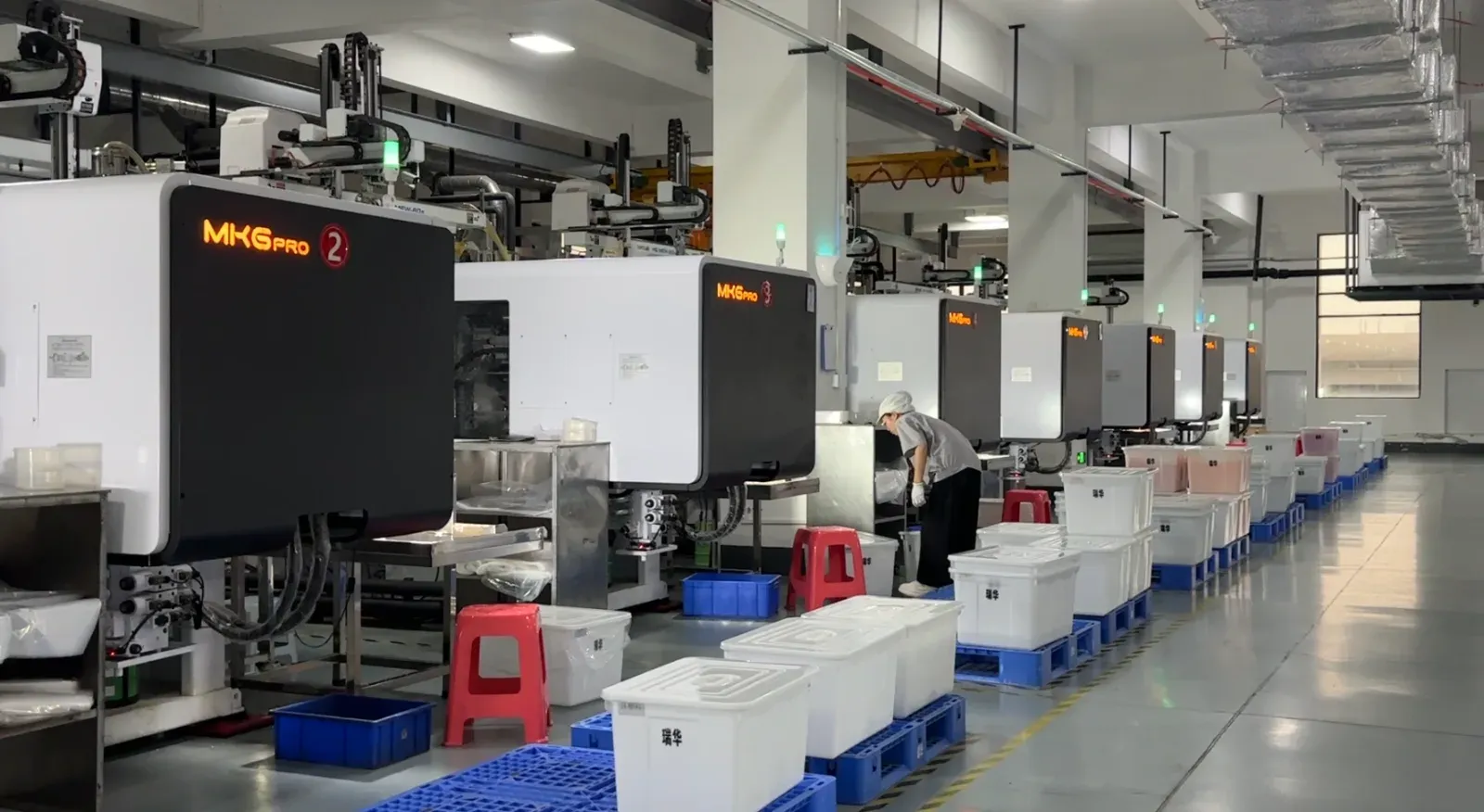
Most guidance on mold ownership assumes a single block of steel with a cavity in it. What you are paying for is an assembly of spout cap tooling, and the clause has to name all of it or you will spend two years arguing about which pieces travel with you.
- The spout body tool. The fitment heat-sealed into the film; its sealing geometry — flange width, rib profile, weld land — is specific to your film structure, which is why it cannot be substituted quickly.
- The cap tool. Screw, flip-top, push-pull or twist-off; frequently a second tool, sometimes a family tool shared with the body.
- Tamper-evident ring and hinge elements. The ring must survive handling and filling intact, then break cleanly once on first opening; where a living hinge is part of the design, the same insert also carries a feature that flexes for the life of the pack. Two wear problems, one insert.
- Anti-choking or anti-swallowing lips, where the application needs them — small features, tight tolerances, their own insert.
- The liner. An induction foil seal or silicone pad is a die-cut or a separate molded part, not something "in" the cap tool.
- Fixture and assembly tooling — capping or spout-insertion tooling, plus gauges built only for this part.
- Spare inserts, cores, hot-runner components and controllers — consumables with real replacement cost, and the first thing to go missing when a tool changes hands.
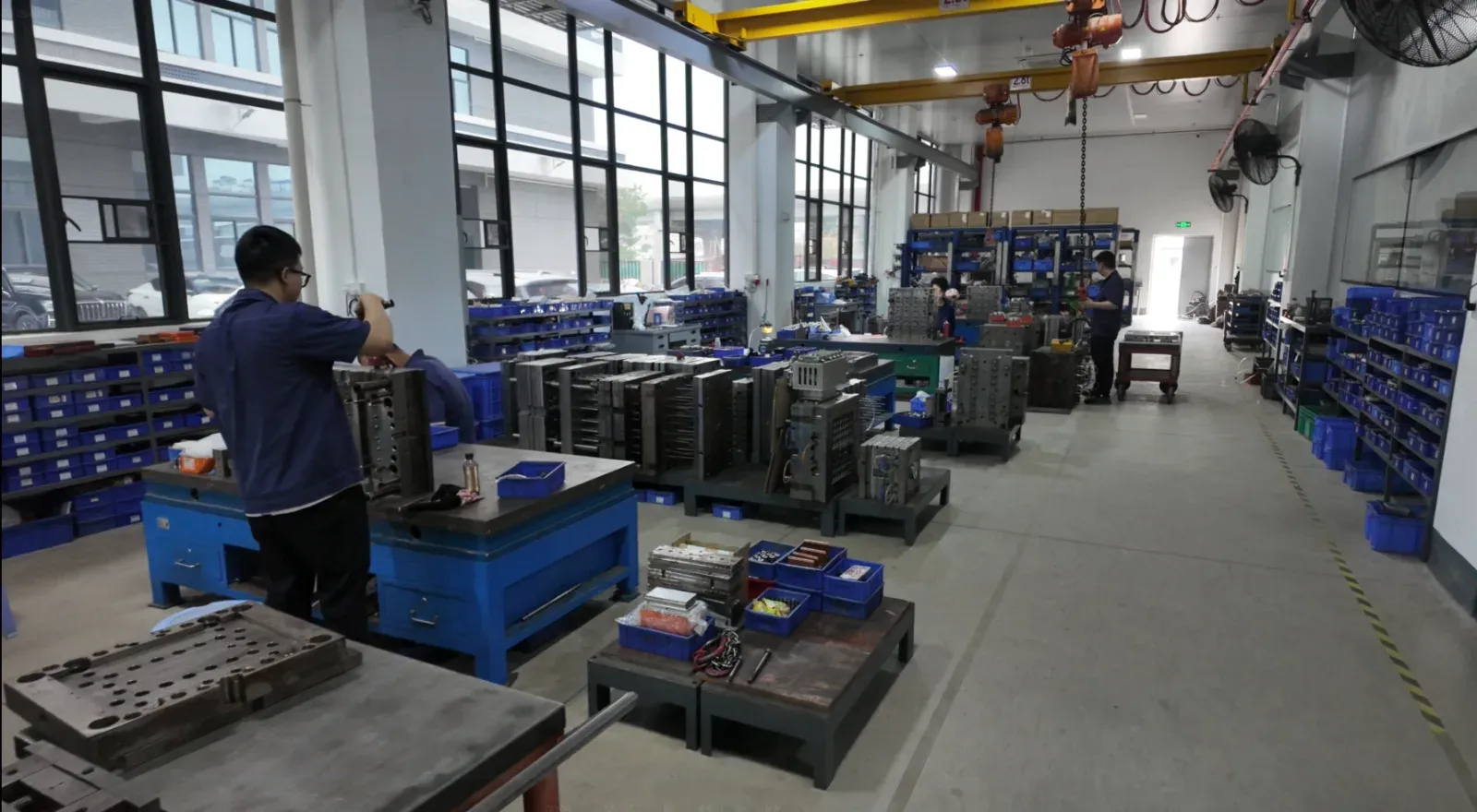
Stand in the toolroom and the abstraction collapses. What a supplier calls "your mold" is a frame being fitted on a bench, surrounded by the components that make it run — and the parts deciding whether it produces good caps are scattered across that bench, not bolted to the frame. A scope that lists only the frame protects the least valuable piece.
The Custom Tooling hub collects the rest of this cluster: cost, sampling rounds, in-house versus outsourced tooling, MOQ.
For the sequence in which each component comes into existence — which is when its ownership should be recorded — the walkthrough of a custom cap project follows a tool from drawing to approved sample.
Four ownership states your mold can be in
Most disputes are not bad faith. They are two parties who each believe they are in a different one of these four states. Underneath all four sits one distinction: a bailment is a non-ownership transfer of possession, and the right to possess a thing is legally separate from owning it (Cornell Wex, bailment).
State | Who holds title | Who holds the tool | The trap |
|---|---|---|---|
Buyer-owned, supplier-held | You, from a stated trigger | The supplier, as custodian for your production only | Title exists but release is conditional; lien and insurance gaps live here |
Supplier-owned | The supplier, permanently | The supplier | You are buying parts, not capacity; a price rise has no counterweight |
Amortized / tooling deposit | The supplier, until a volume or payment trigger is met | The supplier | The trigger is defined loosely and the buy-out price is unstated |
Shared investment | Both, in agreed proportions | Usually the supplier | Decision rights and third-party use are almost never specified |
The first state works, provided release terms are as specific as title terms. The third is the one that actually gets signed, because amortized tooling is attractive: little or nothing upfront, with the tool recovered through the part price. It is a legitimate model; what makes it dangerous is being written as if it were the first. If tooling cost sits inside your unit price, you do not own the mold on day one, and paying 300,000 caps' worth of amortization does not change that by itself.
Who holds the tool matters nearly as much as who owns it. A supplier with an in-house mold shop rather than an outsourced tool can produce drawings, trial records and steel certificates from its own files. A trader who subcontracted the tool has to ask a third party — exactly the position you do not want when a relationship ends.
If amortization is on the table, the volume assumption underneath it is the whole negotiation, including what happens when you miss the number: our guide to MOQ after custom tooling covers how committed volume and amortization interact.
The half of ownership that lives in the data
Owning the steel is necessary and insufficient. The other half of the asset is the record that makes the steel produce an acceptable cap, and it is the half buyers forget to ask for.
- 2D and 3D part drawings at the approved revision, in editable CAD as well as PDF.
- The mold design file — cavity layout, gating, cooling, ejection — plus electrode and CNC data if the shop will release it.
- Steel certificates with hardness values for cavity and core inserts, and material lot records.
- The process sheet: shot weight, melt and mold temperatures, cooling time, cycle time, clamp settings.
- Trial reports from each sampling round, with the dimensional and functional results behind sign-off.
- The acceptance criteria those reports were measured against — dimensions, fit and thread torque, leak, seal strength, visual defects. Without the criteria, a trial report is an opinion.
For a spout cap there is a seventh, and it decides whether the tool is worth moving at all: the sealing window. A spout is welded into the film, and the low-temperature series used on mono-material recyclable structures — PE, and increasingly PLA and PHA — is designed to seal in the range of roughly 110–130 °C (the spout cap range these projects are built around). That number is not generic. It is a result: the temperature, pressure and dwell that produced a leak-free seal on your film, at your fill temperature, on your sealing jaw.

Lose the trial report and you have not bought a working tool — you have bought a steel object that must be re-qualified from zero at the next plant. That is why the record belongs in the ownership clause as a listed deliverable, handed over on release rather than on request.
Specification discipline is the front half of the same problem. The version you freeze sets the width of the tool's scope: change the spout diameter, the flange or the film structure after steel is cut and you are not editing a document, you are re-cutting a cavity — at your cost, on a schedule you no longer control. Our spout cap specification sheet guide lists the fields worth locking.
Seven questions to settle before the injection mold ownership agreement is signed
Each has a wrong answer that sounds fine in a meeting, so the test is not "did we discuss it" but "is there a sentence, and who can prove it". The drafting language under each is a starting point for counsel, not a substitute for it.
1. Which parts, inserts and spares does "the tool" include?
List every item above by name and serial number in a schedule. A clause naming "the mold for part RD-xxx" without that schedule leaves the cap tool, the liners and the spares ambiguous — and ambiguity resolves in favor of whoever holds them.
Drafting language: "Tooling comprises the items in Schedule A: A1 spout body tool; A2 cap tool; A3 tamper-evident ring and hinge inserts; A4 anti-choking lip inserts; A5 capping or spout-insertion fixtures and gauges; A6 liner tooling; A7 spare inserts, cores, hot-runner components and controllers — each identified by the serial number stated there."
2. When exactly does title transfer?
Pick one objectively verifiable trigger — on order, on each payment, on final payment, or on approval of the first article — and add a backstop date for when the trigger is never documented. "Upon payment" without saying which payment is the commonest defect in otherwise reasonable agreements.
Drafting language: "Title passes to Buyer on the later of (a) payment in full of the tooling invoice and (b) written approval of first-article samples against the acceptance criteria in Schedule B; and if Supplier has not delivered first-article samples within 90 days of the purchase order date, condition (b) is deemed satisfied."
3. Who owns the design data, and what do you receive?
Separate the physical tool from the drawings. You should own, by express assignment, the tool-specific files needed to run, repair and transfer the mold — including mold-design CAD and electrode data, not just part geometry. The toolmaker can keep its background know-how, standard mold bases and internal methods, provided that does not stop you using the tool you paid for.
Drafting language: "Supplier assigns to Buyer all right, title and interest in the tool-specific design data listed in Schedule C, in the formats stated there, delivered on final payment and again on any release."
4. Where may the tool run, and what notice precedes a move?
Name the site and, if possible, the machine tonnage class. Require written notice before the tool moves between plants or machines, plus an audit right on reasonable notice. A mold can be legally yours while sitting in a machine park you cannot visit.
Drafting language: "The Tooling shall run only at the site named in Schedule E on machines of the stated tonnage class. Supplier shall give 10 business days' notice before any relocation and permit inspection on 5 business days' notice."
5. Who maintains it, who insures it, and who pays?
Tie preventive maintenance to shot counts — cleaning, vent inspection, parting-line checks, lubrication — and name the payer for wear parts versus major repair. Then answer the three insurance questions a risk manager will ask: who insures the tool on the supplier's floor, who bears risk of loss, and whether you are named as loss payee. Without a schedule, maintenance becomes discretionary and every intervention becomes an invoice.
Drafting language: "Supplier shall perform the preventive maintenance in Schedule D at the stated shot-count intervals at its own cost, and keep the Tooling insured for replacement value with Buyer named as loss payee. Risk of loss remains with Supplier until release, and Supplier's policy shall waive subrogation against Buyer. Major repairs above the stated threshold require Buyer's written approval."
6. What are the release conditions, what may be withheld, and what happens at end of life?
State the notice period for a release request, who arranges crating and freight, and the only grounds for withholding the tool — typically undisputed outstanding amounts. Anything broader hands the holder a veto; where local law grants a lien, say whether it is waived. Then settle what most lists forget: the idle or obsolete tool. Storage terms, notice before scrapping and a written disposition instruction belong here, not in a later email.
Drafting language: "Supplier waives any lien and shall release the Tooling within 10 business days of Buyer's written request, subject only to undisputed amounts. If the Tooling is idle for 12 months, Supplier shall give 90 days' notice before any disposal and act only on Buyer's written disposition instruction."
7. What is the mold buy-out price, and when can you exercise it?
For amortized tooling this decides whether you can ever leave. Fix the formula, not the concept: residual value against committed volume, a floor, and the window in which you may exercise.
Drafting language: "Buyer may acquire title within 30 days after the end of any contract year on payment of the unamortized balance, calculated as tooling cost × (1 − units delivered ÷ committed volume), subject to a floor of 25% of tooling cost."
Two blanks are yours to fill, not the supplier's: someone on your side has to be authorized to sign the tooling schedule, and someone has to own the specification. If that is unclear, the roles that sign off on a spouted pouch project is the place to start.
What the exit actually costs
Five costs sit behind a mold tooling transfer, and only one is priced in the contract you sign.
- Outstanding balances and lien exposure. Release is normally conditional on settled invoices. Undisputed amounts are fair; disputed ones need a mechanism, or the tool waits.
- Liquidated damages for non-return. Buyer-side terms sometimes fix a multiple of replacement cost — one publicly circulated template sets it at 125% of the replacement cost listed on the tooling record (a template tooling ownership agreement published by a China-focused law firm). It works only if the asset value is in your schedule.
- Crating, freight, insurance and customs. A multi-part tool set is not a parcel. Budget for packing, transit cover and a customs treatment that matches the ownership claim.
- Re-qualification at the receiving plant. New press, new water, new operators: trial shots, dimensional checks and seal validation before you can ship. This is the cost that surprises finance, and the one the data package exists to reduce.
- Downtime. Every week of re-qualification is a week of finished-goods risk on a single-source component.
The arithmetic is simple enough that there is no reason to leave it vague. If tool cost is T, committed volume is V, and you have run n units, a defensible residual is T × (1 − n/V), with a floor and a stated expiry. A US$9,000 tool with a 400,000-cap commitment, 250,000 caps into the contract, lands at roughly US$3,375. Whether that number is right is a commercial argument; having it defined is not.
How to prove ownership a year later
Ownership disputes are decided on evidence, and the evidence is assembled long before the dispute — which is why an injection mold ownership agreement should list deliverables rather than intentions. The chain runs in this order, because this is the order in which it will be tested.
Evidence | What it proves | Who should hold it |
|---|---|---|
A standalone tooling invoice in your entity's name | That the payment was for the tool, not for parts | Finance, not a shared inbox |
The signed agreement with the tooling schedule | What was bought, and when title moved | Legal, with a copy attached to the purchase order |
A nameplate with your name and asset number, photographed | Visible ownership on the production floor | Photos in your asset file, dated |
An asset register listing inserts, spares and controllers | That the scope claim is specific and complete | Engineering |
Drawings, process sheet and trial reports in your possession | That you can operate, repair and move the tool | Your technical file, not the supplier's |
Two habits keep the chain alive. Put the plate on with a fastener rather than adhesive — published buyer terms specify rivets or screws, plus photographs of the plate and of the tool open and closed, because a sticker is not evidence (Think Plastics, on buyer tooling terms and state lien law). And confirm the asset annually: a photograph of the plate alongside the maintenance log, with the audit right exercised once rather than assumed. That habit answers half of the three-year rule above; the other half is procedural. The statute's notice goes to an address the customer designated in writing, so designate one in the tooling schedule and answer the registered letter if one arrives. A factory that has been bought, moved or reorganized will not volunteer that your tool went with it.
The agreement is cheaper than the argument
A custom spout cap mold takes weeks to cut. The argument about who owns it can run for years, cost more than the tool, and end with a component you cannot source. The asymmetry sits entirely on the side of doing the paperwork first: one schedule listing the parts, one sentence fixing the title trigger, one clause fixing release and insurance, one list of the files you receive at handover.
None of that requires a lawyer to invent. It requires deciding, before steel is cut, what you are actually buying — and noticing that for a closure the asset is a package of tools and records, not a block of steel. That is the work an injection mold ownership agreement should record, and the reason it belongs in the engineering meeting rather than only the legal one.
If you are scoping a tooling project now, request samples or a quote with your pouch, contents and target volume attached, and ask for the tooling schedule alongside it.
The same custom-mold process, from design to mass production, is described on our customization page.
Last updated: 15 November 2026. Written by the Ruihua Technical Team. Statute citations checked against the sources linked above on 15 November 2026.