

If you are sourcing spout caps from China for stand-up pouches or doypacks, you have probably spent a day on supplier directories and learned surprisingly little. The marketplaces are full of product cards — "contact us for a quote" — but almost none of them answer the questions that actually decide whether a sourcing project works: what the minimum order really is, how long you will wait, how you pay, and how you know the goods are right before they leave the factory. Those four terms are the entire negotiation. This guide walks through each one, with the numbers and structures you can expect from a Chinese spout cap factory, so your next inquiry produces comparable quotes instead of more uncertainty.
What "sourcing spout caps from China" means for pouch brands
When a buyer searches for spout caps from China, the query usually comes with a product picture already in mind: a stand-up pouch with a welded spout and a screw, flip-top or push-pull closure. That matters because "spout cap" alone is ambiguous in English — in some markets the same words describe a metal pourer for fuel cans. A plastic spout cap for pouches is a different product entirely: a small injection-molded fitting, typically 1.8 mm to 33 mm in inner diameter, made from food-grade PP or PE, that is heat-sealed into the film and reclosed after every pour.
Sourcing these parts from China is a mature industry — Guangdong and Zhejiang provinces alone host hundreds of spout cap and flexible packaging suppliers — and the marketplaces reflect it. What the directories do not reflect is the commercial structure behind the product cards. MOQ, lead time, payment and inspection each follow patterns that repeat across Chinese factories, and knowing the patterns is what separates a smooth sourcing project from a stalled one.
The four terms that decide your supplier relationship
Every sourcing conversation with a Chinese spout cap factory comes down to four variables. They interact, which is why suppliers quote them as a package rather than one at a time:
- MOQ — how many pieces per order, and whether the number changes with customization.
- Lead time — from order confirmation to shipment, and what happens in between.
- Payment terms — the deposit/balance structure and the payment methods involved.
- Inspection — how quality is verified before the goods leave the factory.
Once you know what is standard for each of these, three things happen: you stop treating every quote as a black box, you can compare suppliers on the same axes, and you can structure your first inquiry so the factory answers all four at once. The rest of this guide covers exactly that, in the order you will meet these terms in a real negotiation. For the wider context of how these fit into your packaging supply chain, the sourcing and supply hub on this blog collects the related guides.
MOQ: three tiers, not one number
The most common mistake buyers make is asking "what is your MOQ?" and treating the answer as a single number. In practice, a spout cap factory runs three different MOQ regimes depending on how far your product is from the catalog — and they are not ordered the way you might expect.
Tier 1 — standard stock models: no meaningful minimum. Most factories keep a set of common spout cap models in stock: standard food-grade screw caps in the most popular diameters, ready to ship in small quantities. A buyer can order a few thousand pieces — sometimes far less — because the parts already exist and the factory is moving inventory, not starting a production run. This is the entry point for samples, small launches and testing a new market.
Tier 2 — custom colors: the highest minimum of the three. This is the counterintuitive one. Changing the color of an existing spout cap means cleaning and re-setting the injection line, running color masterbatch through the machine, and flushing it again afterward. For that reason, factories typically hold custom-color orders to a high minimum — a common figure in the industry is around 100,000 pieces, negotiable for specific cases. The same logic applies to custom logos and other surface-level changes on a standard part.
Tier 3 — custom tooling: no MOQ at all. Once a factory opens a dedicated mold for your spout — a new diameter, a special anti-choking lip, a tamper-evident ring, or a closure style that does not exist in the catalog — the minimum disappears. The customer owns the tooling project, so the factory supplies exactly what the customer needs. What you pay instead is the mold cost and the sampling rounds, which is a separate economics that the custom spout cap tooling cost guide explains in detail.
Why does this structure trip buyers up? Because the standard advice — "MOQ falls as volume rises" — is backwards here. Custom color is the most common request and it carries the highest barrier, while the most expensive commitment (a mold) has none. If a supplier quotes you "MOQ 100,000" and stops there, ask which tier they mean. A factory that can separate the three regimes is one that has actually run the numbers.
MOQ tier | Typical minimum | What you get |
|---|---|---|
Standard stock models | No meaningful minimum | Existing diameters, shipped from inventory — entry point for samples and small launches |
Custom color / logo | High minimum (~100,000 pcs, negotiable) | Line cleaning, masterbatch matching and a color sample round |
Custom tooling (new mold) | No MOQ | You own the tooling project; the factory supplies to your requirement |
Two more things to ask about while you are on the subject:
- Mixed models in one order. Many factories allow different models to be combined in a single container to reach the minimum together — useful when you are stocking several sizes at once. Confirm this explicitly; it is a policy decision, not a given.
- Stock models worth knowing. In the industry, a handful of diameters appear in every catalog because they fit the most pouch sizes. On Ruihua's side, the standard stock list includes RD-001 (8.6 mm food-grade screw cap), RD-010 (9.6 mm tamper-evident cap), RD-013 (12 mm leak-resistant cap) and RD-014 (14 mm screw cap) — useful reference points when you compare against other suppliers' catalogs.
Lead time: what to expect from sample to shipment
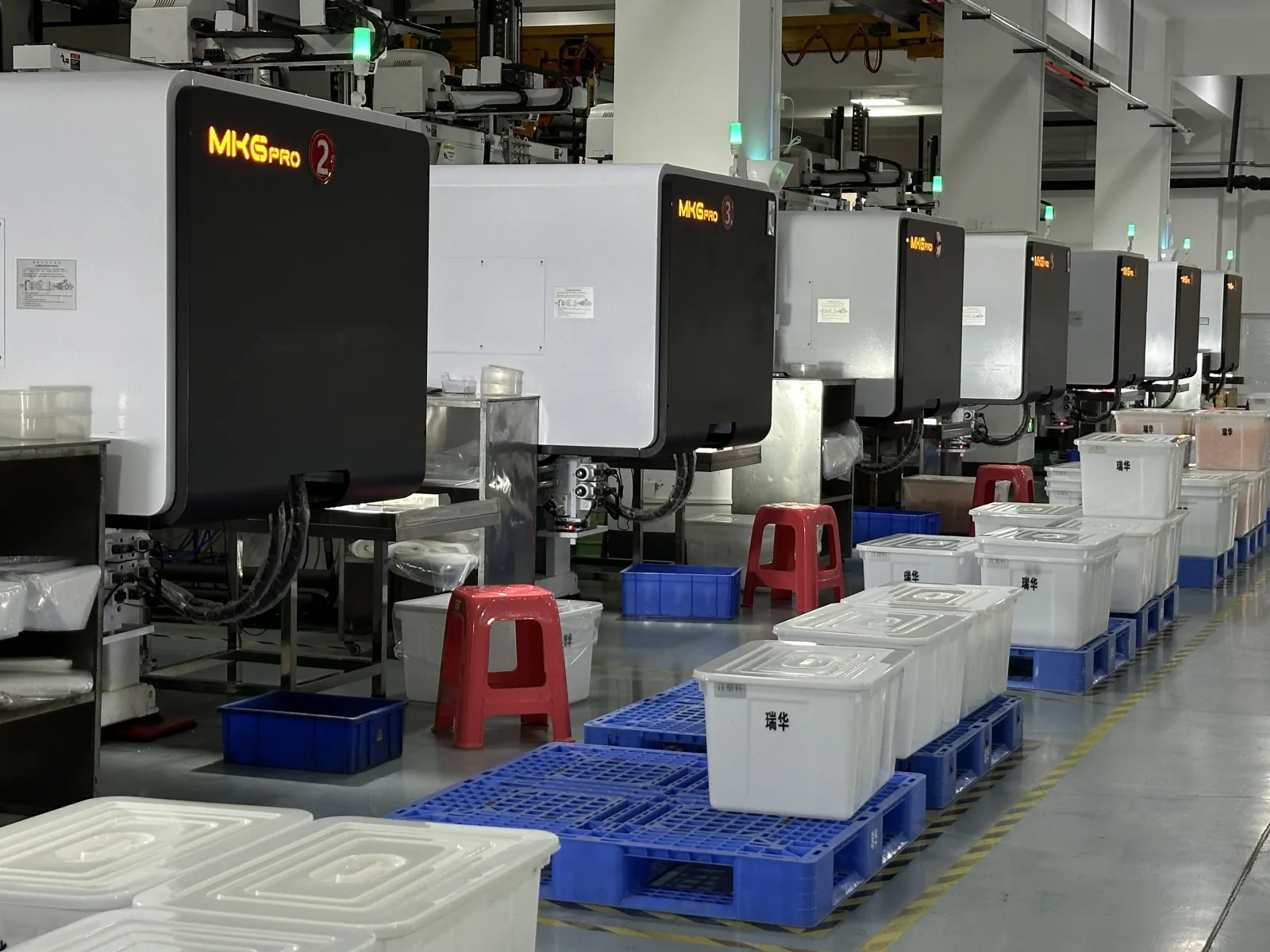
Lead time for spout caps splits into three scenarios, and buyers who quote "lead time is lead time" get surprised because they assume one number. The reality:
Scenario | Typical lead time | What happens |
|---|---|---|
Standard stock models | Fast — days, not weeks | Pick-and-pack from existing inventory; timing is about consolidation and freight, not production |
Custom color / logo on a standard model | A few weeks | Line scheduling, masterbatch matching, a color sample round, then production |
Custom tooling (new mold) | ~60 days for the mold, plus production | 3D drawing → mold quotation → sample rounds → mass production |
The custom-tooling path deserves unpacking because it is where most of the calendar goes. A realistic sequence in the industry runs: your 3D design is finalized first, because the mold price cannot be quoted until the 3D drawing exists — a factory that quotes a firm tooling price before seeing your design is guessing. Once the design is confirmed, a 3D-printed sample is produced for shape and fit confirmation, and only then does the mold machining begin, typically around 60 days for a spout cap tool. After the mold is cut, trial shots and sample approval rounds follow before mass production starts. The custom tooling guide breaks down each of these stages and the sampling rounds with honest timelines.
What this means for your planning: if you need caps for a launch in four months, a stock or custom-color path is comfortable; a custom-mold project is tight. Declare your target market's compliance requirements early (EU or FDA food-contact rules affect material and additive choices) — waiting until the mold is cut to raise them adds weeks. And if you are still deciding which diameters to stock, the spout cap diameter guide helps you narrow the range before you commit to tooling.
Payment terms: the structures buyers meet most
Payment for spout cap orders from China follows structures that are stable across the industry. You do not need to negotiate them from scratch — you need to know which one you are being offered and what it implies.
Deposit plus balance (the default). The most common arrangement is a deposit at order confirmation and the balance before or against shipment — typically a 30% deposit / 70% balance split, sometimes 50/50 for first orders or custom projects. The deposit covers material purchase and line scheduling; the balance is due when production completes, before the goods leave the factory (or against the shipping documents for established relationships). This structure exists because the factory carries real cost from the day your order is confirmed.
Letter of credit (L/C). For larger or first-time orders, an L/C replaces trust with banking: your bank guarantees payment against shipping documents, and the factory ships against that guarantee. L/Cs are common for container-sized orders and add banking fees and document requirements on both sides, but they are the standard answer when neither party has history with the other.
T/T (telegraphic transfer) variations. In practice, most payments move by wire transfer — the T/T you will see written on quotations. The split, not the method, is the variable: 30/70 for standard orders, 50/50 for custom colors or first orders, and occasionally 100% before shipment for small or low-trust orders. A request for 100% upfront on a standard stock order is a signal to ask why; on the other hand, expecting net-30 credit terms from a first-time Chinese supplier is unrealistic — credit is earned across repeated orders, not granted upfront.
One term to confirm in writing before you pay anything: what the deposit covers if the project changes. For custom tooling, clarify whether the mold fee is a deposit against future production, a purchase of the mold, or a refundable arrangement at volume — and who owns the mold when the project ends. These are the questions that prevent the two most expensive surprises in sourcing, and they are ordinary to ask.
Inspection and quality control: protecting your order
The fourth term is the one buyers under-plan. Inspection is not a single event — it is a sequence of checkpoints, and the most important one happens before the container leaves the factory.
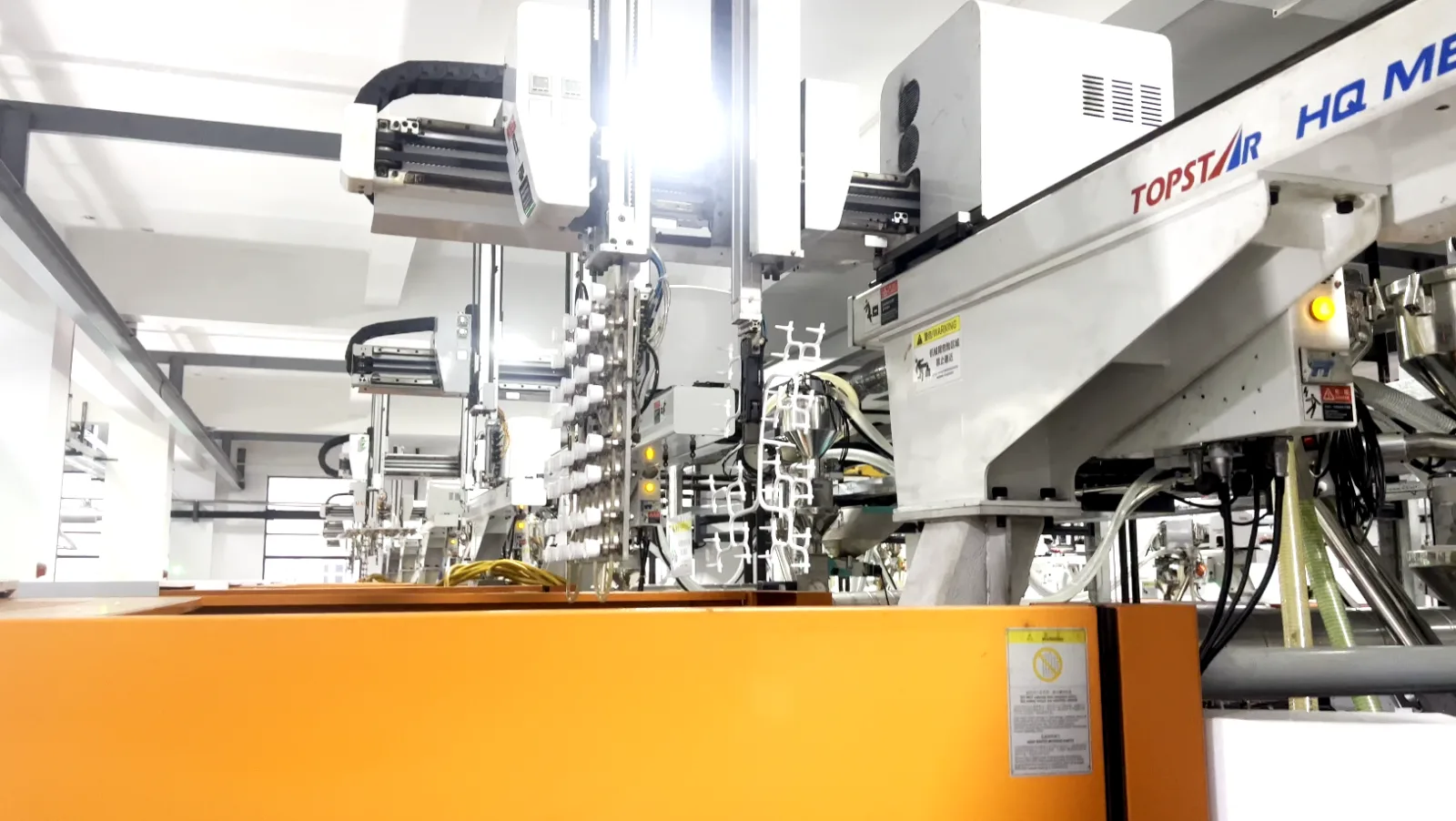
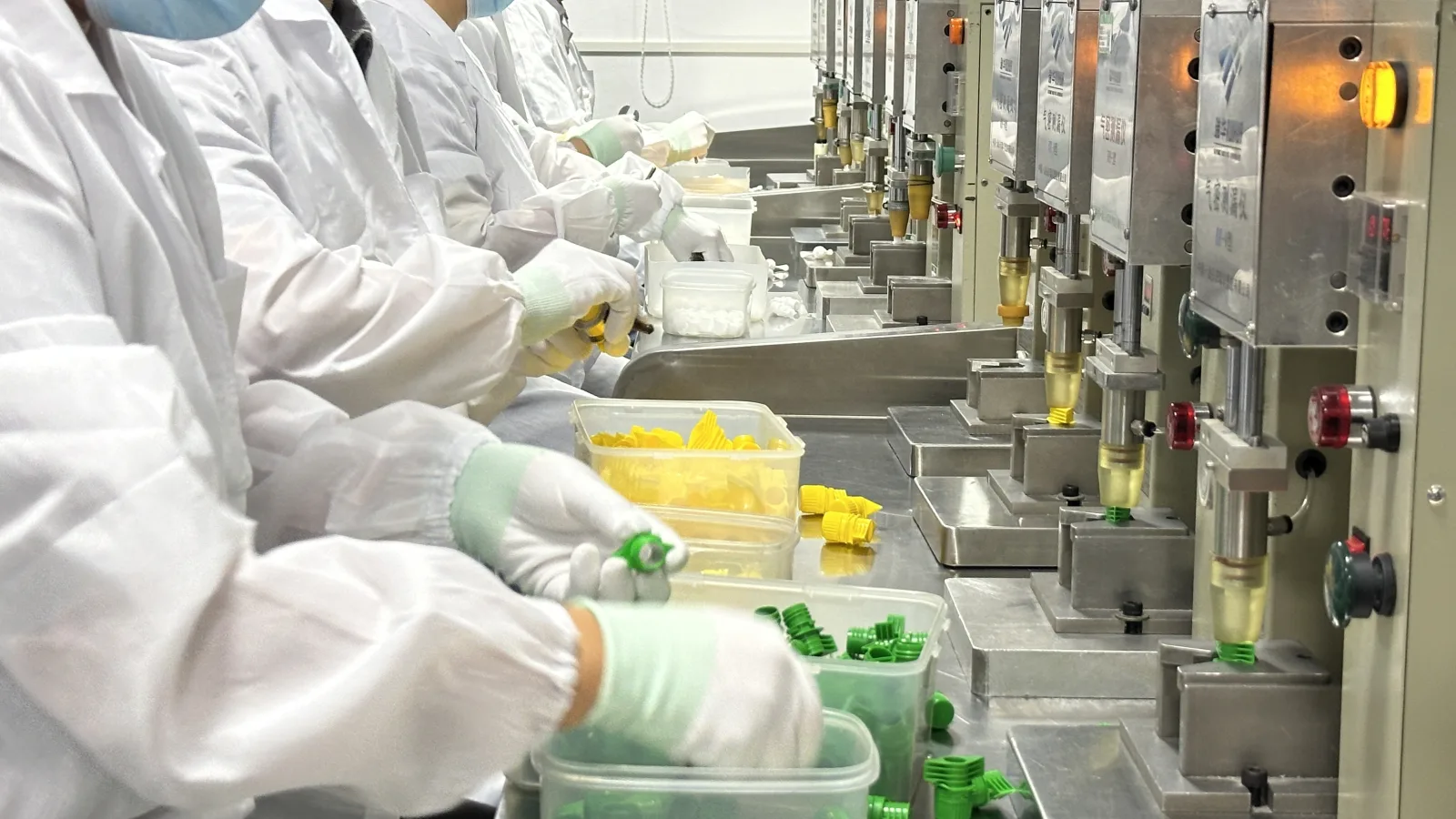
Factory-side quality systems. A serious spout cap factory runs food-grade production controls: food-contact materials only, documented processes, and — increasingly — machine-vision inspection on the line. Ask what the factory actually does between the mold and the carton. On Ruihua's side, automated inspection is available on request for customers who want full machine-vision checking of their order — offered per customer need rather than as a blanket default, so ask for it explicitly if you want it. The quality control page on the main site shows the systems a factory can put behind a spout cap order.
Sampling and AQL. For the outgoing check, the industry works on acceptance sampling — statistically inspecting a sample batch and accepting or rejecting the lot on the results. AQL (Acceptable Quality Limit) levels like AQL 1.0 or 2.5 for critical, major and minor defects are the standard language; put the AQL levels you expect into your purchase agreement so "passed inspection" means the same thing to you and the factory. For high-stakes orders, buyers add a third-party inspection company to perform the pre-shipment check at the factory — a small cost against the price of a rejected container.
Food-contact compliance. Because spout caps touch food, compliance is part of quality. Two frameworks matter most for export: the EU framework regulation on food contact materials, (EC) No 1935/2004, and the US FDA's rules for food-contact substances. Ask for the certificates up front — a factory that cannot produce its food-contact documentation on request is a risk you should price in, not hope away. For a deeper read on how EU and FDA rules apply to pouch closures specifically, the pouch closure regulatory guide covers the compliance landscape.
How to structure your first inquiry
A good first inquiry is short, complete, and makes the factory answer all four terms at once. Here is what to include:
- Product — pouch type (stand-up, doypack, flat-bottom) and size, contents (liquid, powder, viscosity, filling temperature), target spout inner diameter, cap type (screw, flip-top, push-pull, tamper-evident), and whether you need an anti-choking or anti-swallowing design.
- Material — PP or PE; food-grade requirement; recyclable mono-material PE if your pouch is designed for recycling (low-temperature sealing compatibility matters here).
- Quantity — expected annual volume and first-order quantity. This determines which MOQ tier you are in and whether a custom mold is justified.
- Customization — colors (Pantone references), logos, embossing, or a new mold. Be explicit; "custom" covers everything from a logo to a 33 mm anti-choking design.
- Target markets — where the product sells, so the factory can confirm the right food-contact compliance (EU, FDA) before quoting.
- Timeline — when you need samples and when you need production. This forces a real lead-time answer.
- Shipping — destination port and whether you want quotes FOB, CIF or another basis. Incoterms define who pays for what between the factory gate and your door, and mixing them up is a classic source of surprise costs.
- Quality expectations — AQL levels you expect, and whether you plan a third-party pre-shipment inspection.
Send the same inquiry to three or four factories and you will get comparable quotes for the first time — because you forced the comparison onto the same axes. That is the entire point of the four-term framework: the information that lets you compare is the information you supply up front.
A checklist before you commit
Before you place the order, run this checklist against the supplier's quotation:
A supplier who answers all six in writing is running a process you can build on. One who deflects on ownership, inspection or compliance is telling you where the risk lives. When you are ready, request samples or a quote with the inquiry structure above — and expect a factory that knows spout caps to answer all four terms in the first reply.


