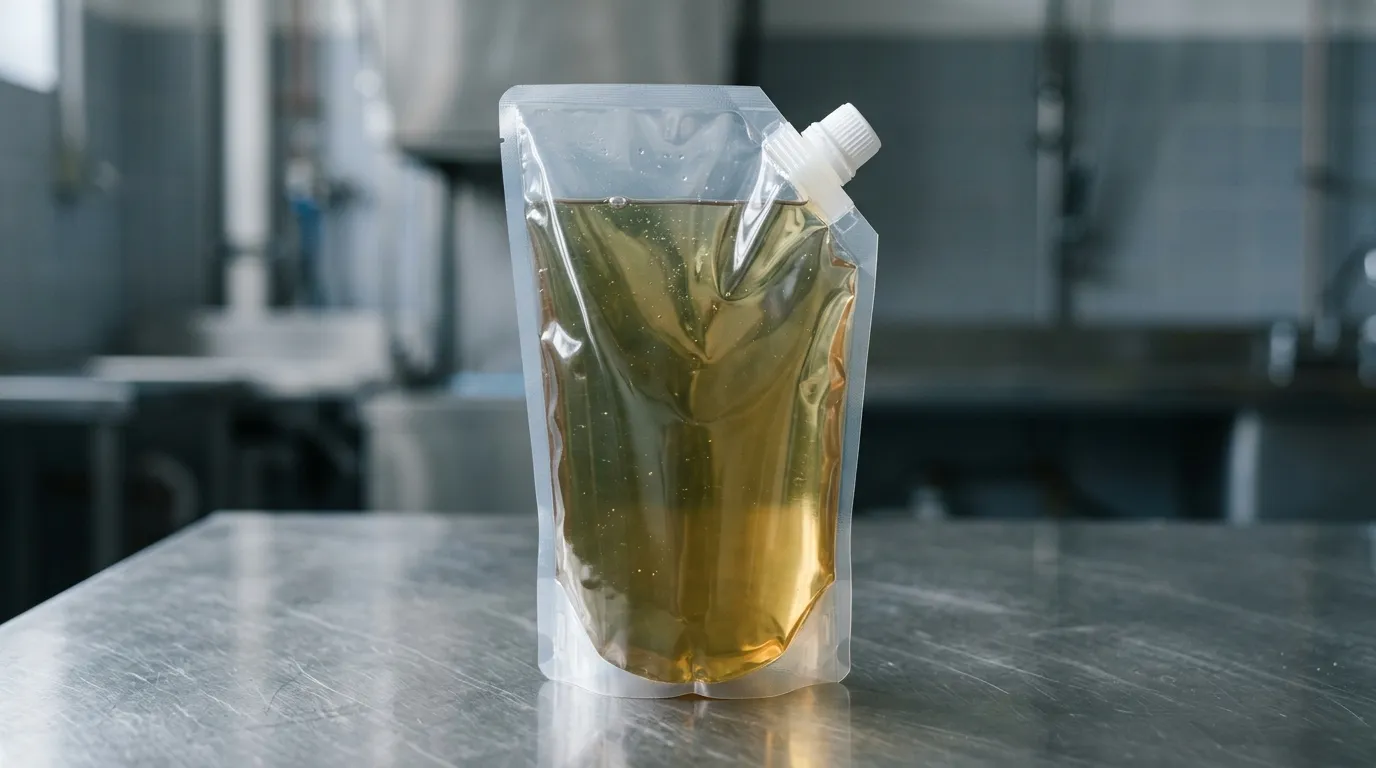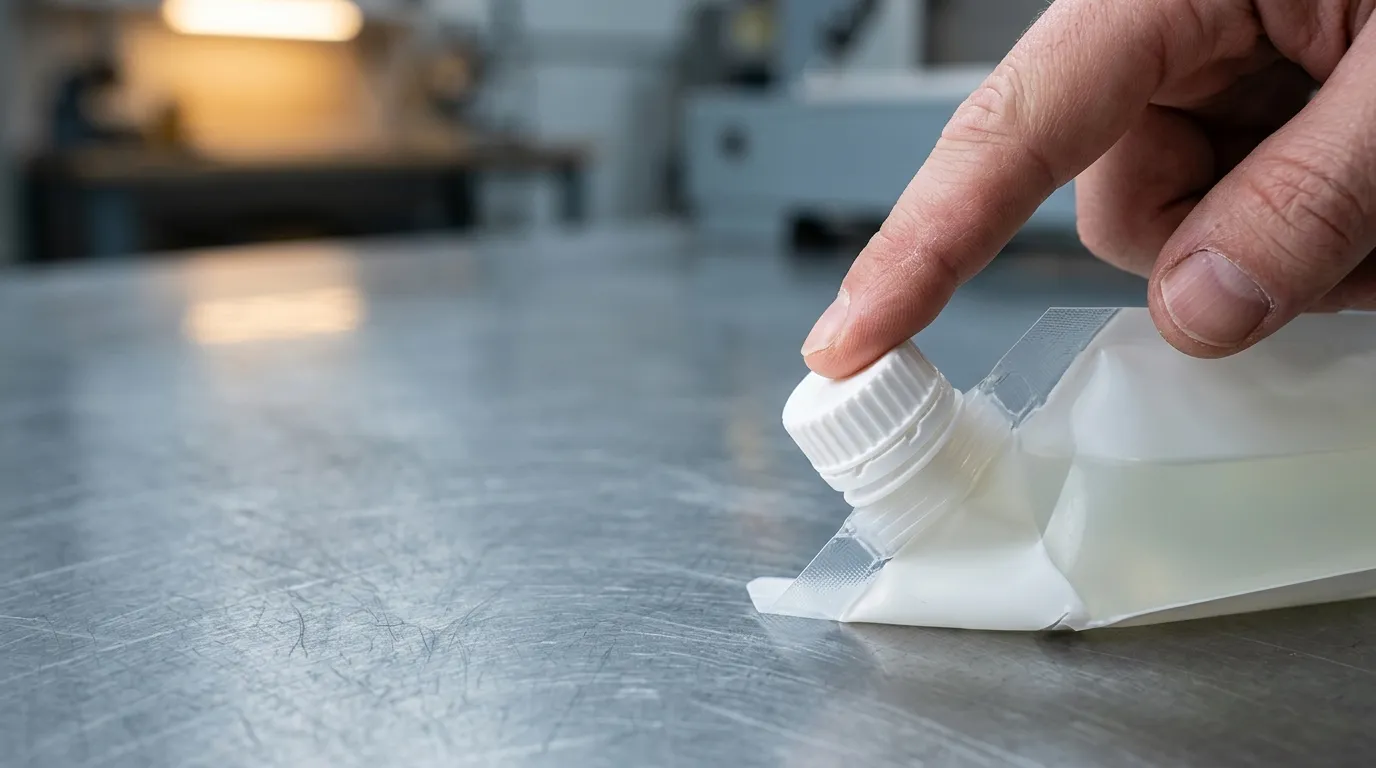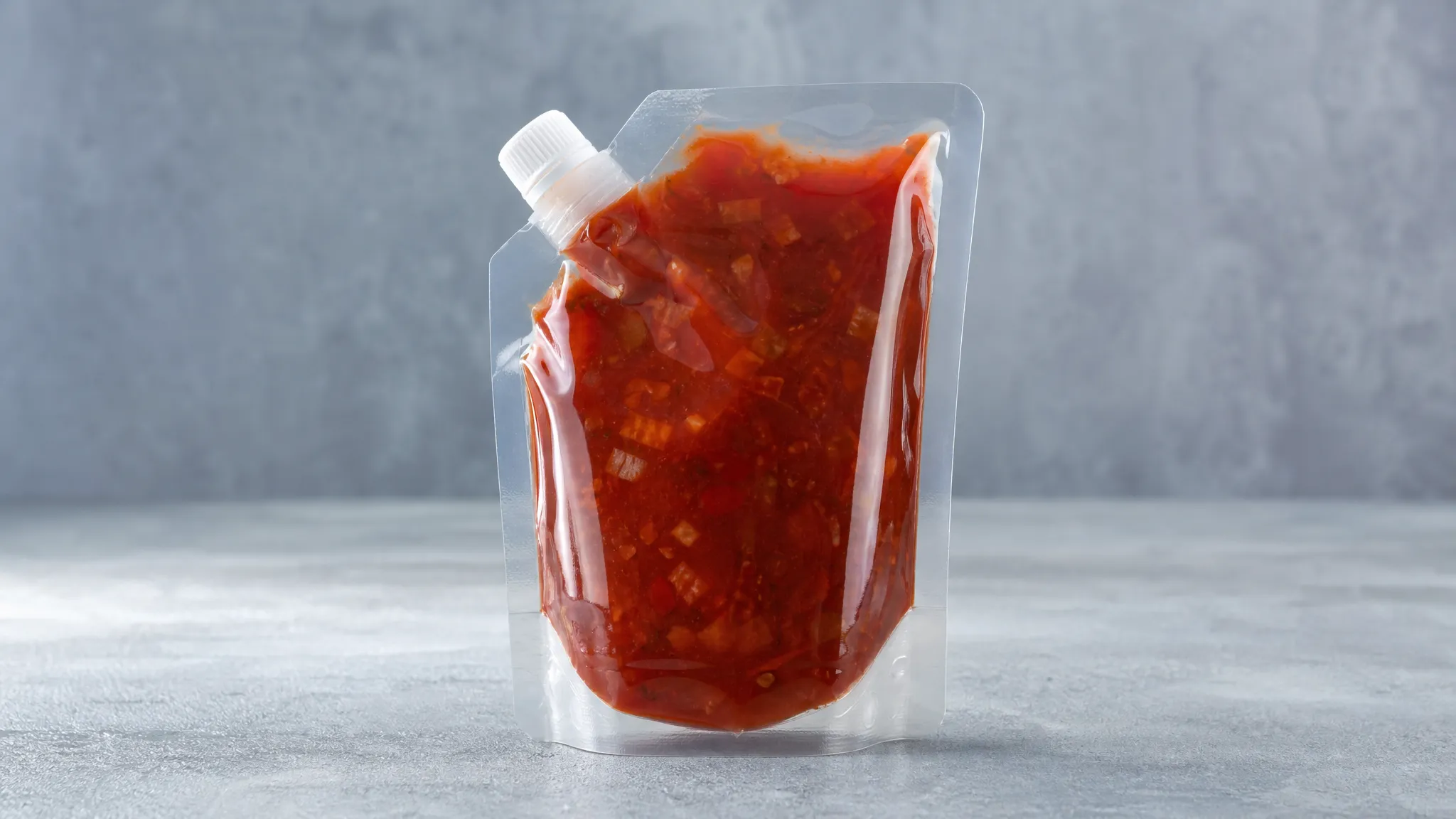
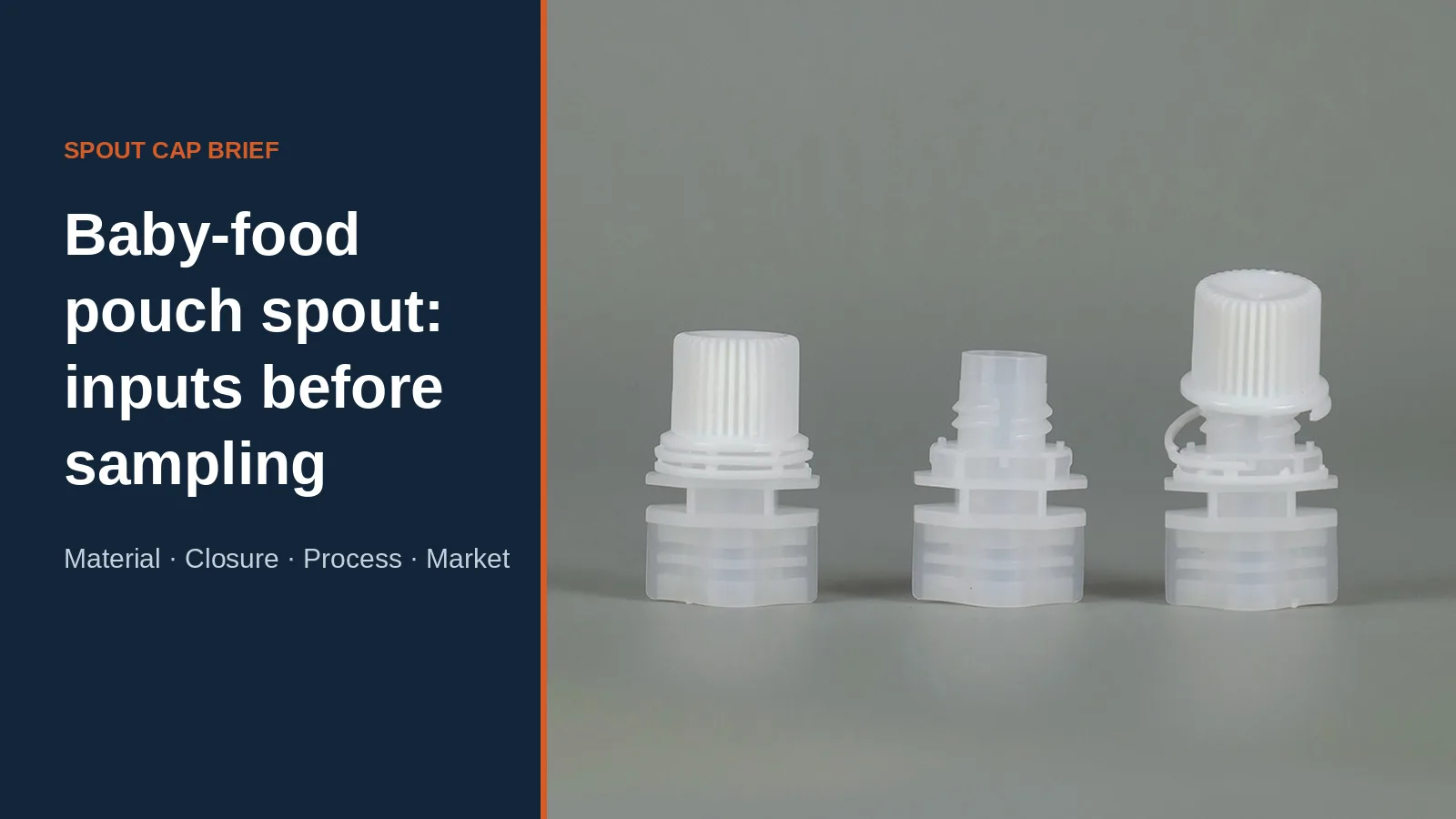
Baby food pouch packaging requirements collapse into four blocks you should be able to write down before anyone produces a sample: the material and food-contact route, the closure and child-safety architecture, the fill and thermal process the pouch must survive, and the market the pack is sold into. Put those four on one page and a sampling request stops being a guess — the supplier can answer with a fitment that already matches your film, your line and your compliance file. Leave the last two blank and the sample may weld beautifully, then deform in your pasteuriser.
This is the procurement brief, not a catalogue page. Models live on our spout cap product pages and in the spout caps by content series; white is the standard colour, and any other colour is matched to your Pantone reference per order. What follows decides which of them are relevant.
Why baby food pouch packaging requirements come before the sample
A sample is a physical answer to a written question. When the question is vague, the answer is whatever fitment the reader of your email happens to pick — usually the smallest-bore screw cap that ships in volume, because nothing in the request ruled it out. Change the sealant layer or the fill temperature after the mould is cut and you buy steel twice: the costly-to-reverse inputs are the ones nobody puts in the first email.
Ownership differs per block — material, closure, process and market sit with four different people — which is why they rarely arrive together.
If you have a quotable commercial sheet, this brief sits underneath it: the spout cap RFQ checklist turns a specification into a price, this page a concept into a specification.
Block 1 — Material and food contact inputs
Start with the film, not the cap. A spout is welded into the pouch by melting its base flange into the sealant layer that faces the product, so the two have to melt compatibly. Ask your converter one question first: which polymer faces the food? A polyethylene sealant pairs with a PE spout base; a polypropylene sealant or a retort structure points to PP. Guess here and the weld looks closed, then peels at the flange edge within weeks.
Then write the compliance route, because "food grade" is not a route. In the EU, food-contact materials sit under Regulation (EC) No 1935/2004, plastics under Regulation (EU) No 10/2011 with its positive list and migration limits, and manufacturing under Regulation (EC) No 2023/2006 on good manufacturing practice. In the United States the polymer family is cleared through the indirect food additive regulations (21 CFR Part 177 covers polymers) or a food contact notification for an unlisted substance.
Five lines hand the supplier what it needs:
- Resin grade and supplier, with the food-contact statement for that grade
- Sealant layer of the film, by polymer and thickness
- Barrier layer (EVOH, metallised or foil) and the shelf life it is supposed to deliver
- Declaration of compliance for the finished closure, stating simulants and test conditions
- Colour: standard or matched. A colour change is a new formulation, so it carries its own declaration and it moves you off stock volume
Two things are worth asking for when the paperwork looks complete: the scope line on the migration report (a pass on one sample is evidence about that sample and those simulants, not clearance for every colour in the range), and an explicit statement on additives. Our food-grade resin is specified free of brighteners and fluorescers — a claim you should see stated, not inferred from a certificate on a wall.
Block 2 — Closure architecture and child safety
Three numbers decide whether the closure survives the rest of the project: inner diameter, spout height above the flange, and flange width for the weld. The bore sets flow — squeeze pouches for baby food sit at the small end of a 1.2–40 mm range, at 8.6 mm and 10 mm in current production. Spout height decides whether the cap clears the pouch's top seam on the filling line.
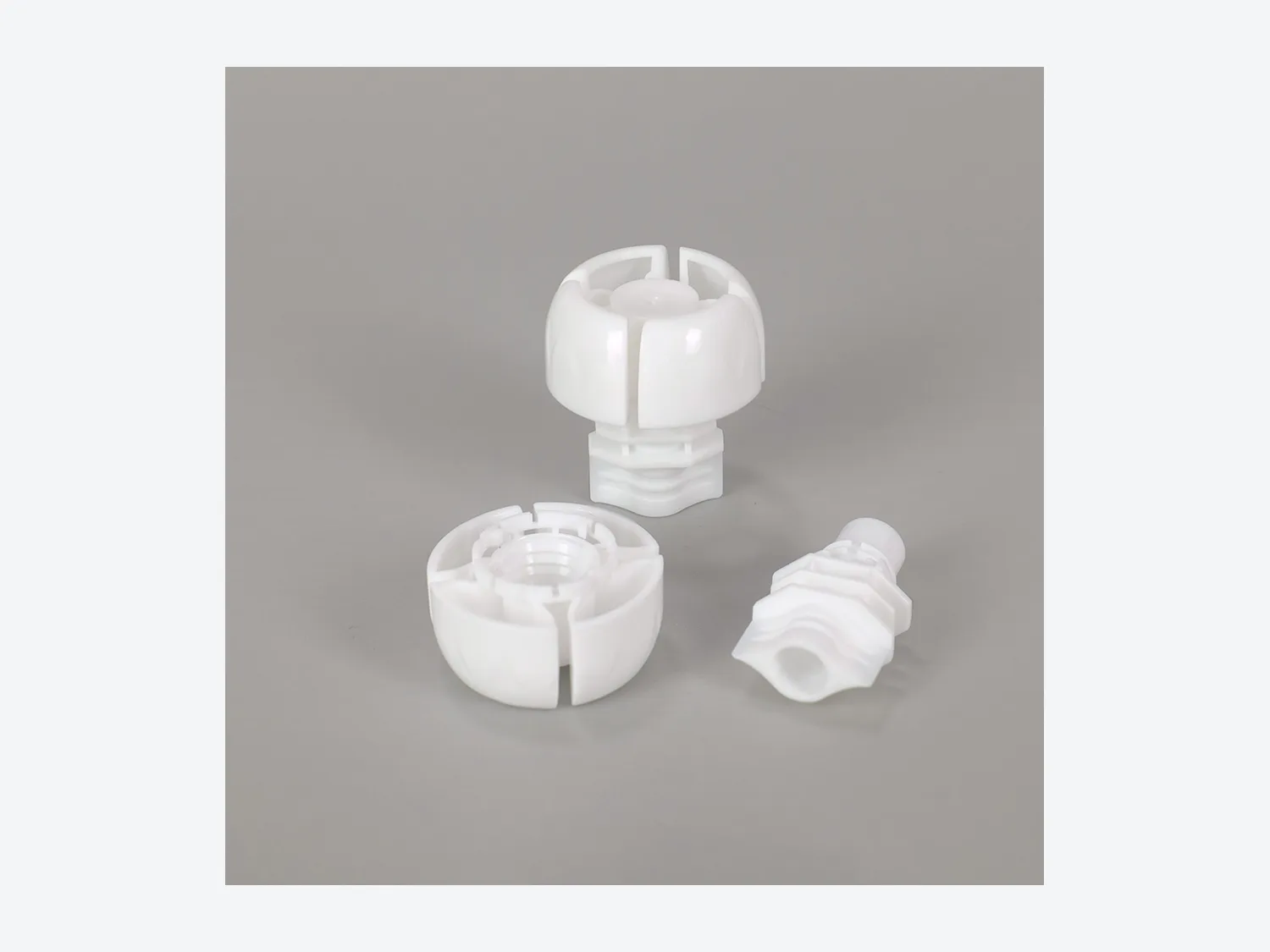
The safety feature is where briefs get sloppy, because two claims get merged. An anti-choking cap is shaped so a child cannot swallow it: a wide rounded mushroom profile, or a split-petal cover like the one below, where the petals deform instead of admitting a small object. A child-resistant closure is a different claim — a child cannot open the pack — and in most markets it is demonstrated by a protocol test on the finished package, not by the cap's silhouette. If your buyer asks for child resistance, write it into the brief as a test requirement with the standard named. If you need anti-swallow geometry, say that instead. "Child safe" left for the supplier to interpret is how a pouch ends up with a feature nobody tested.
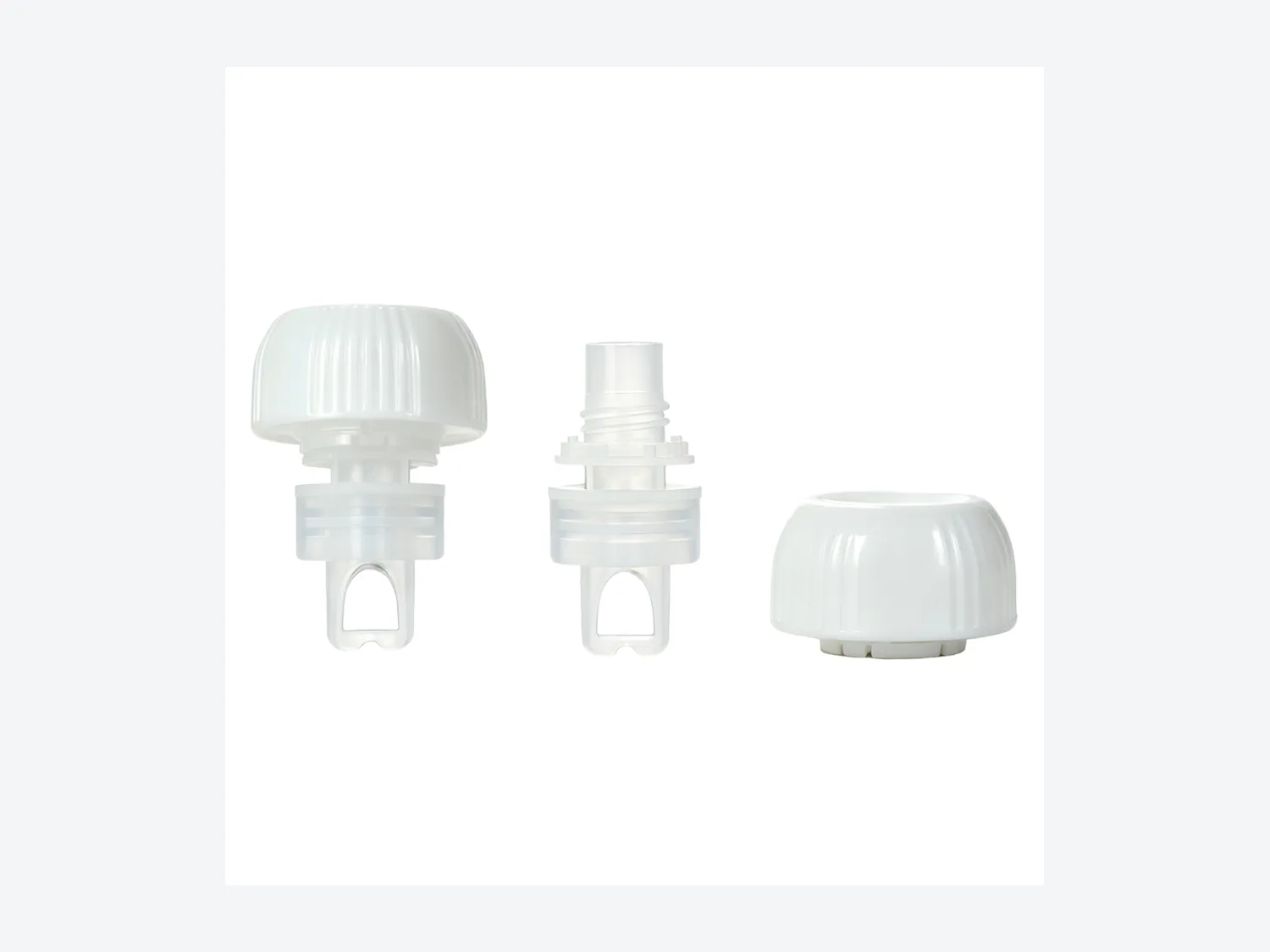
A mushroom-profile cap does the same job with a different silhouette — a wide, rounded head over a short spout — and the choice comes down to how the cap reads next to your artwork.
One more architecture decision belongs here: whether the cap stays attached. For European retail, a non-detachable version — the same thread reworked with stop lugs so the cap hinges rather than separates — is increasingly requested by buyers, and we make that variant on the same 8.6 mm platform.
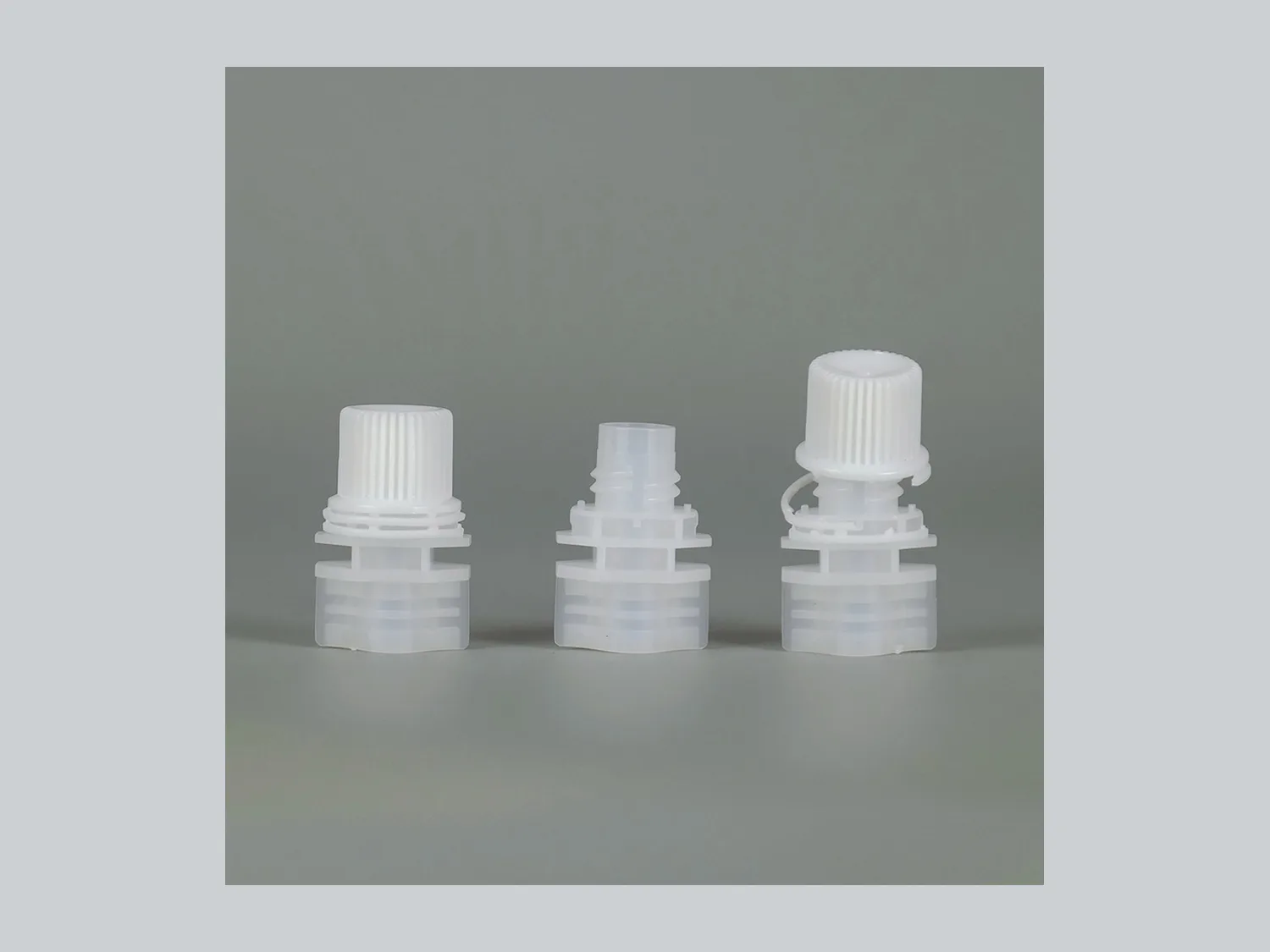
Treat the tethered version as a market input, not a default: whether it is compulsory depends on the rules covering your format and your buyer's specification.
Block 3 — Process inputs: heat, fill and the capper
This block is the one most often left empty, and it invalidates samples fastest.
Write down the thermal path: cold fill, hot fill, hot fill plus pasteurisation, or retort. In the United States, a low-acid product in a hermetically sealed container brings 21 CFR Part 113 into play, with its scheduled process and records; an acidic fruit puree usually does not. That line decides what your filler accepts; settle it before choosing the spout.
Then the weld window. Our low-temperature sealing spouts are engineered to seal at 110–130 °C, which is what makes a mono-material PE pouch viable — the spout welds without cooking the sealant layer the recyclability claim depends on. If your line runs a narrow window because the film is thin, say so; flange design and sealing jaw are where that gets solved, and our guide to spout behaviour in retort and hot-fill pouches covers the trade-off.
Cap torque, application speed and whether closures arrive loose or pre-assembled are line facts, not preferences; if a co-packer runs the trial, their machine sets the constraint, and the sample kit guide covers what travels with the spouts.
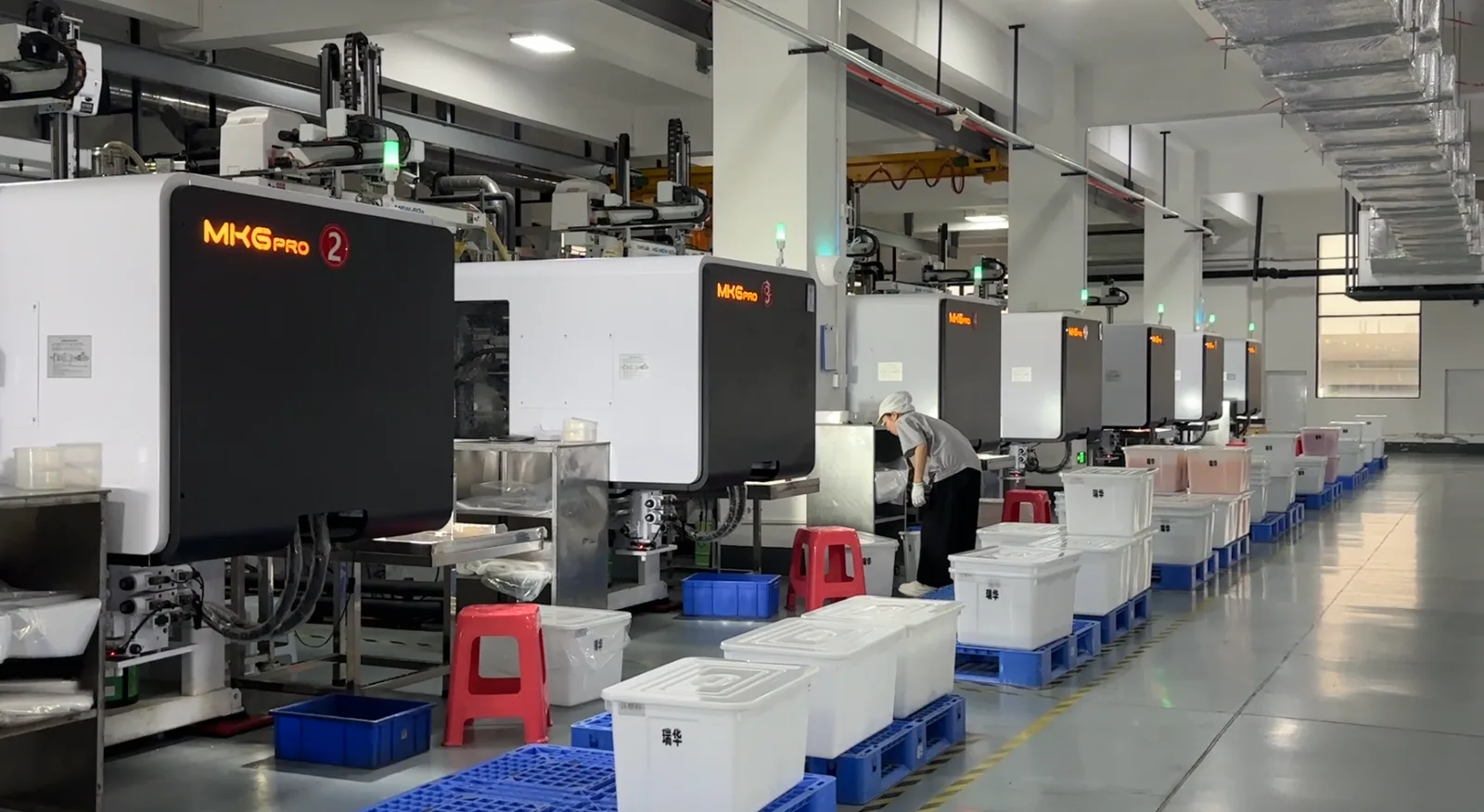
If the answer is a new shape, the tooling clock matters: we quote mould cost only after the 3D drawing is fixed, can print a 3D sample from that drawing, and allow roughly 60 days for mould production.
Block 4 — Market inputs: what the destination changes
The easiest block to defer is the one that derails projects at the buyer's compliance desk rather than at the machine.
For the EU, the pack file is the food-contact route above plus the packaging rules now covering recyclability and material documentation; our comparison of FDA, EU 1935/2004 and GB 4806 routes sets out how the three diverge. Infant-food buyers also ask for the compositional rules governing the product itself — Directive 2006/125/EC on processed cereal-based foods and baby foods — even though it addresses what goes in the pouch, not the pouch.
For the US, polymer clearance and, where relevant, Part 113 come up; for China, GB 4806.7 is the standard your importer will cite. Add the commercial facts that shape the brief: whether the retailer wants a recyclability claim (which pushes you to mono-PE and a low-temperature sealing spout), whether an age-stage claim constrains fill weight, and whether the buyer has a preferred colour range. None is a technical parameter, and all of them change what you sample.
The brief, as a form you can fill in
Copy it into your project file. Anything you cannot answer is a question for your converter, co-packer or QA lead, not for the supplier to guess.
Input | Why it decides the fitment | Your answer |
|---|---|---|
Product and pH | Acid or low-acid sets the thermal route and the test file | |
Fill temperature | Drives weld window and cap heat resistance | |
Thermal process | Cold, hot fill, pasteurise or retort | |
Sealant layer polymer | Must weld to the spout base | |
Barrier layer and shelf life | EVOH / metallised / foil sets shelf life and constrains the weld | |
Target bore | Flow for the puree consistency you sell | |
Cap architecture | Mushroom, split-petal, screw, tethered | |
Safety claim | Anti-swallow geometry or tested child resistance | |
Filling and capping method | Loose or pre-assembled, torque, line speed | |
Target markets | Declaration route and labelling file | |
Colour and volume | Matched colour needs its own declaration; volume decides stock or tooling |
What the sample will and will not prove
A supplier sample can demonstrate dimensions, the resin grade, the seal geometry and — where you ask — migration or heavy-metal testing on that sample. Ours is backed by ISO 9001 and HACCP system certificates, US FDA and EU 1935/2004 food-contact certification, and third-party SGS reports on an RD spout-cap sample for heavy-metal content and total fluorine under the EU packaging regulation. Read the scope line: a sample pass is not clearance for every model or colour, and a total-fluorine pass is not a PFAS-free claim. What no sample proves is your shelf life, your line speed or regulatory clearance for your finished product — those need a filled trial and your own stability work.
What to send with the brief
Three attachments make it actionable: a film structure with the sealant layer named, the process parameters from your filler (fill temperature, thermal treatment, capper type), and the market with the claim you intend to print. With those, the reply is a specific fitment and a sample plan rather than a catalogue link. Send the four blocks even when one is incomplete: "We fill at 88 °C, pasteurise in pouch, sell in the EU, sealant is PE" eliminates most of the range. "Baby food pouch, please advise" does not.