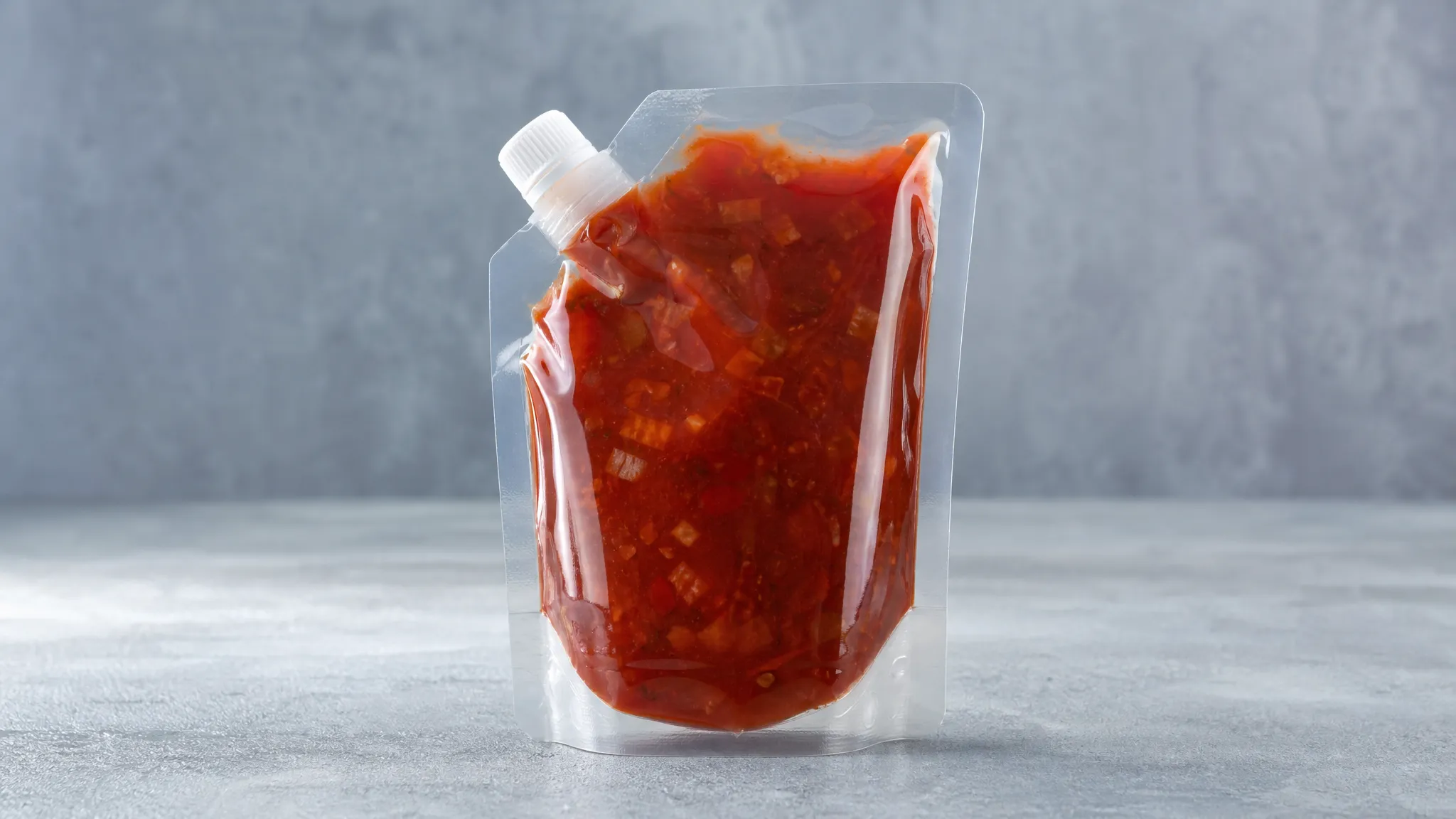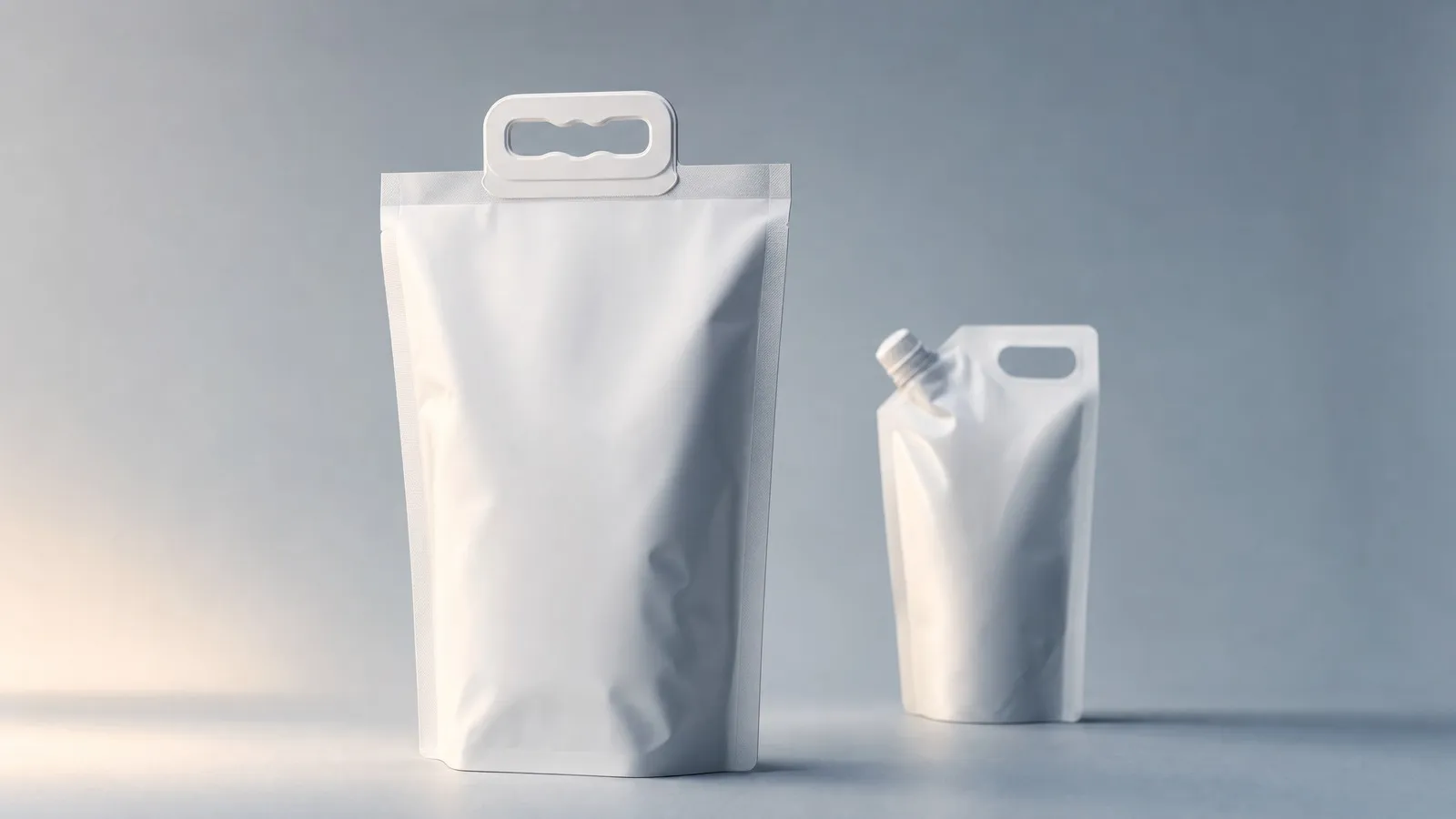

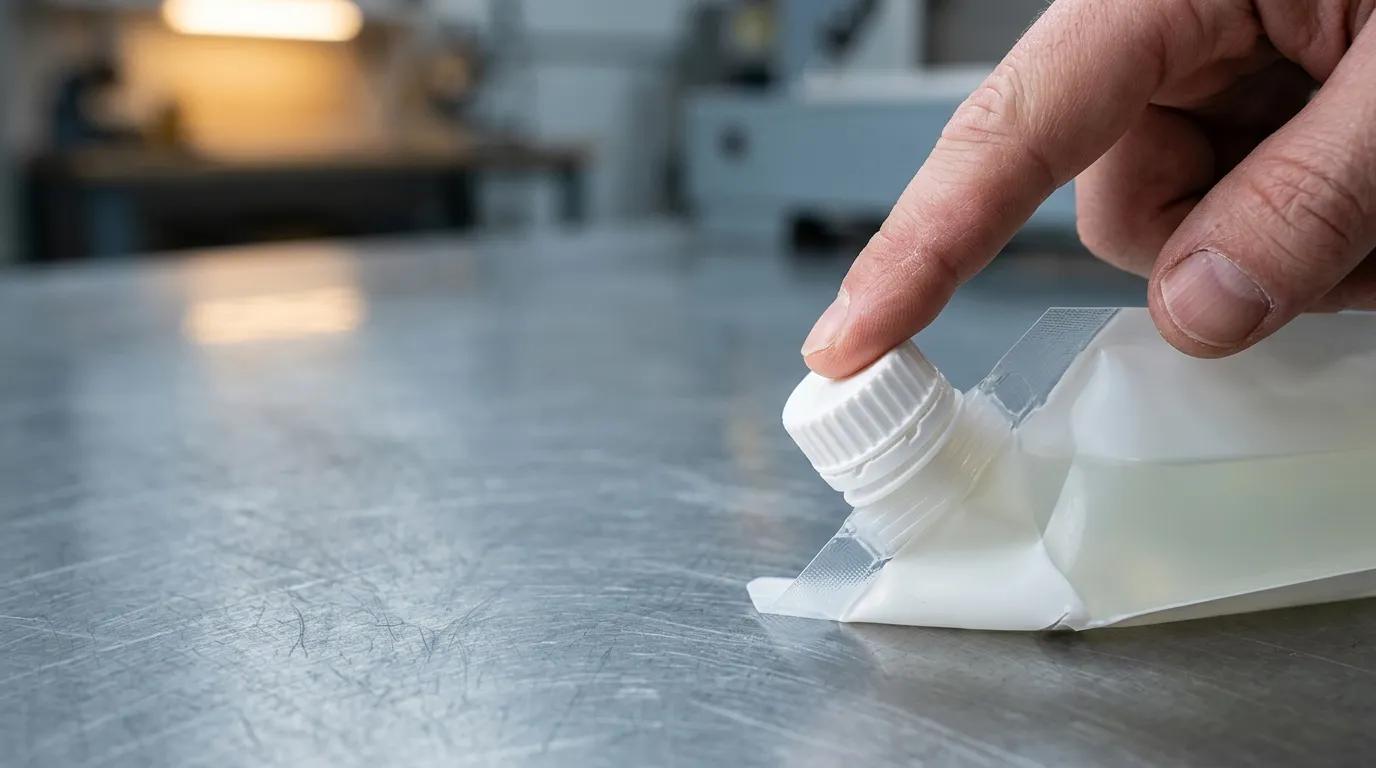
Direct answer. Whether the cap on a refill pouch opens is not something a drawing can settle. Hand the same spout cap on the same stand-up pouch to two people and one opens it in a second while the other twists it, squeezes it, and passes it on. The bore is identical, the thread is identical, the sealing face is identical. What differs is the state of their hands, how much grip they have, and the order in which they try things. Accessible refill packaging starts from that observation: openability is an operation performed by a person, not a dimension on a part. A user study is how you find out how that operation actually goes before the pack ships — a small number of people, a fixed set of tasks, and a written record of what happened.
Two clarifications come first, because both change what you are allowed to conclude.
The object matters. A refill pack is a pouch that replaces a bottle's worth of product; it is usually opened once, emptied into the container it was bought to refill, and recycled. A reusable pouch is one that is refilled itself, many times, over its life. This page stays with the single-transfer refill pack and with the component welded into it — the spout cap, called a fitment when you mean the weld-in body without its lid. Nothing here applies to a cap that threads onto a bottle neck.
Scope matters too. What follows is a research method, not a compliance route. It will tell you how a group of people opened your cap and what got in their way. It will not certify the pack, and it will not tell you whether that cap is safe in a household with a small child — that is a different question with a design goal that pulls in the opposite direction, and the site covers it separately under tamper evidence versus child resistance. Keep the two apart and the study stays honest. Blend them and you will write a protocol nobody can defend in a review.
Everything on this page can be run on a bench, in a meeting room, or at a table in a plant canteen. Budget more time for recruiting participants than for testing them; that ratio surprises people the first time.
Why a drawing cannot answer whether your pouch cap opens
A specification drawing is a statement about a part. It fixes the bore, the thread form, the weld flange, the resin, the colour. Every one of those is real and necessary, and none of them describes what happens when a person with damp hands lifts the pouch off a shelf in a shower and tries to get the lid off.
The gap is not a gap in your drawing. It is a gap in the kind of document a drawing is. Manufacturing tolerances describe a population of parts; openability describes an interaction between one of those parts and one person on one occasion. The same cap can be effortless for a 30-year-old who opens it dry at a desk and genuinely difficult for somebody with arthritis opening it with conditioner on their fingers, and there is no line on the drawing where that difference lives. In liquid refill packaging the difference is wide enough to change which cap a brand should have specified in the first place.
This is not a niche concern that a brand can wave away. ISO 17480:2015 — the packaging standard titled Accessible design — Ease of opening — treats openability as a design property to be evaluated, and its scope covers evaluation techniques that are instrumented and user-based side by side. If your organisation is being pushed to demonstrate that a pack is usable rather than merely conforming, the ISO 17480 page is the reference to cite, and the structure it points at is measurement plus people — not measurement alone.
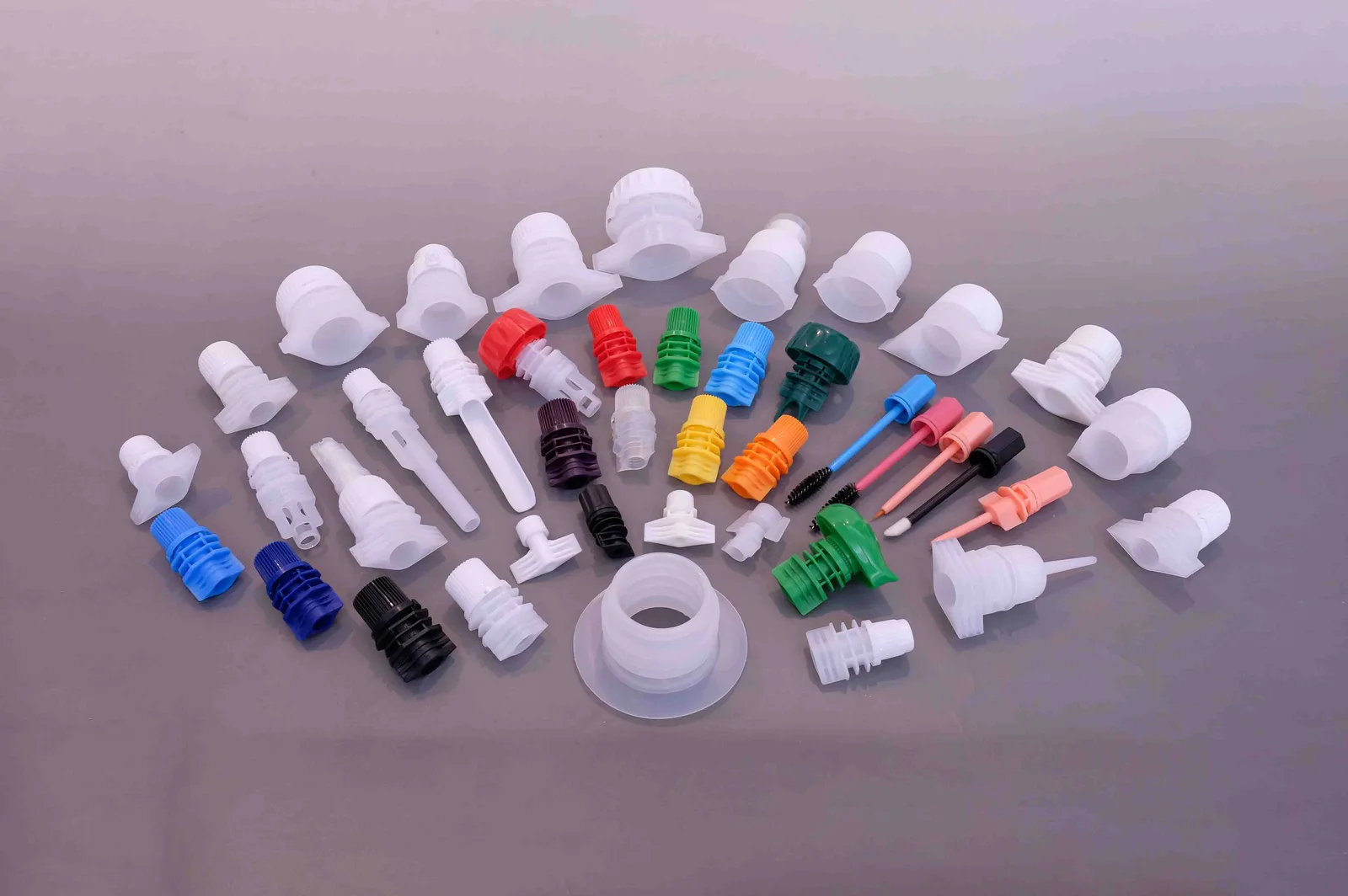
That combination is what makes the exercise worth doing early. Lab instruments can be repeated exactly and cannot be surprised; people can be surprised, and cannot be repeated exactly. A cap that passes every dimensional check and still generates complaints is almost always a cap whose openability was never observed by anyone other than the people who designed it. The rest of this cluster — which fitment suits which fill, which closure suits which product family — is mapped on the spout caps by content hub, and this page is the missing chapter: what to do when the question is not which cap but does this cap work in a hand.
What accessible refill packaging asks of the test plan
Three conditions account for most of the difference between a cap that opens and a cap that resists. They are worth naming before any task is written, because each one changes the task, the participant and the thing you write down.
Condition | What it changes | How it shows up at the bench |
|---|---|---|
Hand state | Friction between skin and cap surface | Dry hands open a cap that damp hands cannot turn at all |
Grip capacity | How much force the hand can bring to the cap | One participant flicks the lid; another needs both hands and a steady surface |
Operating sequence | Which part is moved, in what order, with what posture | The pouch is held, tilted, pinned, or set down first — frequently in an order you never drew |
The reason to state them explicitly is that each one maps to a different target for accessible packaging design, and a study that averages across all three hides all three. A mean time-to-open tells you nothing about pouch cap openability, because the participant who needed both hands and a table did not experience a slightly slower version of the fast participant's task. They experienced a different task.
Two framing points before the tasks.
First, the international standards treat this as a handling question, not a reading question. ISO 22015:2019 — Packaging — Accessible design — Handling and manipulation — defines its subject as holding, lifting, carrying, pulling, pushing, sliding, grasping, twisting and tearing, and applies those to opening, re-closing and taking out contents. That list is a useful checklist of verbs to watch for; the standard's listing is worth skimming before you write your tasks, if only to notice how many of the verbs have nothing to do with the label.
Second, inclusive packaging design is often introduced through type size, contrast and Braille, because those are the visible fixes. They are worth doing. They are also a different project from this one. A cap that a person cannot turn is a cap they cannot use, however legible the pouch front is and however well the instructions read aloud. The work in this cluster is deliberately about the operation.
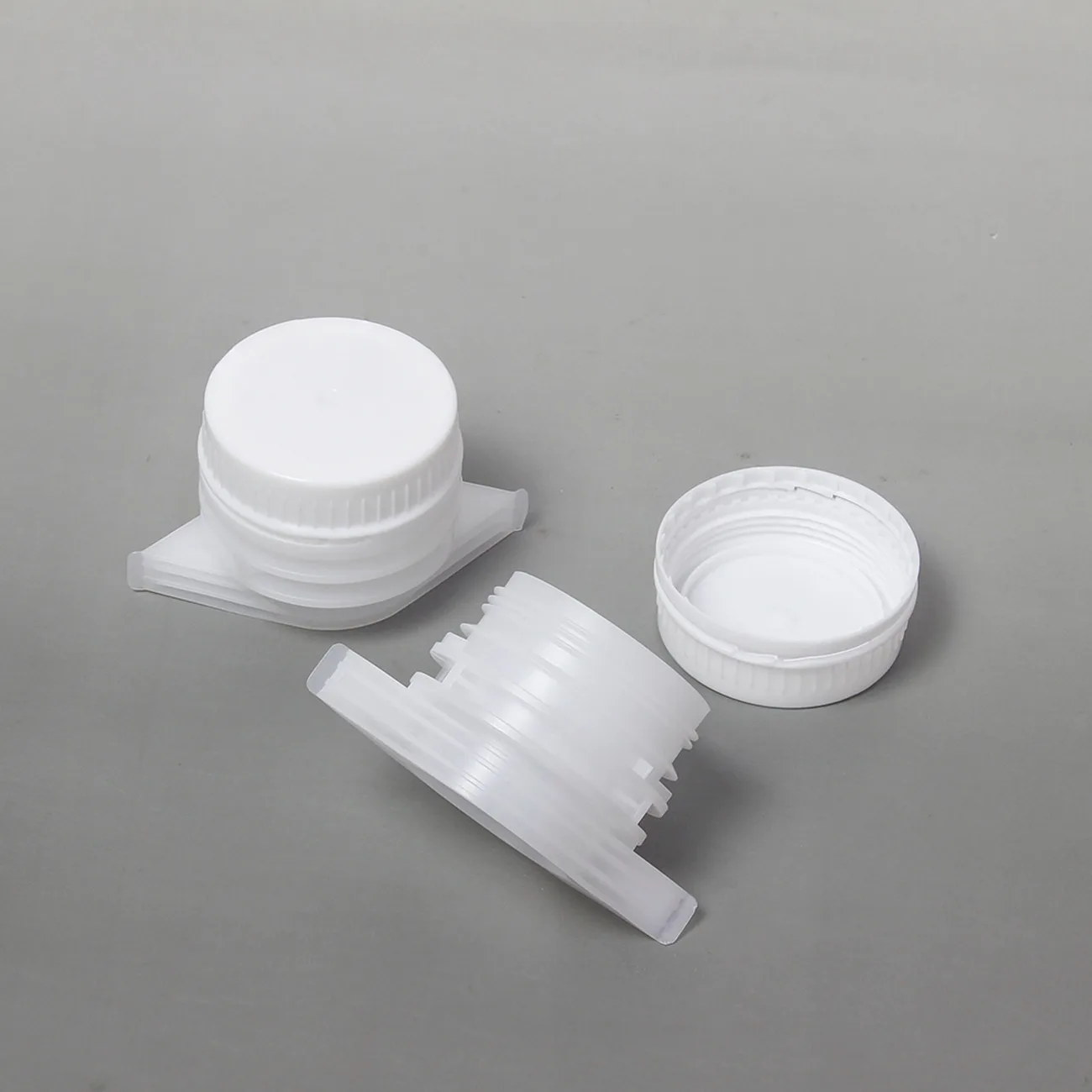
Testing the cap as a loose part is the most common way to run this study badly. The object under test is the assembled pack: cap welded into film, filled to a representative level, sealed. Weight and stand-up stiffness are part of the task, and a loose cap removes both.
Task 1: opening with wet or damp hands
This is the task people skip, and for a daily-chemical refill pack it is closer to reality than anything performed at a desk.
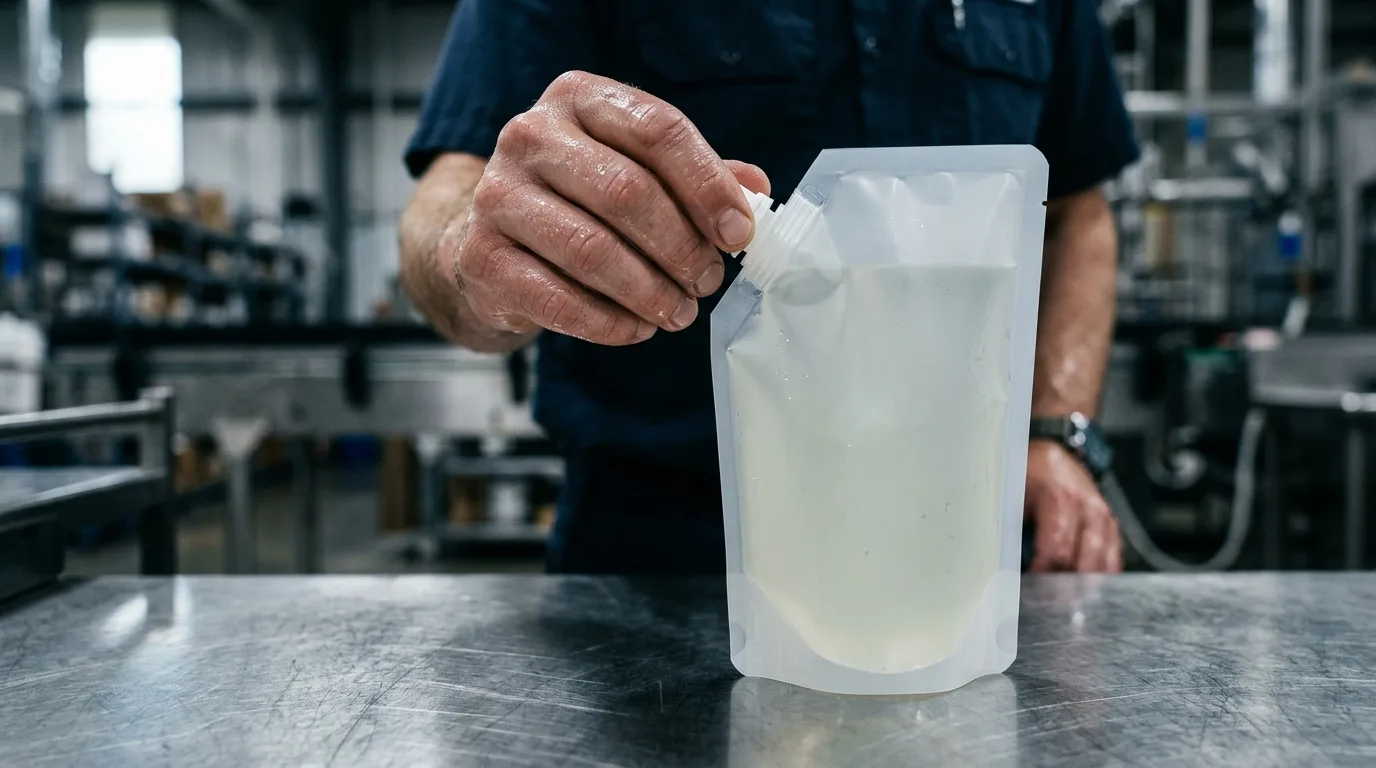
Set up. A filled and sealed pouch at the fill weight you actually sell. A source of water and ordinary hand soap near the bench — no gloves, no towels held ready. A surface the participant can put the pouch on, because setting it down is a legitimate action and you want to see whether they choose it.
The task. Ask the participant to wet their hands, rub them together lightly as if they had just washed them, and then open the pouch and pour or dispense a small amount. Say nothing about how to open it. Do not demonstrate. Do not correct a technique that surprises you — the surprise is the finding.
What to watch. Whether the first attempt is a turn, a pinch, a lever or a push. Whether the second attempt changes method or only changes effort. Whether the pouch is set down, pinned against the body, or gripped between the knees. Whether the participant uses the same hand twice or swaps. Whether they wipe their hands on clothing before trying again — that single behaviour tells you the friction of the cap surface is not carrying the task.
The failure that repeats. The participant succeeds, and you conclude the cap is fine. It is not; it is fine for that person, at that moment, after one attempt. Record attempts, not just outcomes. A cap that opens on the third attempt with damp hands is a cap that generates the complaint you cannot reproduce on the line, because on the line nobody has wet hands.
Keep a dry-hands run in the session as a control. The gap between a participant's dry time and damp time is the number that matters, more than either figure on its own. If accessible refill packaging is the goal, this is the task that decides whether you reached it, because it is the only one in which the participant's hands are doing what hands do in a bathroom.
Task 2: opening across a spread of grip strength
The word "accessible" invites you to recruit one person described as a user with a disability and treat that as coverage. That produces anecdotes, not evidence, and it is easy to defend badly in a review.
Recruit a spread instead. Grip strength and hand dexterity vary continuously across the population, and the relevant variation for a packaging decision is not a clinical category — it is whether the participant can bring enough force and control to the cap in the posture the pack imposes. Government health data is a reasonable starting point for judging how ordinary this spread is: the CDC's 2024 release on adult disability puts adults reporting a disability at a quarter of the US adult population, which is a reminder that designing only for the highest-grip end is designing for a minority of households.
Band | Who you are looking for | What it exposes |
|---|---|---|
High | Adults who open packaging without thinking about it; comfortable one-handed | Whether the cap has any friction margin left to spare |
Mid | Adults with reduced grip from age or occupation; some stiffness in the fingers | Where the cap transitions from easy to effortful — the useful threshold |
Low | Adults with diagnosed arthritis, tremor, or a fine-motor impairment | Whether the cap is usable at all without improvised technique |
Assisting | A household member who opens packs on someone else's behalf | Whether your design quietly assumes a helper exists |
Four bands at three to five participants each gives you a spread; do not chase statistical power with a qualitative protocol. If you need a number rather than an insight, the study design changes by an order of magnitude, and the sample-size guidance from Nielsen Norman Group is a clear statement of why the two should not be mixed. Qualitative openability work is about finding the ways the task breaks. Quantitative work is about estimating how often it breaks, and it costs several times as much.
One boundary belongs in this task rather than in a footnote. A participant who cannot open the cap easily is not evidence that the cap is child-resistant, and a cap that a child cannot open is not automatically an accessible one. The two requirements pull against each other, which is why the site keeps them in separate discussions. Say this out loud in the session notes, so nobody in the review conflates a study about openability with a safety claim it does not support.
Task 3: the operating sequence people actually use
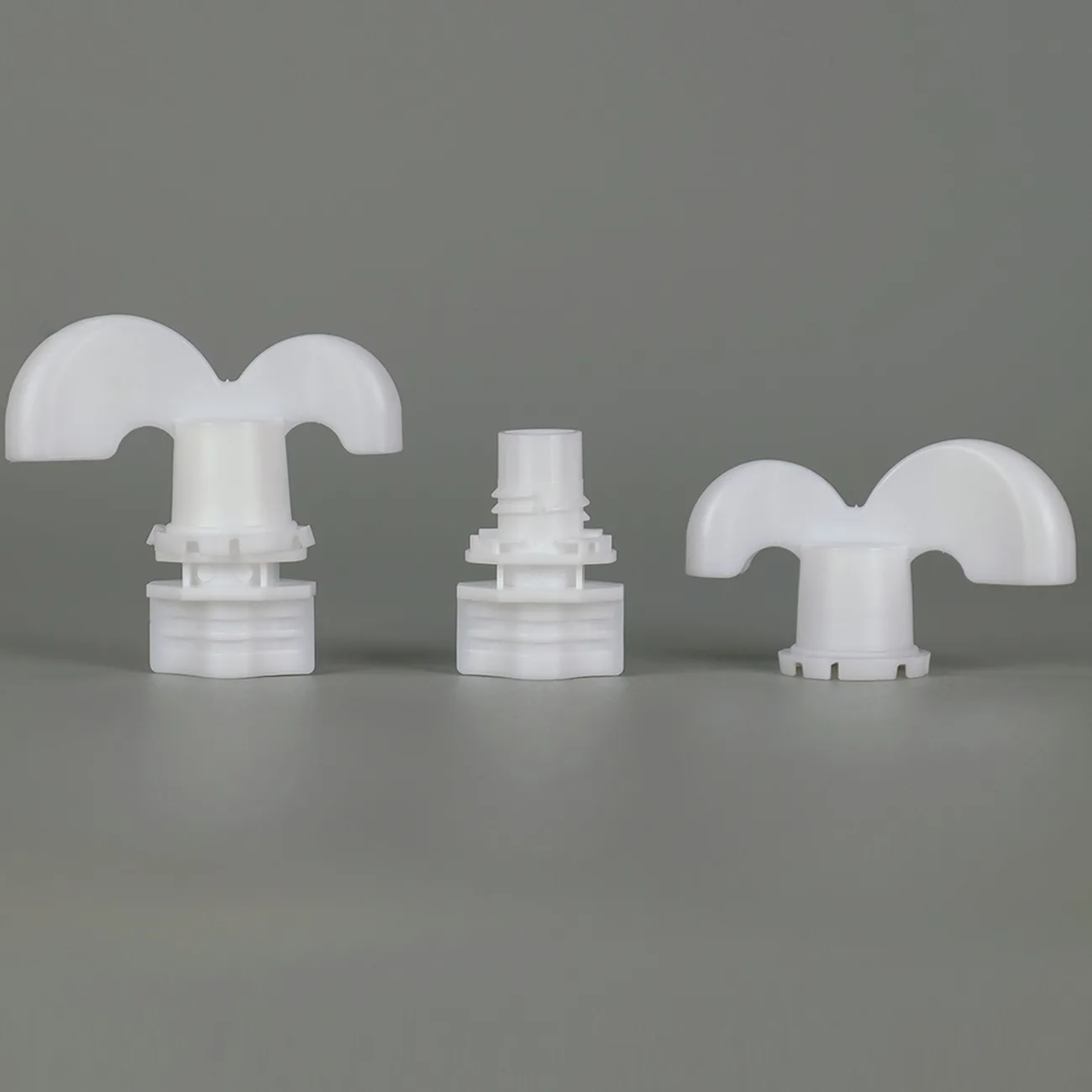
Watch what a participant does before they touch the lid and you will see at least one action that appears nowhere in your process description. The pouch gets set down and trapped under the palm. The cap gets levered against a thumb. The participant rotates the pouch a half-turn to bring the lid into a comfortable line with the wrist, then opens it — and your drawing has no opinion about which way the pack faces.
For a refill pouch packaging decision, three sequence observations earn their place in the record:
- Approach. Does the participant start on the lid, on the pouch, or on the spout body? Starting on the body means the cap is being treated as part of a larger object, and grip is being spent there.
- Re-orientation. How many times is the pouch turned before the lid moves? Each turn is a moment where the task was not yet possible in the posture offered.
- Completion. Does the participant stop when the lid comes off, or continue until the pouch is positioned to pour? The second behaviour is the real task, and it is where a cap that opens well can still fail.
Run the three tasks in one session and the sequence observations start to differentiate themselves. A participant who opens dry, with good grip, one-handed, and struggles only when the hands are damp is describing a friction problem. A participant who struggles in every condition but succeeds after setting the pouch down is describing a posture problem. Both are openability findings, and they have almost nothing in common as engineering problems.
If the task continues past opening into transferring product out of the pouch, that is a separate protocol with its own geometry — the pour path, the distance from outlet to container, and the receiving opening all move to the front. It is covered under pouring a refill pouch into a bottle rather than here. Resist merging the two: a study that asks participants to open and pour produces findings you cannot attribute to either, which is the fastest way to turn an accessible refill packaging brief back into an opinion.
The record sheet that survives a design review
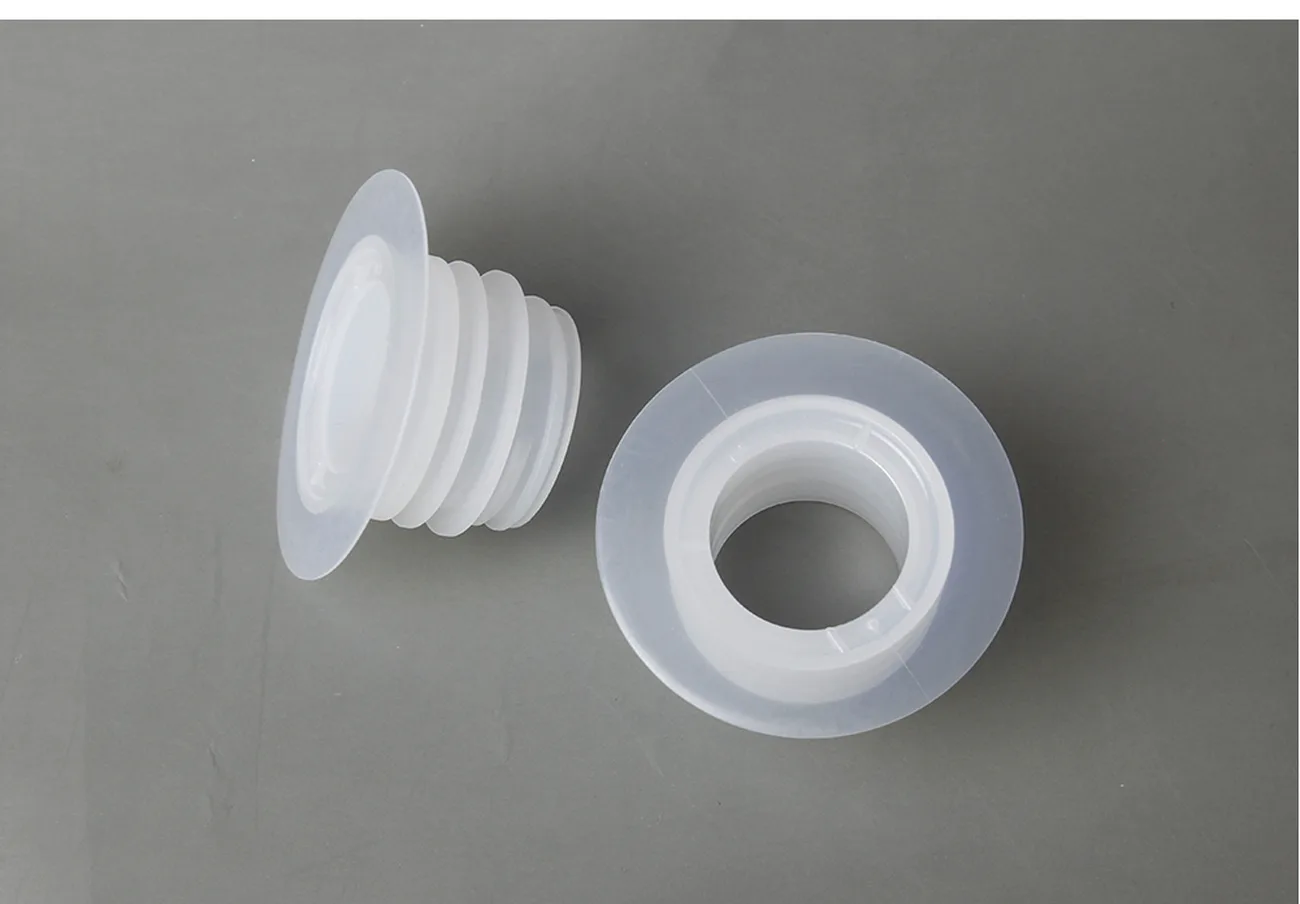
The study is only worth as much as its record. A note that says "cap was hard to open" will be dismissed in a review meeting, correctly. A note that says which participant, in which condition, on which attempt, with what technique, will not be.
Participant | Band | Condition | Attempts | Technique used | Pouch held / set down | Spoken comment | Pass on 1st try |
|---|---|---|---|---|---|---|---|
dry / damp | Y / N | ||||||
dry / damp | Y / N | ||||||
dry / damp | Y / N |
Three conventions turn that grid into evidence. Log every attempt, not only the successful one — the count is the finding. Write the technique in the participant's own words where you can, because "pinched the lid between thumb and nail" and "turned the cap" are different problems. And record the held-versus-set-down choice, since it decides whether your next move is about surface friction or about posture.
Then ask the sheet the only three questions that matter at review time. Which band failed first, and in which condition? Which technique appeared that we did not design for? Is there a band for which no participant succeeded on the first attempt, because that band is the one your change has to be tested against next round.
How many participants is enough is a judgement about your own pack, not a constant. Run one band through all three tasks before adding bands, because a broken task usually shows itself in the first three people and there is no reason to spend the rest of the budget discovering it repeatedly. When the findings stop being surprising — when the fourth participant in a band does what the third one did — you have enough for a design decision.
Whatever the sheet says, it goes into the same place as the rest of the pack's documentation. If your team keeps a controlled spout cap specification sheet, the study record belongs beside it as supporting evidence, not inside it as a requirement. Requirements get revised by change control; study records get cited.
What this study cannot tell you
Being clear about the edges is what makes the rest of the protocol usable, so here are the four things a user study will not do for you.
It does not verify sealing or retention over time. Opening once, under observation, says nothing about whether the closure still seals after twenty or forty cycles of use. That is a cycling question with its own test method, and the site treats it separately in whether a refill closure still seals on the fortieth open. Two studies, two rigs, two record sheets.
It does not produce a pass/fail number. Resist the pressure to publish a single opening-force threshold from a bench of eight people. A threshold derived from a convenience sample is worse than no threshold, because it will be quoted for years and enforced against suppliers who had no part in deriving it. Report distributions, bands and failure modes; leave the threshold to a controlled method if your organisation needs one.
It does not certify anything. A study run by a brand on its own pack is internal evidence. It is not an accessibility certification, it is not a safety certification, and no amount of well-run sessions converts it into one. If a market, a customer or an auditor wants a certified claim, that is a different route with a different owner.
It does not stand in for designing with people, rather than for them. A method that recruits participants only at the end, to confirm a decision already taken, tends to find what it was built to find. The practice guidance from Microsoft's Inclusive Design programme makes a similar point: inclusive design work starts by bringing in the people who meet barriers, so they can describe the problems, rather than bringing them in to react to a finished object. The tasks on this page work in either position, and they are worth considerably more in the first one.
Where the site touches component selection more broadly, the same boundary applies: a usability finding is one input to a choice, and how to choose a spout cap is where the other inputs live.
From study plan to specification decision
A study that ends in a report nobody acts on has cost you a fortnight. The output that earns its keep is short: the band that failed first, the condition that produced the failure, the technique you did not design for, and the one change you intend to test next round.
Take those four lines into the conversation with whoever supplies the cap, and the conversation changes shape. Instead of asking whether a cap is good, you are asking whether a specific bore, lid form or surface treatment moves a specific band past a specific task. That is a question about components a supplier can answer, and it is a question a drawing can never settle on its own.
We mould spout caps and fitments for stand-up pouches and doypacks, and we see the other side of this conversation — the specifications that arrive with a usability finding attached, and the ones that arrive with a hunch. The first kind get answered with samples. If you are still working out which closure family suits your product before you build the study around it, the range of spout caps for stand-up pouches and doypacks is the place to start.