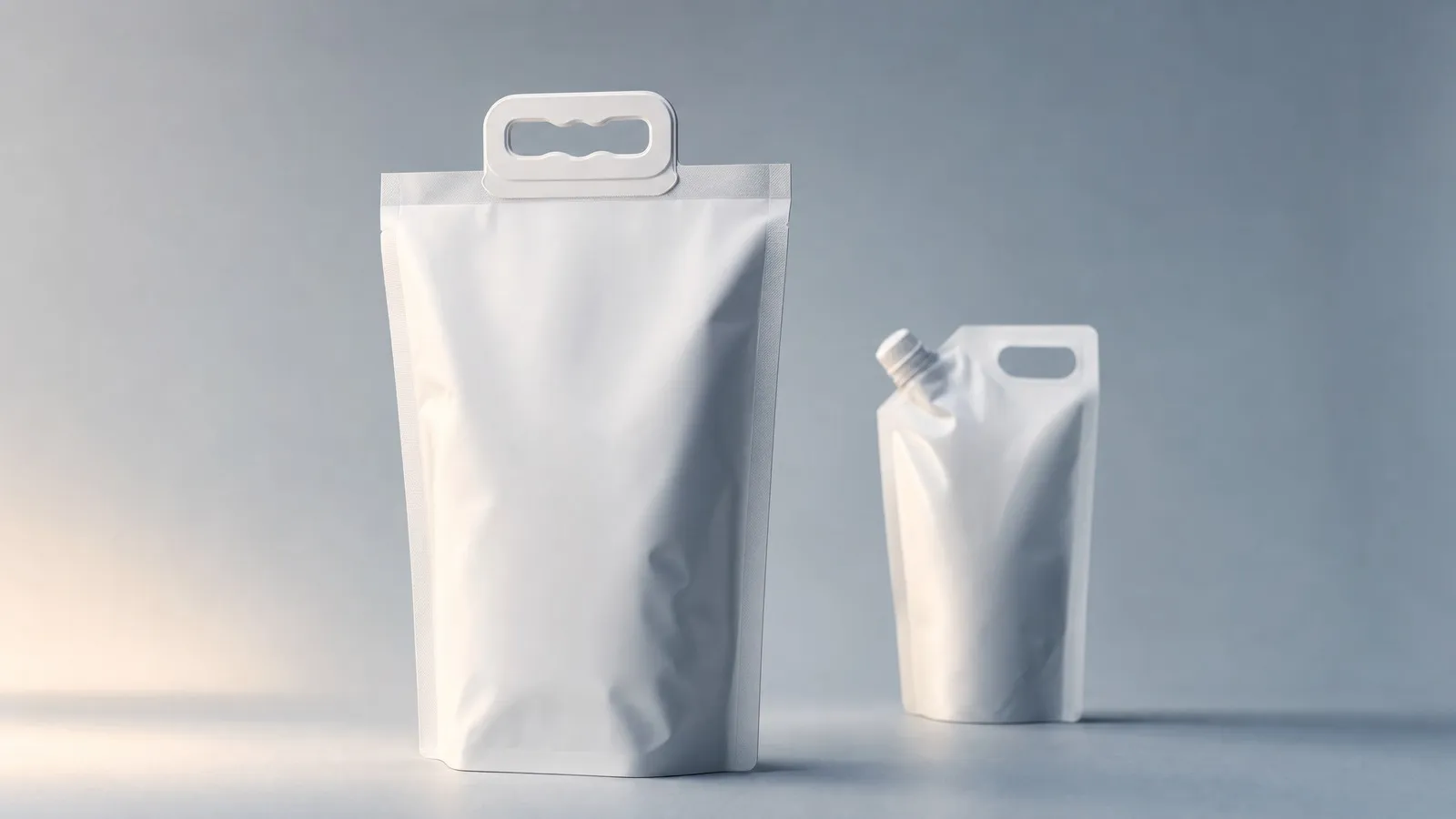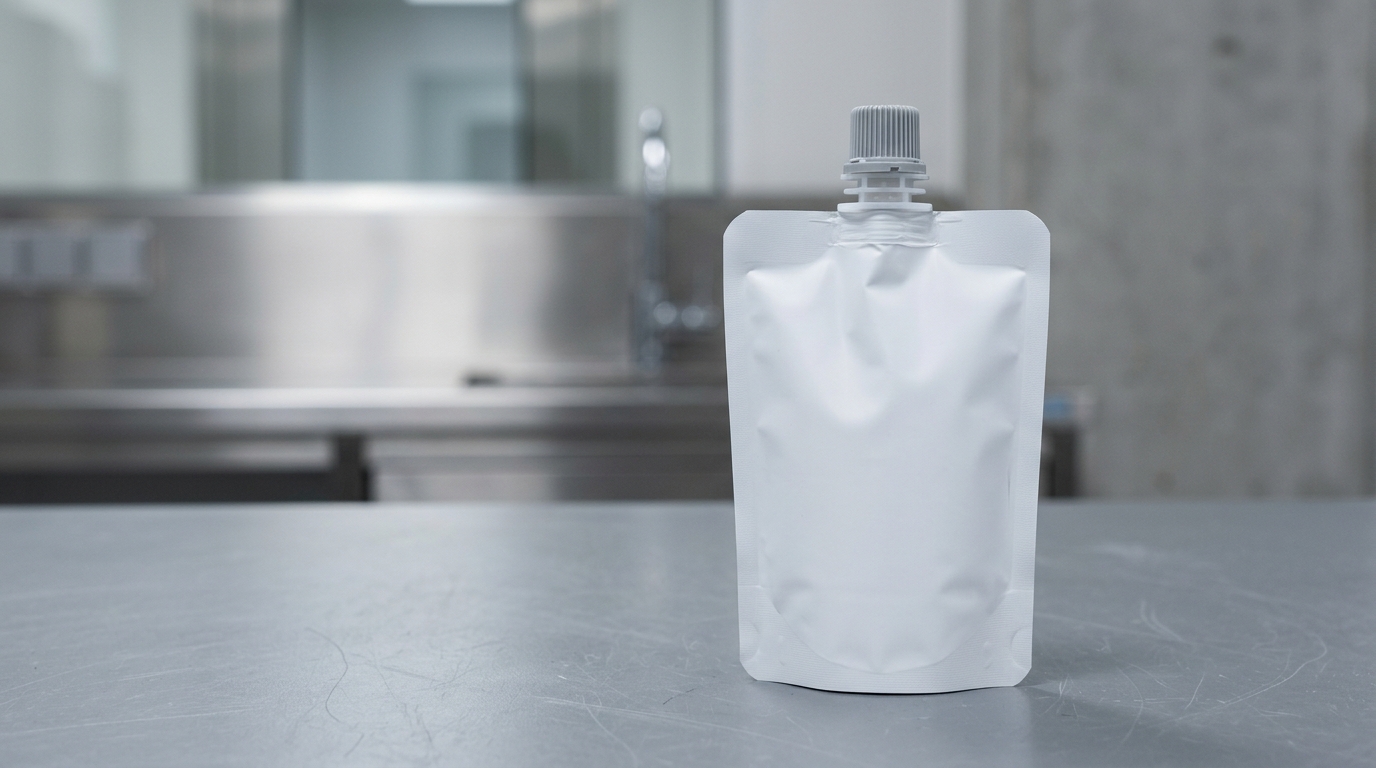

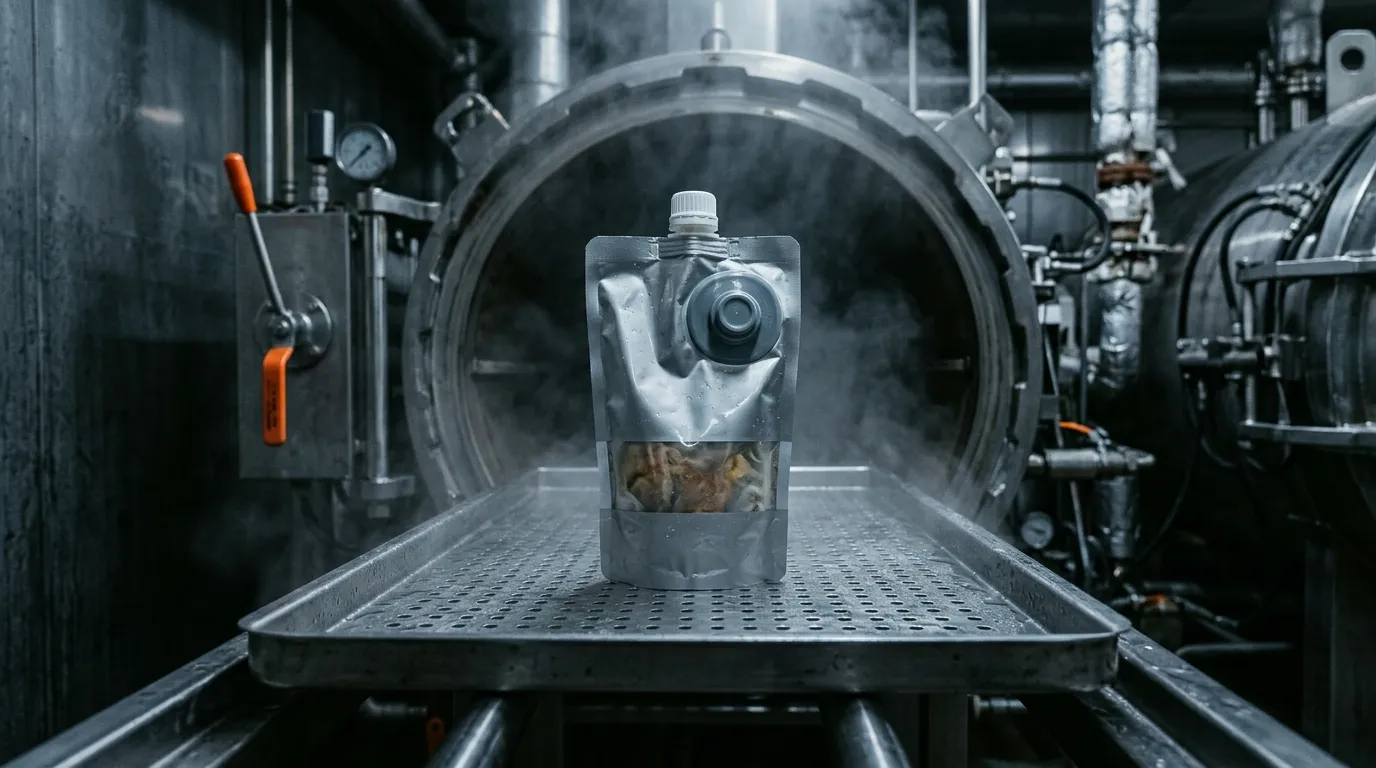
A retort pouch spout is the small injection-molded fitment that turns a stand-up pouch into a squeezable, resealable package for sauces, soups, baby food, and pet food. The pouch film around it is engineered for the job: PET, nylon, or aluminum layers over a CPP sealant that is formulated to survive sterilization temperatures. The spout, by contrast, is often treated as an off-the-shelf afterthought — and that is where retort lines go wrong. A spout that softens or distorts during the 121 °C sterilization cycle will not just look bad: threads can go oval, caps can back off, weld zones can stress-crack, and a batch can start leaking on the shelf. This guide walks through the material choices, design details, and validation steps that keep a retort pouch spout round, sealed, and functional after processing.
Why the Retort Pouch Spout Is the Weakest Thermal Link
A retort pouch is a flexible laminate — typically PET or nylon on the outside, aluminum foil in the middle, and a CPP (cast polypropylene) sealant layer inside — designed to withstand sterilization at 116–121 °C for several minutes under pressure. Every layer is selected with that heat budget in mind, and the sealant is chosen so the fin and bottom seals fuse without melting through at process temperature.
The spout is a different species of part. It is injection-molded, usually from PE or PP, with a welded flange that fuses into the pouch film, a threaded tube, and a screw cap. Nothing about that part is automatically retort-proof. The resin grade, wall thickness, thread geometry, and tamper ring all determine whether the spout survives the cycle or quietly distorts.
Here is the failure chain that actually happens on retort lines. The pouch goes into the sterilizer at 121 °C with the spout closed. The spout resin, if it is a grade whose softening window sits near or below process temperature, loses stiffness. Internal pouch pressure pushes outward and the vacuum phase on cooling pulls inward; between the two, a soft spout body deforms. Threads that were round become slightly oval, so the cap no longer seats with the torque it was designed for. On cooling, the weld zone — the interface between rigid molded plastic and flexible film — carries the stress of mismatched shrinkage. Weeks later, a slow leak or a popped cap shows up in distribution. It is not the film that failed; it is the closure.
If you are still mapping which closure fits which product category, our overview of spout caps by content — liquid, powder, high-viscosity, and corrosive fills — is a useful starting point before you go deeper into heat duty.
Retort vs Hot-Fill: Two Different Thermal Loads on a Closure
"Retort and hot-fill ready" gets printed on pouches like a single claim, but the two processes load a closure very differently.
Hot-fill runs at 85–95 °C. The product is filled hot, the pouch is closed, inverted for a short hold to sterilize the closure and headspace, then cooled. The heat exposure is brief, there is no external overpressure, and the pouch is not pressurized during the cycle. A well-chosen PE spout can work here — PE's softening window sits above typical hot-fill temperatures, and the short hold time never pushes the part deep into its softening range. Hot-fill is also the faster, cheaper process: no autoclave cycle, no overpressure, less energy per pouch. Its limitation is shelf life — hot-filled products usually still need cold chain or preservatives unless they are acidic enough to be stable at ambient.
Retort is harsher by a wide margin. The pouch is processed at 121 °C in saturated steam, typically for 15–30 minutes, with 1.5–3 bar of overpressure applied to keep the pouch from bursting as internal pressure builds. On cooling, the pouch sees a vacuum phase that pulls the film and the spout weld inward. The closure is exposed to heat, pressure, moisture, and mechanical stress — all at the same time, for long enough that creep becomes real.
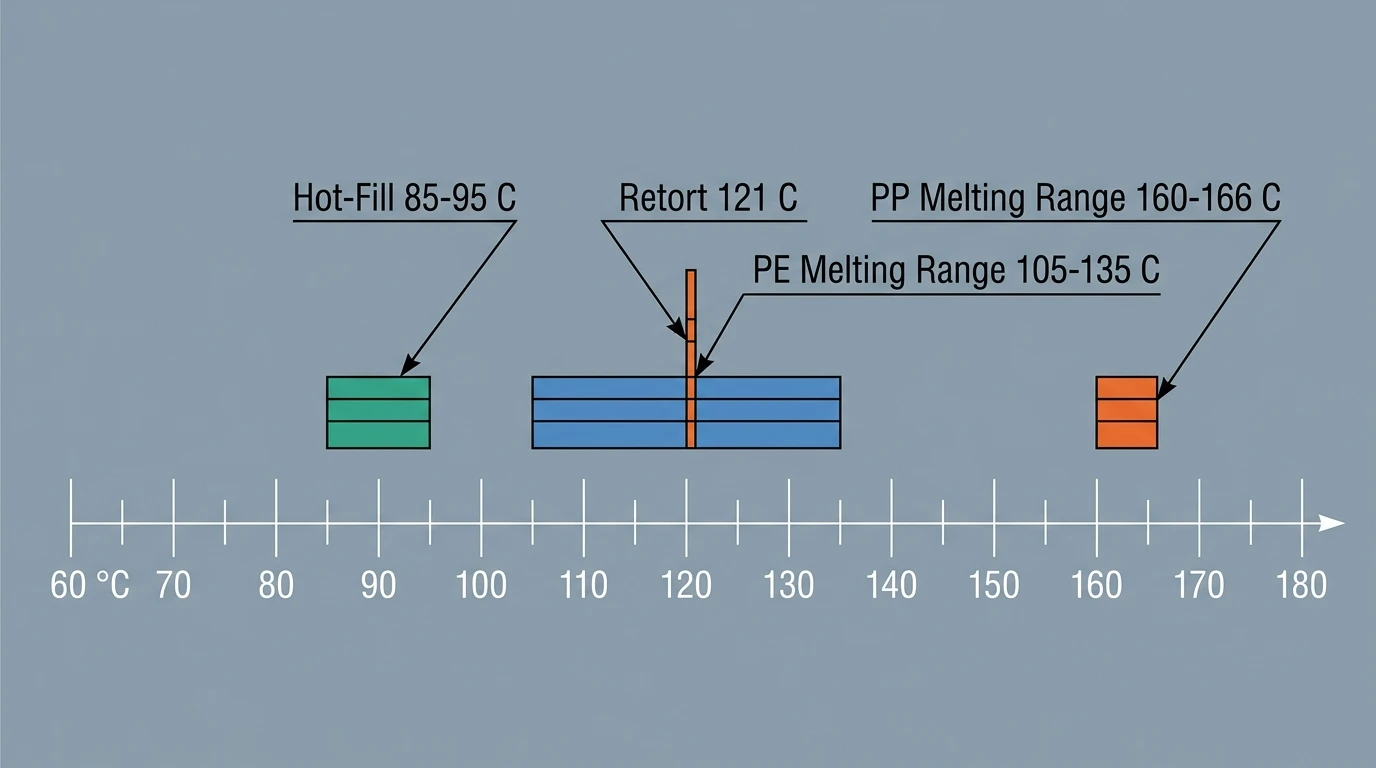
Hot-fill (85–95 °C), retort sterilization (121 °C), and the melting ranges of PE and PP — the whole thermal argument in one chart.
That difference is why "hot-fill ready" must never be read as "retort ready." A spout cap chosen for a hot fill line can deform on a retort line in the first pilot run. The commercial stakes are real too: retort processing is what lets ambient-stable products — shelf-stable soups, sauces, and baby food — skip the cold chain, which is the whole point of the package. Retort does cost more per cycle and take longer than hot-fill, and it can cost some flavor and nutrient freshness compared with aseptic filling, but for low-acid products it is the workhorse process, governed in the US by FDA thermal-processing rules under 21 CFR 113.
If the choice of closure is driven by what you fill, our guide to spout caps for liquid and powder fills separates the flow-rate question from the heat question — worth reading before you settle on a diameter.
The Material Math: Why PP, Not PE, at Retort Temperatures
The core of the selection problem is a temperature overlap. Polyethylene melts across roughly 105–135 °C depending on density — which means a PE spout at 121 °C is sitting inside its own melting window. It will not necessarily liquefy, but it loses stiffness, and under sustained load it creeps. Polypropylene melts around 160–166 °C, leaving a comfortable margin above the retort setpoint. That margin is the entire reason PP is the default resin for retortable spouts.
Melting range is not the only number that matters; softening temperature and creep behavior matter just as much. The relevant engineering property is how much stiffness the part retains at 121 °C while holding a closed cap under torque and internal pressure. PP retains useful stiffness; PE at the same temperature is on its way down.
Resin | Melting range | Position at 121 °C | Typical spout duty |
|---|---|---|---|
PE (HDPE/LDPE) | 105–135 °C | Inside its softening window | Hot-fill and cold-fill spouts |
PP homopolymer | ~160–166 °C | Comfortable stiffness margin | Retort spouts, stiff closures |
PP random copolymer | ~135–150 °C (grade-dependent) | Workable with thicker walls and validation | Low-temperature-weld spouts, tamper rings |
Within PP, the choice of homopolymer versus random copolymer is a real trade. Homopolymer gives maximum stiffness and heat resistance — the safe default for retort. Random copolymer trades some stiffness for better weldability at lower temperatures and better clarity, which is why it shows up on low-temperature-sealing spouts for mono-material pouches. Always ask for the specific grade's datasheet: melting range, softening point, and any creep or HDT data. If a supplier answers "it's PP, it's fine," that is not data.
Do not forget that the cap is part of the same heat budget. A PP spout body paired with a PE cap looks economical on paper, but the cap sits through the entire retort cycle too. If the cap resin softens, the thread engagement relaxes and opening torque drops — which is exactly how a retort pouch cap backs off in transit. The material decision covers the whole assembly: spout body, cap, and tamper ring all need the same thermal margin, even if the cap's shorter engagement time gives it slightly more slack.
The geometry does the rest of the work. A spout is not a solid block — it is a thin-walled tube with a thread, a weld flange, and a tamper ring, and each feature concentrates stress differently.
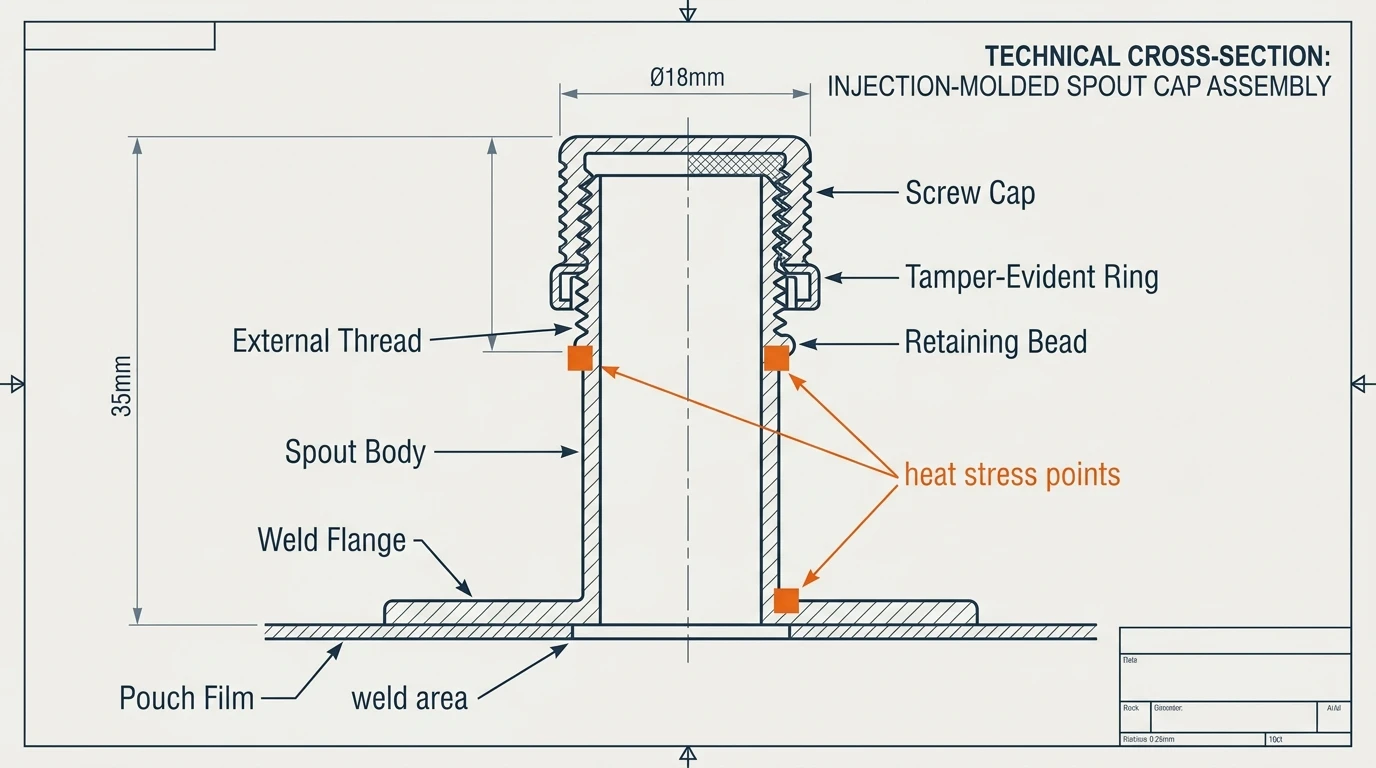
Where the heat stress concentrates: thread root, weld junction, and the tamper-ring hinge are the first places a retort cycle shows up.
For hot-fill-only duty, a high temperature spout cap in PE can be perfectly adequate, and PE's flexibility can even help the weld. The rule is not "PE never" — it is "know which side of 121 °C your process sits on, and pick the resin with a margin on the right side." For any retortable spout, PP is the honest default; for a retort stand up pouch with spout that has to survive repeated handling after processing, the margin is what keeps the part round.
Design Details That Stop a Spout from Deforming
Resin sets the ceiling; geometry decides whether a part gets anywhere near it. Four design areas separate a spout that survives retort from one that survives only the sales meeting.
Wall thickness and ribs. A thin-walled spout body softens fastest. Designers add wall where the thread sits and rib the body to resist ovalization under cap torque. This is also where the cheapest-looking quotes show up: minimum wall that looks fine in a CAD render and deforms on cycle 50.
Thread geometry. The thread root is a stress concentrator. A generous root radius spreads the load; a sharp root is a crack starter. Thread form and engagement length also decide torque retention — if the thread distorts, the cap's holding torque decays after the first retort cycle.
Tamper-evident ring. The thin hinge that breaks when the cap is first opened is the most fragile feature on the part. On a retort pouch, it has to survive the heat and pressure of sterilization first, then still snap cleanly for the consumer. That combination — survive the autoclave, then function as a tamper signal — is harder than it looks, and it is one of the first things a pilot run reveals.
Weld flange and sealing temperature. The flange is welded into the pouch, and the weld window has to match the film's sealant layer. This is where the spout sealing temperature question gets specific: a spout engineered to weld at 110–130 °C exists for a reason. Mono-material PE pouches — increasingly common for recyclability — need a spout that welds into a PE film at low temperature without burning the sealant, and Ruihua's low-temperature-sealing spout caps are built for exactly that window.
A retort spout usually pairs a PP body with a weld flange tuned to the pouch's sealant. Re-seal performance matters just as much as the first seal: a pouch that cannot be re-closed after opening is a pouch that gets finished in one sitting. For baby-food squeezable pouches, anti-choking geometry — a spout opening that cannot be swallowed — is a design requirement, not a detail.
Geometry choices cascade, too: a thicker wall raises part weight and cycle time, so good spout design is a negotiation between stiffness and cost. That negotiation is exactly what a mold-owning supplier walks through with you at the design review — wall sections, rib layout, and thread form are settled there, not discovered at the trial.
Validating a Spout Cap for Retort or Hot-Fill
No amount of datasheet reading replaces a trial run with your actual product and your actual process parameters. A serious validation protocol has six steps, and it is worth putting them in writing before you order samples:
- Pilot retort trial at your time/temperature/pressure recipe — not the supplier's, not the industry's. If you hot-fill, run the hot-fill profile instead.
- Pre- and post-cycle dimensional check. Measure thread pitch diameter, cap inner diameter, and spout opening before and after processing. Ovality is the earliest deformation signal; a dial caliper catches it long before a visual check does.
- Torque retention. Measure opening torque after processing and after a simulated shelf period. A cap that backs off with less than its designed torque is a leak risk, even if it looks fine.
- Weld integrity / leak test. Pressure or dye tests on the weld zone after the cycle. This is where stress cracks at the weld junction show up.
- Drop test. Retort pouches get handled in distribution. A spout that cracks on impact after it has been embrittled by the cycle is a field failure waiting to happen.
- Visual inspection. Warpage, discoloration, and tamper-ring condition — the things a customer notices first.
The same protocol answers the "retort pouch closure" question honestly: the closure is validated when it holds dimensions, torque, and weld integrity through your cycle, not when the brochure says "heat resistant."
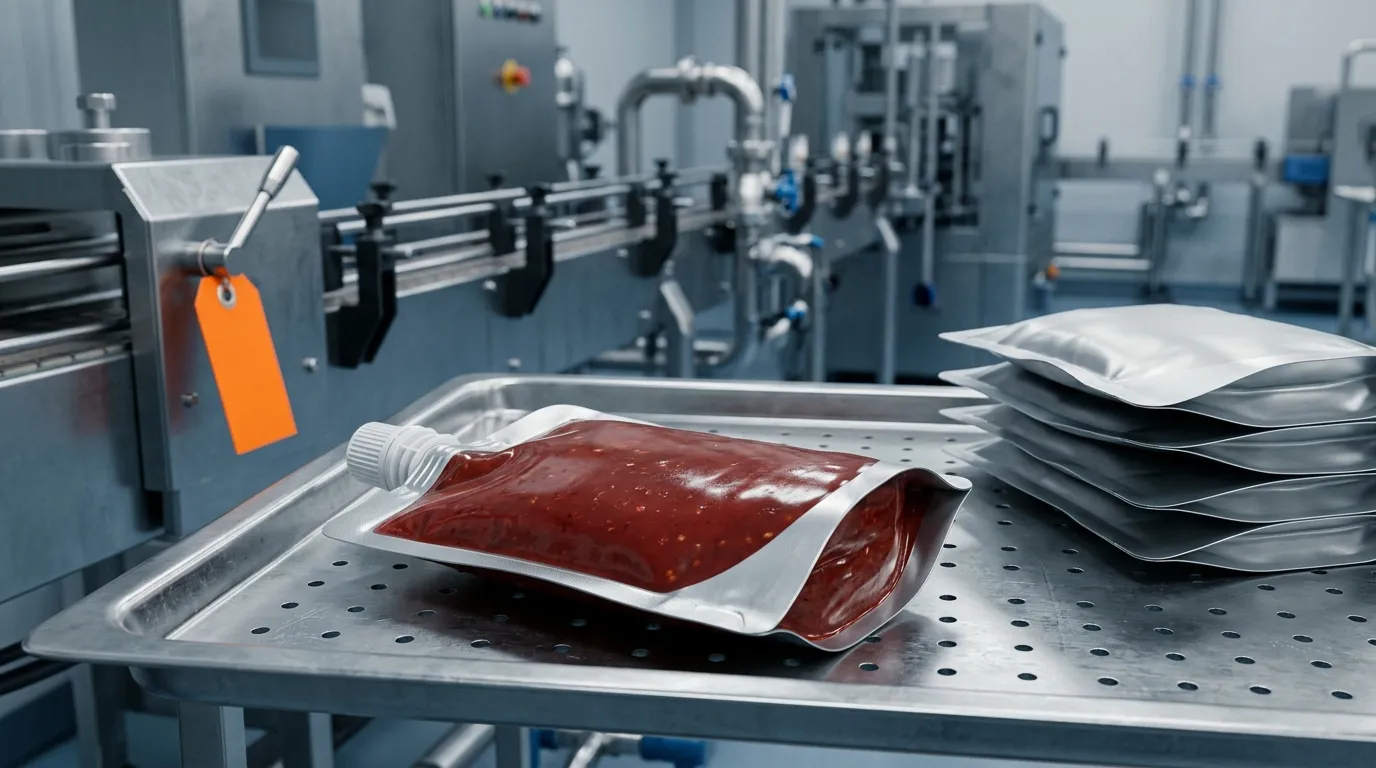
A PP spout cap after the trial is the only proof that matters — dimensions, torque, and weld integrity through your actual cycle.
Two practical notes from running these trials. First, take the measurement points and torque spec from the spout cap diameter guide so the validation matches the part you actually intend to buy at scale. Second, do the trial on the same mold, same resin lot family, and same film structure you will use in production — a trial on different materials validates nothing.
Write the acceptance criteria down before the trial starts: maximum allowable ovality in millimeters, minimum opening torque after processing, zero leaks in the weld test, zero tamper-ring cracks. With criteria in place, the trial report becomes a procurement document — the same report you hand to quality, to your own auditor, and back to the supplier as the spec for production lots. Without criteria, a trial is just a visit to the pilot plant.
What to Ask Your Supplier Before You Commit
When you take the engineering out of the room and talk to a spout manufacturer, these six questions separate suppliers who have done the work from suppliers who are reading a catalog back to you:
Ask for | Why it matters | What a solid answer looks like |
|---|---|---|
Resin grade and datasheet | Melting and softening points define the real heat budget | A named PP grade with a melting range well above 121 °C |
Retort trial data at your recipe | Your process parameters are what count | Trial report with pre/post dimensions, torque, and leak results |
Food-contact documentation | A regulatory gate, not a marketing claim | FDA compliance under 21 CFR 177 and EU 1935/2004 statements or certificates |
Wall thickness and thread specs | Geometry is half the deformation battle | Section drawings with wall and thread-root dimensions |
Weld temperature window | Must match your film's sealant layer | A stated window, e.g. 110–130 °C for PE mono-material pouches |
Samples, MOQ, and tooling plan | De-risks the scale-up | Clear sample lead time, MOQ, and any custom-mold terms |
Food-contact certification deserves its own warning: not every "food grade" claim covers the same ground. Our piece on what food-grade certification actually covers walks through FDA and EU frameworks and how to verify a claim instead of trusting a logo. For context on the company side: Ruihua manufactures food-grade PP and PE spouts from 1.2 mm to 40 mm inner diameter, holds FDA and EU 1935/2004 (TÜV SÜD) certifications, and runs ISO 9001 and HACCP systems — the sort of documentation you can hold in your hand when you audit.
The Bottom Line
The retort pouch film is engineered for 121 °C; the spout has to earn it. Three things decide whether a retort pouch spout survives the cycle: a PP resin with real margin above process temperature, geometry that resists ovalization (wall, ribs, thread root, tamper ring), and a validation trial run against your actual recipe. Hot-fill lines have more slack, but "hot-fill ready" is not "retort ready" — pick the resin for the process you actually run.
Start with the supplier checklist above, and ask for trial data before you commit to samples. Whether your line runs batch autoclaves or a continuous retort system, the closure question is the same: does this spout hold its geometry through my cycle? Resin, design, and the trial answer it. If you are at the stage of shortlisting closures, browsing the full spout cap range — diameters from 1.2 mm to 40 mm, PP and PE, retort and low-temperature-weld variants — gives you the shape of what is possible before you pick up the phone.