
A cracked cap on a detergent refill pouch is rarely a random defect. It is usually a material decision that went wrong somewhere between resin selection and the filling line — and by the time the crack shows up on a consumer's shelf, the pouch has already leaked, the brand has already taken the return, and the packaging engineer is already fielding the complaint. Detergent pouch caps sit in the worst position in flexible packaging: they are the only rigid component on a flexible pouch, they get twisted, dropped and squeezed, and they are permanently in contact with one of the most chemically aggressive liquids in the home. This guide explains what actually cracks them, which detergent pouch cap material resists it, and how to verify the choice before you commit to tooling. It covers spout caps for stand-up pouches and doypacks only — the screw-cap-and-spout fitment welded into the pouch film — not the measuring cap on a detergent bottle.
Three Reasons Detergent Pouch Caps Crack
Every cracked cap you will see in the field traces back to one of three failure paths, and most real-world failures combine two of them.
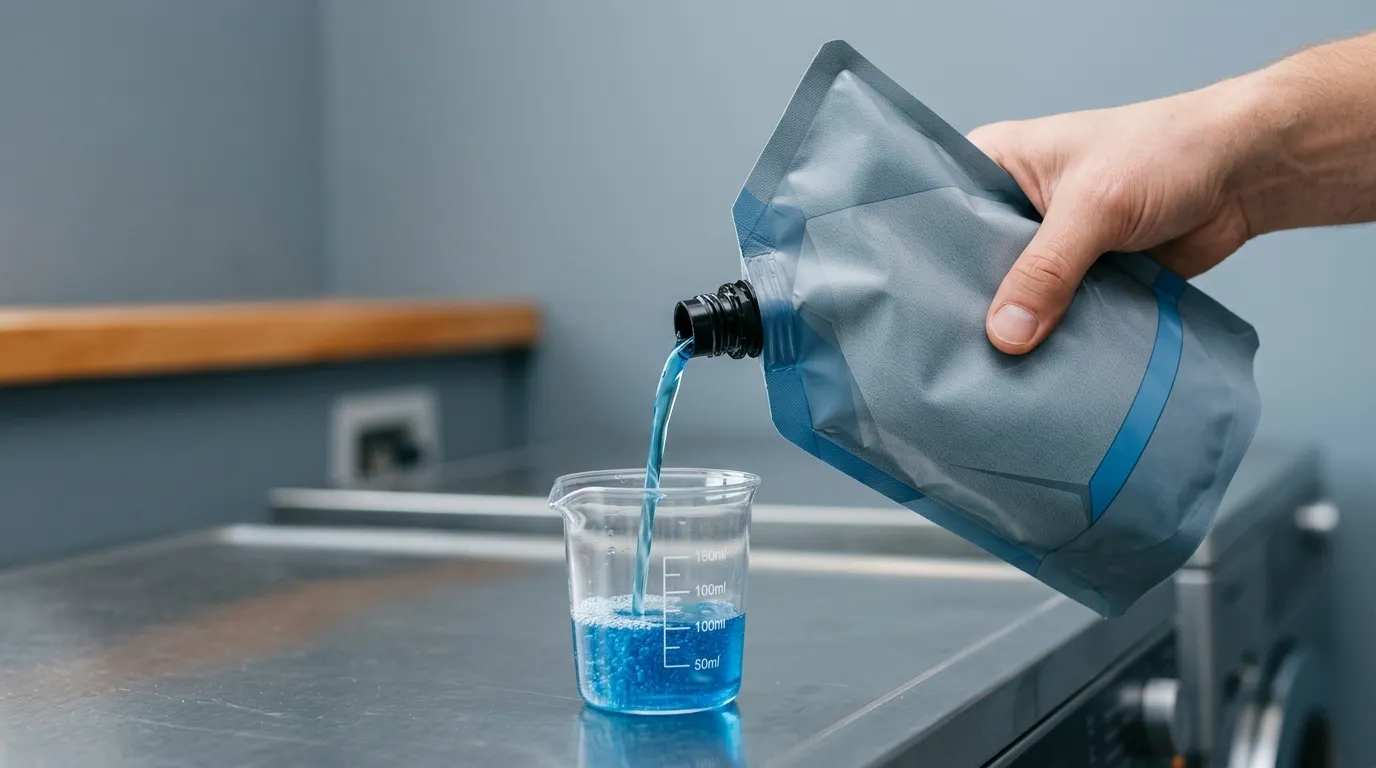
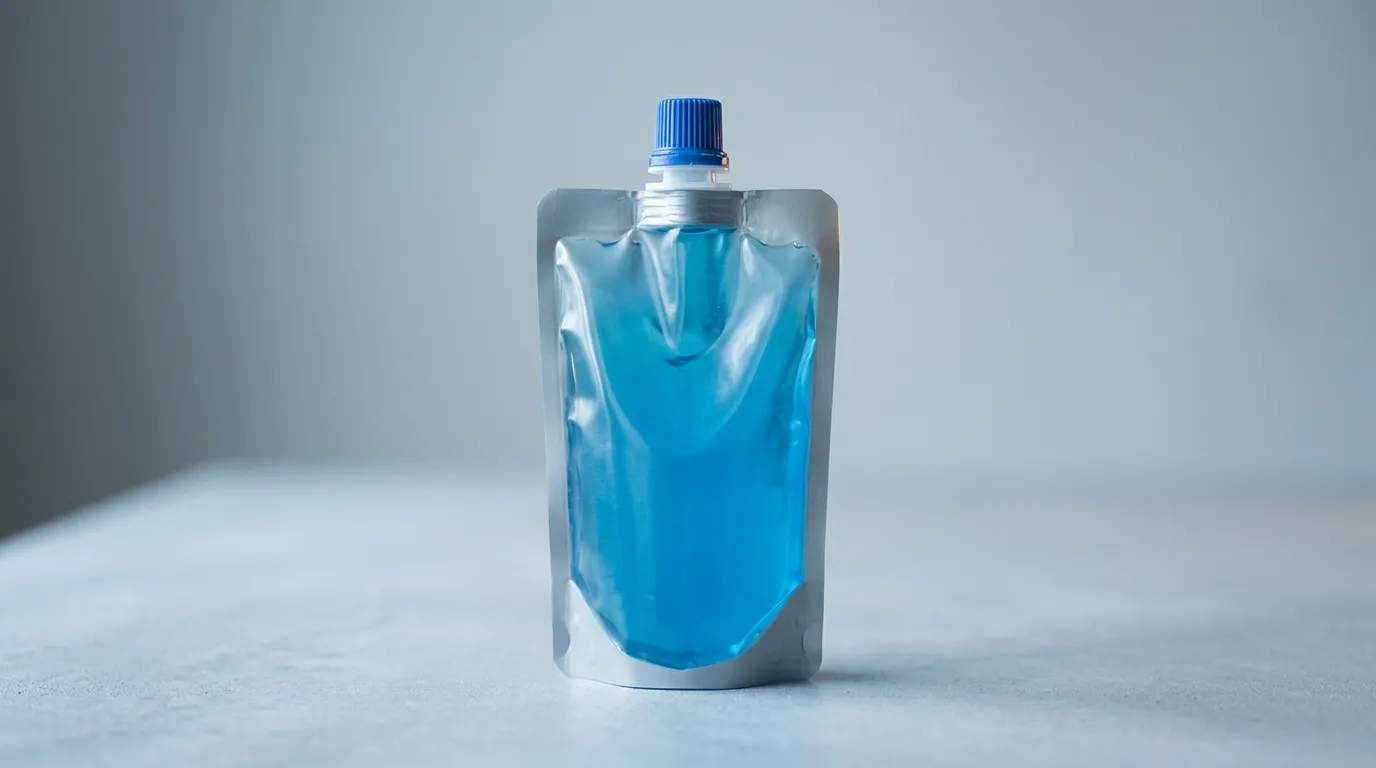
A detergent refill pouch in daily use: the spout cap takes repeated twisting, squeezing and drops on top of permanent chemical contact.
Chemical attack, amplified by stress. Detergent formulas are built from surfactants, alkaline builders, enzymes, solvents and fragrance. Individually these are hard on plastics; together they are worse. The failure mode is environmental stress cracking (ESCR): a stressed plastic part develops micro-cracks that the liquid then drives deeper, until a visible crack opens. This is why the same cap can perform for years on a juice pouch and fail within months on a detergent pouch — the liquid changed, not the part.
Stress concentration in the design. A cap is a small part carrying a lot of geometry: the thread root, the hinge on flip-top designs, the tamper-evident ring, the ejector-pin marks, the weld line where two melt fronts meet. Every one of those features concentrates stress, and a design that never gets its stress points checked will keep failing at the same spot, batch after batch.
Process and material contamination. Cracking that appears days or weeks after molding, rather than during filling, is usually a molding problem: incompatible resin blends, pigment masterbatches that weaken the base polymer, excessive post-molding shrinkage, or cold mold temperatures that leave internal stress locked into the part.
The practical takeaway: if you are seeing cracks, do not just swap "plastic A" for "plastic B" and hope. Diagnose which of the three paths is active, because the fix for a stress-concentration crack is geometry, the fix for a process crack is the mold, and the fix for a chemical crack is the resin. The rest of this guide is about the third path — the one that is unique to detergent packaging — plus the design and validation checks that keep the other two from resurfacing.
Detergent Is a Stress-Cracking Liquid: the ESCR Mechanism
Environmental stress cracking deserves a proper explanation, because it is the single most common reason detergent pouch caps fail — and the least understood.
Every injection-molded plastic part carries internal stress: molecules that were stretched and frozen during molding, concentrated around features like threads and hinges. Now add a second ingredient. Detergent formulas are rich in surface-active agents, and surfactants do something unusual: they wet the polymer surface, work their way into micro-cracks, and physically pry the polymer chains apart at the crack tip. No chemical degradation of the molecular bonds is required — the plastic is not dissolving or corroding; it is being cracked open by a liquid that lowers the energy needed for a stressed part to fail.
As one packaging supplier puts it in a product-defect explainer on cracking, surface-active substances are particularly responsible for stress cracking, and "even a detergent can be very harmful to a seemingly harmless plastic." Engineers discussing real cap-cracking cases on eng-tips walk through the same diagnosis: if caps crack days after molding while in storage, the cause is almost always ESCR combined with post-molding shrinkage — and the two fixes are to reduce internal stress or increase the material's elongation at break.
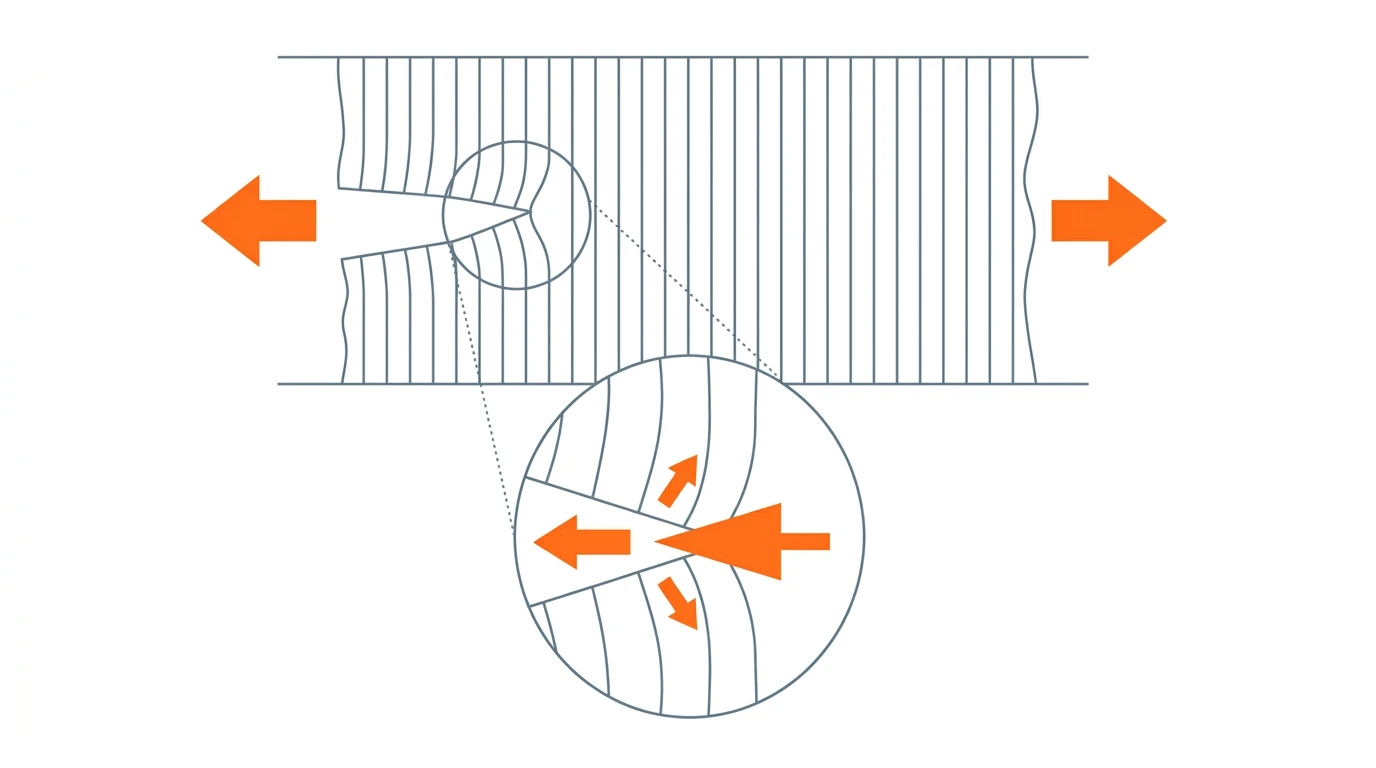
Environmental stress cracking: internal stress plus a wetting liquid (surfactant) pries the polymer chains apart — no chemical corrosion involved.
Why does this matter for material selection? Because ESCR resistance is not a fixed property of "plastic" — it varies dramatically between resin grades of the same family. A cap molded from a general-purpose polypropylene and one molded from a stress-crack-resistant PE grade can look identical and fail completely differently on the same detergent. The film side of the pouch is equally exposed: film suppliers screen their laminates for exactly this chemical load, and the best current guide on detergent pouch film selection lists "surfactant class, fragrance level and any known tendency to stress-crack polyethylene" as mandatory inputs for choosing the structure. The cap and spout deserve the same screening discipline as the film — in practice they get almost none, because most buyers spec the cap by diameter and price.
Detergent Pouch Cap Material: PE, PP, HDPE and PET Compared
Food-grade detergent pouch fitments are molded from four resin families in practice: polyethylene (PE), polypropylene (PP), high-density polyethylene (HDPE), and — less commonly — PET. Each has a different answer to the question "will it crack on my formula?" There is no single "best" resin; there is a best resin for the part's job.
Resin | Where it fits | ESCR / crack behavior | Other trade-offs |
|---|---|---|---|
PE (LDPE/LLDPE) | Spout base welded into the pouch film | Flexible and forgiving, but ESCR-sensitive under sustained stress; grade choice matters | Welds to PE pouch film at low temperature; the default for mono-material recyclable pouches |
HDPE | Screw caps and stiffer closures | Better chemical resistance and rigidity than LDPE; good all-rounder for detergent caps | Less flexible at low temperature; must still pass ESCR screening |
PP | Screw caps, flip-top hinges | Rigid, fatigue-resistant — the classic hinge material; resists many solvents | Notch-sensitive; brittle at low temperature; not weldable to PE film |
PET | Caps in cracking-sensitive applications | High strength and chemical resistance; marketed specifically to stop cap cracking | Not weldable to pouch film; different recycling stream; higher cost |
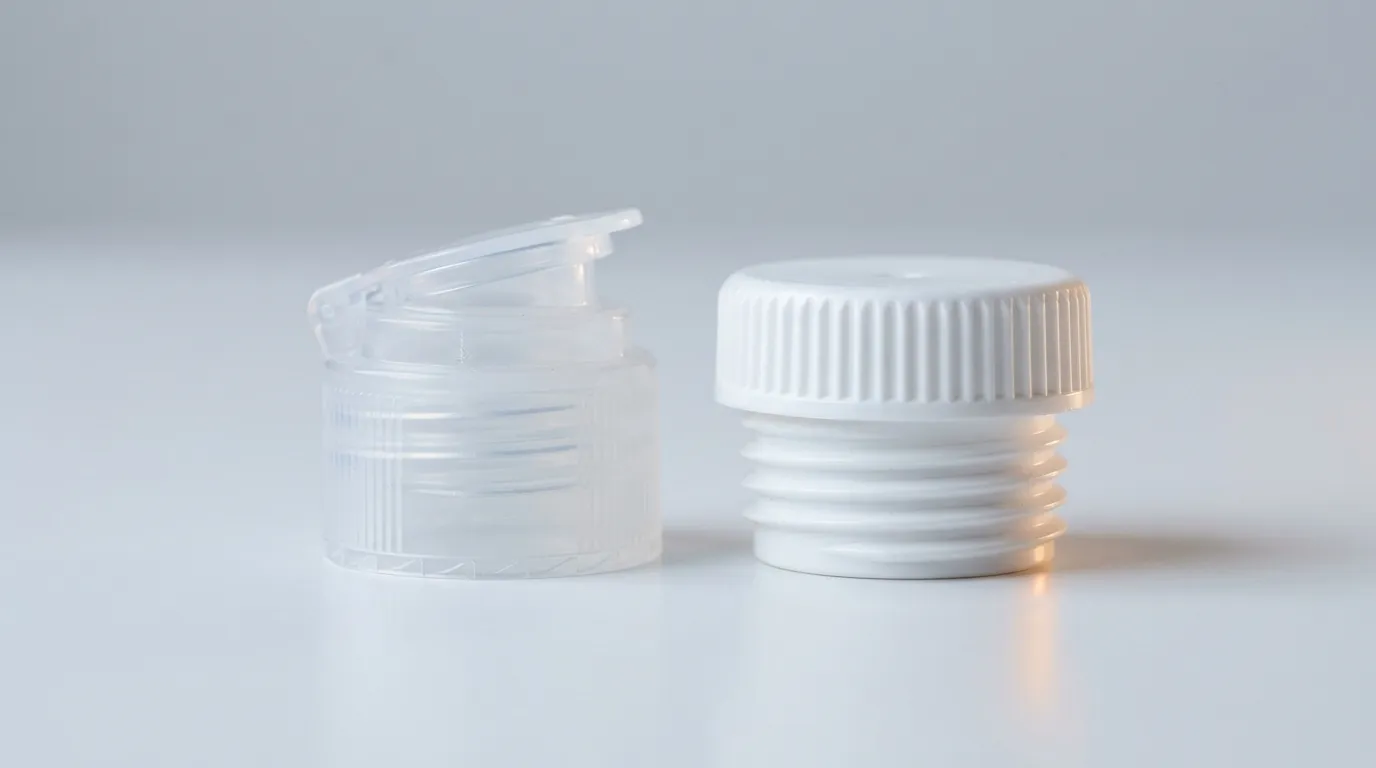
The two workhorses: a flexible PE spout that welds to the pouch film, and a rigid PP screw cap that carries the opening cycles.
The division of labor in a pouch fitment is the key to reading this table. The spout base must weld to the pouch film, so it is almost always a PE grade — and for recyclable mono-material PE pouches, it must be a PE that seals at 110–130 °C so it does not burn the film. The screw cap sits on top of that spout and carries the opening/closing loads, so it is where rigidity and fatigue resistance matter: PP for hinge-heavy flip-top designs, HDPE where you want a stiffer, tougher closure. PET enters the picture when cracking complaints dominate: industry coverage of the cap-cracking problem points to PET as the material that combats it, citing its durability, chemical resistance and recyclability — though in a pouch context PET caps remain a niche choice because they add a third material to a system that is usually trying to stay within the PE/PP families.
Three rules cut through the options:
- Match the cap to the formula, not just the price. Ask your cap supplier which resin grade they run for detergent duty and what ESCR screening they did with your formula. A "food-grade PP" answer is not a specification.
- Match the spout to the film. A PE spout on a PE pouch seals at low temperature and keeps the pack mono-material. If your pouch is moving toward recyclable PE structures, the spout must be part of that decision — this is where plastic spout caps for detergent pouches diverge from generic closures.
- Treat the cap as a food-contact component. Detergent pouches are not food, but the same resins and certifications apply, and regulators still look at the closure. In the US, food-contact substances for packaging are covered by the FDA's food-contact materials framework; in the EU, the framework regulation is (EC) No 1935/2004. If a supplier cannot state which framework their resin complies with, that is a red flag worth acting on.
A note on recycled content: recycled PE in caps saves cost and carbon, but it also raises ESCR risk — contaminants and degraded polymer chains are exactly what stress-cracking tests are designed to catch. If you are specifying PCR content in a detergent cap, the validation section below is not optional.
Cap Design Choices That Stop Cracking
Material is half the answer; geometry is the other half. A cap made of the right resin will still crack if the design concentrates stress where it should not. These are the design decisions that matter, in the order failures usually appear:
Wall thickness and transitions. Thin walls crack first. The fix is not "make everything thicker" — it is uniform wall thickness with generous radii at every transition, so the part cools evenly and no section freezes with locked-in stress. Sharp corners at the base of the cap wall are the classic crack origin.
Thread roots. The thread is the most stressed feature on a screw cap: every opening and closing torques the thread root. A rounded root profile and the right thread depth spread that load; a sharp root concentrates it into a defined crack line.
Hinges (flip-top designs). A living hinge is a deliberate fatigue point — it is meant to flex tens of thousands of times. PP is the classic hinge material because it survives repeated bending without tearing, but the hinge geometry (thickness at the flex line, gate position) decides whether the cap fails at 5,000 cycles or 50,000.
Tamper-evident ring. The tamper ring is a one-time-use feature that is designed to break — the design question is where and how. A ring that tears cleanly at its bridges is a feature; a ring that takes part of the cap wall with it, or leaves a stress raiser behind, becomes a crack starter for the second opening.
Gate and weld-line placement. Every molded part has a weld line where melt fronts meet, and that line is the weakest plane in the part. A good mold puts gates and vents so that weld lines do not run through highly stressed zones — a weld line across a thread root is a crack waiting for a drop.
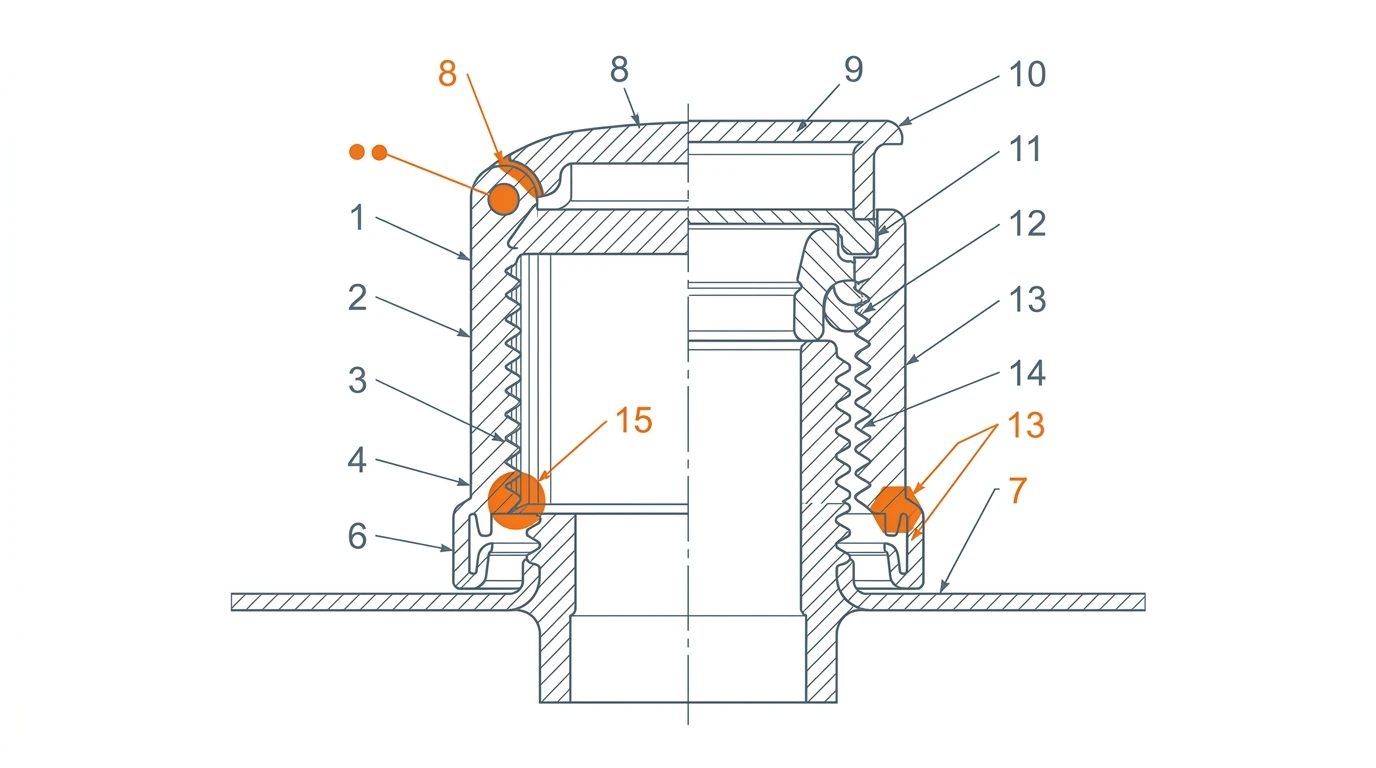
Where cracks start: thread root, hinge flex line and the tamper-evident ring are the three highest-stress zones on a pouch cap.
This is exactly where a spout-cap specialist earns its keep. A cap is a high-volume, low-margin part, and the difference between a mold that produces 50,000 clean cycles and one that produces 50,000 crack-prone caps is entirely in details like these — details that are invisible in a product photo and impossible to judge from a price list.
How to Verify a Cap Before You Commit
You cannot see ESCR resistance in a sample. You can only test for it — and the tests are neither expensive nor exotic. Before you approve a detergent pouch cap, run this checklist:
Check | What it proves | How |
|---|---|---|
Chemical compatibility / aging | The cap survives your formula over shelf life | Fill pouches with the real formula (not water), store at elevated temperature, inspect caps at 1/2/4/8 weeks for cracks, whitening, softening |
Stress-crack screening | The resin grade actually resists ESCR | Ask for the supplier's ESCR data per ASTM D1693 (the standard bent-strip test for PE stress cracking), ideally run with your formula |
Cap torque retention | Sealing force holds through transport | Measure opening torque after filling, after drop testing, and after storage; torque that collapses means the cap is relaxing or swelling |
Drop / impact | The cap survives the distribution chain | Drop filled pouches from defined heights at room and refrigerated temperature; inspect cap, spout weld and film seals |
Weld integrity | The spout stays welded to the film | Peel tests on the spout flange after aging; watch for flange deformation from the sealing jaws |
Tamper-evident behavior | First-open works, second-open is safe | Open/close cycles; verify the ring breaks cleanly and does not crack the cap wall |
Three conversations to have with the supplier before ordering:
- "Which resin grade, and why?" The answer should name a grade family (e.g., a food-grade PP homopolymer or a specific PE) and explain the choice for detergent duty — not just "PP."
- "What ESCR data do you have for this formula?" The supplier cannot test your exact formula, but they should have bent-strip or similar screening results and be willing to run compatibility aging with your liquid.
- "What is your mold and QC story?" Ask about gate and weld-line placement, and how the factory checks caps out of the mold. Automated visual inspection of every cap catches cracks and weld-line defects that sampling misses — the QC capability of the factory is part of the material decision.
If the cap passes all six checks and the supplier answers all three questions, you have de-risked the most common failure modes. If a supplier cannot produce ESCR or aging data, that is information in itself — you are about to put their resin on a shelf next to your brand name, and the chemical compatibility of a detergent pouch cap is not something to discover after launch. Regulatory context matters here too: food-grade spout cap certification explains which FDA and EU frameworks apply to closures, and the pouch closure regulatory guide covers the wider compliance picture for flexible packaging.
Why the Cap Supplier — Not Just the Pouch Maker — Decides Failure Rates
Most detergent pouches are bought from a pouch converter, and the converter buys the cap from a fitment supplier. That chain hides the decision that actually controls cracking: the cap and spout are specified by diameter and price, and the resin grade, the mold design and the QC that determine ESCR behavior are left to whoever quotes the lowest number.
A spout-cap manufacturer sees the failure modes that a film house never sees. When a detergent formula attacks a cap, when a hinge tears at 3,000 cycles, when a tamper ring takes the wall with it, that data lives at the cap molder — and it is exactly the experience you want applied to your part. This is why the material decision deserves a conversation with the closure specialist, not just a line item on the pouch quote.
For detergent duty specifically, look for three capabilities: acid- and alkali-resistant resin grades formulated for cleaning liquids, large-bore spout designs that keep pour rates high without thinning the cap wall, and low-temperature sealing that lets a PE spout weld onto recyclable PE film at 110–130 °C without distortion. The last one is becoming the deciding factor as brands push mono-material recyclable pouches: a fitment that cannot seal on PE film quietly locks you out of the recyclable pack, and a fitment that seals at high temperature damages the film around the flange.
As an example of what a detergent-specific closure looks like in practice, Ruihua's 22 mm laundry-detergent spout cap (model RD-187) is a large-bore food-grade design aimed at high-flow detergent and softener pouches — the application pattern matters more than the model number.
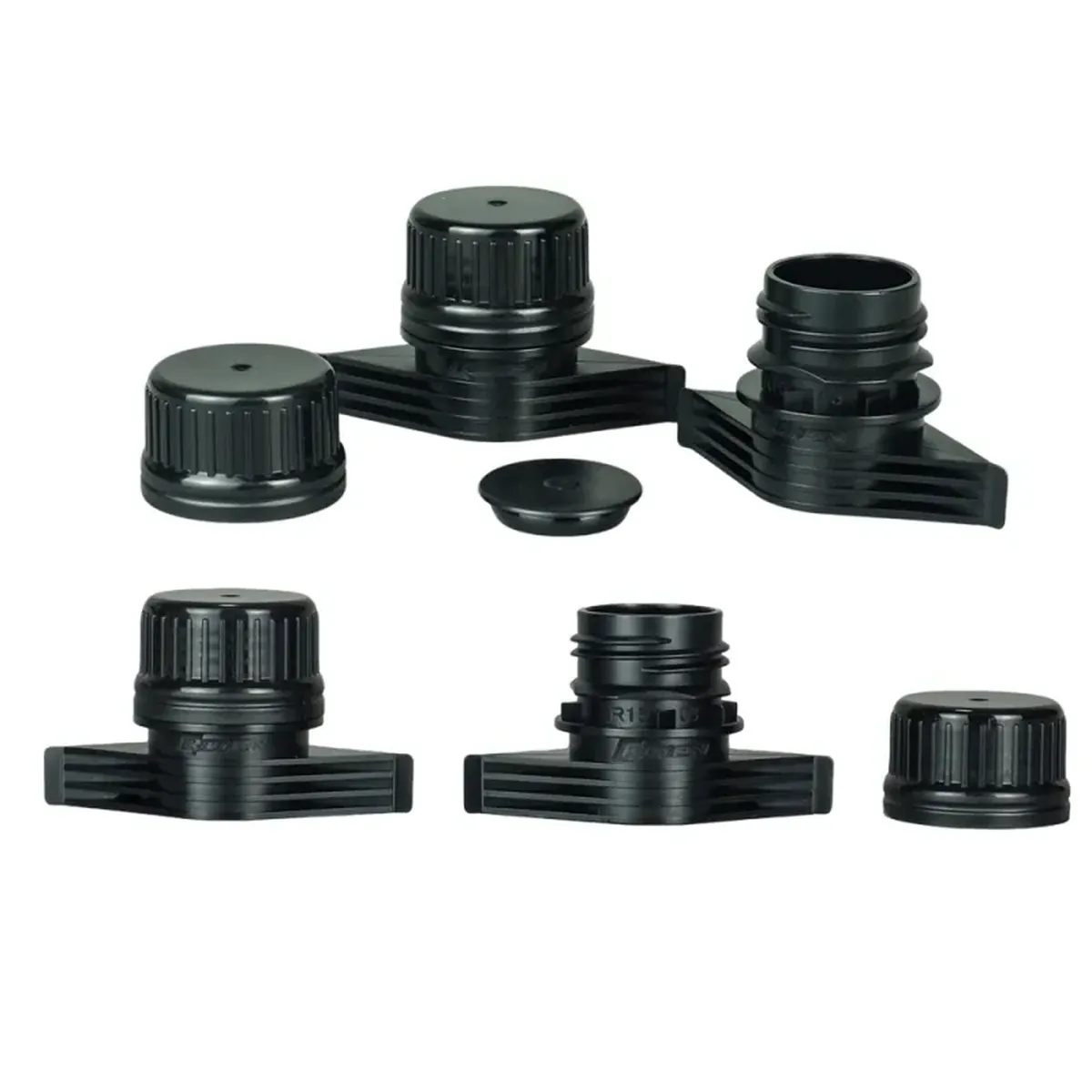
A 22 mm large-bore spout cap built for high-flow laundry detergent pouches: bore size, wall geometry and resin are specified together.
Choosing the right bore size is its own decision, covered in the spout cap diameter guide, and if you are sealing onto recyclable film, the spout sealing temperature guide explains the 110–130 °C window in detail.
The Six-Point Shortlist
If you take one thing from this guide, take the verification habit: a detergent pouch cap is a chemical-exposure part, and it earns its place on your pouch by passing aging, ESCR screening, torque, drop, weld and tamper-evident checks — not by being the cheapest quote. Choose a food-grade PE spout that matches your film, a PP or HDPE cap that matches your opening cycle, and a supplier who can show you the stress-crack data instead of a catalog page. Caps crack for three reasons: chemistry, geometry and process. You now have the language to ask which one is active on your line — and the checklist to prove the fix before the first production run. For the full picture of how spout cap content fits together, start from the spout caps by content hub — and if you are selecting a closure for a new detergent pouch, send your formula parameters to a spout-cap specialist (like Ruihua's detergent-duty line) before the mold is cut.