

Quick answer
Does the EU tethered-cap rule automatically cover spouted pouches?
Article 6 of Directive (EU) 2019/904 requires attached plastic caps and lids on the single-use plastic beverage containers it covers, up to three litres. The Directive does not explicitly name spouted pouches, so their scope needs a product- and market-specific assessment before launch. Select a non-detachable closure where appropriate, then confirm legal applicability with qualified counsel.
Read Article 6 in Directive (EU) 2019/904If you pack beverages in spouted pouches and sell into the EU, the question comes up sooner or later: does the EU tethered cap rule apply to my pouch?
The short answer: since 3 July 2024, Directive (EU) 2019/904 has required caps and lids on single-use plastic beverage containers of up to three litres to remain attached. Its scope covers "beverage containers … i.e. receptacles used to contain liquid" — a category broad enough that a spouted pouch plausibly falls inside it. The directive never names pouches explicitly, so a layer of interpretation remains, but for beverage pouches the practical answer is: plan on a tethered, non-detachable cap. Brands — especially in baby food and juice — have already made it the default, and buyers treat it as a de facto requirement.
This is the scope article: its job is to answer one question — does the rule reach your pouch — not to specify a cap or plan a line change. Those are separate decisions, and we point to them at the end. This guide walks through what the rule actually says, where spouted pouches sit in its definition, and what to check before your next EU order.
What the EU tethered cap rule actually says
The requirement comes from Article 6(1) of Directive (EU) 2019/904 on the reduction of the impact of certain plastic products on the environment — the Single-Use Plastics Directive. The operative provision reads:
Member States shall ensure that single-use plastic products listed in Part C of the Annex that have caps and lids made of plastic may be placed on the market only if the caps and lids remain attached to the containers during the products' intended use stage.
Three details in that sentence do the work. First, the date: member states had to apply Article 6(1) from 3 July 2024 (Article 17), giving manufacturers a five-year runway after the directive was adopted in 2019. Second, the scope: the requirement covers the "single-use plastic products listed in Part C of the Annex" — beverage containers up to three litres, discussed in the next section. Third, the obligation lands on whoever places the product on the market — for imported pouches, that is typically the brand or importer, not just the cap manufacturer. If you sell beverage pouches into the EU, you are on the hook for the closure system, wherever it was made.
The policy logic is straightforward. Plastic caps and lids are consistently among the most common single-use plastic items found on European beaches, according to the European Commission's single-use plastics pages. A cap that stays attached travels with its container through collection and recycling instead of escaping into the environment. The directive also asked European standardisation bodies to develop harmonised standards for these closures (Article 6(3)); closures that meet a published harmonised standard are presumed to comply (Article 6(4)) — we cover that route in our guide to specifying a tethered cap for a spout pouch. For the same reason, tethered closures are increasingly expected across the wider EU regulatory landscape for pouch closures, not just for bottles.
Does a spouted pouch count as a "beverage container"?
This is the question that decides everything, and it is where most articles stop short. The category that Article 6(1) applies to is defined in Part C of the directive's Annex:
Beverage containers with a capacity of up to three litres, i.e. receptacles used to contain liquid, such as beverage bottles including their caps and lids and composite beverage packaging including their caps and lids, but not: (a) glass or metal beverage containers that have caps and lids made from plastic; (b) beverage containers intended and used for food for special medical purposes … that is in liquid form.
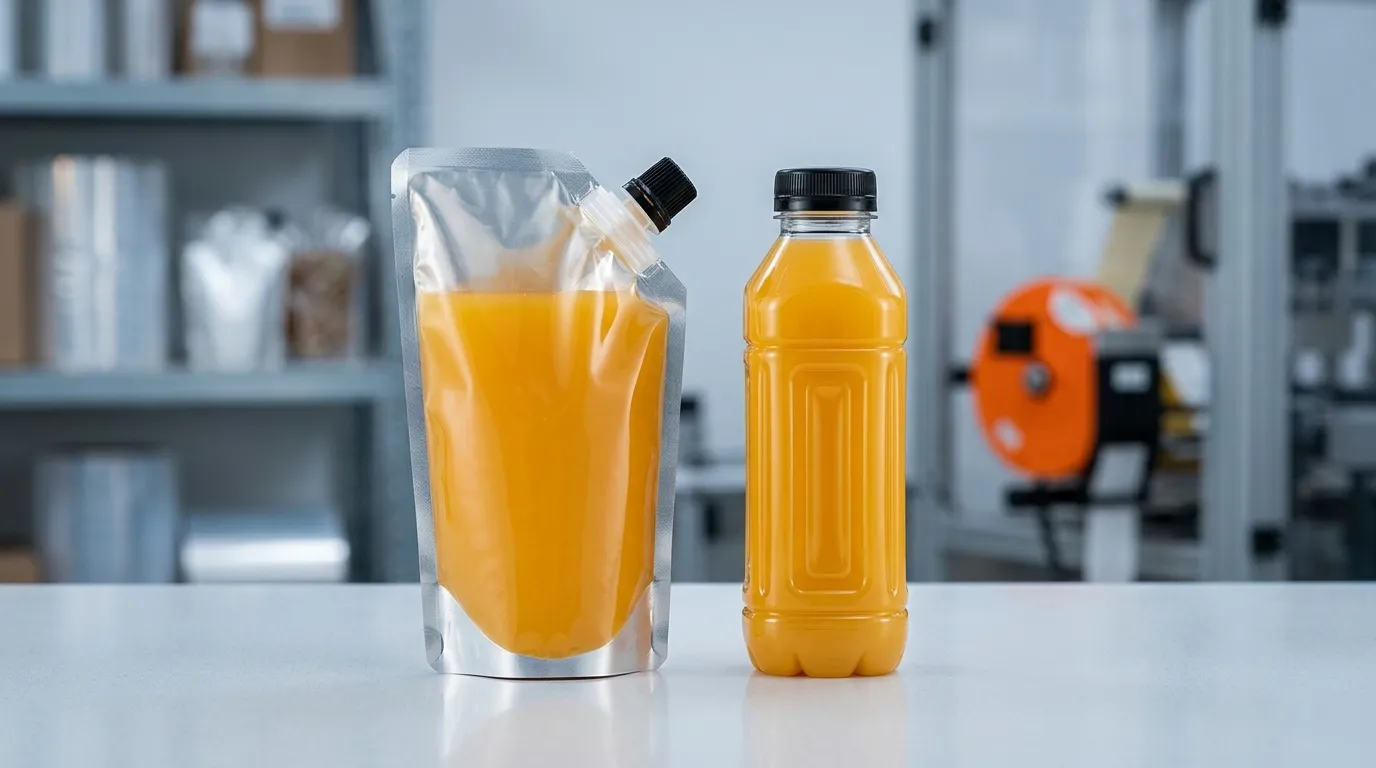
Note the wording: "receptacles used to contain liquid, such as beverage bottles". The operative phrase is "receptacles used to contain liquid", and "such as" makes the list of examples non-exhaustive — bottles and composite beverage packaging are named, but the category is not limited to them. A stand-up pouch with a spout is, on its face, a receptacle used to contain liquid. On this reading, a single-use plastic beverage pouch of up to three litres with a plastic cap is inside the scope of Article 6(1).
The directive nevertheless never mentions pouches — the word does not appear anywhere in the text — which is why interpretation has mattered. The Commission's own guidelines are where that interpretation is written down, and their illustrative tables list pouch formats directly: plastic caps used in combination with single-use plastic beverage pouches, and pouches up to three litres whether fully plastic or including a plastic layer, are shown as covered by the tethering requirement. That has been the position since the 2021 edition of the guidance; the most recent update, Commission Notice C/2026/4813 published on 8 September 2026, added the plastic cap and foil lid case to the same table without changing the pouch entries. The same guidance draws a commercial line worth knowing: a plastic multilayer pouch of fruit purée is treated as a food container, while a juice or smoothie pouch is a beverage container. Member-state enforcement detail can still differ, so a written position for your own product is still worth having — but the direction of travel is no longer genuinely in doubt.
The honest position: if your product is a beverage pouch, treat "do I need a tethered cap?" as a scope question with a strongly supported default. The Annex's "receptacles used to contain liquid" language, and the Commission's illustrative tables, both point toward pouches being in scope; enforcement and retail expectations point the same way. Plan on a non-detachable cap for any single-use plastic beverage pouch up to three litres, and have your counsel confirm the position for your specific products and member states.
Why brands are switching pouch caps to tethered designs anyway
Baby food pouches led the way. Squeeze pouches for puree are a staple across the EU, they are used by small children, and a small detached cap is two problems at once: a piece of litter and a choking hazard. Non-detachable caps solve both, so baby-pouch brands adopted them well ahead of any explicit mandate — which is why the "European standard" non-separated spout cap now exists as a catalog item rather than a custom project.
The same logic has spread to juice, sports drinks, and water pouches. These are on-the-go products: caps get unscrewed, set down, lost. A cap that physically cannot come off the spout protects the product, keeps the closure clean, and gives the brand a concrete litter-reduction story it can put on the pack. Retailers and EU-focused distributors increasingly list tethered closures as a supply expectation rather than a nice-to-have.
There is also a future-proofing argument. The EU's wider packaging agenda keeps tightening, national rules can move faster than the directive, and a closure redesign is expensive to retrofit after a product is already on shelf. Brands that build the tethered cap in now avoid a forced redesign cycle later — the same reasoning behind the wider regulatory picture for pouch closures in our blog.
How tethered caps work on spouted pouches
Two mechanism families do the job on a pouch — a strap or hinge tether, where a flexible link physically joins the cap to the spout, and a non-detachable twist cap, where a stop lug on the thread limits the cap at its maximum opening position. Both keep the cap attached through intended use; which one suits your product is a specification decision driven by your spout geometry, your filling line and the opening behaviour you want, and we set the comparison out in full in our guide to choosing a tethered cap for a spout pouch. For the scope question in this article, the mechanism does not matter — only that the cap is non-detachable by design.
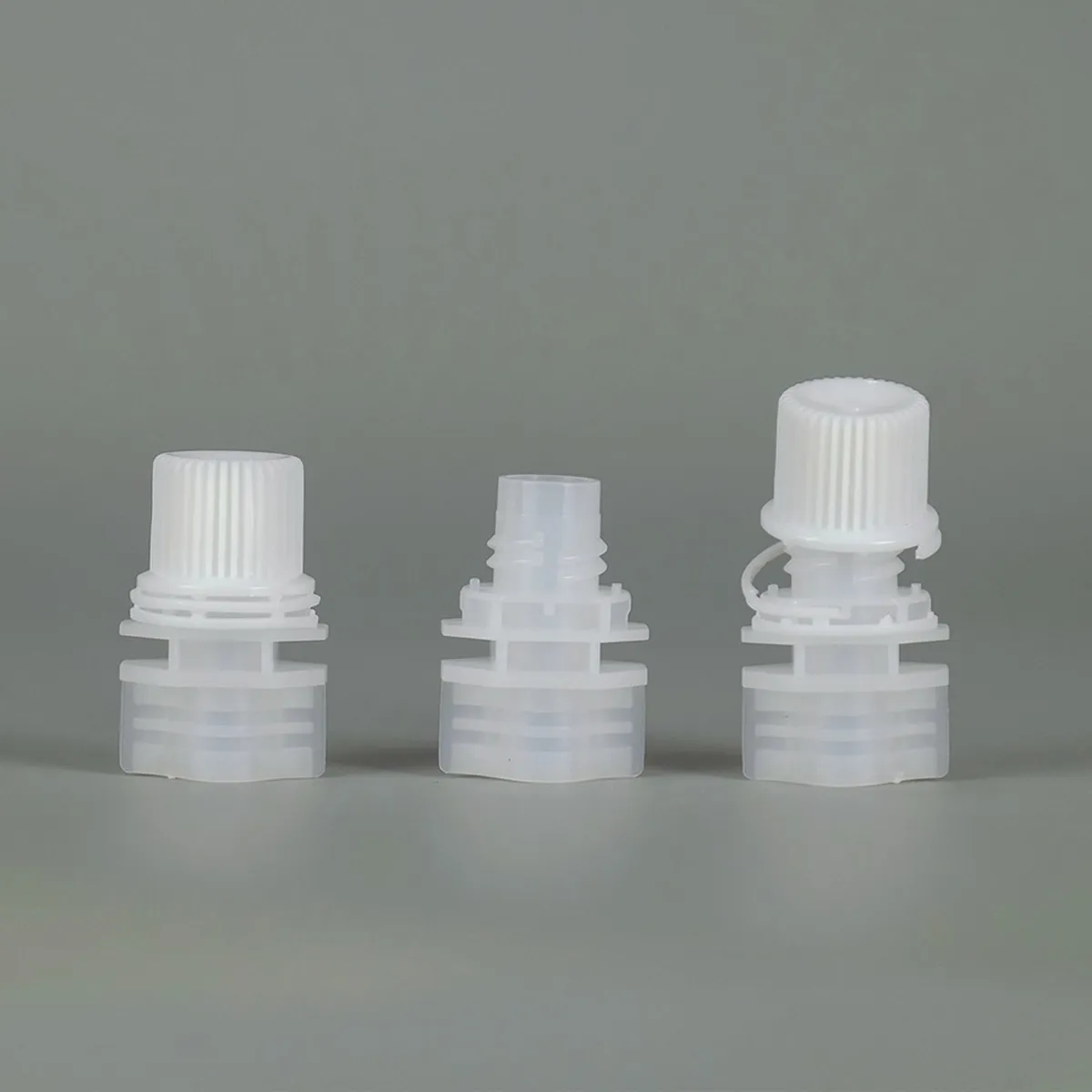
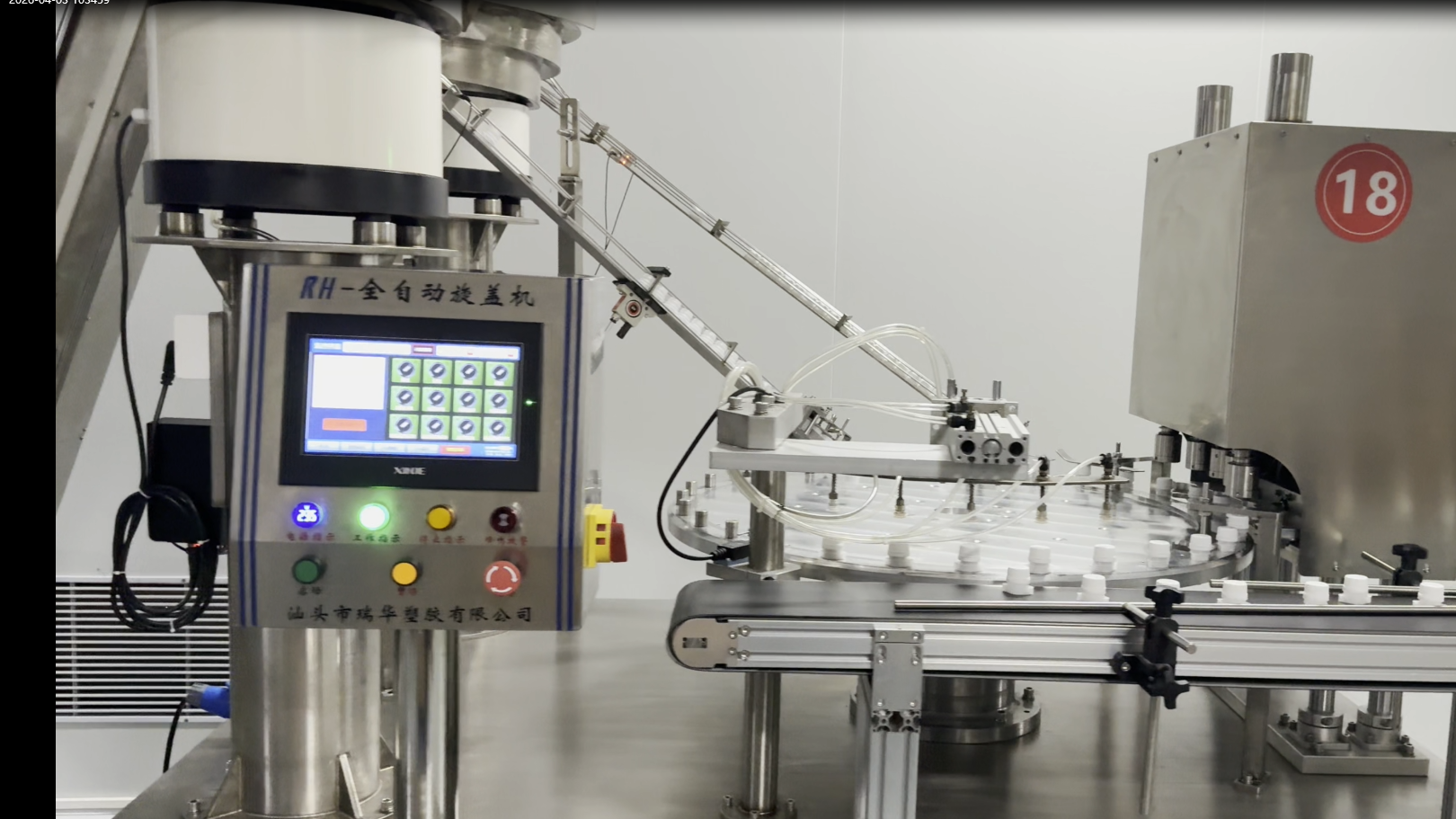
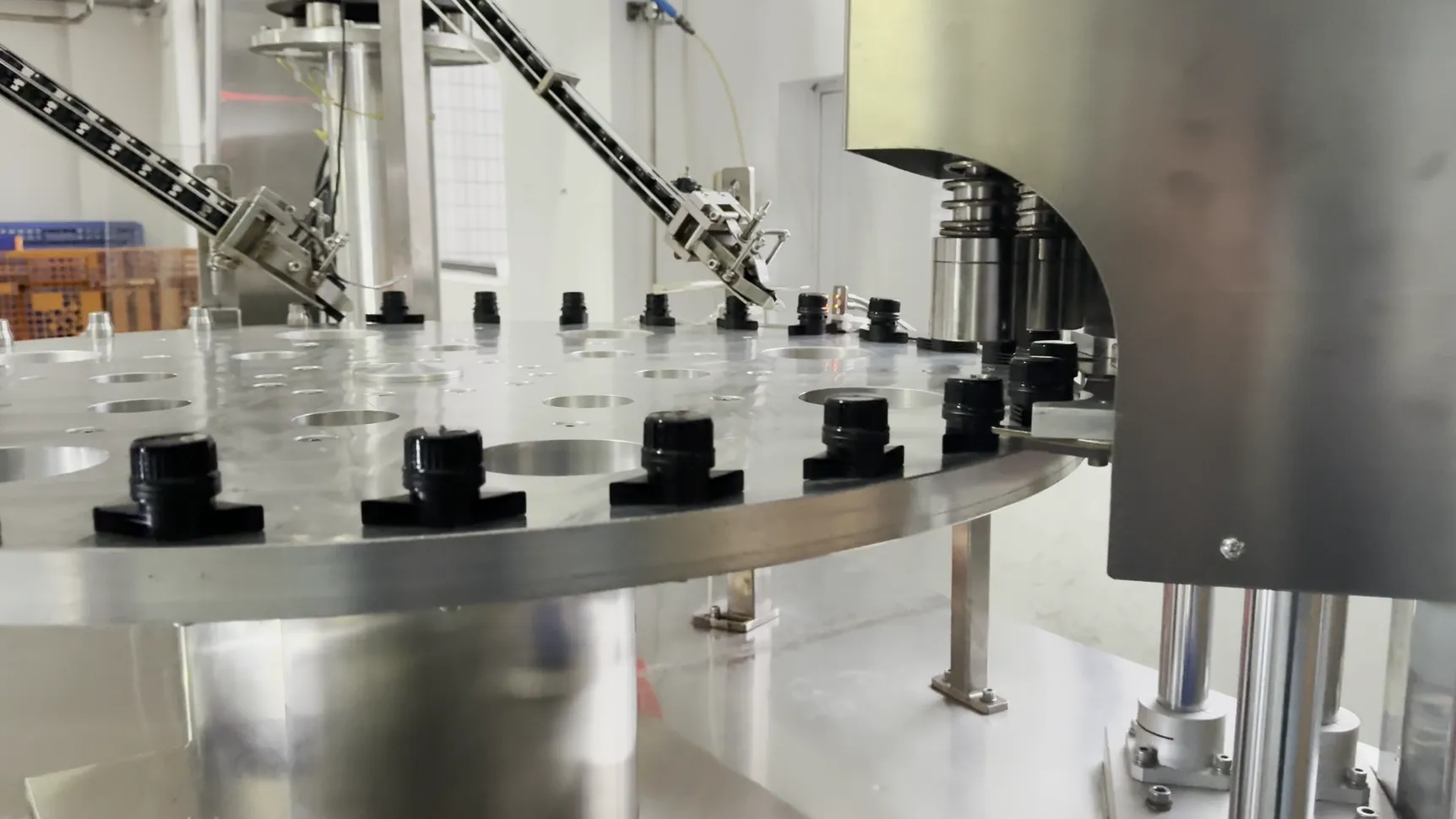
Ruihua's EUR non-separated twist spout cap (8.6 mm) is a working example of the second family. A built-in stop lug on the thread means that when you unscrew the cap counterclockwise, it stops at the maximum opening position and cannot be fully removed from the spout base — the cap stays connected through repeated opening and closing. It is molded in food-grade PP/PE and carries ISO 9001, HACCP, FDA and EU 1935/2004 certification.
What the EU tethered cap rule does not cover
The directive is narrower than many assume. For starters, not every pouch is a beverage container. Detergent, shampoo, and most condiment pouches fall outside the beverage-container definition, so the Article 6 tethering obligation does not reach them — although beverage classification is per-product, and a sauce pouch and a juice pouch are not the same case, so check how your specific product is classified before assuming anything.
The rule also does not cover:
- Containers above three litres capacity.
- Glass or metal beverage containers that carry plastic caps or lids — the Annex explicitly excludes them from the category.
- Beverage containers intended and used for liquid food for special medical purposes, also excluded in the Annex.
- Reusable systems in general: the directive targets single-use plastic products, and refillable or returnable packaging sits in a different regulatory lane.
None of this makes the tethered cap optional for beverage pouches — it just means the boundaries are real, and a correct answer for one product line does not automatically apply to the next.
Compliance checks before you launch in the EU
Work through these five checks with your quality and legal teams before placing a beverage pouch on the EU market:
- Classify the product. Single-use plastic beverage container up to three litres? If it is a bottle, a tethered cap is mandatory — no judgment call. If it is a pouch, get a written interpretation for your target member states and plan on tethering as the conservative default.
- Verify food-contact compliance. Caps and spouts for food pouches must comply with Regulation (EC) 1935/2004, the EU's framework regulation for food-contact materials, and with Regulation (EU) 10/2011 for plastic materials. Ask your supplier for the declaration of compliance and the test reports behind it — this is the same bar covered in our guide to what food-grade certifications mean for spout caps.
- Check material and recyclability together. A tethered cap on a non-recyclable pouch is a smaller win than one on a mono-material PE pouch. Confirm the spout seals at a temperature your film survives — low-temperature sealing spouts protect recyclable PE film, which is why sealing temperature matters when choosing a spout.
- Demand documentation. Full test reports, certificates, and batch traceability for brand factory audits. If a supplier cannot produce them, the closure is a liability even if the mechanism is right.
- Confirm enforcement per member state. Interpretation of the directive's scope varies; your counsel should confirm the position in each country where the product is sold, not just where it is shipped to.
Sourcing tethered spout caps: what to ask your supplier
When you shortlist cap suppliers for an EU-bound pouch, put these questions in writing:
- Is the cap non-detachable by design, and how? Stop-lug thread, strap tether, or something else — and what happens after 1,000 open-close cycles?
- What materials, and what documentation? Food-grade PP/PE, declarations of compliance under EU 1935/2004 and EU 10/2011, and certificates you can attach to your own customer file.
- Does the spout suit mono-material film? Sealing temperature and weld strength against PE-based pouch film.
- Can you support customization? Custom colors, dedicated mold development, and sample-to-production under one roof.
Ruihua manufactures non-separated twist spout caps such as the EUR model for baby puree and juice pouches, alongside the full 1.2–40 mm range of spout caps for stand-up pouches — food-grade PP/PE, with sealing engineered for recyclable PE film at 110–130 °C. Send us your pouch spec and target market; our engineers will confirm cap fit, sealing temperature, and the documentation package for your EU launch.
Once the rule applies: your next steps
If the rule covers your product, scope is settled and the work moves to two other decisions:
- Choose the cap. The mechanism, the tether test behind it (EN 17665:2022+A1:2023), the spout series and the weld window are the subjects of our guide to choosing a tethered cap for a spout pouch.
- Plan the change over. If you already have printed, filled pouches on a live line, the order to re-check cap geometry, the spout weld, the capping station and the evidence file is set out in our tethered cap retrofit checklist for spout pouches.
When you are ready to move, the range of spout caps for stand-up pouches and doypacks shows the bore and closure options, and a sample and quote request is the fastest way to get a non-detachable cap and its documentation in hand for your specific pouch.
FAQ
What are the EU regulations regarding tethered caps? Article 6(1) of Directive (EU) 2019/904. Since 3 July 2024, caps and lids on single-use plastic beverage containers up to three litres must remain attached to the container during its intended use.
Why do EU bottle caps stay attached? To stop caps becoming litter and to keep them in the recycling stream. Loose caps and lids are among the most common single-use plastic items found on European beaches, so the directive requires closures that stay with the container from opening to disposal.
Is the EU banning single-use plastics? No blanket ban. The directive bans specific items — plastic cutlery, plates, straws, and cotton-bud sticks, among others — and imposes targeted obligations on other categories, of which the tethered cap requirement for beverage containers is one.
Do spouted pouches need a tethered cap? For single-use plastic beverage pouches up to three litres, plan on yes. The Annex's "receptacles used to contain liquid" wording points to pouches being in scope, and the Commission's guidelines have listed pouch formats among the covered examples since the 2021 edition, unchanged by the September 2026 update. Confirm the position for your products and member states with legal counsel.
Compliance information in this article is provided for general guidance only and does not constitute legal advice. Regulations and their interpretation can change and vary by EU member state. Verify requirements with qualified legal or compliance counsel before placing products on the market.