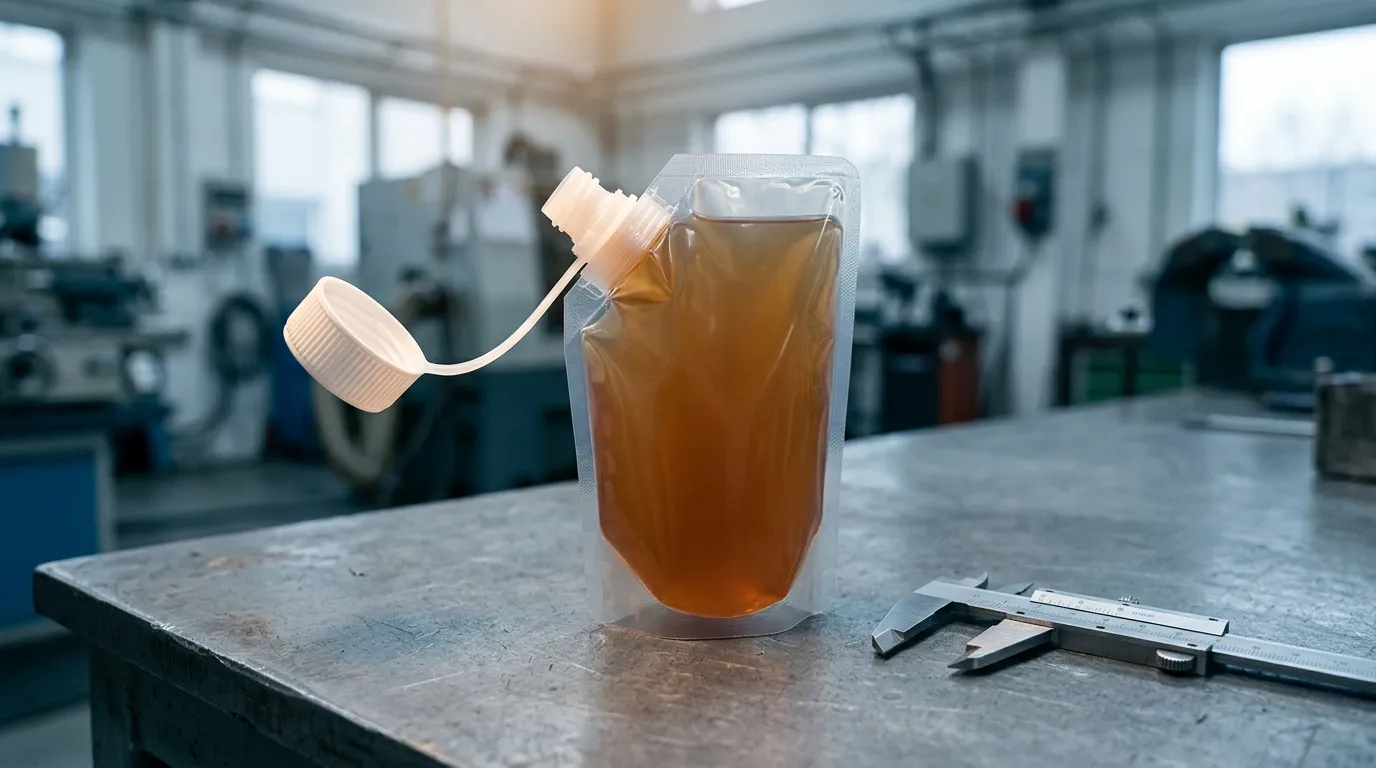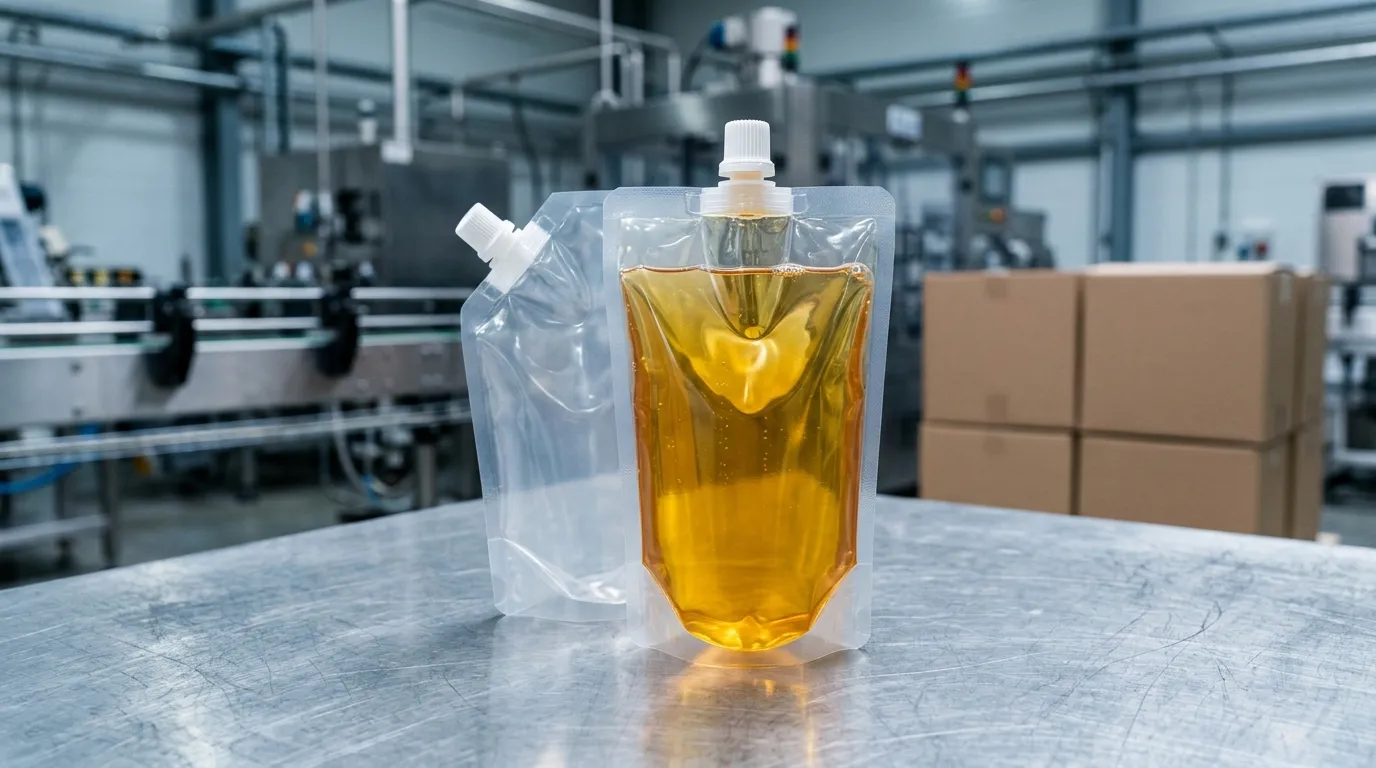


What a tethered cap spout pouch retrofit actually changes
A tethered cap spout pouch project is not a cap purchase. It is a change to four interfaces that happen to meet on one small piece of plastic: the cap-to-spout thread and retention geometry, the spout-to-film weld, the capping station that puts the cap on, and the evidence file that has to convince a customer or an inspector that the cap stays attached. A supplier can only own the first of those, which is why "we can sell you a tethered cap" is an incomplete answer to a question that is really about your assembled pack.
That is the gap this checklist closes. Most of the material written about tethered closures explains what the rule is and shows a supplier's product range. Almost none of it tells a packer what actually has to be re-checked on an existing SKU, in what order, and what has to be in writing at the end. If you are retrofitting a beverage pouch that is already printed, already filled, and already on a line you are not going to rebuild, those are the questions that decide whether the change takes one sampling round or three.
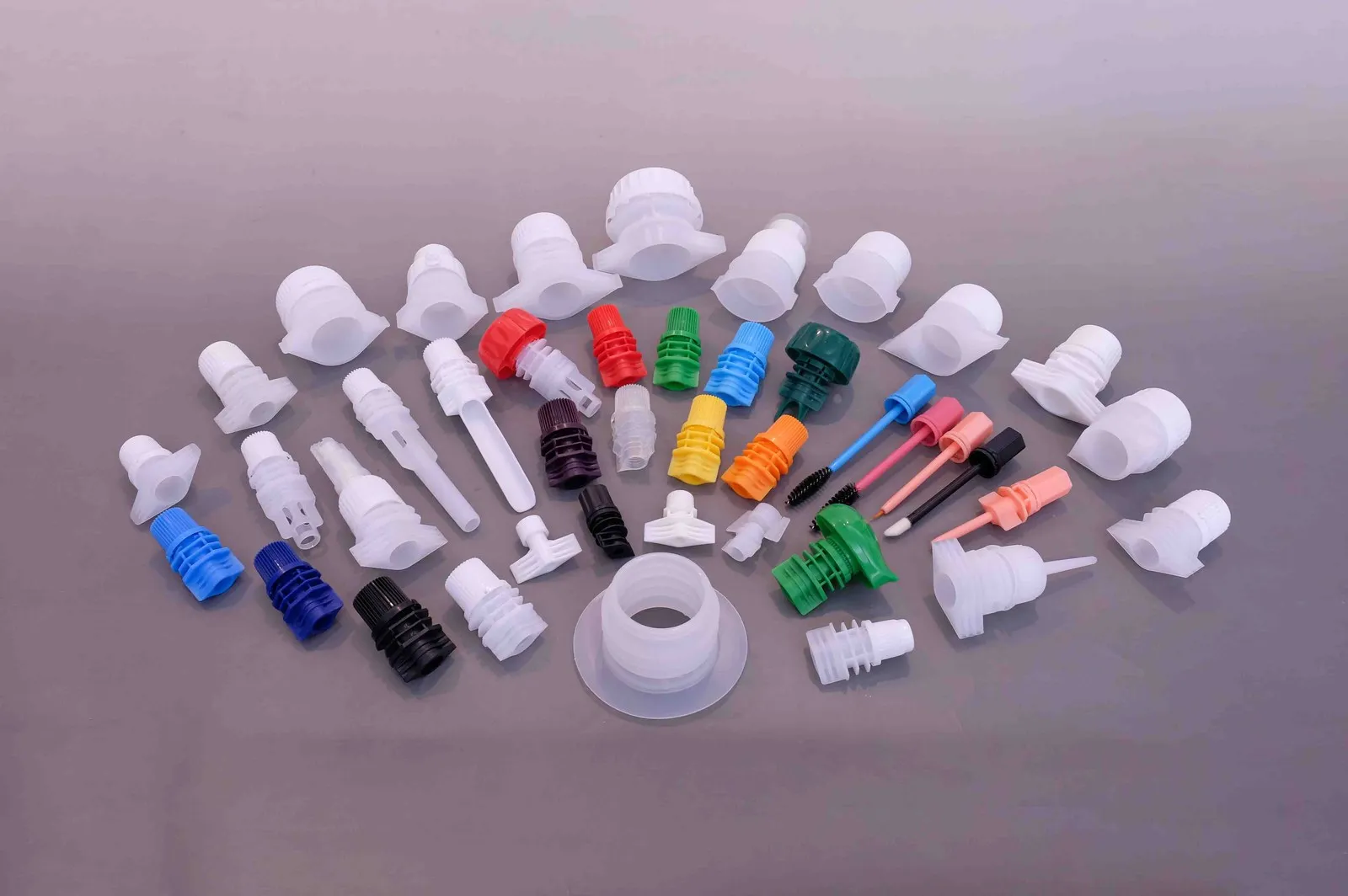
Four things stay fixed in a well-planned retrofit: the pouch film structure, the pouch format, the sealing jaw set, and the filling sequence. Everything else — cap, spout thread, retention feature, capping chute, and test evidence — is in scope. Starting from that list prevents the most common and most expensive mistake, which is buying a compatible-looking cap and discovering at the first line trial that the cap feeder cannot orient it.
A tethered cap retrofit for a spouted beverage pouch, in one sentence, means replacing a detachable spout cap with a closure that stays attached through repeated opening and closing, then re-establishing everything that change touches: the spout thread and retention geometry, the spout-to-film weld, the capping station, and the test evidence behind the attachment claim.
Why the retrofit question has a date: 3 July 2024
The obligation that started this work is short, and it is worth reading in the regulation's own words rather than in a supplier's summary of it:
Member States shall ensure that single-use plastic products listed in Part C of the Annex that have caps and lids made of plastic may be placed on the market only if the caps and lids remain attached to the containers during the products' intended use stage.— Article 6(1), Directive (EU) 2019/904
The scope sits in Annex Part C, not in the definitions article: "Beverage containers with a capacity of up to three litres, i.e. receptacles used to contain liquid, such as beverage bottles including their caps and lids and composite beverage packaging including their caps and lids", with two exclusions — glass or metal beverage containers whose caps are plastic, and beverage containers used for liquid food for special medical purposes. "Such as" is non-exhaustive, so the operative anchor for a pouch is "receptacles used to contain liquid". Article 17 of the same Directive puts the date on it: the requirement in Article 6(1) applies from 3 July 2024.
The interpretation question has moved on since 2024. In 2026 the Commission updated its guidance on single-use plastic products — Commission Notice C/2026/4813 — and its illustrative tables are specific. Plastic caps used in combination with single-use plastic beverage pouches are listed as included in the tethering requirement. Pouches that are fully plastic, or that include a plastic layer, up to three litres, are listed as included as beverage containers. The same guidance draws a line that matters commercially: a plastic multilayer pouch of fruit purée is treated as a food container, while a purée-sized pouch of fruit juice is a beverage container. Those two can run on identical equipment and look identical on a shelf, and they now sit on opposite sides of this rule. We set the pouch-scope question out in full in whether the EU tethered cap rule covers spouted pouches rather than repeating it here.
A second regime is running in parallel and it is the one that decides material choices, not cap attachment. The Packaging and Packaging Waste Regulation, Regulation (EU) 2025/40, applies from 12 August 2026. Its Article 6(1) is one sentence — "All packaging placed on the market shall be recyclable" — and Article 10(1) requires packaging weight and volume to be reduced to "the minimum necessary to ensure its functionality" from 1 January 2030. Step 6 below works through what that means for a closure that has just gained a tether. All of it sits inside the broader set of EU rules that now reach pouch closures and recyclability.
Step 1 — Decide whether you need a new cap, a new spout, or both
There are three retrofit routes, and choosing the wrong one is the single most expensive error available to you.
Route | What changes | When it works | What it puts at risk |
|---|---|---|---|
A. Cap swap only | The cap, keeping the existing spout | Your spout already carries a retention feature the new cap can engage, or the new cap carries its own retention collar sized to your existing spout neck | Nothing on the pouch or the line — but you are limited to cap designs that fit a spout you did not design for retention |
B. Cap plus spout | Spout fitment and cap, keeping the pouch film, format and flange footprint | The most common route. Flange outer diameter and weld area stay the same, so sealing jaws, pouch opening and fill sequence are untouched | The weld: a new fitment is a new welding pair, so seal parameters and seal validation have to be re-established |
C. Cap, spout and pouch tooling | Everything, including the film web or the pouch former | Only when the bore, the dispensing geometry or the fill method genuinely has to change | Cost and calendar, plus every food-contact and recyclability document for the pack |
Route A is the cheapest and the most often misjudged. A retention feature has to sit somewhere: either on the spout (a stop lug or a collar the cap turns behind) or on the cap (a ring or strap that encircles the spout neck). If your current spout has neither, no cap on the market can turn route A into a working pack, and the honest answer is that you are on route B.
Illustrating route B, the sample below is an EU-standard 8.6 mm non-separated — non-detachable, in the naming we use on the specification sheet — twist spout cap: our EU non-separated (tethered) spout cap is built so that the cap cannot be completely separated from the spout base after repeated twisting. The retention is a stop-lug structure on the thread: when the consumer unscrews the cap counterclockwise, the cap is limited at its maximum opening position instead of coming free. That is one legitimate way to satisfy an attachment requirement — and it is worth pausing on, because it is not the shape most people picture when they hear "tethered cap".
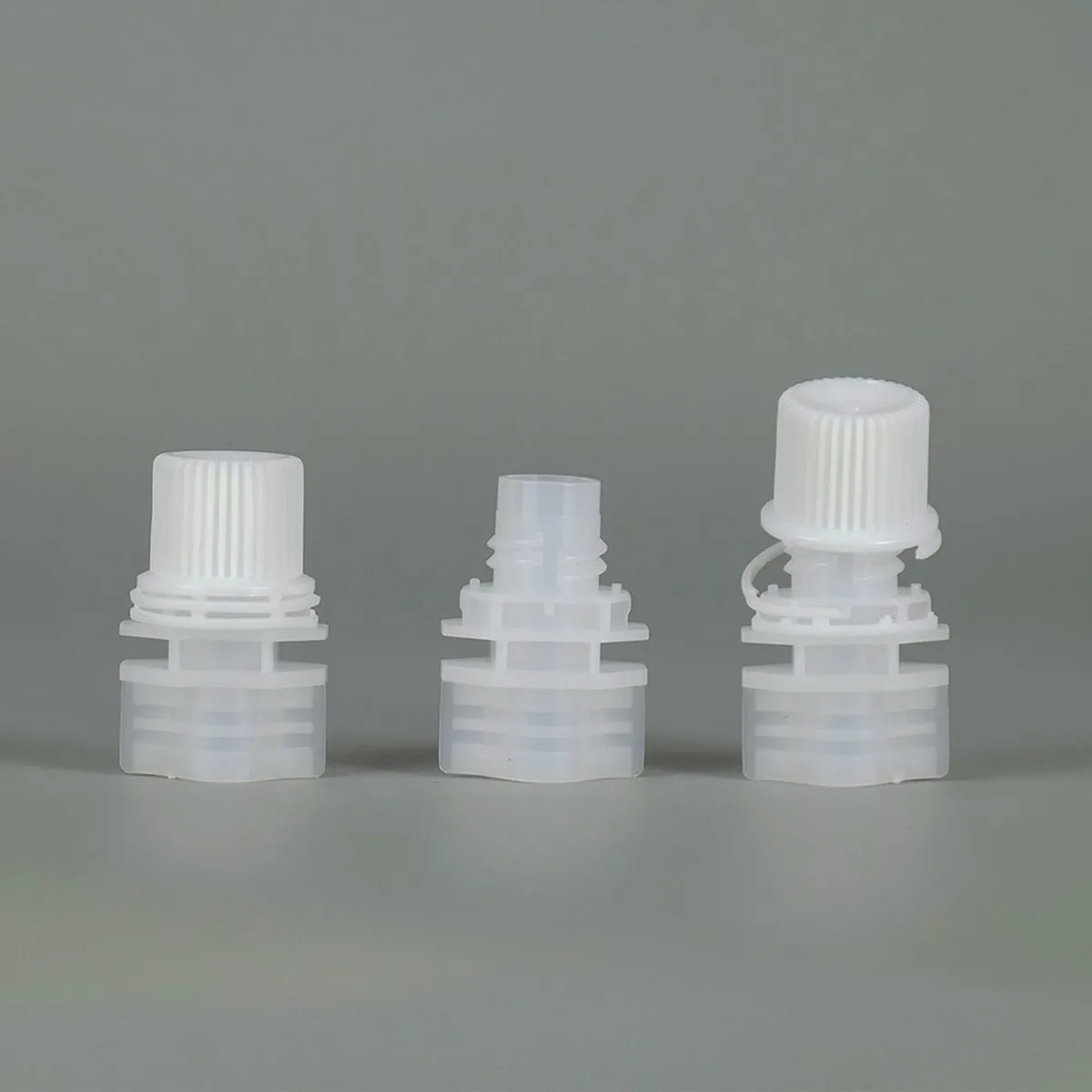
Two design families cover almost all pouches: a strap or ring tether, where the cap swings aside on a moulded link, and a stop-lug retention, where a screw cap is trapped at its open position. A flip-top or hinged closure is a third common form, but it is a closure architecture rather than a tether as such, and it changes how the consumer dispenses, not only how the cap is held. Pick the family before you pick the mould, because the family decides your open angle and your cap feeder.
Step 2 — Thread, stop lug and open angle: the geometry that has to survive repeated use
This is the step where a retrofitted SKU most often fails, and it fails in a way that a bench sample will not show you. Seven items belong on the drawing.
Thread form and start. The cap has to spin onto the spout thread you already have unless you are on route B. Pitch, diameter and start count are not interchangeable between suppliers, and a cap that threads on with force during sampling is a cross-threading problem waiting for a higher line speed.
The retention feature and its release point. For a stop-lug design, define the maximum opening position and the force the consumer applies to reach it. For a strap tether, define the strap's working length and the angle at which the cap stops fouling the spout. Both numbers should be on the drawing, not in a conversation.
Open angle against the dispensing path. A cap held at a narrow open angle is a tethered cap that splashes. On a drinking spout, the cap must clear the mouth of the spout and stay clear while the pouch is squeezed; on a wide-bore sauce spout, it must not sit where the product lands. This is the item that most often forces a route A project onto route B.
Re-closure torque across cycles. Decide the cycle count you are going to test to, and hold it. A retention feature that works on the tenth open-and-close is not evidence about the hundredth, and the standard for attachment sets a defined regime rather than an arbitrary repeat count — as Step 5 explains.
Tamper evidence. If the pouch currently carries a tamper-evident band, the retrofit has to say what happens to it. A band that is torn off and discarded separately is a component that leaves the pack before the pack leaves the consumer, which is a different recycling story from a cap that stays on — Step 6 covers why that distinction now has vocabulary in EU law.
Child safety and cap loss. The requirement and the product interest point the same way here. A detached cap is a small plastic part that leaves the pack: it is the item that ends up on a beach or in the street, and on a pouch consumed by a child it is also a part that can be dropped or put in a mouth. A cap that stays attached to the spout cannot be swallowed on its own or lost between the kitchen and the lunch bag, which is the anti-choking reasoning behind a retained closure and the reason we state it as a design intent for this spout cap family. Write it into your own product rationale rather than treating attachment as a compliance chore — but keep it as intent: a retained cap is not a child-safety certification for the pack, and the reduction of a choking hazard is not something this design claims to test or certify. It does not replace whatever testing your market requires for the closure.
Bore and spout diameter. Attachment work is a good moment to confirm the dispensing aperture still matches the product: if the cap change forces your hand on the spout, the diameters you choose should match the fill and the pouring behaviour rather than the tooling you happen to own.
All seven items end up in the same document, and the retrofit is only as good as that document: what a spout cap specification sheet must record is worth reading before, not after, the first sampling round.
Step 3 — The weld and the film: the half of the load path the cap supplier does not control
When a consumer pulls an open tethered cap, the force does not stop at the cap. It runs cap → thread interface → spout body → spout flange weld → pouch film. Only the first two links are the closure supplier's. The last two are created on your machine, out of your film, at your seal settings — and if the pull test is performed on a cap alone, none of it has been tested.
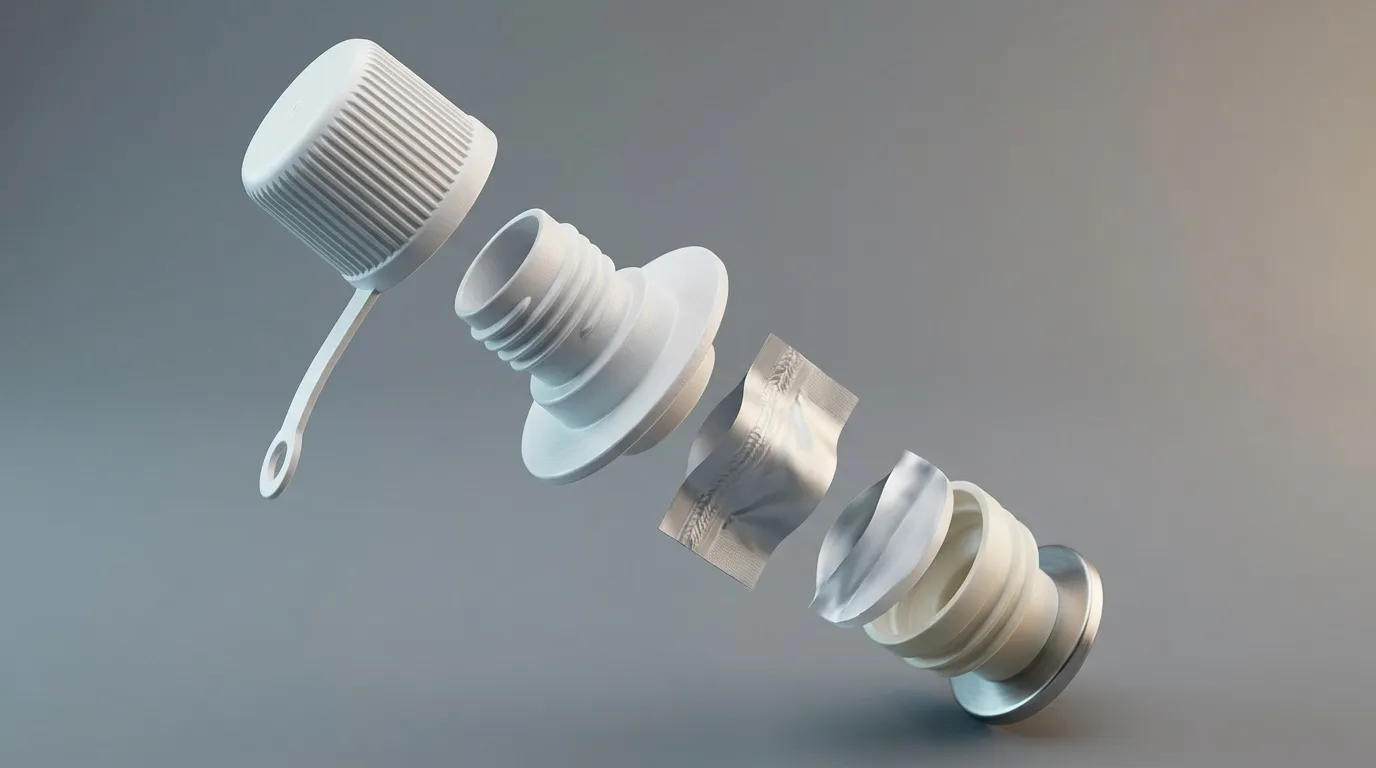
Three consequences follow for a retrofit.
Test the assembled pack, not the component. A retention feature that survives a bench pull can still fail on a pouch whose spout weld is the weaker link. The load has more than one direction, too: an open cap gets pulled along the spout axis when a consumer tugs it, and sideways when a pouch is handled in a bag or a lunchbox. Any attachment test you run or commission should name both.
Re-establish the welding window for the new fitment. A spout change means a new welding pair, and the old seal temperature, dwell and pressure are no longer evidence. Spouts designed to weld in the 110–130 °C band let you keep a mono-material PE film structure without cooking it, which is why the closure and the film have to be chosen together rather than sequentially. The fill regime is part of that calculation: a hot-fill or retort process puts the seal through a second thermal load after capping, so the window you validate has to be the one that survives the process, not the one that looks best on a bench sample at ambient temperature. A cold-fill or aseptic line leaves you a wider choice, and in that case the constraint is usually the film rather than the fill. A cap retrofit that quietly forces a film change has stopped being a retrofit.
Watch the leak signature, not just the pull force. Attachment work disturbs the same interface that keeps liquid in. If the pouch starts weeping at the spout-to-film joint after the change, the cause is usually the weld rather than the cap, and where pouch spouts actually start leaking is the faster diagnostic route than a re-sampling round.
Step 4 — Your filling and capping line: feeder, capping head, torque
The line is where a technically correct cap becomes a production problem, and it is the step most often left out of a retrofit plan until the sampling pouch is already approved.
Cap feeder and orientation. A tethered cap is asymmetric. The strap, the hinge or the oversized collar gives a bowl feeder something to catch on, and it also gives the escapement a preferred orientation that a plain cap never needed. Before you commit, run your intended cap on the actual feeder with the actual change parts — not on a supplier's demonstration unit.
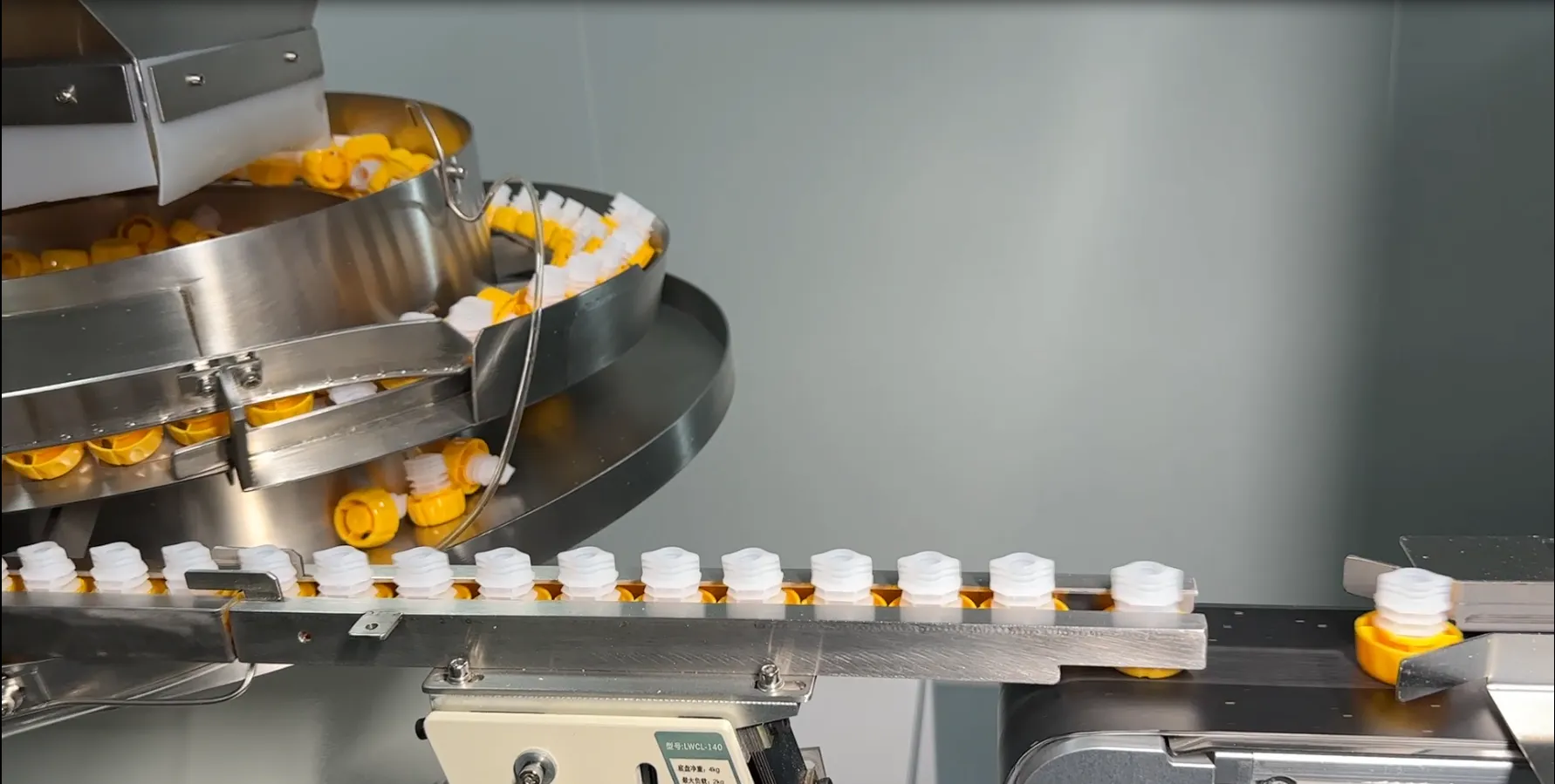
Pre-assembled fitment versus in-line capping. If the spout arrives from the moulding supplier with the cap already threaded on, you avoid the feeder question entirely and take on transport and leak risk instead. If you cap in line, you own the torque. Both are legitimate; choosing neither on purpose is where jams come from.
Capping head and chuck. The head has to close on a cap whose top face may be interrupted by a tether, and it has to seat the cap squarely rather than starting it at an angle. A capping head that was tuned for a flush screw cap often needs a different chuck or a wider guide.
Torque settings and verification. Set the application torque from the retention feature's requirement, then verify it on the line at line speed, on filled pouches. A torque figure measured on empty pouches at bench speed is not a production specification.
Line speed. Attachment geometry has mass and asymmetry at the capping station, and a feeder that keeps up at 60 pouches a minute may not at 120. Treat line speed as a variable in the trial rather than a constant of the project.
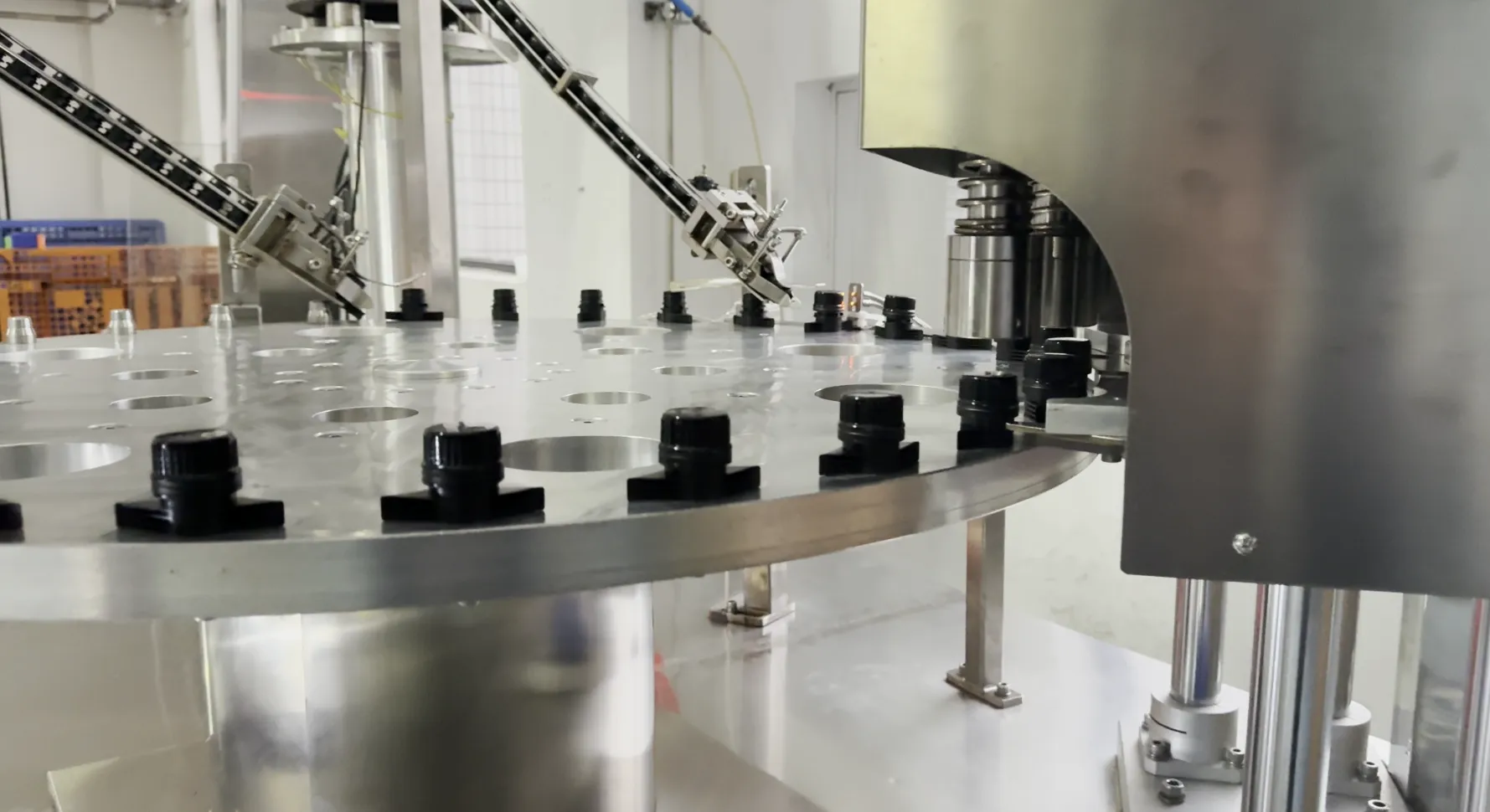
If this reads like the interface work you already did when you chose your filling equipment, that is the point — it is the same class of problem. checking your sealing line against the new closure walks through the mechanical interfaces in the same order, and it is worth running alongside your retrofit plan rather than after it.
Step 5 — Qualify the attachment before you commit to a print run
There are two different questions in this step, and conflating them is how projects end up with a test report that answers neither.
The legal question: how is conformity demonstrated? Article 6(4) of the Directive gives products that conform to a harmonised standard — one whose reference has been published in the Official Journal — a presumption of conformity with the requirement that standard covers. For caps and lids that standard is EN 17665:2022+A1:2023, Packaging — Test methods and requirements to demonstrate that plastic caps and lids remain attached to beverage containers, and its reference was published by Commission Implementing Decision (EU) 2023/1060 of 30 May 2023, which is also what appears on the Commission's harmonised standards page for plastic caps and lids under the Single-Use Plastics Directive. When you ask for evidence, ask for a report against that named standard rather than a supplier's letter describing the design as tethered.
The engineering question: does your pack pass? The standard keys on the interface between the cap and a defined neck finish — the cap-to-neck-finish interface is what it tests. On a pouch, the equivalent of the neck finish is the spout you have chosen, so a report is only evidence for your pack when it names the spout, the cap, the conditioning and the sample count behind it. how a tethered cap attaches to a pouch spout goes through the method and the acceptance criteria in detail; for planning purposes, what matters is that the report is traceable to your component combination rather than to a generic neck finish.
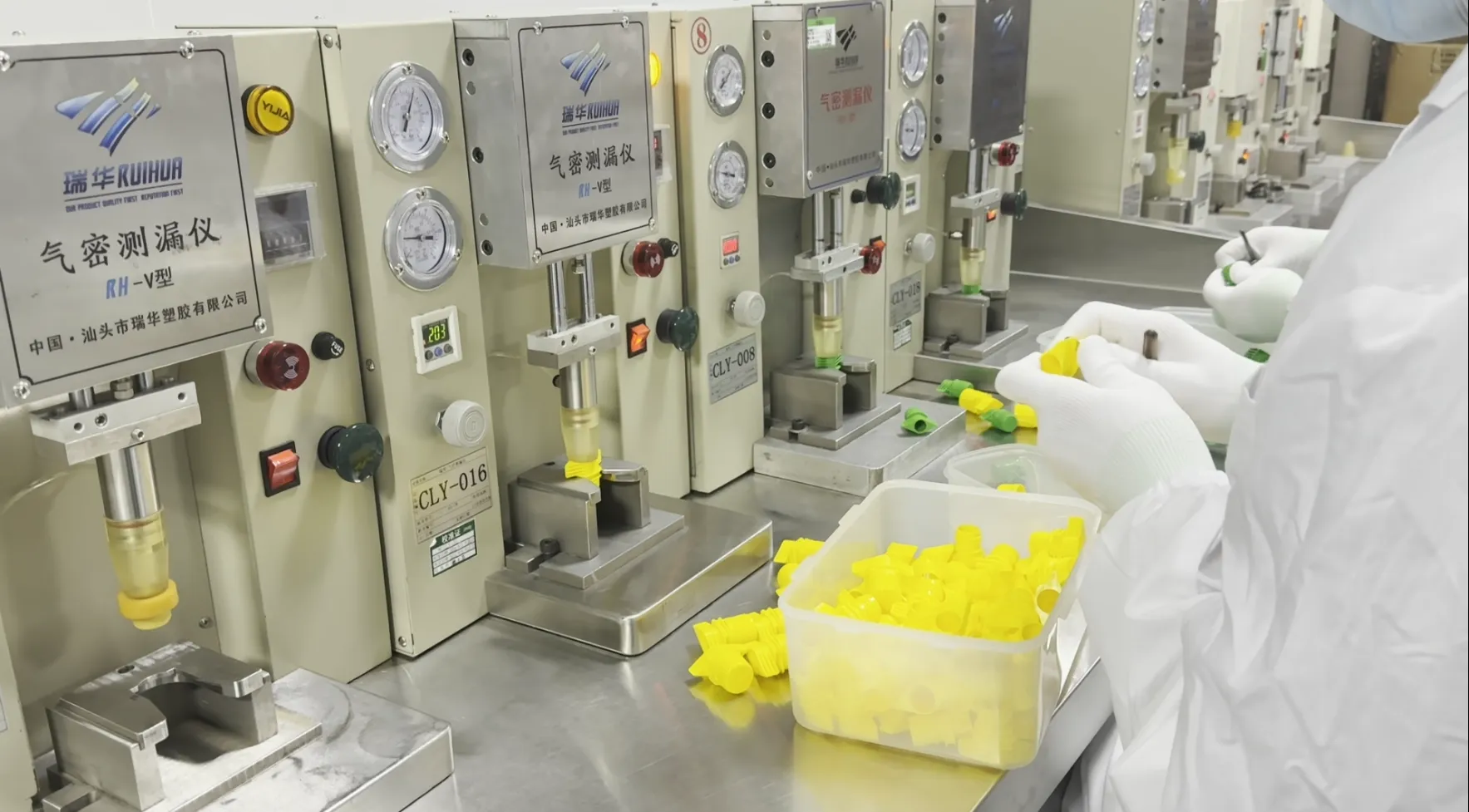
Practically, run three checks on your own assembly before committing to a print run. First, a retention or pull test on filled pouches from a production-representative run, in both the axial and the lateral direction. Second, an open-and-close cycle series at the count you specified in Step 2, with the cap still attached at the end and the spout still sealing. Third, a leak test after that cycle series, because the cycles are what stress the weld. Keep the pouches, the parameters and the results — this is the raw material for the file in Step 7.
Step 6 — Re-check recyclability and material use once the cap grows
A tether is not free. It adds material, and usually a feature, to a pack that has just become subject to Regulation (EU) 2025/40, which asks packaging to use less material and be recyclable. Both pressures come from the same instrument, which is why this step belongs in the retrofit plan rather than in a separate sustainability project.
PPWR (Regulation (EU) 2025/40) provision | What it requires | Applies from |
|---|---|---|
Article 6(1) | All packaging placed on the market shall be recyclable | 12 August 2026 (regulation applies) |
Article 6(2)(a) | Packaging considered recyclable only if designed for material recycling | 1 January 2030, or 24 months after the delegated acts under Article 6(4), whichever is later |
Article 6(3) | Packaging may not be placed on the market unless it falls within recyclability performance grades A, B or C (Table 3, Annex II) | 1 January 2030, or 24 months after those delegated acts, whichever is later; grades A or B only from 1 January 2038 |
Article 6(4) | Commission to adopt the design-for-recycling criteria and performance grades by delegated act | Delegated acts due by 1 January 2028 |
Article 10(1) | Packaging weight and volume reduced to "the minimum necessary to ensure its functionality" | 1 January 2030 |
Two readings of that table are useful to a retrofit.
The minimisation duty is tied to functionality, not to a number. Article 10(1) requires the minimum necessary to ensure its functionality, and an attachment feature required by another Union act is part of what the packaging has to do. That does not make extra material free; it means the argument for it belongs in your technical documentation, in writing, rather than being left as an assumption. This is a case where the paperwork and the mould design are the same decision.
The vocabulary for components has shifted, and a tethered cap sits on the favourable side of it once you articulate why. Regulation (EU) 2025/40 defines an integrated component as a packaging component that is "integral to the packaging unit and its functioning", that "does not need to be separated from the main body of the packaging unit in order to ensure the functionality of the packaging unit" and that is "typically discarded at the same time as the main body". A separate component is the opposite: it must be "disassembled completely and permanently" and is "typically discarded prior to and separately from the main body". A cap that stays attached, and is disposed of with the pouch, is behaving like the first; a tamper-evident band that has to be torn off and thrown away on its own is behaving like the second. The definitions do not classify your product for you, and enforcement and national practice still matter — but they do give you exact language for the design-intent section of your file, and they explain why the "tear-off band plus tether" combination is the least comfortable option on the table.
Material choice is the practical lever. Keeping cap and spout inside the same polymer family as the film protects the mono-material structure that the recyclability assessment will be built on, and a spout that welds in a moderate temperature window is what makes that possible without damaging the film — spout options for a mono-material PE pouch sets out the combinations that hold. If your retrofit needs a second polymer to work, that is a decision to take deliberately and document, not a detail to discover at the recycling assessment.
Step 7 — Documents to collect so the retrofit is auditable
Attachment is a system property, so the file that proves it is assembled from more than one party. Collect it in three layers.
Component layer — from the cap and spout supplier. A material declaration covering food contact, the polymer identity, colourants and additives, and the substance data the regulation now asks for at component level. Two PPWR tests are specifically worth asking about for a food-contact closure: Article 5(4) limits the sum of lead, cadmium, mercury and hexavalent chromium in packaging and packaging components to 100 mg/kg, and Article 5(5) restricts PFAS in food-contact packaging from 12 August 2026. Component suppliers can provide reports for the samples they tested, and it is worth being precise about that scope: a report that passes on a tested sample supports the component selection, and it is not a blanket statement about every product in a range.

Attachment evidence — from testing. The EN 17665 report from Step 5, naming the spout or neck finish, the cap, conditioning and sample count, plus your own production-representative results. This is the layer that a customer or a customs officer is most likely to ask for, and the one most often missing from a supplier pack.
Packaging-unit layer — from you. Your EU declaration of conformity and the technical documentation behind it are drawn up by the manufacturer of the packaging unit — the brand or the converter placing the pack on the market — not by the component supplier. An importer carries a verification duty before placing packaging on the market. The declaration itself has to state that requirements in or under Articles 5 to 12 have been demonstrated, in the structure set out in Annex VIII. If you are assembling that file for the first time, the PPWR declaration of conformity checklist breaks down what goes in each layer and what to ask for from whom.
One traceability item is specific to this project and easy to miss: because attachment is a property of the cap, the spout and the weld together, your file should let you pair the cap lot with the spout and film lots that were run with it. A test report without a lot link is harder to defend than one with it.
The retrofit checklist on one page
# | Step | Confirm before you commit | Owner | Evidence to keep |
|---|---|---|---|---|
1 | Route decision | Which of the three routes applies; whether your existing spout has any retention feature | Brand / converter with supplier | Route rationale, spout drawing |
2 | Geometry | Thread form and start, retention release point, open angle, cycle count, tamper evidence, cap retention and child-safety intent, bore | Supplier (design), you (acceptance) | Approved specification sheet |
3 | Weld and film | New welding pair, seal window, film structure unchanged, axial and lateral load paths | You | Seal parameter sheet, weld samples |
4 | Line | Feeder orientation, cap kit change parts, chuck clearance, torque at line speed | You | Line trial report, torque verification |
5 | Qualification | Report against EN 17665:2022+A1:2023 naming your spout; retention, cycle and leak checks on filled pouches | Supplier (report), you (own tests) | Test reports and samples |
6 | Recyclability | Material family of cap and spout, mono-material fit with the film, minimisation argument in writing | You with supplier data | Design intent note, recyclability assessment input |
7 | Documentation | Component declarations, attachment report, Annex VII technical documentation, Annex VIII declaration, lot pairing | You, fed by supplier | Complete file, versioned |
Questions to put to a spout cap supplier before tooling is cut
Send these as written questions and ask for written answers. A supplier that can answer all eight is a supplier you can run a retrofit with.
- Which retention design do you propose — strap, ring or stop-lug — and what open angle does it hold on a spout of my bowl height?
- Is the fitment designed to engage a retention feature on the spout, and if so, does it require a new spout or will it work on mine?
- What is the tested attachment performance you can supply documentation for, and against which standard and which spout?
- Can you supply cap and spout together so the welding pair is known and the seal window is specified?
- What changes to my cap feeder and capping head does this cap need, and can you supply line-trial support?
- What is the minimum order quantity, and how is it affected if the spout changes as well as the cap?
- How many sampling rounds should I plan for, and what is the tooling lead time if a new fitment or cap mould is required?
- Which component-level declarations will you provide — food contact, polymer identity, and the substance data the PPWR asks for — and for which tested samples?
Question 7 is usually the one that changes the project plan. what custom spout cap tooling costs sets out how tooling and sampling rounds are typically priced and sequenced, and if the retrofit turns out to need a new mould, that article is the better starting point than a quotation request. If the answer to question 2 is "route B", the range of plastic spout caps for stand-up pouches and doypacks is where the bore and closure options sit.
FAQ
Does the EU tethered cap rule actually cover spouted pouches? The Directive's Annex lists beverage containers up to three litres as "receptacles used to contain liquid", and the Commission's updated 2026 guidance lists both plastic caps used with single-use plastic beverage pouches and fully plastic or plastic-layered pouches up to three litres as included. A fruit purée pouch is treated as a food container, not a beverage container, in the same guidance. Member state practice can still differ, so get a written position for your own product.
Does a tethered cap have to be a hinged or flip-top cap? No. A screw cap held on a stop-lug thread, so that it cannot be fully unscrewed from the spout base, is an attachment design too. What matters is whether the cap remains attached during the product's intended use, not which of the three common architectures you use.
Can I retrofit a tethered cap onto my existing spout? Only if that spout already has something for the cap to engage — a stop lug, a collar, or a neck dimension that takes a retention ring. If it has none, you are changing the spout as well as the cap, which keeps the pouch format and the sealing jaws but makes the weld a new pair to validate.
How do I prove the cap stays attached? Ask for a test report against EN 17665:2022+A1:2023, the harmonised standard referenced in the Official Journal, and make sure the report names your spout or neck finish. Then confirm it yourself on filled pouches: a pull in both directions, an open-and-close cycle series at your specified count, and a leak check after those cycles.
Reviewed by Ruihua Technical Team, 2026-09-23. This article covers packaging regulations as a matter of general information, and it is not legal or regulatory advice. Requirements and their interpretation differ by packaging type and by market, national practice continues to evolve, and your compliance adviser and the relevant market authority are the final referees. Nothing here is a statement about a specific product's conformity.