GMP for food-contact packaging is a records obligation, not a certificate
The request usually arrives as a single line in a supplier questionnaire: GMP food contact packaging documentation, please. Back comes a certificate with a seal on it — a quality management system, a food safety scheme, a retailer logo — and the line gets ticked. Six months later someone asks which resin lot went into the caps shipped in March, and the chain of answers stops at the sales office.
In the European Union, the obligations behind that request are written down in Commission Regulation (EC) No 2023/2006, and they are not about certificates at all. Article 5 requires a documented quality assurance system and pre-established specifications for starting materials. Article 6 requires a quality control system that monitors whether GMP is being achieved and corrects it when it is not. Article 7 requires documentation of specifications, manufacturing formulae and processing, plus records covering the manufacturing operations and the quality control results. Read those three articles in sequence and the shape of the obligation is clear: the evidence GMP produces is paper about a lot, not a badge about a factory.
That distinction is not pedantry. It decides who can answer the March question. A certificate is issued once, about a site, and renewed on a cycle. A batch record is created once, about a specific run of parts, and cannot be reconstructed afterwards. Buyers collect the first because it is easy to collect. Auditors ask for the second because it is the only thing that can be checked against a shipment.
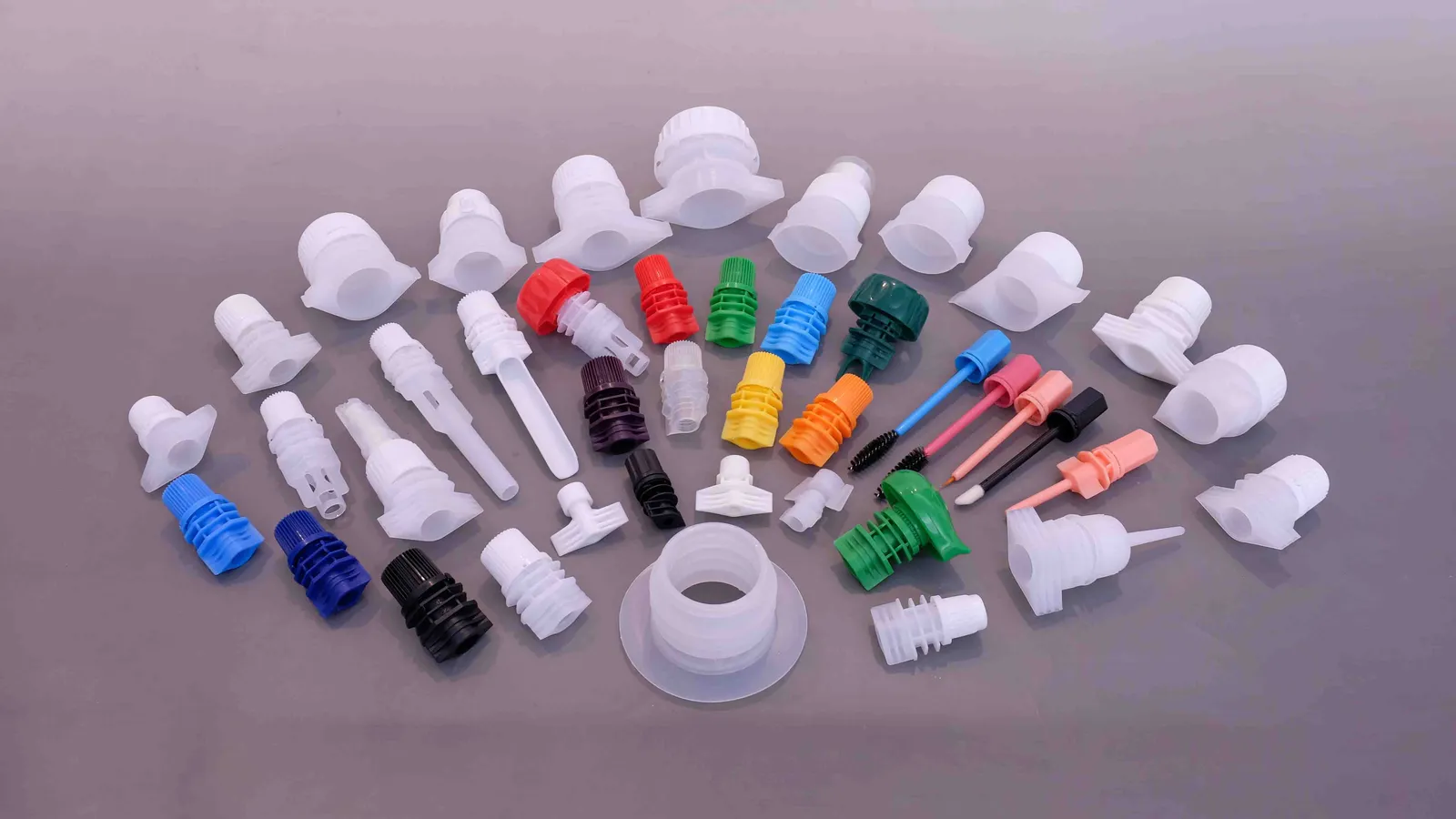
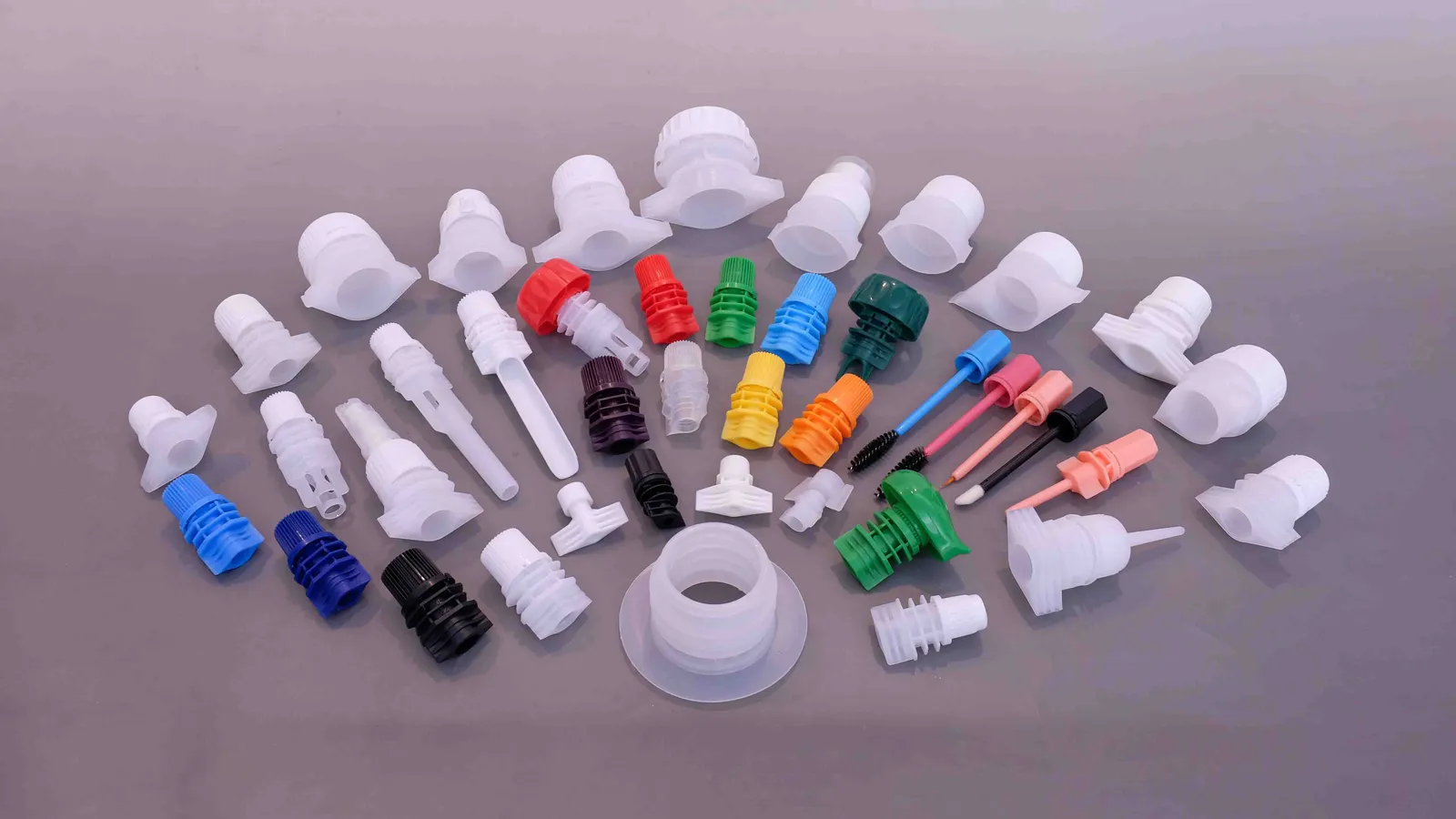
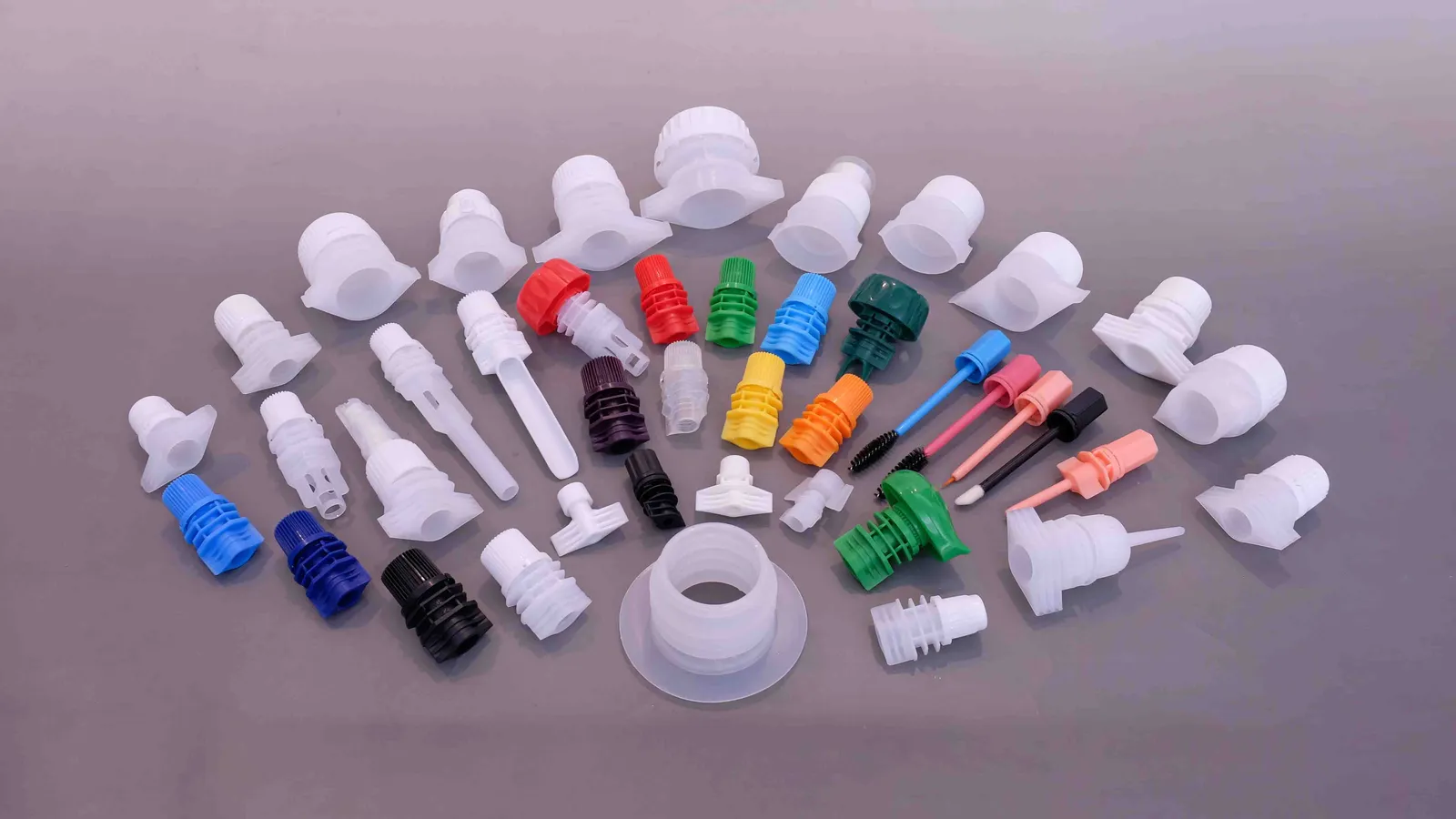
This page is the request list for the second kind, for one part in particular: the spout fitment and cap welded into the top seal of a stand-up pouch — a doypack. (That qualifier matters. "Spout cap" in US search results is dominated by gas-can and faucet caps; nothing below applies to those.) It sits in the wider sourcing and supply series on the commercial side of a spouted-pouch order, and it is written to be copied into an email to any closure supplier, including the one whose site you are reading.
Three things follow: what the EU and US rulebooks actually oblige, the seven stages where evidence is created, and a test you can run in an afternoon on a single lot number.
What the EU and US rulebooks actually require
This section is the short version of the GMP requirements for packaging materials manufacturers: the GMP packaging requirements that apply to a moulder of closures, in the order a supplier questionnaire asks for them.
European buyers inherit two layers, and the two jurisdictions below add up to six instruments. Regulation (EC) No 1935/2004 sets the general duty in Article 3: materials must be manufactured in compliance with good manufacturing practice so that, under normal or foreseeable conditions of use, they do not transfer constituents to food in quantities that could endanger health, bring about an unacceptable change in the food's composition, or deteriorate its organoleptic characteristics. Article 16 adds the document most buyers already know — a written declaration of compliance, required where a specific measure applies, backed by documentation that must be produced to competent authorities on demand. For plastics that specific measure is Regulation (EU) No 10/2011, which holds the positive list of authorised substances and the specific migration limits that the SML column of a test report refers to; its Article 15 makes the written declaration mandatory at every marketing stage except retail, and 10/2011 Article 16 says the supporting documentation must contain the conditions and results of testing, not just a verdict.
Regulation 2023/2006 is the part that turns that duty into a filing system. Its Article 2 fixes the scope in one sentence worth memorising: the rules apply to all sectors and to all stages of manufacture, processing and distribution of materials and articles, up to but excluding the production of starting substances. Two consequences, both practical. First, the resin manufacturer's GMP is not what this regulation covers — your moulder's obligation starts at the loading dock, with the material it receives, which is exactly where your evidence request should start. Second, "distribution" is inside the scope, so the truck is not a neutral zone.
The regulation's annex carries the detailed process rules, and in the EU 2023/2006 text consolidated on 16 March 2025 it has three parts: A, printing inks; B, the quality assurance system at recycling facilities making recycled plastic under Regulation (EU) 2022/1616; and C, the reprocessing of plastics under Regulation (EU) No 10/2011. Part A covers printing inks applied to the non-food-contact side: they must be formulated and applied so that substances from the printed surface do not reach the food-contact side — through the substrate, or by set-off in the stack or the reel — in concentrations that lead to levels of the substance in the food which are not in line with the requirements of Article 3 of 1935/2004, and printed surfaces must not come into direct contact with food. Read the qualifier closely, because it is the part buyers miss: the annex does not require zero transfer. It requires that whatever does transfer leave the food inside Article 3. A supplier who answers "trace transfer occurs, but the migration result is inside the limit" is answering the rule as written, so ask for that result rather than for a promise of none. Part B, recast by the 2025 amendment, applies if your caps contain recycled material, and not otherwise; part C, added by the same regulation, is the rule that governs the regrind in Stage 3 below.
If your caps carry a brand colour on the outside, part A is the most specific rule in the whole file, and a supplier who has never heard of it is telling you something. Note what it covers, though: inks. Hot-stamp foil is a transfer film rather than an ink, so the annex does not name it — which is a reason to put the same questions to whoever applies the foil (formulation, set-off, migration data for the finished decoration), not a rule you can cite at them.
The American side has no equivalent single GMP regulation for closures, which is why the question "do you have FDA GMP?" gets answered with a shrug or an unrelated certificate. The GMP hook sits in 21 CFR 174.5, which defines good manufacturing practice for indirect food additives through two restrictions: the quantity of a substance that may be added to food as a result of the article's use must not exceed what results from using no more of it than is reasonably required to accomplish the intended technical effect in the article, must stay inside any prescribed limit, and must not be intended to achieve an effect in the food itself; and any substance used as a component must be of a purity suitable for its intended use. The polymer specifications follow in 21 CFR 177.1520, which sets density, melting point, and maximum extractable (n-hexane) and soluble (xylene) fractions for olefin polymers — the numbers your resin certificate of analysis can be read against. A substance outside those lists needs its own route — in the US, usually a food contact notification (FCN) — and an FCN number by itself is not enough.
One boundary worth stating because it causes real confusion: 21 CFR 117 — the current good manufacturing practice and preventive-controls rule that most food factories are audited against — governs food. It does not govern an injection moulder making a closure, and a moulder who offers it as GMP evidence has confused the two sides of the contact surface.
Obligation | Where it is written | What it looks like when you ask for it |
|---|---|---|
Documented quality assurance system | 2023/2006, Art 5(1) | QA manual, procedure index, training and competence records |
Pre-established specifications for starting materials | 2023/2006, Art 5(2) | A written spec per resin grade and per colourant, dated and versioned |
Instructions and procedures per operation | 2023/2006, Art 5(3) | Work instruction for moulding, assembly, cleaning, packing |
Quality control system with corrective action | 2023/2006, Art 6 | Inspection plan, nonconformance records, CAPA log |
Documentation and records | 2023/2006, Art 7(1)(2) | Specification sheets, formula revision in force, batch records |
Availability to authorities | 2023/2006, Art 7(3); 1935/2004, Art 16 | A stated retrieval commitment, in days, not "on request" |
Declaration of compliance | 1935/2004, Art 16(1); 10/2011, Art 15 | Signed DoC per product, with a revision number, a date, and the restrictions and conditions of use it was assessed against |
Map the process before you ask for documents
A common way this exercise fails is that the buyer asks for "the GMP file" and receives a folder organised by document type — certificates here, test reports there — which cannot answer a question about a shipment. Ask by stage instead. Every stage below creates a record or it does not, and the gaps are visible in the table before anyone visits a factory.
Stage | What can go wrong | Record to ask for |
|---|---|---|
| A grade substitution that moulds and looks the same; no lot-level identity | Resin certificate of analysis per lot, the resin supplier's declaration of compliance for that grade, incoming inspection record |
| A colourant nobody cleared for food contact; a colour change with no re-test | The colourant's own food-contact documentation, masterbatch lot on the batch record |
| Off-spec or foreign regrind entering a food lot | Written regrind policy, per-lot regrind quantity and source |
| Machine, cavity or parameter drift that nobody recorded | Batch record: date, shift, machine, mould, cavity count and per-cavity identification, parameters, resin and masterbatch lots, first-off approval |
| Caps seated at a setting nobody verified; assembly in an uncontrolled area | Assembly record with the seating setting and a count reconciliation |
| Parts washed in uncontrolled water; packed in a non-food liner | Washing record, packing specification including liner material, hygiene-zone record |
| A clean lot shipped in a dirty container | Dispatch record with container condition, pest-control log, first-in-first-out evidence |
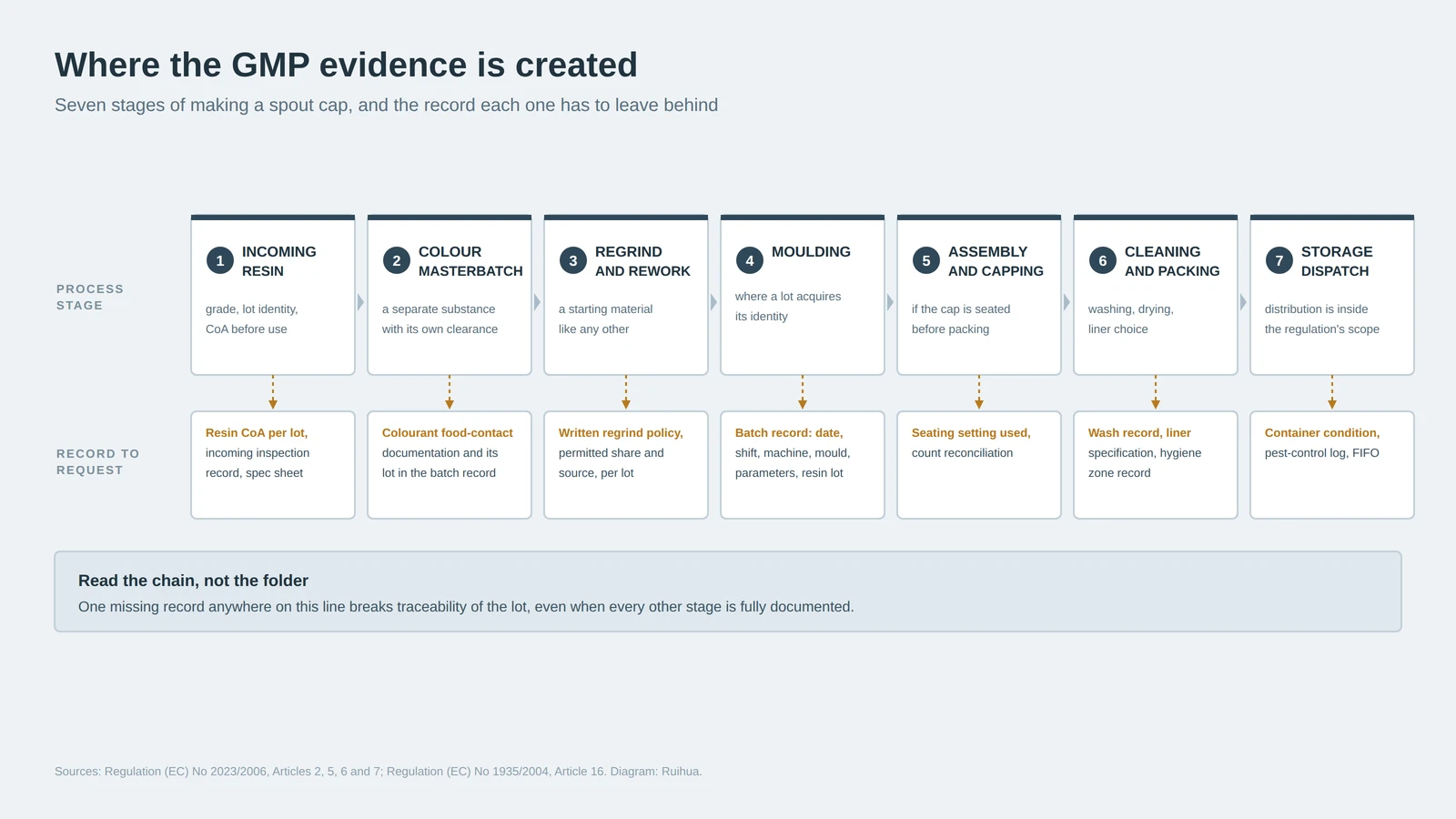
The same seven stages as above, arranged in the order the material travels. Read it as a chain: one missing record breaks lot traceability even when every other stage is documented.
Stages 1 and 2: what goes in has to be specified before it is bought
Article 5(2) is short and it is a clause supply chains commonly fail: starting materials shall be selected and comply with pre-established specifications. Pre-established means the specification exists before the purchase order, not after a customer asks for one. So the first question is not "can you send the CoA" but "is there a written specification this CoA is being checked against, and who signed it".
For a spout cap that means two specifications, not one. The polymer grade has a specification and a certificate of analysis per lot — grade name, density or melt flow, date, and the food-contact status the grade was purchased under. Ask for the resin supplier's own declaration of compliance for that grade as well: 10/2011 Article 15(1) covers the substances intended for the manufacture of plastic articles, so the polymer supplier's declaration belongs in the same lot file as the colourant's, rather than one step further up the chain as a courtesy. The colour masterbatch has its own, and this is where the paper trail most often breaks, because a masterbatch is a separate substance with its own composition and its own clearance. A declaration of compliance covering the base resin does not cover the colourant, the lubricant, or the mould-release agent. If the parts are supplied in a colour, the DoC has to reach the colourant, and the migration work behind it should have been done on the coloured article, not on natural resin with a footnote.
There is a second-order question buyers rarely ask and auditors do: which colour was tested, and what happens when the colour changes. A migration test report is a record about a specimen. Change the masterbatch supplier, the shade, or the let-down ratio, and the specimen no longer matches what you are shipping. That gives the colour question a precise shape rather than a rhetorical one. Under Regulation (EU) No 10/2011, the declaration has to be renewed when a substantial change in composition or production brings about a change in migration, or when new scientific data appears. So "a colour change does not move the migration" is a legitimate position — it is a claim about the test, not a brush-off, and it can be checked. Ask which masterbatch was in the specimen that was tested, and what evidence supports the claim that the new one does not change the result. A supplier who has never asked the question of its own colourant supplier does not have an answer.
Stage 3: regrind is the question almost nobody asks
Many moulders run their own sprues and runners back through the machine. That is normal, it is not a defect, and in a mono-material PE or PP part it is often the least wasteful way to run the job. What is not normal is having no written policy about it, because regrind is a starting material under Article 5(2) and it carries the same obligation as virgin resin.
Three questions do the work. What percentage of regrind is permitted in a food-contact part, and is that written down? Where does the regrind come from — only this job's own sprues, or also off-spec parts, purging lumps, and material bought in from outside? And how is it segregated, so that regrind from a colour trial or from a non-food job cannot migrate into a food lot on a Friday afternoon?
Part C of the annex is the statutory answer to two of those three questions, and it is the part almost nobody quotes. Offcuts and scraps intended for reprocessing must be collected separately from waste, as close as technically achievable to the point at which they are produced, in a closed piping or belt system used for nothing else or in clean bins and bags designated for the purpose — closed as soon as they are full, and designed to prevent contamination up to the point of reinsertion. The unit that results is a batch, under the definition in Article 2(3), point 20 of Regulation (EU) 2022/1616. And the quality assurance system has to prevent that batch being mixed with plastic of a different composition, other materials or waste, with transfers between operations recorded and their traceability accounted for. Put those requirements to a supplier and the answers are documents rather than assurances: the collection point, the container type, the batch identity, and the transfer log.
The failure mode this prevents is specific. Regrind that has passed through a machine twice has a different thermal history, and material that has been sitting in a granulator is exposed to whatever the granulator area contains. Neither shows up in a dimensional check. Both show up in a customer complaint about odour, or in a migration result that nobody can explain because nobody knows what was in the hopper.
Stage 4: moulding records that tie one lot to one machine
Article 7(2) asks for records covering the manufacturing operations performed. In an injection moulding plant that has a precise meaning: for each lot, the date and shift, the machine, the mould, the cavity count and which cavities produced the lot's output, the process parameter set actually used against the approved window, the resin lot and masterbatch lot consumed, the first-off approval, and the quantity produced including scrap. Without those fields a record proves that parts were made. It does not prove that your parts were made the same way as the sample you approved.
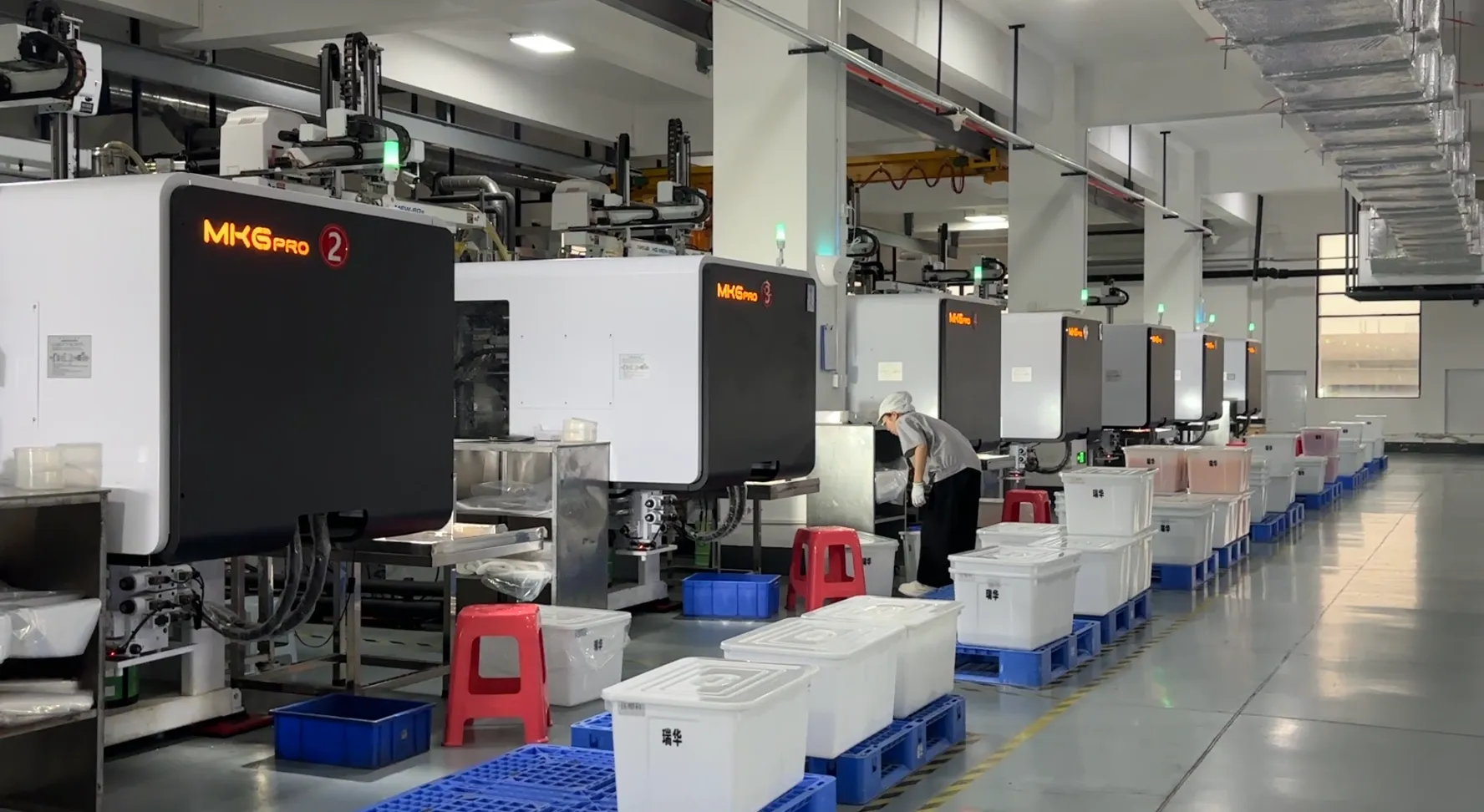
A batch record is only traceable if it names the machine and the mould, not just the date. Photo: Ruihua production floor.
Two details are worth pressing on. Cavity-level identity matters on a multi-cavity tool: if cavity 7 runs a cold slug all shift, the parts from cavity 7 are different parts, and a cavity count alone tells you the tool, not which parts came from where. Only per-cavity identification, or output segregated by cavity, can separate them. And purging between colours or materials is a changeover event that either has a record or is a rumour; ask what the purge procedure is and what evidence is left behind when a machine goes from a red cosmetic cap to a natural food cap.
Change control is the same question asked forwards. Any change to resin grade, colourant, mould, or a process window outside the approved set should trigger a re-verification, and the record should show it did. If the supplier's answer is "we would tell you", ask for the clause that says so — which is what the RFQ section below is for.
Stages 5 to 7: assembly, cleaning, packing and the truck
Article 2's phrase "all stages of manufacture, processing and distribution" is doing real work here, because three of the stages that most affect a food-contact part happen after the mould closes.
Assembly. If the supplier seats the caps on the spouts, that is an operation in its own right: a seating force or torque setting, a count reconciliation between spouts in and caps on, and an area whose hygiene is controlled to the same standard as the moulding hall. If the caps travel loose, this stage is yours, and so is its evidence.
Cleaning. Some closures are washed or air-blown before packing and some are not. Either answer is acceptable if it is documented; the problems start when "we clean them" turns out to mean a worker with an air gun. Ask whether the part is washed, with what water, how it is dried, and whether the drying air is filtered — and ask what record exists per lot.
Packing. The bag or liner that touches the parts is itself a food-contact material, and it needs its own compliance status. This is a quiet nonconformity: a perfectly documented moulding operation, packed into a liner chosen by the purchasing department on price.
Storage and dispatch. Pest control, pallet condition, dust, condensation, first-in-first-out, and the condition of the container at loading. A container that has carried a solvent load, or one loaded in the rain, can undo every stage above it, and none of that appears in the product's own file.
The afternoon test: trace one lot number
Everything above becomes checkable with one exercise — whether lot traceability actually closes — and it takes about half a day if the supplier cooperates.
Take a lot number off a packing list or a carton label from a delivery you actually received. Send it back with one request: the documentation for this lot. Then check whether the numbers chain.
- The lot number on the carton resolves to a production date and a machine. If it does not, the trail ends at the label.
- The batch record for that date names a resin lot and a masterbatch lot. If it names a grade but not a lot, there is no way back to the resin certificate.
- The resin certificate of analysis for that lot exists, is dated before the production date, and its values sit inside the specification. A CoA dated after the parts were made is a re-issued document, and it is worth asking why.
- The quality control results for that lot exist — dimensional, appearance, and any functional test the specification names. This is where a migration report belongs, and where whether the laboratory's scope actually covers the test decides how much the report is worth.
- The declaration of compliance in force on the production date is the one you were given, and its content is checkable. For plastics, Annex IV of 10/2011 lists what a complete declaration carries, and since Regulation (EU) 2025/351 it runs to eleven points rather than nine — the 18-month transition for material first placed on the market ran out on 16 September 2026. The nine core items are who issued it and who manufactured the article, the article it covers, its date, a confirmation that it meets 10/2011 and 1935/2004, the restrictions and specifications for the substances used, the migration data behind any substance restricted in food, the conditions of use it was assessed for (food types, time and temperature, surface-to-volume ratio), and the functional-barrier statement where a multi-layer article uses one. Three of those points are where a declaration issued to an older template falls short: point 6 was replaced and now also requires adequate information on non-intentionally added substances present in an amount that could put the final article outside Article 3 of 1935/2004; point 10 was added and applies where the plastic material is a batch intended for reprocessing, requiring confirmation that it complies with Articles 10(1) and 10(2) and was collected and used in accordance with part C of the 2023/2006 annex; and point 11 was added and applies where the article was made with authorised substances manufactured from waste. A declaration with a date but no conditions of use cannot be matched to your application. This is the sharpest single check in the list: documents get revised when a colourant or a resin changes, and buyers routinely hold a DoC from two revisions ago without noticing.
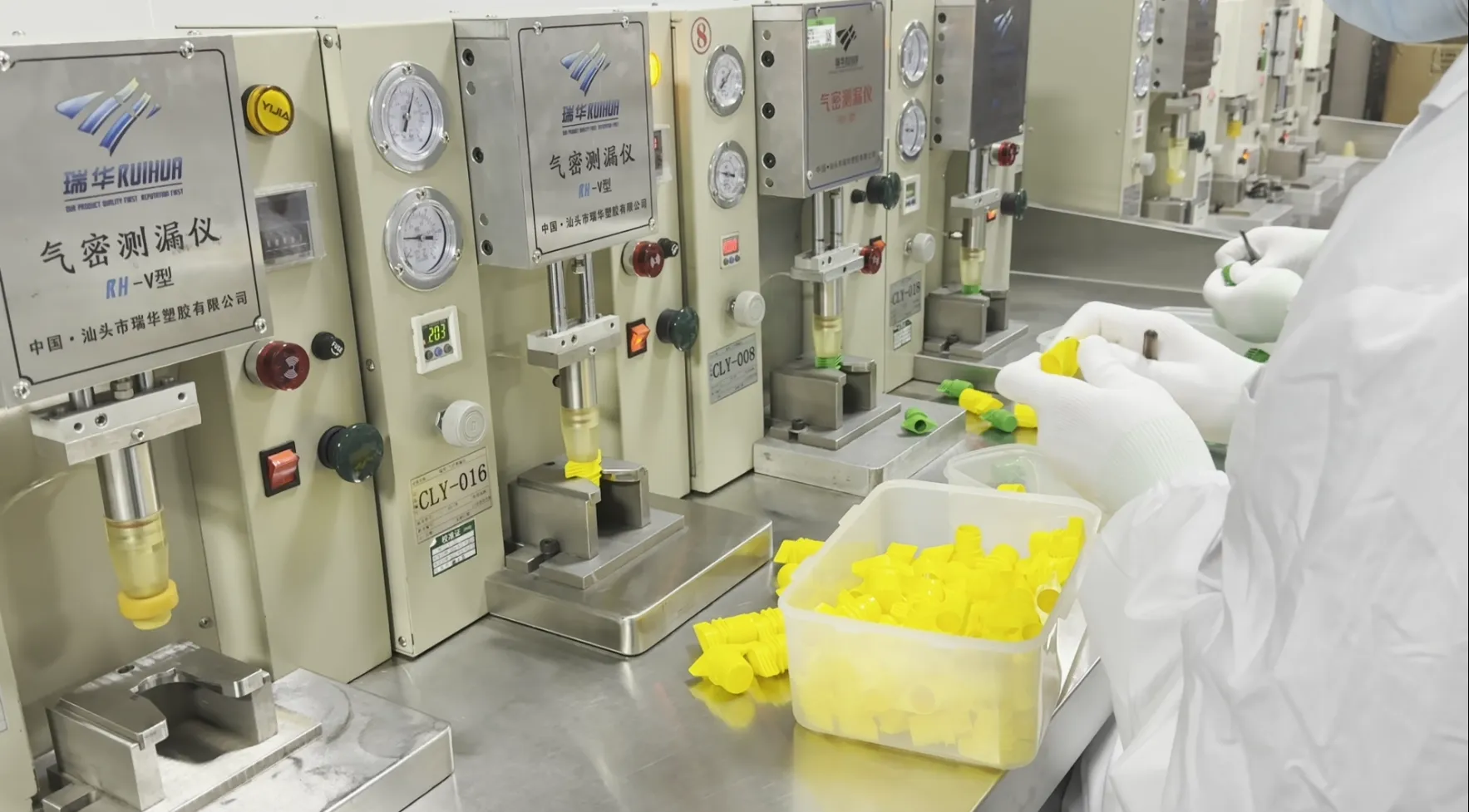
A quality control record is only evidence if it is tied to a lot. Photo: Ruihua inspection station.
A break in that chain is not automatically a refusal. Small plants keep records on paper and take a day to find them; a supplier may store resin CoAs at group level. What matters is whether the answer is "here it is, dated before production" or "we will look into it" followed by silence. A supplier who cannot trace one lot backwards cannot trace a recall forwards, and that is the exposure you are actually buying against.
What to write into the RFQ and the quality agreement
The cheapest time to fix all of this is before the first order, in language the supplier can accept. Eight lines cover most of it, and they belong next to the closure specification sheet rather than in a general terms document nobody reads.
- A declaration of compliance per product, with a revision number, a date, and the restrictions and conditions of use it was assessed against, supplied at each delivery or at each revision, whichever comes first.
- A lot numbering rule that resolves to production date and machine, stated in the contract rather than discovered later.
- A certificate of analysis per resin lot and per masterbatch lot, retained and available against the closure lot number.
- Written specifications for each starting material, including any permitted regrind, before the first production run.
- Notification of change — resin grade, colourant, mould, or process window — with a notice period you agree, and re-verification before shipment.
- Disclosure of subcontracted operations, particularly printing, assembly or any secondary process, because the GMP obligation stays with the operator who signs the declaration.
- A records retention period. Article 7 requires the documentation to exist and to be available to authorities; it does not name a period, so the number belongs in your agreement rather than in an assumption.
- A right to review records remotely, not only on site — a document request answered in five working days is worth more than an audit slot in eleven months.
When the supplier answers with a certificate
Four answers come back often enough to rehearse.
"We are ISO 9001 certified." That is a quality management system, and it asks for document control — a real asset, but not the same thing. It does not require a food-contact specification per starting material, and it does not require a declaration of compliance. Treat it as a floor, then verify that the certificate is current and covers the site that invoices you, and keep asking for the records.
"We are FSSC 22000 / BRCGS certified." Closer to the subject, and still a scope question: scheme certificates carry a scope statement and category letters, and the ones on the wall are not always the ones that cover moulded closures. Before you accept it, read the scheme's scope rather than its logo.
"Our customers audit us." An audit report about someone else's product line says the plant has a system. It says nothing about the lot on your dock. The polite version of the follow-up is: we understand; can we see the batch record for lot X.
"The formula is confidential." This one is fair, and it has a fair answer that does not require disclosure. Article 7(1) requires documentation of manufacturing formulae — it does not require the buyer to receive them. What you need is evidence that a formula exists, is version-controlled, and that the lot conformed to it: a conformance statement referencing the formula revision, under NDA if the supplier insists. A supplier who cannot say which formula revision was in force is not protecting a trade secret; they are missing a document.
Refusal is information too. A supplier who declines the lot-level request, in writing and with a reason, is easier to work with than one who keeps answering a different question. The same request can be put to any closure supplier, including us.
The one-page evidence request
If you send nothing else, send this, with a lot number attached:
- Declaration of compliance in force on the production date, with revision number, and stating the restrictions and conditions of use it was assessed against.
- Batch record for that lot: date, shift, machine, mould, cavity count and per-cavity identification, parameter set, first-off approval.
- Resin CoA for the lot named on the batch record, dated before production, and the resin supplier's declaration of compliance for that grade.
- Masterbatch lot identity and the colourant's food-contact documentation.
- Regrind: policy, and the quantity used in this lot.
- QC results for the lot, including any functional test in the specification.
- Packing record: liner material and its food-contact status, hygiene zone.
- Any subcontracted operation performed on this lot, and by whom.
Eight items, one lot, five working days. If you get them and the numbers chain, you have something a certificate cannot give you: a defensible answer to the March question. If you are specifying the closure itself at the same time, samples and a quote are the next practical step — send the application, the fill temperature and the market, and the specification conversation starts from there.
Questions buyers ask
Is there such a thing as a GMP certificate? Not in the sense buyers usually mean. In the EU, 2023/2006 imposes obligations on the operator and is verified through records and inspections, not through a certificate issued about GMP itself. A scheme certificate or a quality management certificate can support the picture, but neither is the GMP evidence Article 7 describes.
How is this different from a factory audit? An audit samples a system on a day you are present; a lot trace is a check on one shipment, done from your desk. They are complementary, and the trace is the cheaper one to run first — it often tells you which parts of the audit are worth the travel.
How long should the records be kept? Regulation 2023/2006 does not name a period; it requires the documentation to be available to competent authorities on request. Buyers commonly write five years into the quality agreement to cover shelf life plus a recall window, and it is better to set a number than to assume one.
Does any of this apply to a cap that never touches food? The cap does come into contact with food: the product passes through the spout bore and presses against the cap's inner face, and in many packs the consumer pours or sucks through it. Treat the closure as a food-contact article, and treat the declaration as covering the assembled part rather than only the resin it was moulded from.
All six instruments here are quoted as in force on 25 November 2026. The three EU regulations are linked at their consolidated texts — 2023/2006 and 10/2011 as consolidated on 16 March 2025, the date Regulation (EU) 2025/351 applied, and 1935/2004 as last consolidated on 27 March 2021 — and the three CFR sections as currently published on eCFR. Check the consolidated text before relying on a clause: this is a buying checklist, not legal advice.