
Why "medical" is an evidence chain, not a material grade
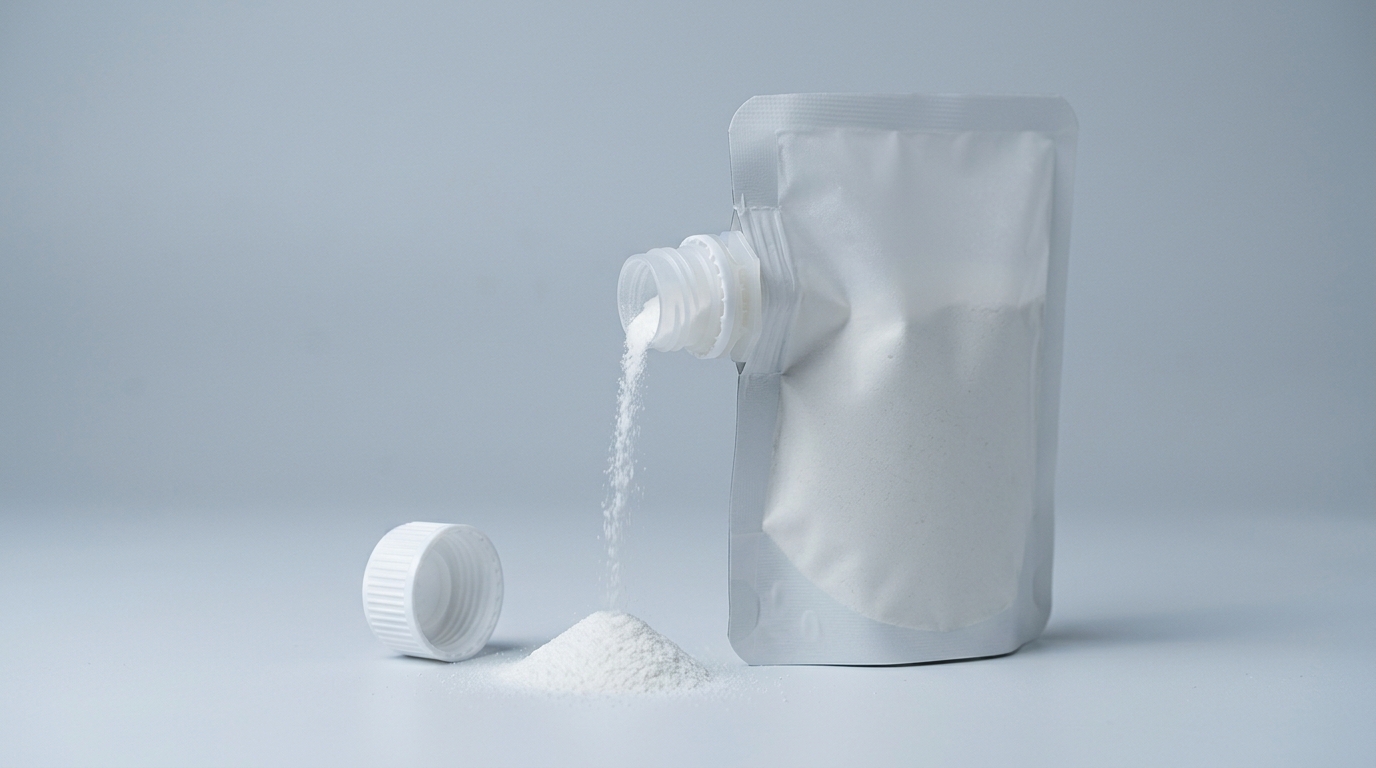
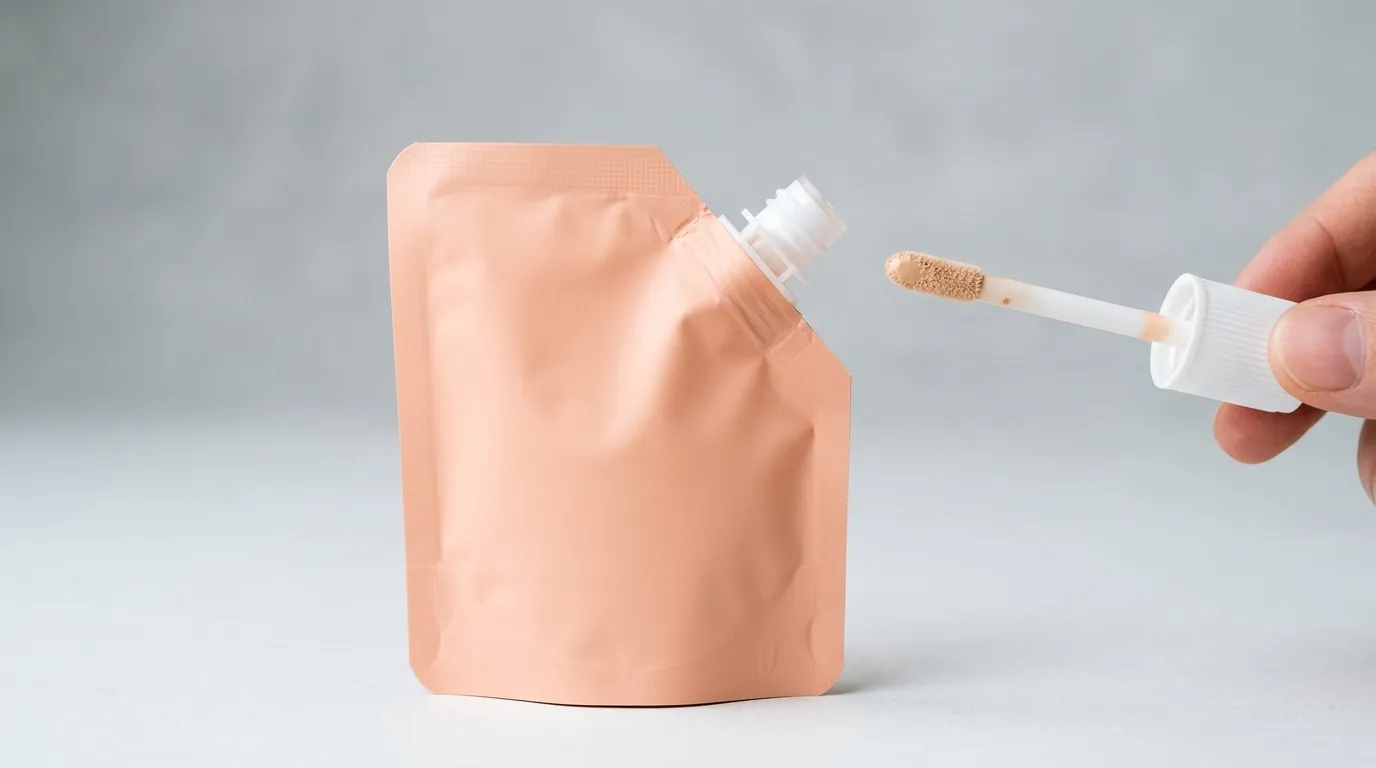
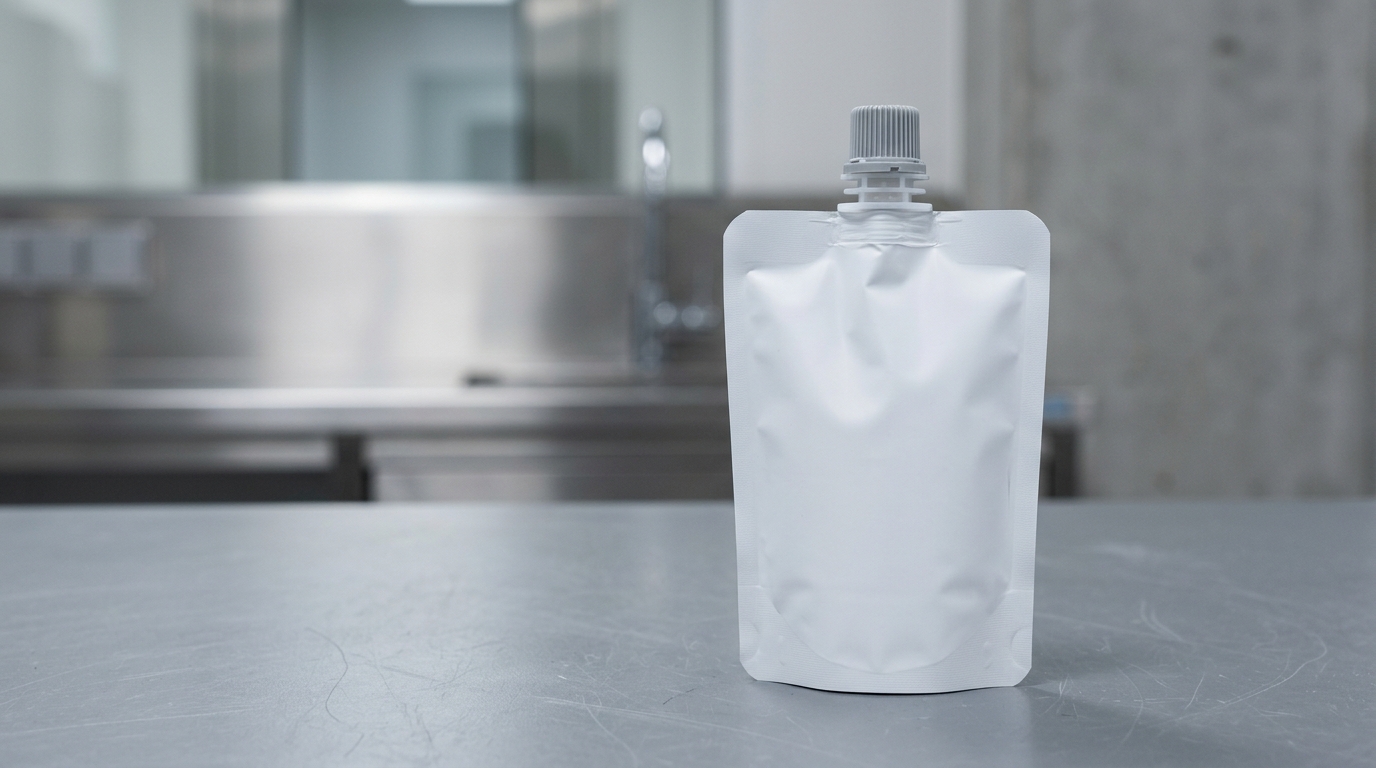
A medical pouch spout cap is the closure on a spouted pouch — the stand-up pouch or doypack form that a liquid spout pouch uses: a moulded plastic spout fitment welded into the film, plus the screw cap, twist-off head or nozzle that closes it. Whether a given one suits an oral liquid or a pharmaceutical fill is decided by evidence you can hand to a reviewer — a material declaration, a biocompatibility position, a seal-integrity protocol run against your own film — and not by the resin on its own.
Three assumptions cause most of the trouble in this category.
That food contact is close enough. A food-contact declaration and a pharmaceutical packaging qualification answer different questions. A supplier can be fully compliant with the first and have nothing for the second, which is why the same white PP cap can be entirely adequate for a mouthwash pouch and unevidenced for a prescription syrup.
That a better material fixes it. Changing the polymer changes the resin data sheet, not the two interfaces that actually fail — the cap-to-spout thread and the spout-to-film weld — and on a spouted package those interfaces carry the load.
That the cap is a component you buy in. It is one segment of a container closure system that spans the cap, the spout, the weld and the fill-and-seal step. In the United States and the European Union alike, the duty to qualify that system rests with the licence holder who markets the finished medicine, not with the closure moulder.
That last point is the reason this guide is organised the way it is. The engineering choices — bore, dispensing shape, seal mechanism, sterilisation route — are things you decide. The qualification evidence is something you collect, and the collection is easier if you know which document answers which question before you open the enquiry.
Where the closure sits in the packaging chain
A spouted pouch is a four-segment load path, and each segment is a different supplier's responsibility:
Cap → thread → spout body → spout-to-film weld → laminated film.
The cap and the spout usually arrive as one matched pair from the same moulder, because the thread is moulded to the spout rather than standardised across the industry the way a bottle neck finish is. The weld is made by whoever fills the pouch, using their own film. That split is the single most useful thing to understand about the category: you are not buying a cap, you are buying one half of an interface whose other half you control.
Two consequences follow. First, a spout fitment is specified by its flange — the flat skirt that the sealing jaws press onto the film — as much as by its bore. A well-matched bore on a flange that does not sit flat in your sealer will leak at the shoulder, not at the thread. Second, the spout's sealing temperature window and its polymer family belong to the film decision as much as to the cap decision; a PP spout and a PE spout are not interchangeable against the same sealant layer, which we cover in PP vs PE spout caps.
If your pouch already leaks, moving to a different cap design rarely fixes it. Leaks on a filled pouch usually originate at the weld or at the flange seat, and the diagnostic order is worth working through before you change the closure.
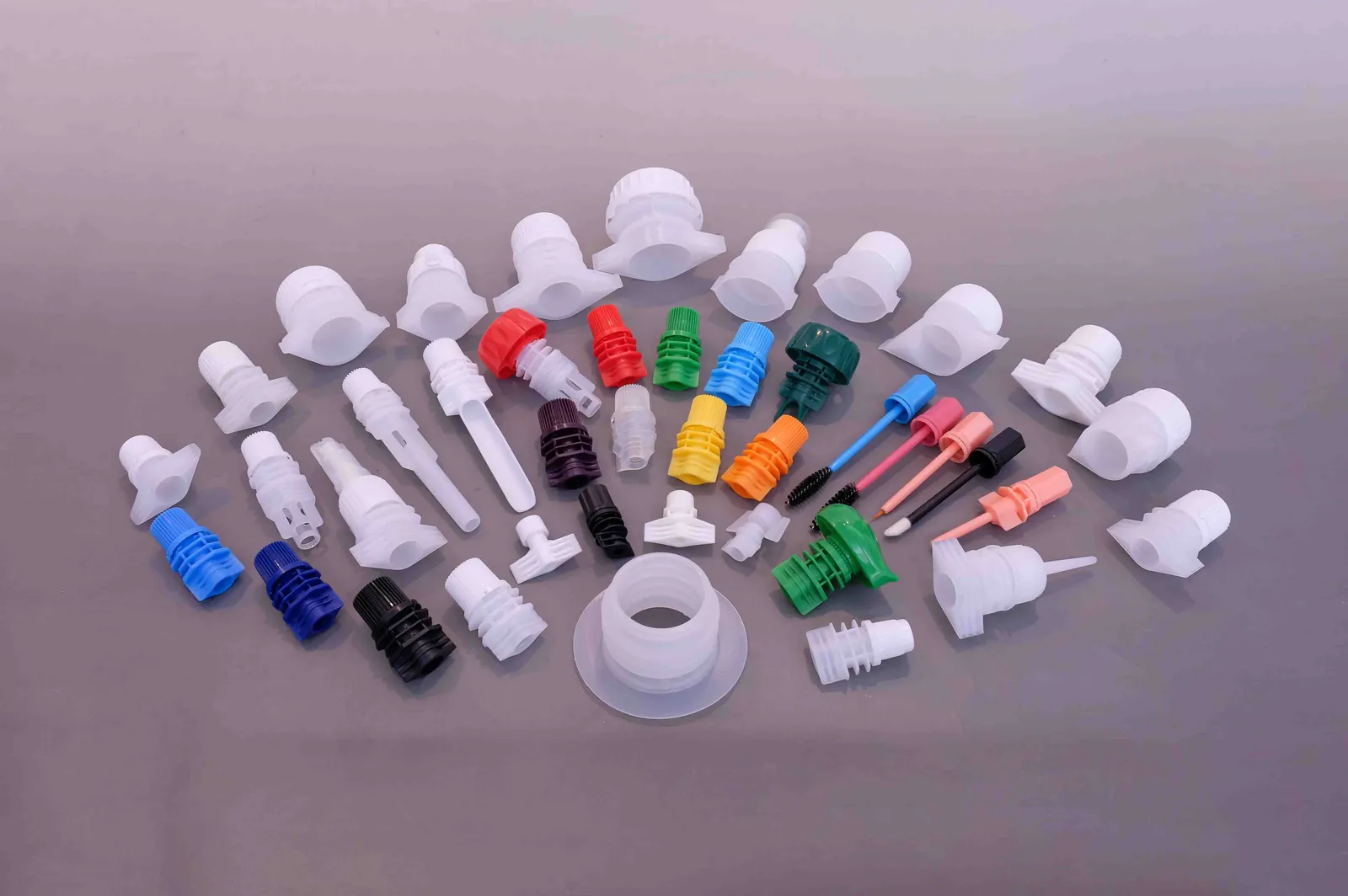
What the range above makes visible is that the differences between two fitments are mostly in the body and the flange, not in the cap: bore decides dispensing, flange decides sealing, and the thread only ties the two halves together.
This article covers the medical and oral-liquid branch of a wider set. The rest of the family — spout caps grouped by what the pouch holds — covers powders, sauces, detergents and large-bore fills, and that is the better starting point if your fill type is still open.
The four jobs a medical pouch spout cap has to do
Any closure in this category is doing four separate jobs at once, and a design that scores well on one can be poor on another. Sorting the enquiry by job rather than by product name is what stops the specification from drifting.
Job | What it is really for | What you must put in writing | The trade-off |
|---|---|---|---|
Seal | Keeps the fill sterile or simply contained from filling to first opening | Seal mechanism (foil seal liner, induction seal, silicone pad), seal diameter, torque to open | A robust pre-open seal adds an opening step the end user can get wrong |
Dispense | Controls how the liquid leaves — flow rate, aim, drip | Bore or inner diameter, nozzle length and shape, orifice | A narrow bore slows a viscous syrup; a wide bore pours a thin liquid too fast |
Tamper evidence | Shows the pack was not opened in transit | Drop ring or tear band, break force, whether it survives the cap's own retort or sterilisation cycle | Tamper features that double as the child-resistant mechanism have to satisfy both duties |
Child resistance and anti-choke | Reduces the chance of a child swallowing the closure or opening the pack | Whether the design is child-resistant by protocol, and the maximum component dimension | A larger, mushroom-headed spout is harder to swallow but changes the pouch silhouette |
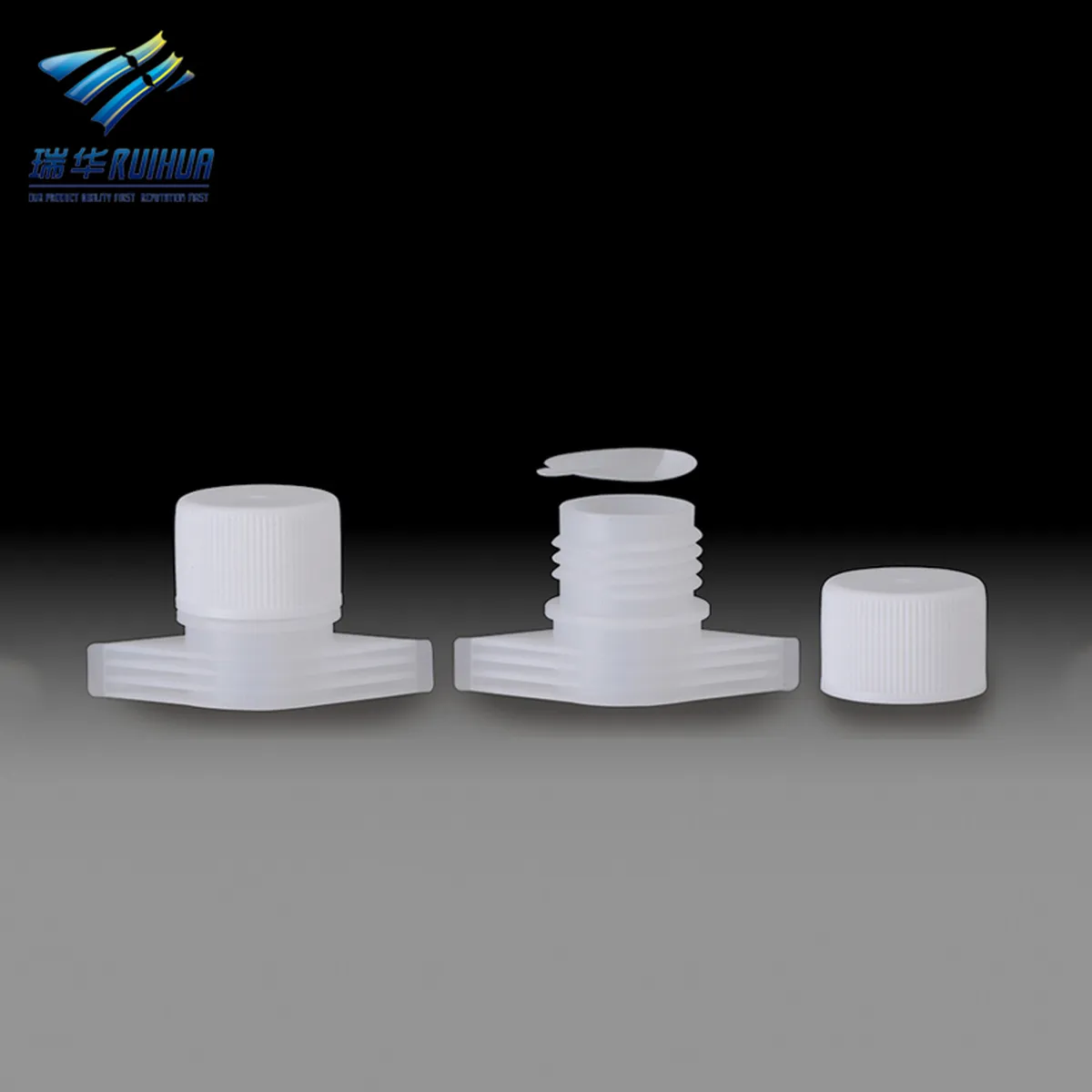
The seal job is where the material choice shows up most directly. Below is the arrangement used on pharmaceutical and oral-liquid fitments at the 22 mm class: a spout with its screw cap, and the foil seal liner shown separately.
The child-resistance duty is the one most often misplaced. In the United States, the Poison Prevention Packaging Act business guidance from the CPSC explains that special (child-resistant) packaging requirements apply to certain household substances and to oral prescription medicines, and the test procedures and packaging requirements sit in 16 CFR part 1700. The obligation attaches to the product being marketed, so the closure supplier can supply a component designed for a child-resistant system but cannot take on the demonstration. Where a claim is made, it belongs to the packer or licence holder, who has to test the assembled pack.
Anti-choke is a different idea, and often confused with child resistance. Child resistance is about a child being unable to open the pack; anti-choke is about a detached component being less likely to obstruct an airway if it is ever loose. On oral-liquid pouches these two objectives pull the same part in opposite directions — one wants a cap a small hand cannot grip and turn, the other wants a part too large to swallow — so an anti-choking or mushroom-headed design is usually specified as a deliberate compromise rather than as a universal upgrade.
If you want to see what that compromise looks like as a moulded part rather than as a description, the range of anti-choking caps for oral doses shows the geometry these two duties produce.
Matching bore and dispensing shape to the liquid
Bore is the specification most often written loosely, and it is the one that decides how the pack feels in use. Measuring your liquid's viscosity and your target fill volume gets you most of the way.
Spout bore class | Typical fill | Typical dispensing behaviour | What goes wrong at the wrong size |
|---|---|---|---|
1.2–1.8 mm | Unit-dose liquids, drops, disinfectant, serums | Very slow, controlled release; needs squeeze pressure | Too wide and a unit-dose over-delivers in one squeeze |
5–7 mm | Shampoo, hand wash, sanitising gel, oils | Steady stream, easy to aim | Too narrow and a gel stalls; too wide and it floods |
8.6 mm | Juice, puree, paediatric liquid food, thin syrup | Free flow with a short nozzle | A long nozzle here makes the last of the fill unreachable |
9.6–14 mm | Sauce, jelly, decoctions, herbal and oral liquids | Pour or squeeze, moderate control | Below this, a thicker decoction will not clear the spout |
16–22 mm | High-viscosity syrup, honey, nutritional and enteral liquids | Fast pour; often needs a wide-mouth opening | Too narrow and the product sits in the spout after use |
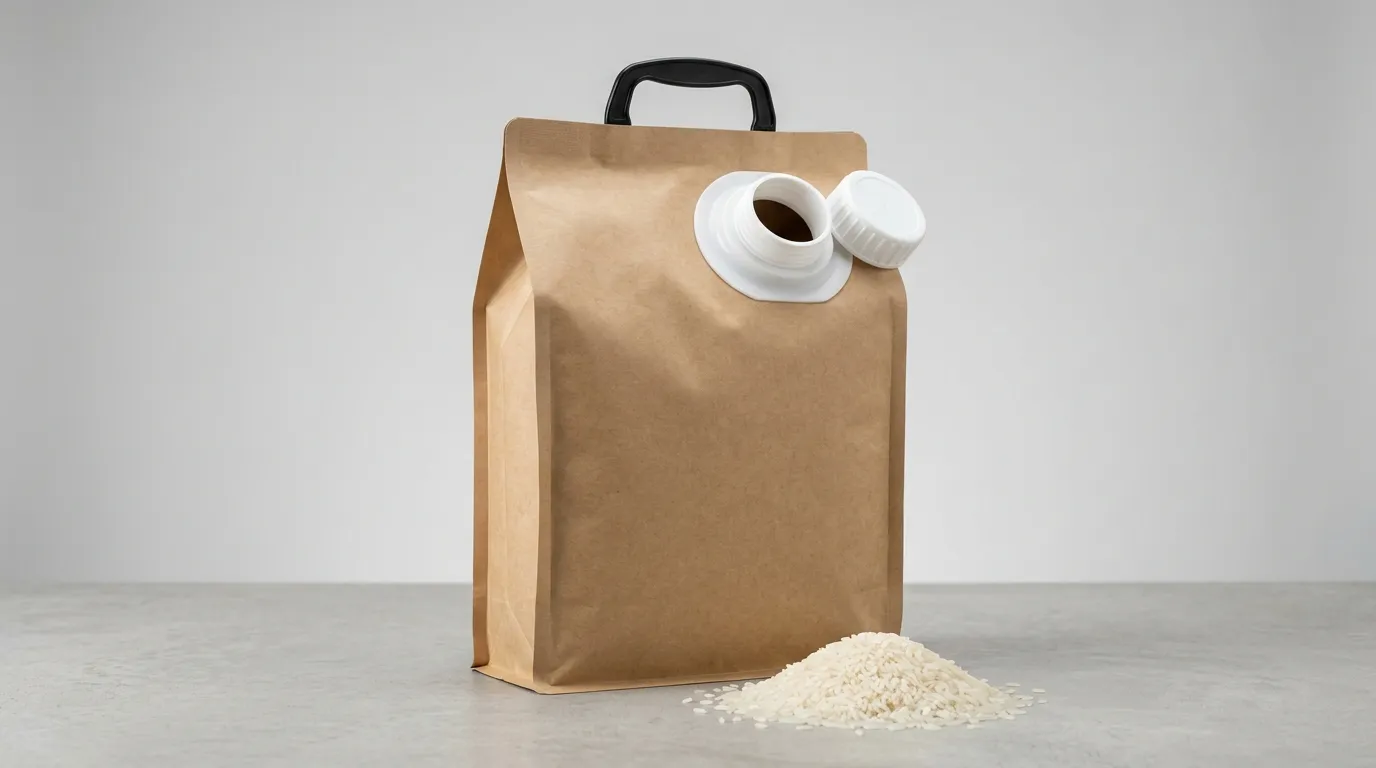
26–40 mm | Granules, powders, rice, large particulates | Scoop or full-mouth emptying | Below this the particulate bridges and blocks |
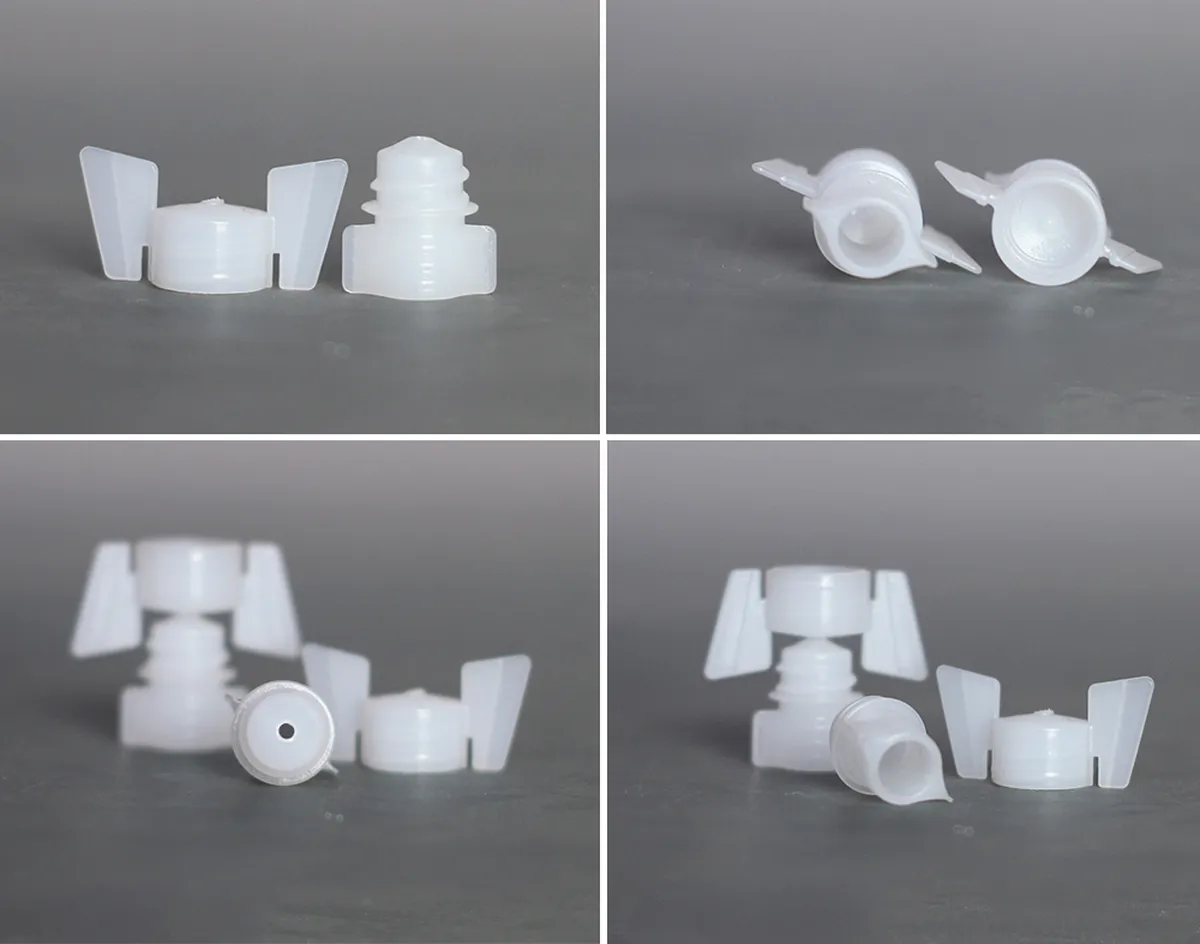
The 1.8 mm mini twist-off is the clearest example of a bore that is chosen for metering rather than for pouring. It is used on medical and oral-liquid pouches — disinfectant wipes liquid, essence, small-dose liquids — where the point is that it will not deliver the whole pouch at once.
Two related sizing questions sit either side of this table. If you are still deciding the bore from scratch, the quickest route is to filter caps by bore size and flow against your liquid and your target release rate, then confirm the result against the fitment series before committing to a drawing. If your constraint is the liquid rather than the dimensions — a hot fill, a chunky sauce, a retort cycle — work backwards from the fill type instead.
One boundary worth stating plainly: pouches for enteral feeding, nasal irrigation and other clinical routes carry requirements beyond component selection, and those sit outside this guide. Treat the closure there as one item inside a device or medicine submission and take the requirements from that submission.
The qualification layer: five documents a medical pouch buyer should collect
This is the part of the category that the supplier directory pages do not show, and it is the part that decides whether a supplier is usable for a pharmaceutical program. Five documents cover most of what a reviewer will ask for, and each answers a different question.
Document | What it actually evidences | Who issues it | Who owns the duty |
|---|---|---|---|
Food-contact or material declaration | The material is authorised for contact with the stated food type and conditions | The moulder, citing the resin maker's data and migration testing where relevant | The moulder |
Plastic-material characterisation (pharmaceutical) | The plastic's composition and extractables position under a pharmacopoeial general chapter, such as USP 〈661.1〉 | The moulder, against the supplier's own or a contract lab's testing | The moulder, as input to the licence holder |
Biocompatibility position | The material has been assessed for biological response at its intended contact, typically against ISO 10993-1 or the USP Class VI tests | An accredited third-party lab or the moulder's own assessment report | The licence holder decides what is needed; the moulder supplies it |
Sterilisation and sterile-barrier evidence | The closure tolerates your sterilisation route and does not degrade the barrier, with the pack validated to ISO 11607-1 where a sterile barrier is claimed | The moulder plus your sterilisation validation | Split — routine validation is the packer's |
Seal-integrity and leak test protocol | The assembled pack holds under a defined test method — dye penetration, vacuum decay or burst testing | The packer's process validation, using the supplier's dimensional data | The packer |
Standard numbers are pointers, not passes. Naming ISO 10993-1 or ISO 11607-1 in a document set does not by itself make a closure suitable for your product, and which of those standards your submission is held to is decided by your regulatory route, not by the supplier.
Take the first document first. In the European Union, Regulation (EC) No 1935/2004 is the framework for materials intended to come into contact with food, and Regulation (EU) No 10/2011 sets the specific requirements for plastic materials and articles, including the composition rules and the migration limits that a declaration draws on. Those are where the plastic documentation starts, and for a medical pouch the same material evidence is then re-read against pharmaceutical expectations rather than replaced.
On the United States side, the polymer itself is usually addressed through an indirect food additive regulation — 21 CFR 177.1520 for olefin polymers — and the pharmaceutical question is answered under a different framework again. There, USP general chapter 〈661.1〉 on plastic materials of construction is the characterisation chapter the industry works to.
Two further documents describe how the assembled system is expected to be qualified, as distinct from how the material is authorised. The FDA guidance on container closure systems for packaging human drugs and biologics covers the framework for human drugs and biologics, and the EMA guideline on plastic immediate packaging materials covers the European expectation for immediate packaging.
Read those together and the division of labour becomes clear. A moulder can evidence the material, the moulding and the dimensions. It cannot evidence that your filled pouch holds, because that depends on your film, your sealer and your fill line. Nor can it qualify the drug product — that is the licence holder's submission.
The cheapest test of a supplier in this category is not a sample, it is a question. Ask for the material declaration with the specific regulation cited and the migration or extraction testing named. A supplier who answers in writing has a documentation process; one who replies with a product brochure has told you something useful about how your own regulatory file will go.
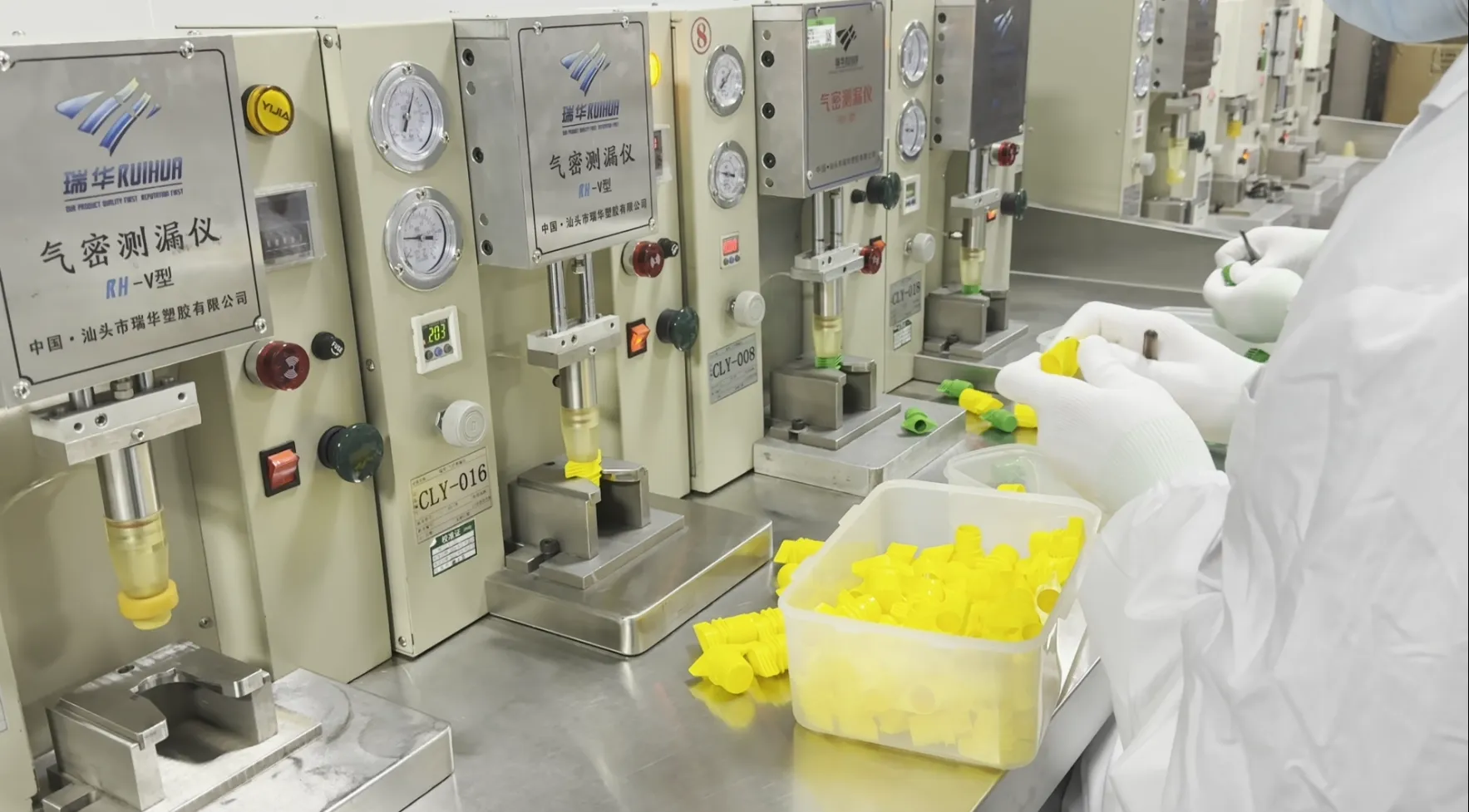
A leak test is where dimensional control becomes visible. An in-line air-tightness check on capping and a dimensional inspection on the moulded spout are what generate the numbers a downstream reviewer will eventually look for, and they are the reason the tolerance you agree at the drawing stage has to survive into production.
The certificates behind a food-contact claim sit alongside those numbers rather than replacing them — the certificates page lists what a supplier can hand over today, which is the practical test of the list above.
The three-way comparison of the FDA, EU and China frameworks is the other half of this section: FDA vs EU 1935 vs GB 4806 sets out where the three regimes agree and where a component document that satisfies one will not satisfy another.
Sterilisation, retort, and how the closure reacts
Most oral-liquid and medical pouches arrive at the closure decision with the sterilisation route already fixed by the fill, and the route changes what the cap has to survive.
Retort and hot fill are the thermal routes. A retort cycle subjects the closure to saturated steam under pressure, so dimensional stability and colour stability become the criteria; a spout that relaxes at temperature will not reseal against the thread reliably afterwards. This is where PP has an advantage over PE, and it is worth checking how a specific spout behaves after a defined number of cycles rather than at a single peak temperature. See retort and hot-fill pouch spouts for the cycle and sealant considerations.
Ethylene oxide is a low-temperature route and is generally the gentlest on polyolefins. Its constraints sit in aeration and residuals rather than in the closure's shape.
Gamma and electron beam are the routes where the closure deserves the most scrutiny. Ionising radiation interacts with polymers and with the colour masterbatch, and the visible symptom — a yellowing or a shift in a white cap — is usually accompanied by a smaller change in mechanical behaviour that matters more. Radiation dose, dose rate and the additive package all feed into the result, so a supplier cannot give a blanket answer for every dose. The workable version of this requirement is to ask the moulder to state the materials used and to re-check appearance and dimensions after the dose you actually intend to run, rather than accepting a general claim that radiation-sterilisable grades are fine.
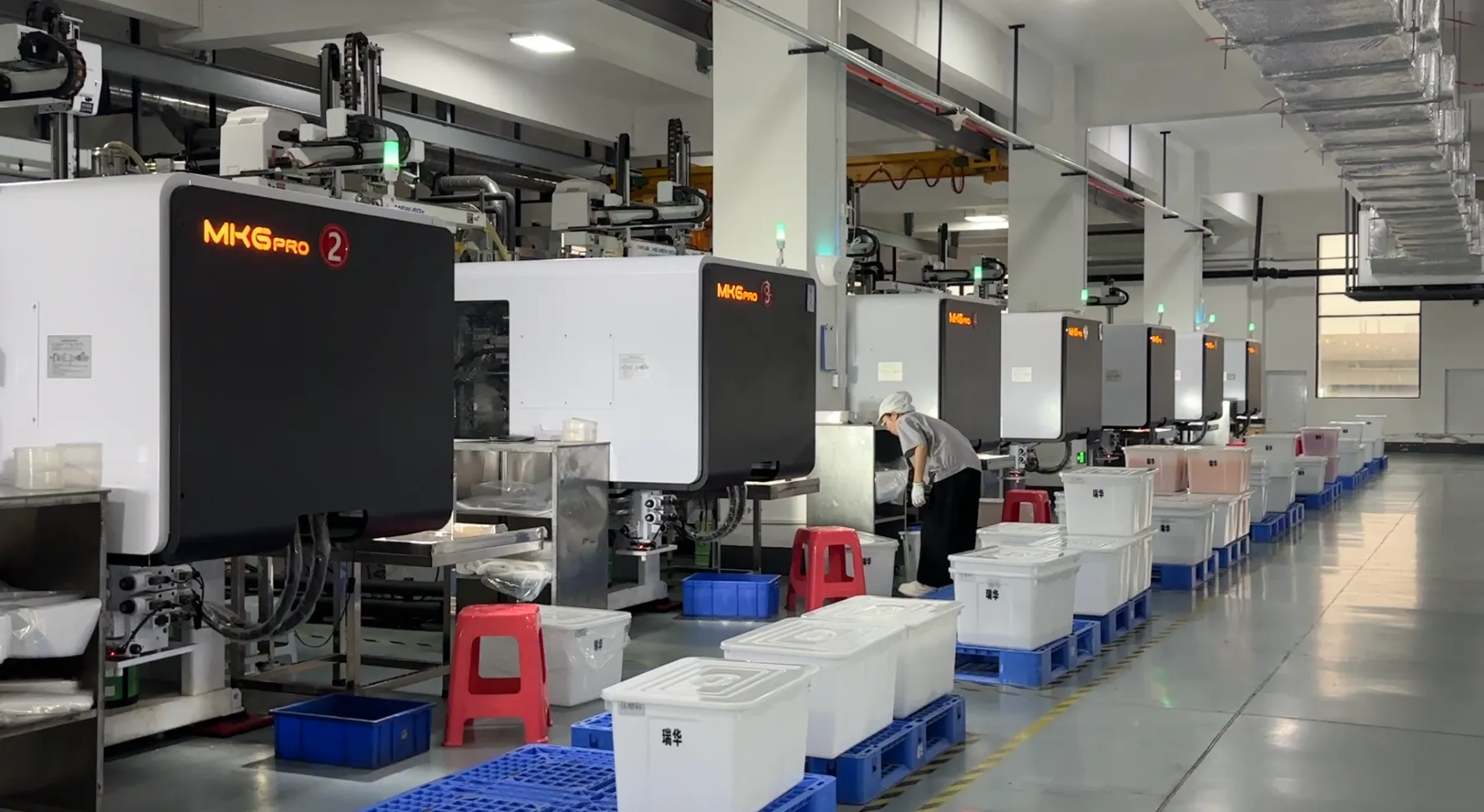
Where those grades are decided is at the machine: the polymer and masterbatch are set when the part is moulded, which is why the material and sterilisation questions have to be asked together rather than after the tooling is cut.
If the pouch is itself a medical device or an accessory to one, the route runs through a different regime again: Regulation (EU) 2017/745 governs medical devices in the EU, and a packaging component of a device is assessed inside that device's own conformity route rather than under the food-contact rules. Working out which regime applies is a step worth doing early, because it changes which evidence set you will be asked to assemble.
What to put on the specification sheet
A specification for a pouch spout cap that survives contact with a supplier and a quality auditor has eleven lines. Anything less and you will be renegotiating a dimension in the middle of a production run.
Specification item | What to write | Why it matters |
|---|---|---|
Fitment series and bore | Nominal bore and the spout family, not just "suitable for juice" | The thread is moulded to the spout, so the series fixes the cap |
Flange and weld surface | Flange geometry, flatness and the surface that meets the film | Drives leak performance far more than the thread does |
Polymer and colour masterbatch | Polymer family, grades and the masterbatch reference | Migration, sterilisation and colour retention all follow from this |
Seal mechanism | Foil seal liner, induction seal or silicone pad, with seal diameter | Determines opening force and the pre-open barrier |
Sealing window | Temperature, pressure and dwell the sealer will run | Must match your film's sealant layer, not the cap in isolation |
Dispensing geometry | Orifice size, nozzle length, drip-control features | Fixes dose perception and product residue in the spout |
Tamper evidence | Ring or band type, break force, survival through your sterilisation cycle | A tamper ring that cracks in retort is a rework event |
Child resistance and anti-choke | Whether a protocol applies, and the maximum component dimension | Puts the duty with the party who can discharge it |
Sterilisation and temperature exposure | Route, dose or cycle, and cycles per life | Sets the material and additive constraints |
Dimensional and visual criteria | Key dimensions with tolerances, sampling plan, defect definitions | Turns "good quality" into something measurable |
Traceability and packaging | Batch marking, packaging format, shelf-life of the closure itself | Needed for recall and for incoming-goods inspection |
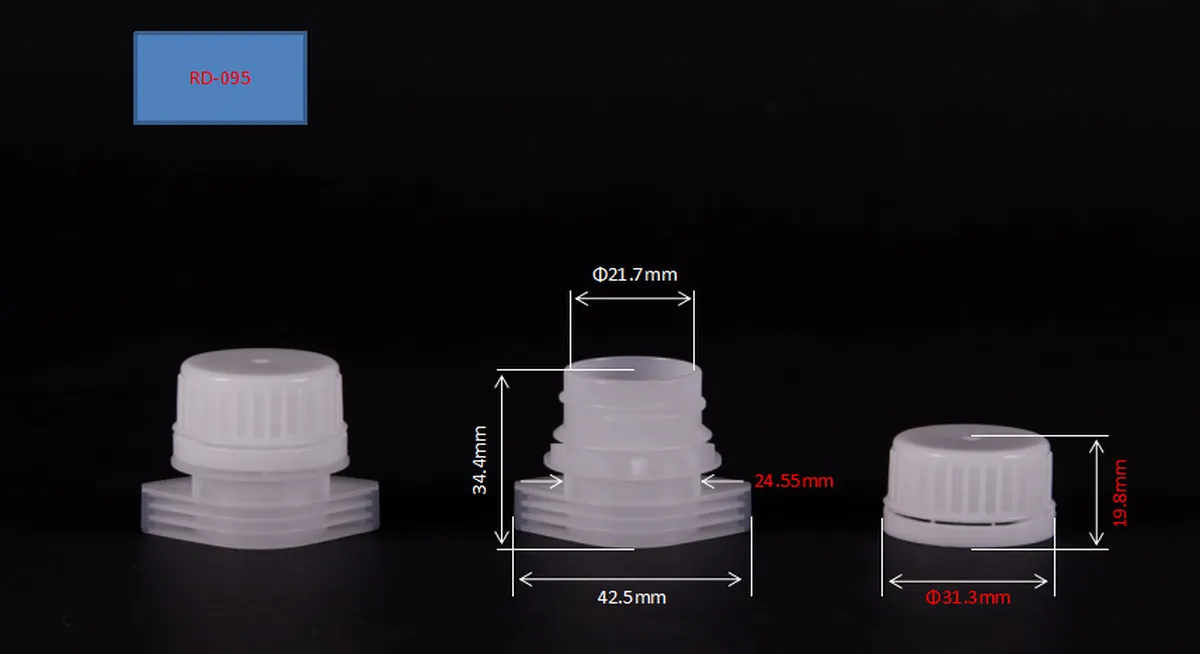
The four specification items worth arguing about hardest are the flange, the polymer and masterbatch, the sealing window and the tolerance on the bore. The rest are usually settled by the fitment series once it is chosen, and the procedure for writing them onto a drawing is set out in the pouch spout cap specification sheet guide.
Questions to put to a pouch spout cap supplier
Written questions, asked before a sample is cut, save far more time than a sample round. These are the seven that separate a documented supplier from a stockist.
- Which fitment series and bore do you recommend for this liquid, and what is the flange geometry that series uses?
- Can you provide a material declaration naming the regulation it is made under, plus any migration or extraction testing behind it?
- Which polymer and masterbatch grades go into the part, and are they interchangeable if a grade is discontinued?
- What is the recommended sealing window for this spout against a sealant layer of [your structure]?
- How do you verify dimensional conformity and seal integrity in production, and can we see the sampling plan?
- What happens to appearance and dimensions after the sterilisation route we intend to run?
- What is the sample, tooling and lead-time path if we need a modified bore or a custom colour?
Ruihua moulds spout fitments and caps from 1.2 mm to 40 mm bore with the inner diameter held to within ±0.1 mm of nominal, in food-contact PP and PE grades, with aluminium foil seal liners and silicone pads available as the pre-open seal. Sealing windows run across the 110–130 °C band for low-temperature sealing, and retort-resistant PP spouts are available for temperatures up to 121 °C. Moulds are made in-house and parts are checked on in-house air-tightness and dimensional equipment, which is what makes it possible to answer questions 5 and 6 with data rather than a description. The quality system holds ISO 9001, HACCP and food-contact declarations for FDA and EU 1935/2004 requirements.
Before you send anything out, put the eleven specification lines and the five documents on a single page. That sheet is what you issue, what you compare replies against, and what the next person to pick up the project will read.
If you send your film structure, fill type, target market and the bore you are considering, the engineering team can confirm the fitment series, the sealing window and the document set that applies to your program. The standard range is on the spout caps range for stand-up pouches.
If your open questions are commercial rather than technical — batch pricing tiers, sample cost, minimum order, tooling cost, payment terms, factory checks — vetting a spout cap supplier in China covers that side of the decision.
FAQ: medical pouch spout caps
What is the difference between a medical pouch spout cap and a food-grade spout cap? The part can be identical; the evidence differs. A food-grade spout cap is documented against food-contact rules such as Regulation (EC) No 1935/2004 or 21 CFR 177.1520. A pharmaceutical program adds a plastic-material characterisation against a pharmacopoeial chapter, a biocompatibility position and a sterile-barrier or seal-integrity argument, and those expectations come from the drug product's regulatory route.
What certification does a pharmaceutical pouch closure need? There is no single certificate that makes a closure "pharma grade". What gets assembled is a documentation set: material declaration, characterisation, biocompatibility assessment, sterilisation compatibility and a seal-integrity protocol. Quality-system certificates such as ISO 9001 support the supplier side of that set but do not replace it.
Do oral liquid pouches need a child-resistant spout cap? Only if the product falls under a special-packaging requirement such as the CPSC rules at 16 CFR part 1700, or under an equivalent national rule. Whether it does is a decision for the party marketing the product. Anti-choking design is a separate consideration from child resistance and can be specified where a smaller detached component is a concern.
Will sterilisation damage the spout cap on a pouch? It depends on the route, the dose and the additive package. Ethylene oxide is generally the easiest on polyolefins. Gamma and electron-beam radiation are where appearance and mechanical properties are most likely to shift, so confirm the behaviour at your intended dose rather than relying on a general radiation-compatible claim. Retort is a thermal question and is answered by dimensional stability after the cycle.
Can a medical pouch spout cap be customised? Bores, spout lengths, nozzle shapes, colours and seal mechanisms are all routinely tooled, and the practical questions are the tooling lead time and the minimum order per variant. Send the fill and the target market first, because the market sometimes constrains the design more than the liquid does.
Last updated: 22 September 2026. Technical review: Ruihua Technical Team.
Compliance information in this article is provided for general guidance only and does not constitute legal or regulatory advice. Packaging requirements for pharmaceutical, medical and oral-liquid products depend on the product, the market and the applicable regulatory route, and they change over time. Confirm the requirements and the evidence set for your own product with qualified regulatory counsel or a notified body before placing products on the market.